
Status: Open
№ 13 (35), 2025. Russia-Africa: Prospects for Strategic Cooperation and Identification of Obstacles. From Uranium to High Technologies

December 17, 2025
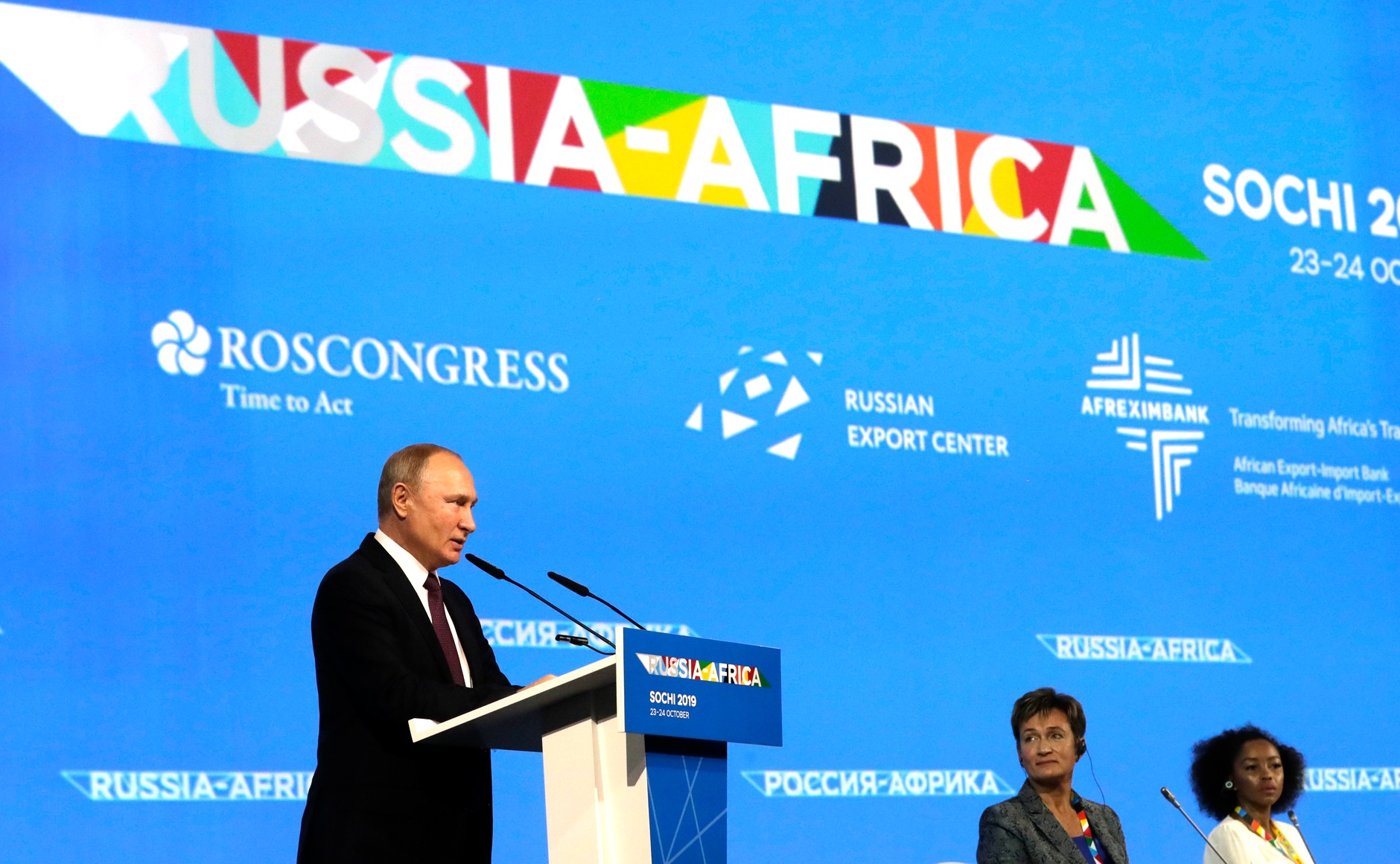
If we were to summarise the Russia-Africa relationship today, we could describe a traditional partner seeking contemporary relevance. We are no longer in the era of national liberation struggles nor in the post-Soviet euphoria of the 2000s. We are in an era of global geostrategic reconfiguration, where Africa is no longer an object but a subject of international politics. The question, therefore, is not whether Russia and Africa should cooperate but how to transform a historical legacy into a mutually beneficial partnership capable of navigating a fragmented and demanding geopolitical landscape.
Russia’s prospects for strategic cooperation with Africa mainly depend on its security expertise. The Wagner Group, along with its successors, has shown an ability to intervene quickly, using a “low-cost, high-impact” approach to support regimes facing difficulties, especially in the Central African Republic and Mali. This focus on hard security is complemented by assertive public diplomacy through media outlets such as RT and Sputnik, which offer counter-narratives to Western media and strengthen Russia’s political messaging across the continent.
Despite these advantages, the partnership faces significant structural challenges that highlight a gap between ambition and reality. Economically, the relationship is characterised by asymmetry and weak competitiveness. Trade between Russia and Africa was around 20 billion dollars before 2022, a small figure compared to China–Africa trade, which exceeds 250 billion dollars, or EU-Africa trade, which goes beyond 300 billion dollars. Russian exports to Africa remain poorly diversified, primarily consisting of cereals and armaments, while African exports to Russia are minimal, limited to a narrow range of agricultural products. Furthermore, Russia’s limited financial capacity, worsened by severe sanctions on its banking sector, prevents it from competing with the vast resources mobilised by China through the Belt and Road Initiative or by Western financial institutions.
Logistical and infrastructural limitations further weaken the partnership. There is no dense network of direct shipping routes or dedicated logistics corridors between Russia and most African countries, leading to higher costs and longer delays. This physical distance is worsened by a lack of “soft infrastructure,” including reliable banking channels, investment protection treaties, and effective dispute resolution mechanisms, all of which discourage private investment on both sides.
Geopolitically, Russia’s engagement in Africa is limited by external pressures. Western sanctions severely restrict its ability to operate within the international financial system, making large-scale projects both complicated and risky. At the same time, Russia faces fierce competition from other powers: the established influence of France, the United Kingdom, and the United States; the dominant economic presence of China; and the increasing role of new players such as Turkey, India, and the United Arab Emirates.
There is also a perception challenge regarding Russia’s true added value. Some African analysts contend that the Russian model, especially in the mining and security sectors, risks replicating an extractive pattern in which natural resources are exchanged for short-term security benefits, without sufficiently developing sustainable local capacities or ensuring a meaningful transfer of technology and skills. Against this backdrop, cooperation is gradually shifting from traditional exchanges to a multidimensional strategy based on three interconnected pillars. The first pillar is a “hard” one focused on energy security and mineral sovereignty. Uranium acts as a strategic gateway, as Russia, via Rosatom, controls the entire nuclear value chain – from resource extraction to plant construction, financing, training, and waste management. The El Dabaa nuclear power plant in Egypt exemplifies this approach. With a portfolio of 36 nuclear power projects in 12 countries, including several in Africa, Rosatom’s “Build, Own, Operate” model is particularly appealing to states lacking capital and technical expertise. This strategy is not just about raw material extraction, but about establishing long-term strategic interdependence over the 60 to 80 years that constitute the lifespan of a nuclear power plant.
The second pillar is digital and high-tech cooperation, a relatively new yet increasingly vital area. Russia presents its technological solutions as sovereign alternatives to Western and Chinese dominance. Companies such as Yandex in search engines and artificial intelligence, Kaspersky in cybersecurity, and Sistema in ICT solutions aim to establish a presence in Africa to secure critical infrastructure. Space cooperation is an underutilised yet strategic aspect of this engagement. The Russian GLONASS navigation system provides an alternative to American GPS for applications ranging from mapping and logistics to agriculture. Countries like Ethiopia and Rwanda have already signed agreements in this domain. As Africa undergoes a digital transformation, data sovereignty has become a key concern, with Russia positioning itself not only as a technology provider but also as a defender of digital sovereignty against the influence of GAFAM and major Chinese firms.
The third pillar is political, rooted in narratives of sovereign governance and security. Russia’s discourse emphasising non-interference, respect for sovereignty, and partnership without political conditions appeals to many African governments that are increasingly critical of Western approaches tying cooperation to democracy and human rights conditionality.
In conclusion, the Russia-Africa partnership should not be viewed as an effort to replace other global players, but rather as a niche-influence strategy. Russia cannot, and probably does not aim to, compete with China on the level of economic involvement. Its comparative strengths lie in security flexibility, specialised high-technology sectors such as nuclear energy and cybersecurity, and a political discourse aligned with the sovereignty aspirations of many African elites. The future of this partnership will depend not on economic dominance but on Russia’s ability to provide Africa with strategic alternatives in energy, security, and diplomacy within a growing multipolar world. The main challenge for both sides will be shifting from a reactive cooperation model – often seen as an opposition to Western influence – to a proactive partnership grounded in a shared vision of development and stability. Only then can the transition from uranium to high technology become an economic and strategic reality rather than just an ambitious slogan.
Keywords: Russia; Africa
AFR
E16/SHAH – 25/12/17
