
Book Review № 1 (4), 2026. Uniting the Dissimilar: Russia’s «High-Tech Bridge» Between Africa and the Gulf

February 3, 2026
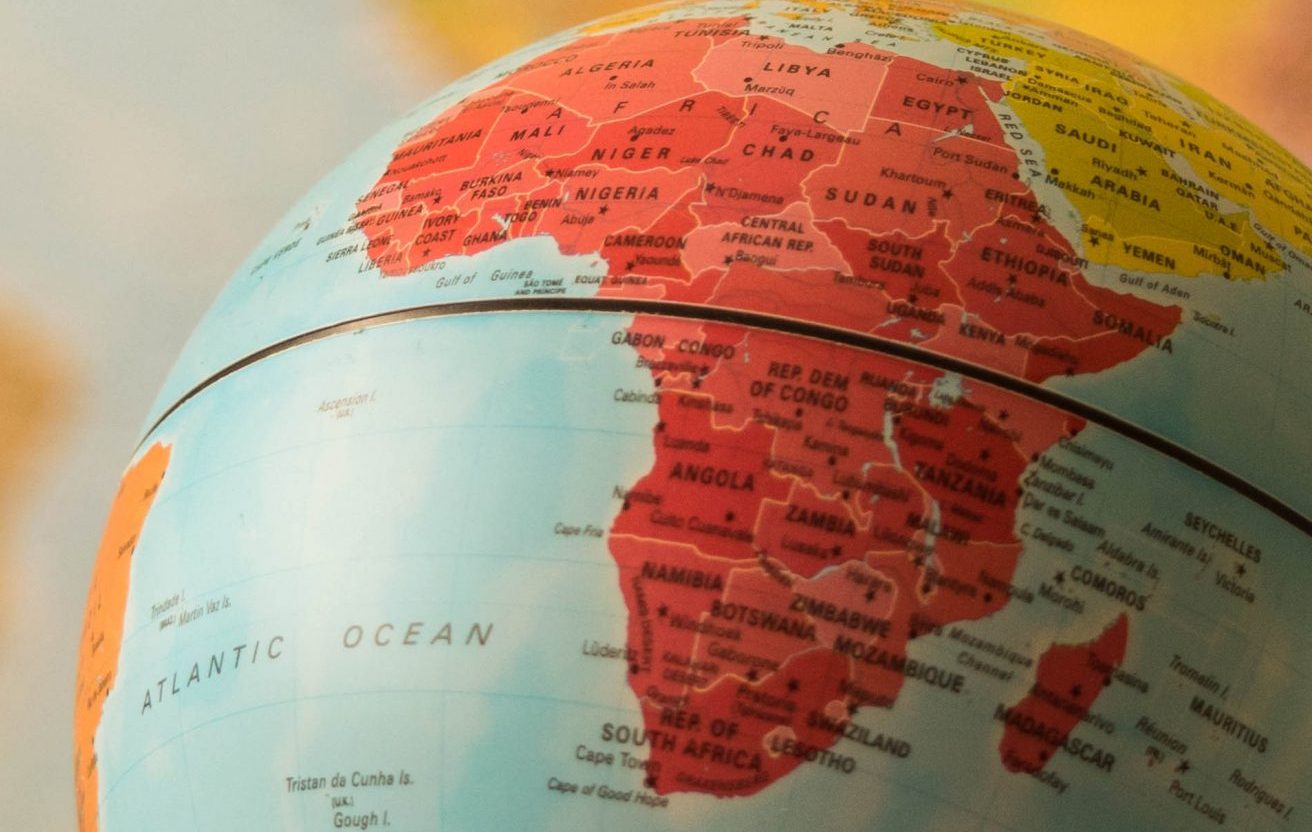
From the Gulf to Sub-Saharan Africa: The Development of Digital Technologies and Russia’s Interests. An analytical report on the potential of Gulf and Sub-Saharan African states in the field of digital technologies, and on the prospects for advancing Russia’s interests in this area by Dr. Leonid Tsukanov, PIR Center, MGIMO University, Moscow, 2025
URL: https://pircenter.org/wp-content/uploads/2025/03/25-03-03-REP-TSU-on-AFR-GULF.pdf
Digital technologies are playing an increasingly important role in global politics and economics. As the global networked society develops, the need for nation-states to utilize advanced technological tools to achieve their foreign and domestic political goals is becoming fundamental, driven by their desire to secure advantageous positions in the new, high-tech world.
Moreover, in a context of intense political turbulence and global instability, Russia faces the urgent need to seek new foreign policy allies. Equally urgent is the need to accelerate the pace of such promising scientific and technological cooperation (including cooperation in the field of emerging technologies).
Moscow’s focus is, among other things, on Sub-Saharan Africa (SSA) and the Gulf states. Although these two regions have distinct economic, socio-political, and cultural backgrounds, they are equally interested in harmonious integration into the new digital world and active participation in global cooperation. It would seem that this is where their commonality ends, and that it would be simply impossible to unite two disparate groups of states under one umbrella. They would simply have no common ground. However, PIR Center experts believe otherwise. In 2025, PIR Center, in collaboration with MGIMO University, released an analytical report, “From the Gulf to Sub-Saharan Africa: the development of digital technologies and Russia’s interests”. The author of the research, orientalist and PIR Center consultant Dr. Leonid Tsukanov, conducts a comparative analysis of the digital capabilities of countries in the two regions, focusing on the technical and social dimensions of digital technologies.
The specific nature of relations between the Gulf states is quite amusingly explored. The author introduces a special category, “Gulf+”, which includes the GCC member states, as well as Iran and Iraq. This geopolitical nesting doll is subsequently used to designate eight states at once, avoiding misinterpretations when reading the report and avoiding the need to guess whether the text refers only to the Arabian monarchies or to all Gulf states.
Interestingly, the report itself is structured like a “gamebook”, meaning sections can be read selectively to gain a distinct understanding of the potential of both the “Gulf+” and SSA countries. This approach makes the report more comprehensive and accessible to a wider audience without having to divide it into two independent (but methodologically identical) studies.
However, reading the report from cover to cover will not cause any difficulties in understanding the material: the author concludes each thematic section with a special paragraph dedicated to the identified points of intersection of the approaches of the states of the SSA and “Gulf+” groups.
Another strength of the report is its flexible presentation. The author strives to explain complex topics in simple terms, without engaging in lengthy discussions or overloading the reader with theory and specific terminology; he utilizes cutting-edge methodological approaches, both domestic and international.
The appendices to the report deserve special praise – they effectively serve as a collection of expert materials and analytical notes related to the main research topic. The range of topics is extremely broad – from an analysis of the current state of the Malian digital market (in PESTL format) to a review of the history of the emergence of Middle Eastern “cyber armies” and independent hacker units. In the case studies, the author summarizes his own findings from previous years, but only partially – most of the materials presented are exclusive.
At the same time, the research paper has its own areas of growth. For example, when analyzing the digital landscape of African and Gulf states, the author focuses primarily on two types of cyber threats – the use of ICT technologies in modern warfare and in cybercrime – while the phenomenon of cyberterrorism, by contrast, receives comparatively little attention. This is somewhat surprising, especially considering that the author has an excellent starting point for further research in the form of a specialized analytical study published by PIR Center in 2022[1].
Another potential direction for development is the development of ready-made solutions for businesses operating in the regions under consideration. While the author makes some steps in this direction (in particular, an overview of Mali’s digital capabilities could well serve as the basis for developing a corresponding business strategy), these are only in appendices to the main work; the text of the report is primarily informational and introductory, with an emphasis on issues of global security and international cooperation.
However, these proposals do not detract from the merits of the research. The report presents a high-quality and concise overview of a large body of relevant data, and will therefore be useful both to novice researchers interested in the issues of high-tech transition and to experienced specialists deeply immersed in the subject.
Keywords: Africa; Digital technology
AFR
E16/SHAH – 26/02/03
[1] See: Tsukanov L. The Rise and Fall of the Cyber Caliphate: Al-Qaeda* and ISIS* in the Digital Space // PIR Center, 2022. URL: https://pircenter.org/wp-content/uploads/2022/09/SI-RUS-%E2%84%9617-43-Tsukanov.pdf (in Russ.).
