
CHAPTER 11. THE MIDDLE EAST: REGIONAL SECURITY AND THE ROLE OF RUSSIA

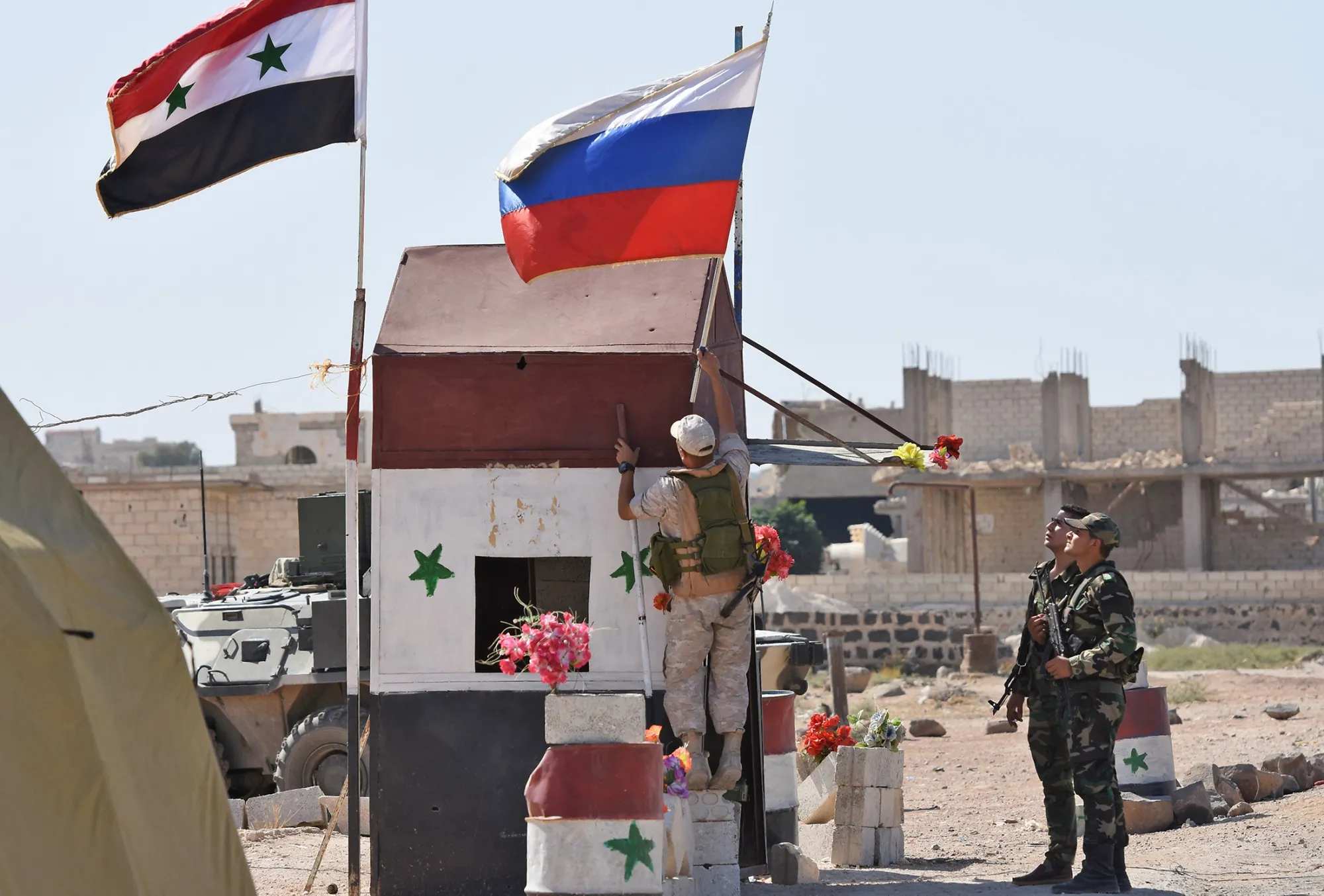
Russia should be in the Middle East. The Middle East needs Russia. And Russia needs the Middle East.
These simple theses cause delight among supporters, cautious curiosity among doubters and irritation among opponents, resulting in attempts to push Russia out of this field or, on the contrary, to push it to overloading in this area with the main goal of weakening it. And the weak are not respected in the Middle East.
To be in the Middle East, you have to be strong. There are enough allies and partners who want Russia to be presented in the region. The principle is mutual benefit and justice. Common security is at the forefront. Indivisible and equal. Not more for someone, less for someone else, or even nothing at all. No.
Russia advocates a unified concept of regional security. With the understanding that the Middle East is not even at the beginning of this path, and, worse, is moving in the opposite direction in some places. There is a rollback and degradation at the main sore points. Nevertheless, sooner or later this concept will work, and Russia remains its faithful adherent, if not its initiator.
A Course Towards Conservatism: Say No to Bomb Neither to Collapse of States
Russia, like many other countries, assumes that turbulence in the Middle East will increase. The threat of escalating regional conflicts, particularly the Iranian-Israeli one, remains. The Palestinian problem is not being resolved, and the situation in the Gaza Strip has slid into a humanitarian catastrophe.
We will not list the hotbeds of tension; they are well known. Let us just note that the region has always been distinguished by heightened danger. Even in Soviet times, Foreign Minister Andrei Gromyko told his subordinates working in the Middle East Department that they “don’t need to read detective novels”, saying, “you do this at work from morning until night”: “Either murders, or conspiracies, or coups, or even kidnappings”[1].
Today, the situation is even more alarming. The United States, without a strategy towards the Iranian nuclear program, launched bunker buster bombs on nuclear facilities in Iran on June 22, 2025. Before that, on June 13, the Israelis had been launching strikes on Iran. Iran responded with ballistic missiles and drones. Until June 24, when the armed confrontation ceased, there was a discussion in the information space about whether World War III would start in the Middle East.
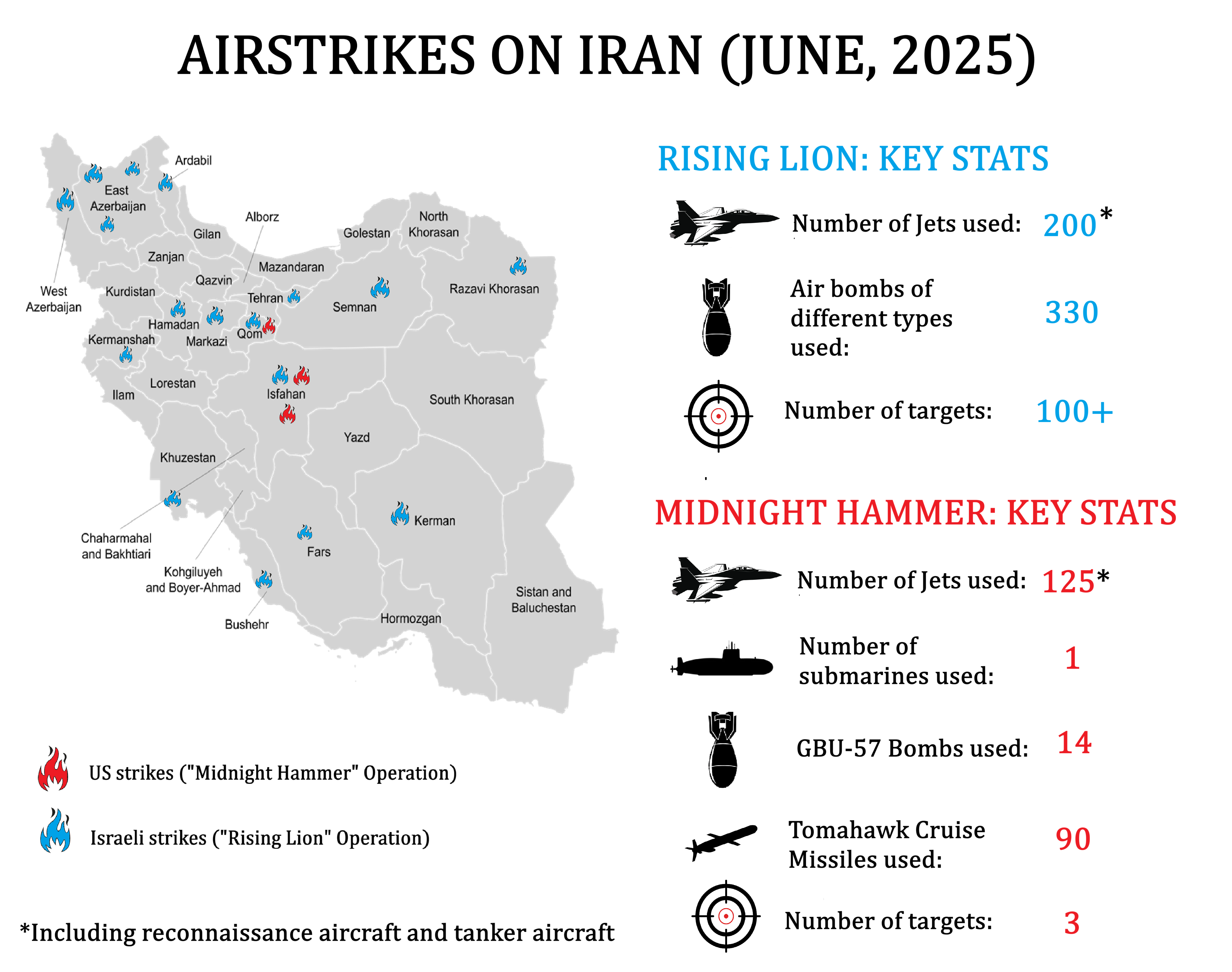
In 2024, Iran and Israel exchanged blows in April and October, each time becoming more destructive. Escalation was inevitable.
This development was predicted. For example, a report by the International Crisis Group back in 2019, that is, during Donald Trump’s first presidency, warned that the American policy of “maximum pressure” on Iran would lead to “maximum risks”. Experts from this authoritative organization, whose headquarters are located in Brussels, warned: “The assassin’s bullet that killed Archduke Franz Ferdinand of Austria put the entire European continent on fire. Today, a single attack by rocket, drone or limpet mine could play the same role”[2].
The authors of the report suggested as an alternative to “save the 2015 international agreement on the Iranian nuclear program”, from which the United States withdrew in May 2018, that is, again, under Donald Trump. At the same time, Russia, Europe and China at the beginning of Trump’s second presidency in 2025 still considered possible a practical return to the Joint Comprehensive Plan of Action (JCPOA) on Iran signed in 2015. Up until the expiration of this plan in October 2025, amendments to the text were discussed, if the participants agreed to them.
There were also proposals to develop a new agreement, with old ideas serving as the basis. Among them was the creation of a regional consortium that, under the control of the International Atomic Energy Agency (IAEA), would use Iran’s achievements in peaceful nuclear energy for the needs of neighbouring countries such as the UAE, Saudi Arabia, the Sultanate of Oman, and others. According to the authors of the initiative, Türkiye and Egypt could join the consortium. Coordination would be carried out with the help of the United States, Russia, China, France, Germany, Great Britain, the Netherlands, and other countries advanced in the nuclear sphere[3].
Another plan has been developed in more detail – involving Russia, as a state that Iran trusts and with which it concluded the Comprehensive Strategic Partnership Treaty in January 2025[4], in close control over the nuclear enrichment cycle, including the temporary removal of part of the enriched Iranian uranium to Russian territory. It is noteworthy that preliminary agreements with the West on such participation by Russia were reached back in 2006[5]. They were never implemented, however, their presence on the negotiating table indicated the possibility of a peaceful solution.
Compliance with the Treaty on the Non-Proliferation of Nuclear Weapons (NPT), which Iran adheres to, is also fundamentally important. There are nine nuclear states in the world, one of them in the Middle East (Israel, which is not part of the NPT). By 2030 many analysts believe, this situation will not change and no one else, especially in the Middle East, will get a nuclear bomb, no matter how hard they try[6].
But while Russia is in favor of negotiations, the United States, under pressure from its main regional ally, Israel, is moving ever closer to the red line of a military solution. This leads to the suspicion that Israeli Prime Minister Benjamin Netanyahu’s plan, aimed at eventual regime change in Iran and previously rejected in the United States, is quietlyfinding supporters among decision-makers there. And this after the discouraging results of military campaigns in Afghanistan, Iraq and Libya.
Russia’s approach to the Middle East is based on the principle that democracy cannot be exported through outside interference. “The desire to introduce democracy through forceful methods can and often does lead to the exact opposite result”, said the then Prime Minister and presidential candidate Vladimir Putin in his article “Russia and the Changing World” (2012)[7].
…We are interested in stepping up our political, trade and economic ties with all Arab countries, including those that, let me repeat, have gone through domestic upheaval. Moreover, I see real possibilities that will enable Russia to fully preserve its leading position in the Middle East, where we have always had many friends.
As for the Arab-Israeli conflict, to this day, the magic recipe that will produce a final settlement has not been invented. It would be unacceptable to give up on this issue. Considering our close ties with the Israeli and Palestinian leaders, Russian diplomacy will continue to work for the resumption of the peace process both on a bilateral basis and within the format of the Quartet on the Middle East, while coordinating its steps with the Arab League.
<…>
Whether we like it or not, foreign interference suggests this train of thought. This is why the number of threshold countries that are one step away from “military atom” technology, is growing rather than decreasing. Under these conditions, zones free of weapons of mass destruction are being established in different parts of the world and are becoming increasingly important. Russia has initiated the discussion of the parameters for a nuclear-free zone in the Middle East.
Vladimir Putin
Prime Minister and presidential candidate
Valdai Discussion Club
February 27, 2012
https://valdaiclub.com/a/highlights/vladimir_putin_on_foreign_policy_russia_and_the_changing_world
Since then, Moscow’s position has not changed. But if in 2003 in Iraq and in 2011 in Libya this protest was expressed through political statements and voting in the UN Security Council, then in the autumn of 2015, a strengthened Russia, having thwarted the West’s plans, decided to launch an anti-terrorist operation in Syria. In 2017, French military expert Michel Goya in his article “Red Star” (later renamed as “Red Storm”) noted that in Syria, the Russian military gained invaluable experience, tested the operation of new types of weapons and technologies in practice, and the campaign itself did not require large resources[8].
By the end of 2024, when President Bashar al-Assad finally fell, the situation had changed both in Syria and in Russia. Assad’s government had ignored advice to establish a dialogue with the opposition and improve relations with Türkiye. The socio-economic situation in Syria had deteriorated sharply. At the same time, the Special Military Operation (SMO) in Ukraine, launched on February 24, 2022, required Russia to concentrate its political attention and military-technical resources on the western direction.
Russia’s priority in Syria remains the same: helping to preserve the territorial integrity of that country, as well as Iraq, Libya, Yemen, Iran, since we are talking about attempts by external forces to destabilize the situation there. In Syria, it is undoubtedly necessary to carry out administrative reforms, in which the rights of national and religious minorities must be respected: Kurds, Christians, Alawites, Druze. Representatives of the Sunni majority, who came to power in 2024, are making attempts to establish a comprehensive dialogue. For its part, Moscow provides humanitarian aid to Damascus and is ready to do so in the future. The stability of Syria is in Russia’s interests.
The borders of many Middle Eastern states were drawn based on agreements reached during World War I. The Sykes-Picot Agreement of 1916, which divided the region between colonial powers and was named after the British and French diplomats who worked on it[9], is far from ideal and no longer fits the changed reality. However, there is no replacement for it yet, and abrupt moves could lead to huge human losses.
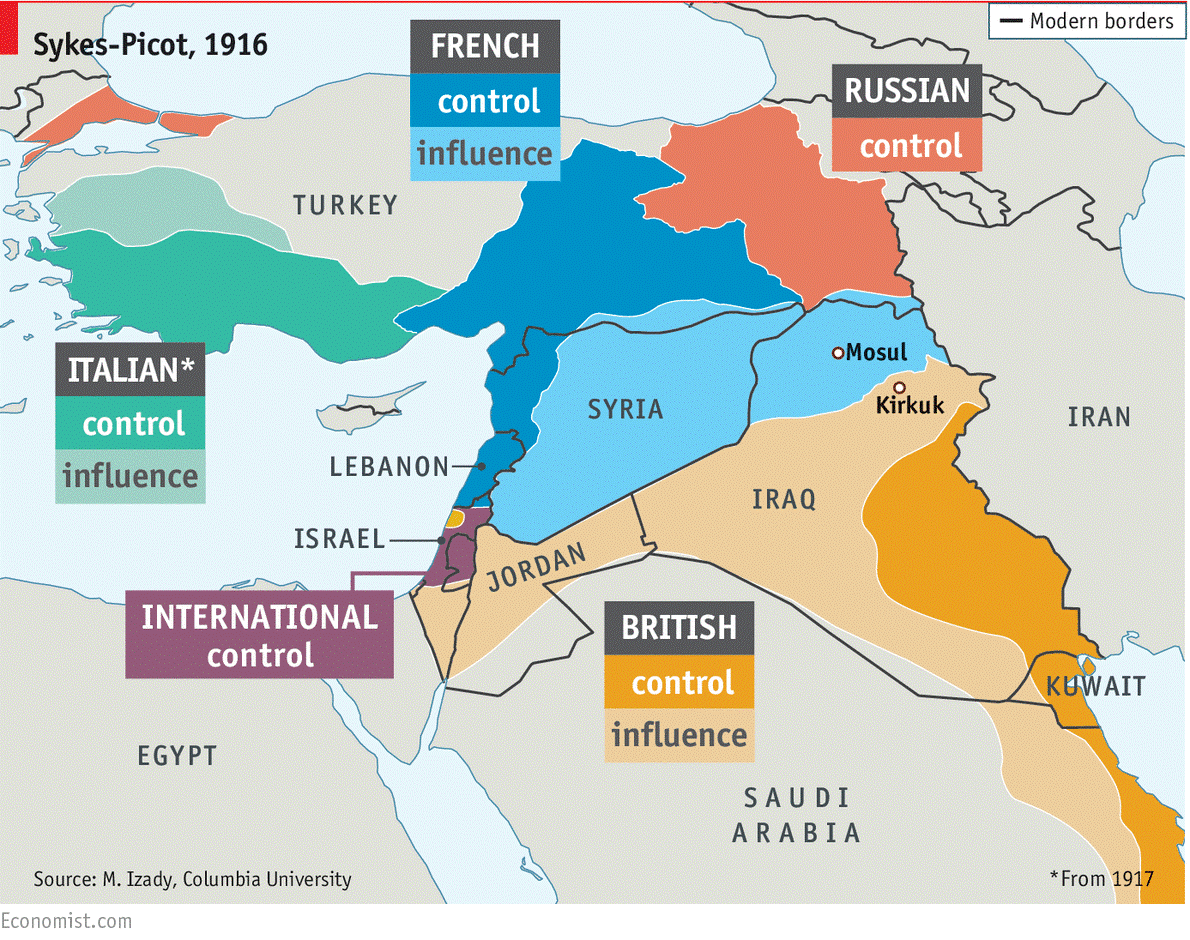
A revision of the Sykes-Picot Agreement, signed more than 109 years ago, is, of course, inevitable. “There is nothing new under the sun”, but nothing is permanent either. Russia will have to react to redrawing the borders of the Middle East. However, Moscow prefers to act as a conservative force, containing centrifugal processes and reducing the severity of conflicts along fault lines. The “Old world order” is collapsing. Russia calls for an agreement, saying no to the irresponsible destruction and disintegration of states.
This position is attractive to most Middle Eastern countries, with the possible exception of Israel, which often initiates revisions of the borders defined both by agreements reached during World War I and the collapse of the Ottoman Empire, and by resolutions of the UN General Assembly and Security Council issued after World War II.
Russia’s strategy towards the Middle East is thus built on the need to counter growing negative trends. This also includes the terrorist threat.
Contradictions of Jihad: Fighting Terrorists and Reconciling with Radicals
The problem of terrorism is a long-standing problem in the Middle East. For Russia, it is even more sensitive because – after the overthrow in 2003 of Saddam Hussein in Iraq by the Americans and the emergence of the terrorist group Islamic State (ISIS[10]) there – thousands of people from America, Europe and Asia, including Russian speakers, have joined the groups scattered across the Middle East[11]. They maintain ties with the underground in Central Asia and a number of regions of Russia.
From 2013 to 2016, that is, at the peak of the jihadist upsurge, estimates of the number of people from Russia and the Commonwealth of Independent States (CIS) fighting on the side of the banned ISIS fluctuated between 5,000 and 7,000 militants[12]. They were concentrated primarily in Iraq and Syria. In 2014–2015, the Asian branchof the group, ISIS in Khorasan[13], burst into the scene in Afghanistan and Pakistan[14].
And yet, the international fight against terrorism has borne fruit. The figures show a trend (which, unfortunately, has not yet become sustainable) of a decrease in the number of terrorist attacks in the region over the past 10 years. The number of attacks has decreased worldwide significantly, threefold (3,492 in 2024). The number of deaths as a result has also decreased (7,555 fatalities in the same 2024)[15].
This is connected both with the achievement of internal political agreements in a number of countries, for example, in Iraq, and with the implementation, since 2015, of more active counter-terrorism operations by local authorities and external players, including Russia and the United States.
Russia and the United States, despite their differences, have avoided direct clashes in Syria during this struggle, maintaining coordination through special channels. Moreover, when the Americans, whose contingent is located in eastern Syria, were preparing to take the ISIS stronghold in Raqqa in 2017, according to the author of these lines, the Russian leadership offered support, which the United States did not dare to do.
In 2016, there were 6,110 terrorist attacks in the Middle East and North Africa (out of 13,400 worldwide, with 34,000 killed as a result). But in the following 2017, there were 3,780 attacks (out of 11,000 worldwide), a 40 % reduction from the previous year. The number of people killed by terrorism was halved. Improvements were seen in Iraq, Türkiye, Libya, Yemen and, to a lesser extent, Syria[16]. At the same time, a number of Asian and African countries became less secure.
In 2016, 45% of terrorist attacks from the global total occurred in the Middle East and North Africa[17]. In 2017, 34%. The number of attacks in the Middle East has decreased. Syria, however, remains a hotbed of terrorist threats. The tragedy of October 7, 2023 in Israel and the bloody drama in the Palestinian Gaza Strip also show that it is too early to talk about successes.
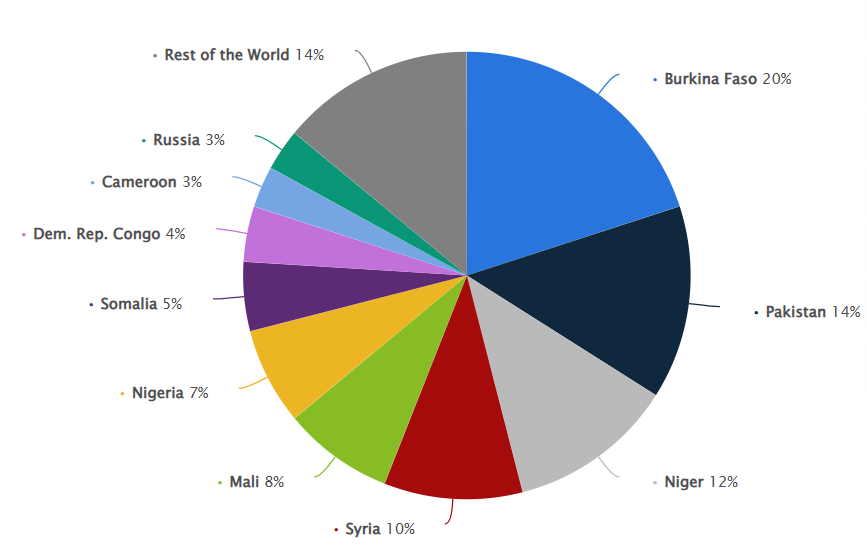
However, terrorist attacks are more often occurring not in the Middle East, but in the Southern Asia and Africa’s Sahel (Pakistan, Burkina Faso, Niger, Mali, Nigeria, Somalia etc.)[18]. The vector of terrorism has changed. It is noteworthy that in the last few years the number of attacks has increased slightly in Iran and Russia, but decreased in Iraq, which immediately after the US invasion in 2003 remained the main supplier of the most severe terror statistics for a long time.
The ISIS terrorist group, despite its weakening, continues to operate. Groups close to it and individuals who share its ideology are going beyond the Near and Middle East, carrying out attacks in other parts of the world. Tragic evidence is the terrorist attacks at the “Crocus City Hall” – a large concert venue outside Moscow – on March 22, 2024.
The need to combat terrorism leaves no doubt. However, the events of December 2024, when opposition groups overthrew President Bashar al-Assad overnight, have posed, including for Russia, a difficult question about determining the attitude towards radical organizations, the criteria for adding them to blacklists or excluding them from there.
The coming to power in Damascus of the leaders of the al-Nusra Front[19] (Jabhat al-Nusra, translated from Arabic as “Support Front”), which is banned in Russia, has put everyone who is establishing relations with the victors in a delicate position. Russia, maintaining a military presence in Syria in the form of the Khmeimim air base and a logistics point in the port of Tartus, has also demonstrated pragmatic flexibility and quickly established relations with the new authorities.
At the end of 2024, the United States canceled the $10 million reward for the capture of the leader of the al-Nusra Front, Muhammad al-Julani, now known not by his combat nickname, but by his real name, Ahmad al-Sharaa[20]. In May 2025, President Donald Trump, visiting the Gulf states, met with Ahmad al-Sharaa in Saudi Arabia. The Syrian came to Riyadh already as the president of Syria for the transitional period.
There is also the example of the Taliban in Afghanistan, who were removed from the Russian blacklist of 69 organizations in April-May 2025[21]. However, it turns out that the narratives that accompanied the fight against radicals are being eroded. Flexibility has been demonstrated. Theoretical justification and legislative support are required. In addition, much still depends on the state of affairs in the explosive region.
The Middle East has faced a surge in terrorist activity in the 21st century. Over the past quarter century, the region has experienced several external interventions and plunged into severe internal discord: the US war in Iraq in 2003, the NATO operation in Libya in 2011, long-term bloody conflicts in Yemen and Syria, the events of the “Arab Spring” that began in late 2010 and never lived up to expectations for improvement, financial and military-political crises in Lebanon, and much more.
The situation is aggravated by general instability. International structures formed as a result of the World War II are unable to cope with the multiplying conflicts. It has long been recognized that these bodies need at least serious reform, and at most – replacement. Building a new international security architecture takes time. Upheavals are inevitable.
Other troubles are adding fuel to the fire: natural disasters, including earthquakes in the seismically active Middle East, the struggle for water resources, the coronavirus pandemic (in addition to the medical ones, the new disease has exacerbated economic and social problems), volatility in oil prices, exported by many countries in the region, refugee flows, drug trafficking, trade wars, tariff ultimatums, sanctions and the fear of a global recession[22]. Let’s take into account rapid demographic growth and acute unemployment, a decline in living standards.
The disastrous consequences of misfortunes and challenges, as if converging at one historical bifurcation point, have not yet been exhausted. In the Middle East, constantly seething, they are refracted with particular sophistication and surprise with their cruel forms. And sometimes the question arises: do external players need this “headache”? The region is strategically important, but very restless. Let’s ask directly: do we need this?
The Middle East Dilemma: to Leave Impossible to Stay
Looking ahead, let us note right away: it is impossible to leave the Middle East. But they tried to leave the Middle East. And not only Russia. In the US, former President Barack Obama once spoke about the Middle East most vividly: “This region is like the Mob is to Corleone. Just when I thought I was out – it pulls you back in”[23]. This refers to the book and film of the same name, “The Godfather”, in which Michael Corleone complains about his failure to break ties with organized crime.
A strong comparison, what else to say. But President Barack Obama, who was awarded the Nobel Peace Prize for 2009, almost ruined his image in 2013, when, under pressure from hawks, he was going to launch a missile strike on Syria in August. The reason was rumors that Damascus was using chemical weapons in an internal conflict. Obama later called August 30, 2013, when additional consultations were scheduled instead of strikes, one of the most important days of his life[24].
On September 5, 2013, President Obama arrived in St. Petersburg for the G20 summit. After his meeting with President Putin, something stunning happened: Russia announced an initiative to destroy Syria’s arsenal of chemical weapons[25]. Russian-American talks began in Geneva. An agreement was reached on September 14, and the day before, Syria signed the Chemical Weapons Convention. The joint commitments were reinforced by UN Security Council Resolution 2118 and an agreement with the Organization for the Prohibition of Chemical Weapons (OPCW)[26].
The OPCW, the UN, Russia, the USA, China, Denmark, Norway, Finland, Italy, Great Britain, and Germany participated in the large-scale operation to remove chemical weapons precursors from Syria and destroy them, which lasted for three years[27]. The Russian initiative was beneficial not only to the USA, which was given the opportunity to abandon military plans that were unpleasant to Barack Obama, but also to Syria’s southwestern neighbour – Israel, as well as to Jordan and Türkiye. And President Obama also became convinced how quickly the Middle East, from involvement in whose affairs he wanted to go out, pulled him back into the funnel of armed conflicts. It is also significant that a way out was found through joint efforts through the establishment of international cooperation.
Donald Trump also intends to leave the Middle East, having spoken about it during his first presidency. He promises this now. After the US strikes on Iran, however, this looks contradictory, with the imprint of Trump’s unpredictability.
The United States is objectively much less concerned about the Middle East than it was in the mid- and late 20th century. The doctrine of President Jimmy Carter, proclaimed in January 1980, is no longer relevant. It was then announced, in particular,in particular: “An attempt by any outside forces to gain control over the Persian Gulf region will be regarded as an assault on the vital interests of the United States of America and such an assault will be repelled by any means necessary, including military force”[28].
However, the US was then dependent on oil and gas supplies from the Middle East, which has lost its significance in recent years with the growth, due to technological breakthrough, of domestic hydrocarbon production, as well as with the development of alternative sources of energy worldwide. And although the US still depends on fluctuations in oil prices, which, in turn, react to events in the Middle East, this connection is no longer direct. The Middle East is no more a barometer for measuring the state of the energy market.
“Can the Pax Americana endure? And if it cannot, what will replace it?”[29]. With the first part of this question it is clear: American leadership is ending. The second part (“what will replace it?”) still needs to be sorted out. In any case, the Americans are more concerned about Asia, the confrontation with China, which, by the way, is dependent on Middle Eastern oil. For Trump even everything outside of America seems less important.
William Wechsler, director of the Rafik Hariri Center for the Middle East and former deputy assistant secretary of defense, noted during Trump’s first term that President takes very seriously his campaign promises to “stop the endless wars in the Middle East”[30]. Trump even declared the signing of the Abraham Accords on September 15, 2020, between Israel on the one hand and the Emirates and Bahrain on the other, as evidence of an even more American withdrawal from the daily routine of the Middle East. “We don’t need to be there anymore. We don’t need that oil anymore. We don’t need those Straits anymore”, he said on August 13, 2020, at the time the Abraham Accords were negotiated[31].
William Wechsler criticizes this approach. In his opinion, Trump thus “made a gift” to Russia and China and “allowed Russia to fill the vacuum created in the Middle East”[32]. Here however the American political analyst is exaggerating. Russia is not going to fill the voids created by the United States, and the latter does not ignore the Middle East.
Russia does not intend and is not capable of becoming a dominant force in the Middle East. But Russia knows how to build relationships with the Arabs, the Turks, the Iranians, and the Israelis. And the region needs neutral and predictable arbitrators who can positively influence the security situation. Russia can play an important role in the Middle East.
It should also be noted that Russia’s return to the Middle East began long before Donald Trump came to power. But there was also a period, immediately after the collapse of the Soviet Union, when this presence diminished and did not correspond to Russia’s weight on the international arena.
The main contradiction of Russia in those years was between the desired and the possible, between ambitions and real resources. However, we must pay tribute to the fact that Moscow, with the exception of the first six years after the collapse of the USSR, demonstrated anyway highly professional diplomacy and often achieved its goals, operating with small resources.
The leaders of Russia, which emerged in 1991 from part of the former Soviet Union, immediately determined that the country’s foreign policy interests should be pragmatic, aimed at ensuring the safety of citizens and creating conditions for obtaining economic benefits. This differed from the ideological principles of the Soviet era. At the same time, the imbalances were corrected. During Soviet times, from the summer of 1967 to the autumn of 1991, Moscow did not maintain diplomatic relations with Israel. In October 1991, two months before the collapse of the USSR, they were restored.
During the era of the first President of Russia Boris Yeltsin, the Middle East region was not considered a priority. It is enough to mention that Yeltsin, who underestimated the importance of this region, visited it only once during his presidency, and even then, unwillingly, when in February 1999 he came to the funeral of King Hussein of Jordan, with whom he was in sympathy.
Yeltsin’s next visit (in January 2000 to Jerusalem and Bethlehem for the Millennium Celebration, marking the 2000th anniversary of the birth of Jesus Christ) took place after the president announced on December 31, 1999 that he had resigned, paving the way for Vladimir Putin to become the President following the election results.
But it took Putin more than four years before he went to the region for the first time. In late 2004, he visited Türkiye, and in April 2005, Egypt and Israel, including the Palestinian Authority. The author also traveled along this route as part of a group of analysts and journalists accompanying the President. Interest in Russia’s return was enormous. Many have pinned their hopes on Moscow, especially in issues of regional security.
Russia, due to internal situation, as we see, once has distanced itself from the Middle East. And during its absence, Russia realized that to distance itself from the Middle East’s problems will be more expensive. And now Russia is back. And it is here to stay.
The Rules of the Game instead of No Rules Fighting
“An illustration of Russia’s desire to maintain real influence in the Middle East was President Vladimir Putin’s decision to host first Russia-Arab summit in October 2025” – this is not a quote from the official announcement of the Arab leaders’ arrival in Moscow. But from an article by a Western political scientist discussing how “pragmatism” and “flexibility” help Russia maneuver in the Middle East even in turbulent time[33].
Similar to the Russia-Africa summit, which was held in 2019 and for a second time in 2023, the Russia-Arab summit is conceived to discuss a wide range of topics. The League of Arab States, with headquarters in Cairo, was formed in 1945 and has since expanded from seven to 22 members. It is an important platform for articulating of views and political positions. The organization maintains regular contacts with Russia.
Unfortunately, the event scheduled for mid-October 2025 was postponed due to developments in the Middle East. However, the new Syrian leader, Ahmad al-Sharaa, arrived in Moscow on the scheduled date for talks with President Vladimir Putin. While contentious issues between Moscow and Damascus remain, the very fact of the Syrian delegation’s arrival is very important. The difficulties arising in this area, as well as the technical obstacles encountered during preparations for the first Russia-Arab summit, once again demonstrate how difficult it is for Russia to maintain influence in the Middle East, despite its clear desire to do so.
A strategic dialogue, since November 2011, but unfortunately intermittently, has also been ongoing with the Gulf Cooperation Council (GCC). It was formed in May 1981 as an alliance of six monarchies: Saudi Arabia, the United Arab Emirates, Qatar, Kuwait, Bahrain, and the Sultanate of Oman. Today, they look like real islands of stability.
Russia has significantly strengthened its ties with the Gulf monarchies in recent years, both as a group and with each state individually. The GCC states are interested in Russia’s mediation in the Middle East, and they themselves are already involved in bearing fruit diplomacy, especially in the humanitarian sphere, over the Ukrainian crisis.
In 2005, Russia joined as an observer the Organization of Islamic Cooperation (OIC), which includes 57 states, Middle Eastern ones too. The impetus for the formation of the OIC in 1969 (it was initially called the Organization of the Islamic Conference) was the Middle East conflict: the Arab defeat in the war with Israel in 1967 and the burning of the Al-Aqsa Mosque by a crazy Australian tourist in August 1969[34]. The regional security is a topic of priority for the OIC.
An important part of the joint efforts is energy security. Cooperation between Organization of the Petroleum Exporting Countries (OPEC) and other producers has been going on, more or less, since the mid-1990s. In 2016, despite competition, they not only agreed on quotas, but created an informal alliance what is now known as “OPEC Plus”. The forum consists of 12 OPEC members, including its first fiddle Saudi Arabia, alongside 10 independent producers, including Russia.
There is also the Gas Exporting Countries Forum (GECF) which gathers Russia, Qatar, Algeria and others natural gas producing countries.
Russia proceeds from the fact that ensuring security in the Middle East is a common matter, and no one can handle it alone. Hence the desire to institutionalize the approach to solving problems that have long been common, to insert them into a broader organizational context. Largely due to Russia’s efforts, Iran joined the Shanghai Cooperation Organization (SCO) in 2023. Seven Middle Eastern countries became SCO dialogue partners. Russia’s BRICS one-year rotating chairmanship, which began in January 2024, was marked by the accession of Egypt, Ethiopia Iran and the UAE. Saudi Arabia began the process of joining.
Western opponents, primarily Europeans, perceive Russia as a “dangerous” rival in the Middle East and Africa due to its increased activity. The confrontation between the US and China also has a negative impact in the region. The annual reports of the Munich Security Conference always point to this rivalry.
In 2024, an analytical report by this German organization suggested that something urgently needed to be done about the trend of rapprochement between Russia and the countries of the Middle East and Africa. Countries that did not interrupt cooperation with Russia despite pressure from the West were called by the offensive term “gray zone”[35]. That is, they are with the West, but also with Russia and China, and it would be good to choose. However, the bloc approach to diplomacy of the European Union did not seem attractive to the states of the Middle East and Africa.
Russia, interacting with the Middle East, does not impose anything. It treats the choices of partners with respect. When putting forward initiatives, it does not insist on their immediate adoption, but follows the discussion with interest and understanding. This was the case, for example, when in the summer of 2019, Russia put forward the “Collective Security Concept for the Persian Gulf”, based on proposals elaborated in the late 1990s, but updated according to new realities. Soon after the Russians, in September 2019, then Iranian President Hassan Rouhani proposed the “Hormuz Peace Initiative”, briefly called “Hope” (acronym HOPE – Hormuz Peace Endeavor). “The countries of the region should come together and agree”, summed up Iran’s position, then-Foreign Minister Javad Zarif[36].
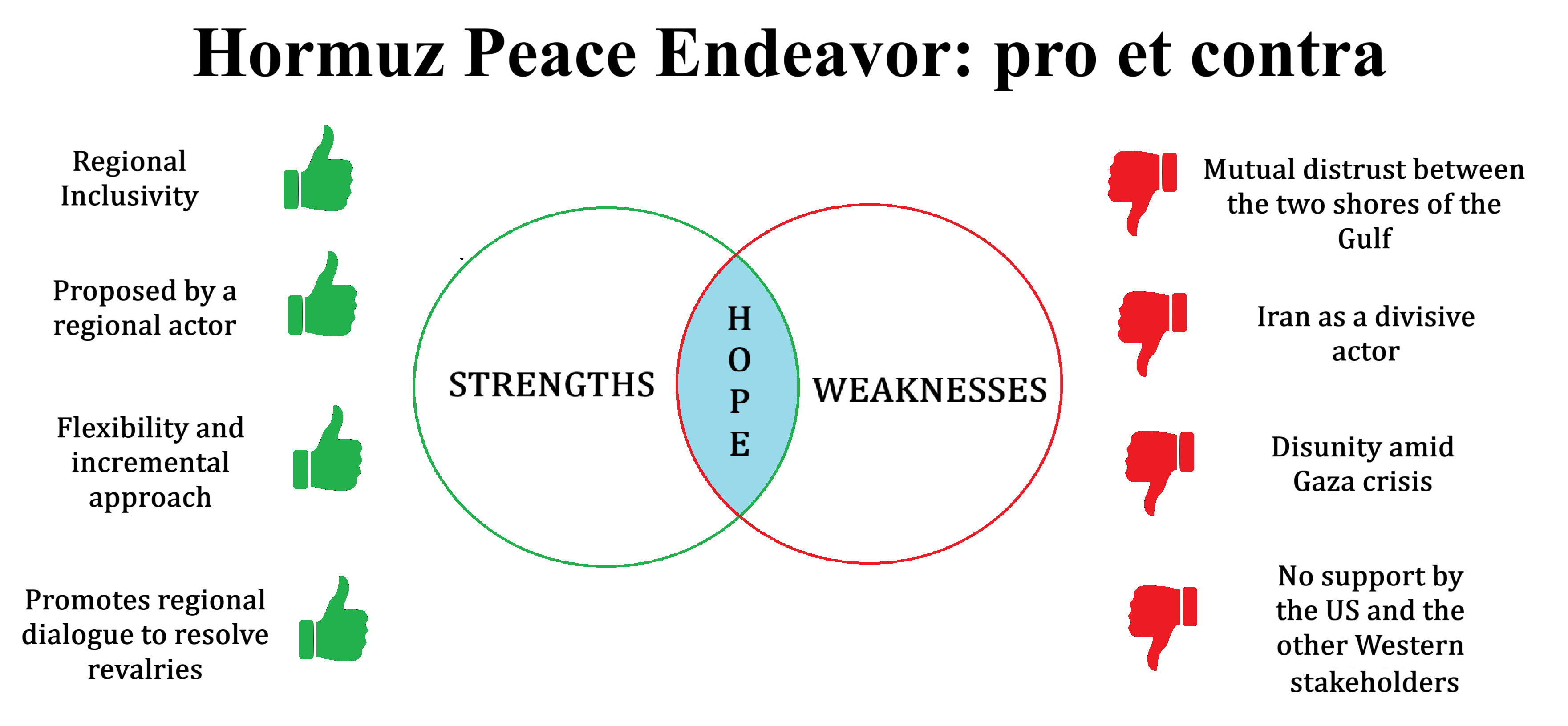
At the same time, the GCC structures, as the author knows from conversations with Arab politicians, began to think about their vision of security in the region. The Arabs did not come to a common point of view. At that time, tensions remained between Qatar and the group represented by Saudi Arabia, the UAE, Bahrain and Egypt due to a dispute over a number of regional issues. Later, relations improved, but when talking about problems in the Gulf, we must keep in mind not only the complexity of relations between the Arabs and Iranians, but also between the Arabs themselves. Qatari professor Muhammad al-Musfir reminds us that “the prosperity of the region depends on whether neighbours manage to overcome their differences and agree on a solid foundation for cooperation”[37].
The above-mentioned Russia’s Concept, which was updated in August 2021, speaks specifically about “establishment a common Middle East post-crisis architecture”[38]. These should include steps to “develop confidence-building measures in the military field”: exchange of observers, establishment of “hotlines”, creation of demilitarized zones, collective cooperation to prevent and respond natural and man-made disasters, organized crime, terrorism, and drug trafficking. The document also contains a paragraph on the taking steps to make an entire Middle East region a zone free of weapons of mass destruction and their means of delivery.
The idea, which originated in Soviet times, despite the occasional skepticism, invariably finds support in the region and beyond. Russia is systematically promoting it. “The creation of such a zone is fully in Russia’s national interests”, says Dr. Vladimir Orlov, founding director of PIR Center, who deals with this issue. “However, Russia cannot do homework for those who are responsible for it, namely, the states of the region themselves”[39]. Discussions on this matter, which continue at the suggestion of Moscow, are helping the Middle East gradually move forward on this path, which, however, is thorny and long.
And yet, the Middle East region does not look hopeless. There are glimmers of hope. The “light at the end of the Middle East tunnel” flickers time and time again. Dim, of course, but it serves as a guide.
Thus, the Madrid Middle East Peace Conference, held in October 1991 under the joint sponsorship of the USA and the USSR on the eve of its collapse, although it received a fair share of criticism, became a step towards the prototype of a new security architecture. The breakthrough was short-lived, reflecting a shift in the balance of power in favor of the Americans. The rounds of Arab-Israeli negotiations were difficult. The participants were biding their time. Nevertheless, as Professor Alexey Vasiliev noted, “a psychological atmosphere was created that was necessary for mutual understanding”[40].
A tough nut ofthe Middle East conflict, according to the Russian diplomat Viktor Posuvalyuk, “almost cracked more than once”, although it “remained unshelled”: “The peace process did not acquire an irreversible character, and yet we almost believed in its “irreversibility”. This is an excerpt from the article “Peace and Security in the Middle East – Is the Goal Achievable?”, which Viktor Posuvalyuk published in 1998 in the Russian “International Affairs” Journal[41].
A brief historical excursion is important for a better understanding of the current situation. The basis for peaceful coexistence in the region was laid back in the 20th century. Its instability, however, was visible from the very beginning. But the Abraham Accords, signed in the 21st century and mediated by the US, as a series of agreement between Israel and Arab countries, such as the UAE, Bahrain, and then Morocco, certainly relied on this foundation.
The United States tried in vain to monopolize this process. As expected, but alone they are not able to cope with. The decision to put the long-standing Palestinian problem out of the picture and out of the negotiations maximally aggravated the situation and led the participants to a political dead end. The tragedy of October 7, 2023 in Israel and the subsequent new war in the Gaza Strip required decisive action from the United States, which took on the burden of Middle East mediation. However, the efforts made by U.S. have not been constant, and the recommendations were non-objective. Not without reason the famous Arab political scientist Dr. Jasim al-Azzawi called the United States “the main loser” after the events of October, 7[42].
Meanwhile, Russia, which condemned both the terrorist attacks against Israelis and the extermination of the Palestinian population in the Gaza Strip, has always insisted that the core ofthe Middle East conflict is the problem of Palestine. It can only be resolved through dialogue between Israelis and Palestinians and only by combining the efforts of international mediators, and not just by the actions of one, overseas one.
About five years ago, my attention was drawn to a forecast made by Israeli experts from the Institute for National Security Studies about what the Middle East would be like in 2030[43]. They developed several basic scenarios depending on how closely the United States would continue to engage with the region. All options painted a gloomy picture. The differences were only in the degree.
In the “multi-level chess” scenario, which implied that the players would at least adhere to some agreements and norms of decency, the deterioration was supposed to be controlled. The worst-looking option was called “free-for-all” or “no rules fighting”. It was about an inexorably growing chaos. And this is in a region where, according to researchers, by 2030 will be around 581 million people, that is 15% more than at present[44].
Many in the Middle East fear this development. That is why we need rules. We need a security system and urgent measures to reduce risks. Russia is neither an optimist nor a pessimist, but a realist and a pragmatist. As we know, times are not chosen. But we choose the path. The scenario will be as we write it.
[1] Grinevsky O. Scenario for the Third World War. How Israel Almost Became Its Cause // Moscow: OLMA-Press Education, 2002. 383 p. P. 134. (in Russ.)
[2] Averting the Middle East’s 1914 Moment, International Crisis Group: Middle East Report No. 205 // Crisis Group. August 1, 2019. URL: https://crisisgroup.org/sites/default/files/205-averting-the-middle-easts-1914.pdf
[3] Mousavian S., von Hippel F., Glaser A., Mian Z. A nuclear consortium in the Gulf as a basis for a new nuclear deal between the United States and Iran // Bulletin of the Atomic Scientists. June 2, 2025. URL: https://thebulletin.org/2025/06/a-nuclear-consortium-in-the-persian-gulf-as-a-basis-for-a-new-nuclear-deal-between-the-united-states-and-iran/
[4] Comprehensive Strategic Partnership Treaty between the Russian Federation and the Islamic Republic of Iran // President of Russia. January 17, 2025. URL: http://kremlin.ru/supplement/6258 (in Russ.).
[5] Wright R. Dreams and Shadows. The future of the Middle East // New York: The Penguin Press, 2008. 464 p. P. 328.
[6] 11 questions for the next decade: Superforecasting global and regional political and economic trends // Arab Strategy Forum (UAE) and Good Judgment (USA). December 20, 2019. 88 p. URL: https://arabstrategyforum.org/en/stream-report/11-questions-for-the-next-decade
[7] Putin V. Russia and the Changing World // Moscow News Newspaper. February 7, 2012. URL: http://www.mn.ru/politics/20120227/312306749.html (in Russ.; archieved).
[8] Goya M. Etoile Rouge: Enseignements opérationnels de deux ans d’engagement russe en Syrie // La voie de l’épée. September 12, 2017. URL: https://lavoiedelepee.blogspot.com/2017/09/tempete-rouge-enseignements.html (in French).
[9] Barr J. A Line in the Sand. Britain, France and the struggle that shaped the Middle East // Simon & Schuster. UK. 2012. 454 p. P. 20–21.
[10] hereinafter – terrorist organization banned in Russia – Editor’s note.
[11] hereinafter – terrorist organization banned in Russia – Editor’s note.
[12] Meeting of the CIS Council of Heads of Government. Speech by President Vladimir Putin // President of Russia. October 16, 2015. URL: http://kremlin.ru/events/president/news/page/461 (in Russ.)
[13] hereinafter – terrorist organization banned in Russia – Editor’s note.
[14] US Suspects more direct threats beyond ISIS // The New York Times. September 21, 2014. URL: http://www.nytimes.com/2014/09/21/world/middleeast/us-sees-other-more-direct-threats-beyond-isis-.html
[15] Global Terrorism Index 2025: Measuring the Impact of Terrorism // Institute for Economics and Peace. URL: https://www.economicsandpeace.org/wp-content/uploads/2025/03/Global-Terrorism-Index-2025.pdf
[16] Terrorist Attacks in the Middle East and North Africa fell by almost 40% last year // The Global Terrorism Database. August 9, 2018. URL: https://www.start.umd.edu/news/start-in-the-news/quartz-terrorist-attacks-middle-east-and-north-africa-fell-almost-40-last
[17] Overview: Terrorism in 2016. Background Report // The Global Terrorism Database. August 17, 2017. URL: https://www.start.umd.edu/pubs/START_GTD_OverviewTerrorism2016_August2017.pdf
[18] Countries with the highest share of deaths by terrorism in 2024 // The Statistics Portale for Market Data (Statista). March 3, 2025. URL: http://www.statista.com/statistics/377061/countries-with-the-highest-number-of-deaths-by-terrorism/
[19] hereinafter – terrorist organization banned in Russia – Editor’s note.
[20] US removes $10 million bounty on HTS (banned in Russia) leaders following talks in Damascus // Middle East Monitor. December 20, 2024. URL: https://www.middleeastmonitor.com/20241220-us-removes-10m-bounty-on-hts-leader-following-talks-in-damascus/
[21]Single federal list of Organization, including foreign and international ones, designated as terrorist under Russian law. As of September, 2025 // Federal Security Service. URL: http://www.fsb.ru/fsb/npd/terror.htm (in Russ.).
[22]Suponina E. Weakness of the Virus and strength of the Corona (about meeting of East and West waiting for the end of Pandemic and the beginning of Apocalypse) // National Strategy Issues. Moscow, 2020. No. 6. P. 172–187. (in Russ.).
[23] The Obama doctrine: The US president talks through his hardest decisions about America’s role in the world // The Atlantic Magazine. April 4, 2016 URL: https://www.theatlantic.com/magazine/archive/2016/04/the-obama-doctrine/471525/
[24] Ibid.
[25]Commentary on the situation with chemical weapons in Syria. // President of Russia. September 10, 2013. URL: https://kremlin.ru/events/president/transcripts/statements/19194 (in Russ.).
[26]Destruction of chemical weapons in Syria // MFA of the Russian Federation. April 23, 2018. URL: https://www.mid.ru/ru/maps/sy/1569376/ (in Russ.).
[27]Contribution of States to the Process of Elimination of Chemical Weapons in Syria. Dossier // TASS. January 14, 2014. URL: https://tass.ru/info/884952 (in Russ.).
[28] Bunzel C. Whither The Carter Doctrine? The Biden Administration and the Gulf // The Hoover Institution. September 12, 2023. URL: https://www.hoover.org/research/whither-carter-doctrine-biden-administration-and-gulf
[29] Ikenberry G., Parmar I., Stokes D. Introduction: Ordering the world? Liberal internationalism in theory and practice // International Affairs, Vol. 94, Issue 1, 2018. P. 1–5.
[30] Wechsler W. The US and the Middle East in 2021: Disengagement or Re-engagement? // Italian Institute for International Political Studies. September 14, 2020. URL: https://www.ispionline.it/en/publication/four-years-trump-us-and-world-27375
[31] Ibid.
[32] Ibid.
[33] Born W. Quelle stratégie russe au Moyen-Orient depuis la chute du régime de Bachar al-Assad? // Institut FMES – Fondation méditerranéenne d’études stratégiques. January 8, 2025. URL: https://fmes-france.org/the-strategy-of-russia-in-the-moment-of-orientation-depuis-la-chute-du-regime-de-bachar-al-assad/ (in French).
[34] Suponina E. The horse Buraq and the Russian eagle // Notes of the Fatherland Magazine, 2003. URL: https://strana-oz.ru/2003/5/kon-burak-i-rossiyskiy-orel (in Russ.).
[35] Mudie-Mantz A, Witte S. Chapter 4 – Middle East: Abraham Discord. Lose – Lose. Munich Security Report 2024 // The Munich Security Conference. February 1, 2024. URL: https://securityconference.org/en/publications/munich-security-report-2024/foreword/
[36] From a conversation between Iranian Foreign Minister Javad Zarif and several international experts, including the author, on the sidelines of the Doha Conference in Qatar. 15.12.2019.
[37] al-Musfir M. Relations between the Gulf States. The Problem of Fragmentation and Strategic Vacuum (al-alaqat al-khalijiyya – al-khalijiyya. Muidylat al-farag al-istratijyy wa at-tajziya) // Al Jazeera Center for Political Studies, 2018. 318 p. P. 276. (in Arabic).
[38] Russia’s Collective Security Concept for the Persian Gulf // MFA of the Russian Federation. August 21, 2021. URL: https://mid.ru/ru/foreign_policy/vnesnepoliticeskoe-dos-e/krizisnoe-uregulirovanie-regional-nye-konflikty/rossiyskaya_kontseptsiya_kollektivnoy_bezopasnosti_v_zone_persidskogo_zaliva/1466420/ (in Russ.).
[39] Orlov V. WMD-Free Zone in the Middle East – Reflecting on the Results of the November (2019) WMD-Free Zone Conference in New York // PIR Center. March 26, 2020. URL: https://pircenter.org/editions/zona-svobodnaja-ot-omu-na-blizhnem-vostoke-osmysljaja-itogi-nojabrskoj-2019-g-konferencii-po-zsomu-v-nju-jorke/ (in Russ.).
[40] Vasiliev A. Russia in the Near and Middle East: from messianism to pragmatism // Moscow: Science. Eastern education, 1993. 399 p. P. 370 (in Russ.).
[41] Posuvalyuk V. The Crimson Sky of Baghdad // St. Petersburg: Aleteya, 2012. 400 p. P. 214 (in Russ.).
[42] al-Azzawi J. Winners and losers of the 7 October War // Middle East Monitor. July 20, 2025. URL:
[43] Heistein A., Rakov D., Guzanski Y. What will the Middle East look like in 2030? An Israeli perspective // INSS. 25.03.2021. URL: https://www.inss.org.il/publication/what-will-the-middle-east-look-like-in-2030-an-israeli-perspective/
[44] Ibid.
