
CHAPTER 16. SECURITY ACROSS THE EURASIAN SPACE: THE ARCHITECTURE THAT UNITES
Peace is indivisible. <…> There can be no security in one’s own peace and tranquillity if the peace of neighbours – both near and far – is not ensured.
From the speech of the People’s Commissar for Foreign Affairs of the USSR Maxim M. Litvinov at the Council of the League of Nations on January 17, 1935
Russia seeks to transform Eurasia into a continental common space of peace, stability, mutual trust, development and prosperity.
Concept of the Foreign Policy of the Russian Federation
President of Russia Vladimir Putin, in his Address to the Federal Assembly of the Russian Federation on February 29, 2024 noted the need to work towards shaping, in the foreseeable future, a contour of equal and indivisible security in Eurasia. The head of state expressed readiness for a substantive discussion on this topic with all interested countries and associations of the continent.
Three and a half months later on June 14, Vladimir Putin speaking at the Ministry of Foreign Affairs of the Russian Federation put forward the initiative to create a Eurasian security architecture. The President ordered to establish a dialogue with potential participants of the future system, taking into account that it should be open to all states of the continent.
…It is evident that the entire system of Euro-Atlantic security is crumbling before our eyes. At present, it is practically non-existent and must be rebuilt. To achieve this, we must collaborate with interested countries, of which there are many, to develop our own strategies for ensuring security in Eurasia and then present them for broader international deliberation.
This is the task set in the Address to the Federal Assembly: to outline a vision for equal and indivisible security, mutually beneficial and equitable cooperation, and development on the Eurasian continent in the foreseeable future.
Vladimir Putin
President of the Russian Federation
Meeting with Foreign Ministry senior officials (June 14, 2024)
http://en.kremlin.ru/events/president/news/74285
Thus, a major foreign policy initiative was announced, aimed at working out, together with partners, options for ensuring security across the Eurasian space. The Russian initiative is not a tribute to fashion or a situational response to the hybrid war unleashed by the West against our country. It is an element of the long-term strategy of a strong power, which has always been a significant part of the Eurasian continent, consistently and systematically followed a course towards promoting pragmatic, constructive, and mutually beneficial cooperation with all members of international community. This idea takes on a special role against the backdrop of the gradual formation of a multipolar world, as it is essentially designed to contribute to the development of this trend.
History Brief
Russia’s central geographic position on the continent, where the Russian Civilization neighbours other civilizations (Chinese, Arab-Muslim, Persian, Indian, European), as well as our country’s political and economic weight, and deep traditional ties with most cultures and peoples of Eurasia predetermine the necessity of its active participation in ensuring stability and security, both its own and that of neighbouring countries and peoples. This is natural. Russia enjoys a long experience of statehood, was involved in the intricacies of political and economic ties both in Europe and in various subregions of Asia. We inevitably influenced processes in both parts of the world. The reverse is also true: the complex course of history resulted in the acknowledgement by Russia’s political leadership of its special responsibility for ensuring peace at regional and global levels.
In different eras, this responsibility manifested itself in various ways. Among the events of the 19th century, one can recall the initiative of the Russian Emperor Alexander I to create the Holy Alliance. This is nothing less than the idea of forming a common security space for the Russian Empire and the monarchies of Europe at that time, an attempt to coordinate the “rules of the game”, to ensure the stability of the political power of the states involved in this process. The Concert of Europe (1814-1815 Congress of Vienna), created after the defeat of Napoleonic France with Russia playing a leading role, which excluded the hegemony of any single country, rid Europe of destructive wars for decades.
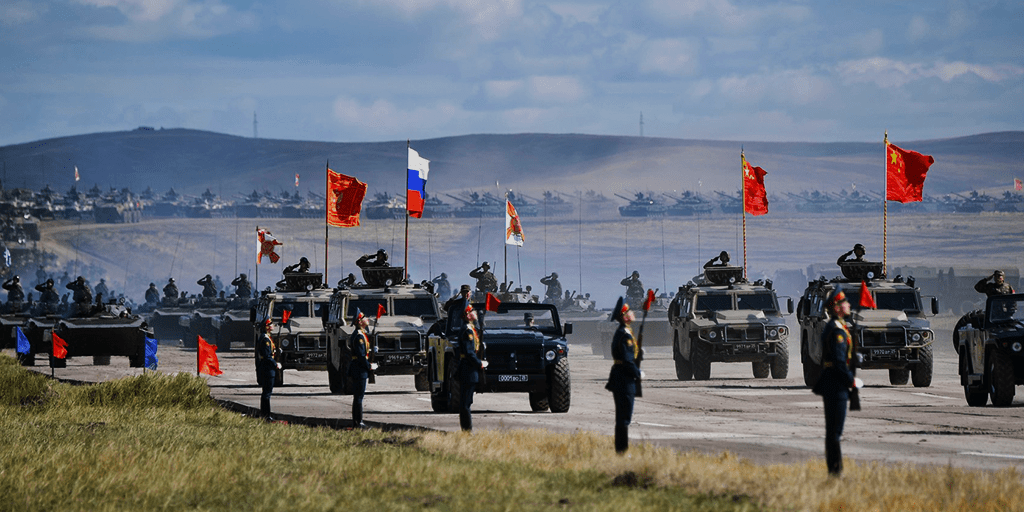
In the second half of the 20th century the Soviet Union consistently sought to maintain a balance of power. Important mechanisms along this path were the Warsaw Treaty Organization (WTO) and Moscow’s provision of security guarantees to its neighbours and allies who shared its understanding of the fact that one’s own security cannot be effectively guaranteed at the expense of the security of others.
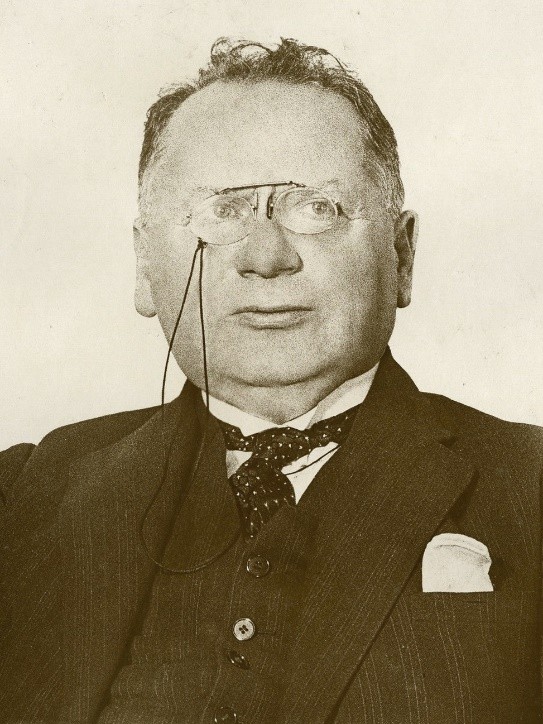
This course was a development of the concept of the “indivisible peace” put forward by People’s Commissar for Foreign Affairs M.M. Litvinov in the 1930s. The international community of that time witnessed efforts aimed at creating an architecture of international relations that would include the USSR as a full participant and was aimed at reducing risks and ensuring fair cooperation.
It is worth mentioning that thanks to the Yalta-Potsdam system, formed with the key role of Soviet diplomacy, peace and global stability were established for many decades.
Collapse of the Euro-Atlantic Concept
After the disintegration of the USSR, Russia’s attempts to become part of the process of cooperation in the field of security were linked to Euro-Atlantic schemes rooted in the politics of the late Cold War era. Our country initiated the creation of a system based on the leading role of the Organization for Security and Cooperation in Europe (OSCE) as well as on various agreements with NATO and the EU. The system has laid on fundamental documents such as the Helsinki Final Act of 1975, the Charter of Paris for a New Europe of 1990, the Treaty on Conventional Armed Forces in Europe (CFE) of 1990, the Founding Act on Mutual Relations, Cooperation and Security between the Russian Federation and the North Atlantic Treaty Organization of 1997, the Charter for European Security of 1999, and the Astana Commemorative Declaration “Towards a Security Community” of the OSCE Summit in 2010.
As Vladimir Putin said, “after the end of the acute military-ideological confrontation, the world community had a unique chance to build a reliable, just order in the field of security. This did not require much – just a simple ability to listen to the opinions of all interested parties, a mutual readiness to take them into account. Our country was set precisely for such constructive work”[1].
However, the Western countries opted for a different approach. It turned out that the US and its allies in the North Atlantic alliance did not intend to take Russia’s interests into account from the very beginning. They did not plan to fulfill the political commitments undertaken within the OSCE framework – to respect the principle of equal and indivisible security in the Euro-Atlantic region.
Let me remind that this principle mandates that each state should enjoy an equal right to security in accordance with its national interests, therefore no state or group of states should gain advantage over others in exercising this right. In other words, each and every state is free to choose or change its security arrangements, including adhering to neutrality. At the same time, it is not permissible to strengthen one’s security at the expense of the security of others and no state, group of states or organization can have pre-eminent responsibility for maintaining peace and stability. Consequently, the practical implementation of this principle is possible only on the basis of reciprocity, as stipulated by the Foreign Policy Concept of Russia[2].
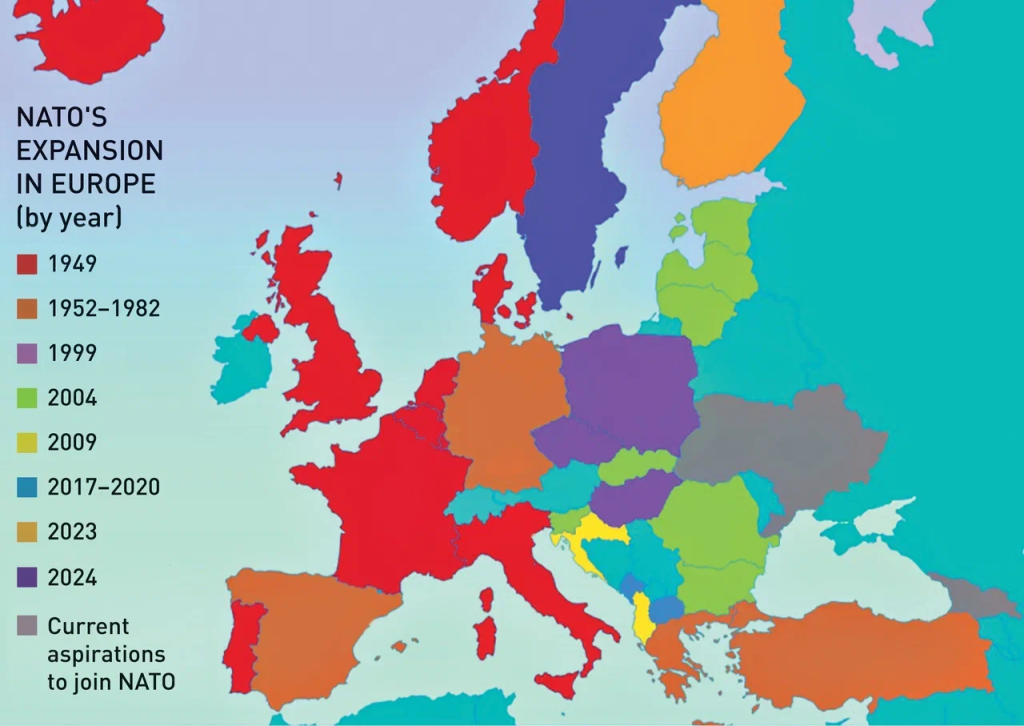
It was precisely the NATO and the EU countries that destroyed the military-political dimension of the OSCE. The assurances given to the Soviet leadership about the non-expansion of the alliance eastward were effectively disavowed. From 1999 to 2024, seven waves of expansion took place, as a result of which the size of the military bloc doubled – from 16 to 32 states. NATO members, at the instigation of the United States of America, refused to ratify the Agreement on Adaptation of the CFE Treaty, nullified the significance of the Vienna Document on Confidence- and Security-Building Measures in Europe (1999 and its updated version of 2011). The Americans themselves, through their actions, buried the Treaty on Open Skies of 1992, and also unilaterally withdrew from the Anti-Ballistic Missile Treaty of 1972 and the Intermediate-Range Nuclear Forces Treaty of 1988.
Legally binding security guarantees were something NATO allies were prepared to provide only to those who are part of the alliance. Overall, the West believed that any possible security architecture in Europe should be NATO-centric and, accordingly, presuppose Washington’s controlling participation in ensuring political and military stability.
The Russian side consistently pointed out the fallacy of the course chosen by the Western elites. It is appropriate to recall the words of President of Russia Vladimir Putin that Russia did not just criticize and warn, but offered options, constructive solutions, emphasized the importance of developing a mechanism for European and global security that suited everyone[3]. We were not just ignored, but all Russian initiatives were brushed off the table, such as, in particular, the draft Treaty on European Security of 2008 or the draft agreements between Russia and the US and NATO on security guarantees of 2021.
As a result, all mechanisms of Euro-Atlantic security were completely discredited due to the unwillingness of their participants to take into account the vital interests of our country, to apply the principle of indivisible security towards Russia. Maintaining the existing architecture, deployed in the Euro-Atlantic region, is not possible anymore – it has collapsed.
Growing Tension in Eurasia
Since recently, the North Atlantic alliance has claimed a leading role not only in its traditional zone of responsibility but also throughout the Eurasia, attempting to surround the entire continent with the military circle.
As stated in the documents, threats to the alliance emanate from the Asia-Pacific region, therefore NATO intends to assert its military dominance in the east of Eurasia. At the summit in Madrid in 2022, the interconnectedness of security in the Euro-Atlantic and the so-called “Indo-Pacific region”[4] was declared, and under this motto, the alliance is penetrating the Asia-Pacific. The Alliance’s members are looking forward to achieve their geopolitical goals there in the same way as in Europe, by introducing bloc mechanisms and expanding NATO infrastructure into the region. They try to erode the inclusive mechanisms built up over decades around the Association of Southeast Asian Nations (ASEAN), that has ensured stability in South East Asia for decades. China and the DPRK are experiencing increasing external pressure.
Furthermore, NATO seeks to create footholds in the South Caucasus. After the 20-year occupation of Afghanistan, the US and its allies today want to wedge themselves into the fragile process of stabilizing the situation in this country, invent pretexts for resuming their military presence in the states of Central Asia, and make attempts to militarize the North Eurasian part, to create military threats to Russia’s security from the waters of the Arctic Ocean and the airspace above it.
The situation in the Middle Eastern part of Eurasia is developing even more dramatically. The power balance in this strategically important region has been seriously undermined by Israel’s aggressive actions against its neighbours in Gaza Strip, West Bank, Lebanon, Syria, Yemen and Iran. The latter has fallen victim to the Americans’ and Europeans’ policy of maximum pressure. It is equally important to note that the US unilateral withdrawal from the agreements on the Iranian nuclear program, that were approved by the UN Security Council, the stubborn desire of Washington to monopolize the process of Arab-Israeli settlement, the amount of destructive steps against Syria, resulted in catastrophic consequences, putting this strategically important region on the brink of complete destabilization.
Today the overall situation in international politics is characterized by increased turbulence and uncertainty of future development. Actions of the current US administration on the world stage are significantly changing the familiar picture: there is growing tension among Western nations and a reconfiguration of forces and interests in the Euro-Atlantic. Nevertheless, the US demonstrated a focus on normalizing Russia-American relations, the confrontation along the West-Russia line remains one of the main factors determining the dynamics of the international situation. The hybrid war against our country does not stop. There are no serious reasons to talk about a reversal of the trend towards the degradation of the political and military situation, caused by the EU and NATO steps aimed at undermining the national interests of the leading Eurasian powers.
Constructive Alternative
In the emerging multipolarity era, resolving security issues in the Eurasian space is of decisive importance for mitigating external threats to Russia and for maintaining global stability. The Russian initiative to establish an architecture of indivisible Eurasian security corresponds to the logic of the regionalization of international relations, serves the tasks of building a world order based on polycentric principles, and responds to the entire array of security challenges and threats along the perimeter and on the territory of the continent.
The point is also that the risks of conversion of hotbeds of tension into a large-scale conflict are increasing and question further progressive development of all of Eurasia. It is precisely in Eurasia where today a substantial share of global economic growth is ensured, and independent non-Western centers of the multipolar world are strengthening their positions. Eurasian states have all they need to take advantage of the benefits of cohabitation in the interests of effectively addressing the tasks before them in various fields and unlocking the potential of multilateral projects with their participation. A stable architecture of equal and indivisible security should be the support and guarantee of such cooperation. It will reliably protect the countries involved from external threats, including military ones.
There is no all-inclusive multilateral organization in Eurasia which is the largest and the richest continent. However, a whole range of subregional structures operate on Eurasian soil. They play a special role in strengthening security and provide the necessary opportunities for work aimed at aligning the interests of participating states. These include, in particular, the Union State of Belarus and Russia, the Collective Security Treaty Organization (CSTO), the Commonwealth of Independent States (CIS), the Shanghai Cooperation Organization (SCO), ASEAN, the Gulf Cooperation Council (GCC), the Conference on Interaction and Confidence Building Measures in Asia (CICA).
…Together, our states make up nearly a third of the global economy in terms of purchasing power parity. Such a partnership could initially focus on protecting investments, streamlining procedures for the cross-border movement of goods, joint development of technical standards for next-generation technology products, and the mutual provision of access to markets for both services and capital. Of course, this partnership should be based on principles of equality and mutual interest. For Russia, this partnership will open new possibilities for increasing exports of food and energy, as well as offering services in engineering, education, healthcare, and tourism to the Asia-Pacific Region, allowing us to play the leading role in forming new technology markets, and re-orienting major global trade flows to Russia.
Vladimir Putin
President of the Russian Federation
Presidential Address to the Federal Assembly (December 3, 2015)
http://en.kremlin.ru/events/president/news/50864
All Eurasian integration structures could potentially combine their efforts and create their own system of division of labour to save resources and harmonize economic plans and become part of a complex architecture with strong horizontal connections. Impetus to work in this direction was given by the idea put forward by President Vladimir Putin in December 2015 of a Greater Eurasian Partnership as the widest possible contour for strengthening and achieving liberalization of trade and investment contacts, carrying out cross-border infrastructure projects, improving the transport and logistics network, and harmonizing integration processes. In turn, this lays a solid material foundation for building an architecture of equal and indivisible Eurasian security. Thus, one of the tasks set by the head of state is to significantly intensify the dialogue process between the multilateral organizations operating in Eurasia, which is already being implemented.
Goals and Participants
Among the goals of the initiative, the key ones are the settlement of regional conflicts and their prevention in the future, the development of a system of bilateral and multilateral security guarantees, ensuring comprehensive protection of national and regional security from the destructive influence of external and internal challenges and threats.
This endeavour is based on the understanding of the need for states and multilateral structures of Eurasia to assume primary responsibility for their own security in accordance with the principle ‘Eurasian solutions to Eurasian problems’ without interference from outside. Extra-regional actors that would like to do so can provide assistance at the request of the capitals in need, supporting approaches that are agreed upon by Eurasian countries. It is precisely this line that we adhere to when settling contentious issues related to the South Caucasus, the Middle East, South Asia, Afghanistan, and the Korean Peninsula.
This, of course, should presuppose the gradual curtailment of the military presence of external players on the continent. The negative experience of armed interventions in affairs of Vietnam, Yugoslavia, Iraq, Afghanistan, Libya, Syria, and Yemen must be taken into account when building the security architecture in Eurasia. As Vladimir Putin noted, in the current situation the statement like this may seem unrealistic, but if we create a reliable security system in the future, then there will simply be no need for the presence of extra-regional military contingents[5].
It is worth recalling the historical experience of convening the Conference on Security and Cooperation in Europe. This topic was touched upon by Andrey A. Gromyko back in April 1966 during his meetings with Italian leaders in Rome, who supported the Soviet minister’s proposal, but with an amendment – to add the words “and cooperation” to the phrase “conference on security in Europe”. In its finished form, this idea was voiced in March 1969 at a meeting of the leaders of the Warsaw Pact countries held in Budapest. In April 1969 Moscow’s initiative was discussed at the NATO Council in Washington and was approved in general. Finland acted as an intermediary between the capitalist and socialist states. In May 1969, President Urho Kekkonen sent notes to all European capitals urging them to join the process of developing a unified system of European security. The socialist countries agreed with the idea unconditionally. As a condition for their participation in the negotiations, the capitalist countries put forward the demand to involve the US and Canada in the process, which was met[6]. However, what was achieved in past when a bipolar world existed looks like an anachronism at the current stage when multipolarity is taking shape.
Today Russia is not pushing an idea of creating an organization or political and military association. In the heterogeneous space of Eurasia, the architecture we are envisaging can only be integral – modular and intertwining simultaneously. It presupposes a multiplicity of formats, agreements, and other models of cooperation between interested parties in the security sphere.
Individual Eurasian states will themselves determine the specific areas of mutually beneficial partnership and reach “cross-cutting” agreements among themselves – bilateral or multilateral, create mechanisms and institutions to ensure common interests in the field of security. In other words, Russia proposes the prospect of developing a network, rather than a hierarchical system, without predetermining what it will come out in the end. Will this involve, for example, a continent-wide umbrella structure, or periodically convened meetings of high-level representatives, or a complex configuration involving states and their associations.
In any case the principle of equal and indivisible security would lay in a center of the whole endeavor. This principle has already been mentioned earlier in this article. However, it is necessary to clarify its meaning in the context of establishing a new Eurasian security architecture. It is basically a combination of two elements. The first one being a recognition that all countries have an equal right to ensure their security and to choose how (in what ways) to do it. And the second one being a commitment that no one country’s security should harm, weaken or threaten the security of another country. This principle, so far, has not been universally recognized and, therefore, in practice, states that wish to follow it usually make a political commitment to doing so. In our vision, relations among parties of the security architecture in Eurasia will combine different cases of this principle’s application – ranging from confidence-building measures (such as exchanging information about military exercises and inviting defense attachés to such exercises) to non-aggression pacts or classical military alliances.
As Vladimir V. Putin said, the states and regional structures of Eurasia themselves must build a complex of working institutions, mechanisms, agreements that would genuinely serve common goals of achieving of stability and development. This envisages a broad discussion on a new system of bilateral and multilateral collective security guarantees.
The architecture of Eurasian security proposed by our country can only be inclusive. We are not talking just about some kind of ‘smaller Eurasia’ that would comprise Russia and its neighbours. All states located on the continent can join the dialogue. We are ready for interaction with European countries as well. However, joint work is possible only with those of them who have renounced a hostile course towards other Eurasian states, and intend to follow the principle of indivisible security, following the path of pragmatic, mutually respectful cooperation, which implies finding the balance of interests on all issues. Moreover, the discussion should be about the security of all Eurasia: processes occurring in different parts of the continent are intertwined and interconnected, it is no longer possible to consider them in isolation, to divide security in Europe from security in one or another subregion of Asia.
And What’s in Practice?
In essence, the proposed architecture constitutes a form of multilateral interaction when political and legal framework might be created. Such a system is already taking shape and finding its embodiment in practical actions based on the coordination of common approaches and in accordance with the needs and available national potentials of the parties involved.
The following can be sited as examples of legal agreements: the Treaty with Belarus on security guarantees that was concluded in December 2024 (entered into force in March 2025), the Security Concept of the Union State, the Russia-DPRK Treaty on Comprehensive Strategic Partnership signed In June 2024 (entered into force in December 2024), which is up to play an important role in stabilizing the situation in Northeast Asia, the Russian-Iranian Treaty on Comprehensive Strategic Partnership, signed in January 2025 (entered into force in October 2025), that solidified the aspiration of the parties for closer interaction in the interests of peace and security. It is worth recalling the Collective Security Treaty that established the CSTO.
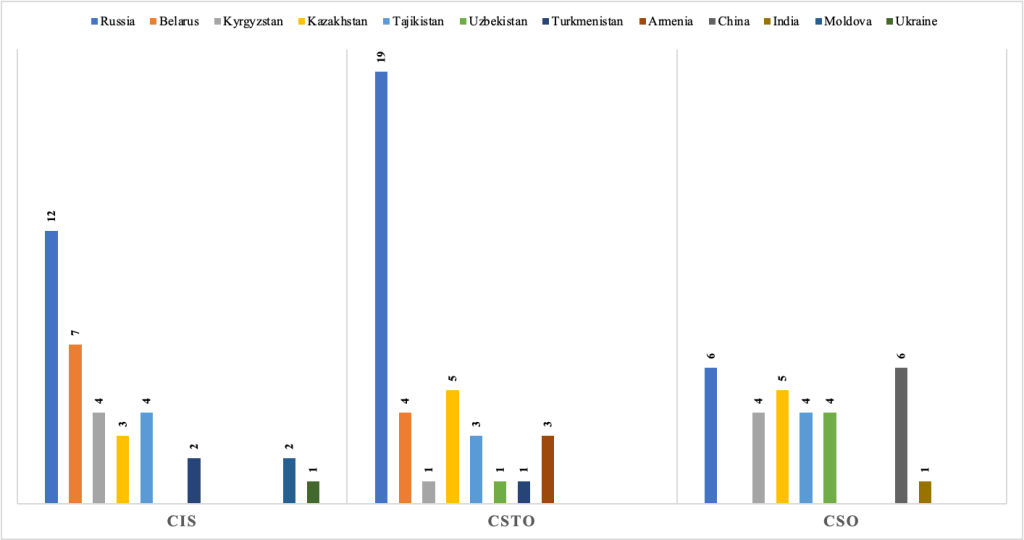
A Statement on the principles of cooperation in ensuring security in Eurasia, adopted at the meeting of the CIS Council of Foreign Ministers in October 2024, is an example of the political arrangements. In addition to Russia, Belarus, Kazakhstan, Kyrgyzstan, Tajikistan, and Uzbekistan joined the document. Earlier, in November 2023, in the CSTO format, the foreign ministers approved a Statement on common approaches to ensuring the security of the Eurasian space. These organizations are expanding discussions on all issues related to building a new architecture of continental security based on the principles of its indivisibility.
The Astana Declaration of the Council of Heads of State – SCO members, adopted in July 2024, points to the need to enhance its role in creating conditions for strengthening universal peace, security and stability, recognizes the need to improve SCO mechanisms for countering challenges and threats to security, and emphasizes that corresponding cooperation “can serve as a basis for shaping an architecture of equal and indivisible security in Eurasia.” The similar understandings were fixed in the Tianjin Declaration of the Council of Heads of State of the SCO adopted in September 2025.
Russia-China relations of strategic cooperation and comprehensive partnership are of paramount importance for strengthening stability in Eurasia. In the joint statement of the leaders of the two powers following their meeting in Beijing on May 16, 2024, it was noted that the current geopolitical realities “highlight the demand for shaping a stable security system in the Eurasian space, fully corresponding to the principle of equal and indivisible security”[7]. An intensive bilateral dialogue is underway on this topic. Conceptually, the Russian proposal complements the Chinese initiative in the sphere of global security and aligns with its basic principles.
| The Union State | Commonwealth of Independent States (CIS) | Collective Security Treaty Organization (CSTO) | Shanghai Cooperation Organization (SCO) | |
| Russia | Member | Member | Member | Member |
| Belarus | Member | Member | Member | Member |
| Armenia | – | Member | Member* | Dialogue partner |
| Azerbaijan | – | Member | Ex-Member | Dialogue partner |
| Kazakhstan | – | Member | Member | Member |
| Kyrgyzstan | – | Member | Member | Member |
| Uzbekistan | – | Member | Ex-Member | Member |
| Tajikistan | – | Member | Member | Member |
| Moldova | – | Member* | – | – |
| India | – | – | – | Member |
| Iran | – | – | – | Member |
| China | – | – | – | Member |
| Pakistan | – | – | – | Member |
| Mongolia | – | – | Observer | |
| Afghanistan | – | – | Observer | |
| Turkmenistan | – | Associated Partner | – | – |
| Serbia | – | – | Observer | – |
| Georgia | – | Ex-Member | Ex-Member | – |
| Ukraine | – | Ex-Member | – | – |
| Bahrain | – | – | – | Dialogue partner |
| Egypt | – | – | – | Dialogue partner |
| Qatar | – | – | – | Dialogue partner |
| Cambodia | – | – | – | Dialogue partner |
| Kuwait | – | – | – | Dialogue partner |
| Laos | – | – | – | Dialogue partner |
| Myanma | – | – | – | Dialogue partner |
| Nepal | – | – | – | Dialogue partner |
| Saudi Arabia | – | – | – | Dialogue partner |
| Türkiye | – | – | – | Dialogue partner |
| The UAE | – | – | – | Dialogue partner |
| Sri Lanka | – | – | – | Dialogue partner |
| The Maldives | – | – | – | Dialogue partner |
The Joint Statement of the PRC and the Russian Federation on Further Deepening the Comprehensive Strategic Partnership of Coordination for the New Era on the Occasion of Commemorating the 80th Anniversary of the Victory in China’s War of Resistance against Japanese Aggression, the Soviet Great Patriotic War, and the Establishment of the UN, signed by Presidents Putin and Xi on May 8th, 2025 in Moscow goes further. It stipulates that the two sides will cooperate on the Global Security Initiative, and the Chinese side attaches importance to the “Eurasian Security Architecture” initiative proposed by the Russian side and is willing to advance alignment of security concepts and integration of interests with the Russian side to contribute to maintaining world peace and security.
Russia and China agreed that safeguarding the international legal system based on the UN Charter is of great importance for maintaining stability in the Eurasian continent, and advocated that cooperation in security, economic, cultural, and other fields of the region should conform to the trend of multipolar development and benefit all countries in the Eurasian continent.
The two sides emphasized that ensuring a reliable and sustainable Eurasian security system must eliminate the root causes of contradictions between countries and abandon behaviors that create mutual threats. Russia and China firmly condemn any external acts of force and power aimed at undermining the process of Eurasian unity and equal cooperation.
The growing awareness of the responsibility of regional players for settling disputes in their parts of Eurasia is manifested in the activities of such structures as the “3+3” Consultative Regional Platform for the South Caucasus, the Moscow format of consultations on Afghanistan, the expanded “troika” on peaceful settlement in Afghanistan, as well as the mechanism of countries – neighbours of this country. An important role in building a stable system of peaceful coexistence and resolving security problems is played by mechanisms created within the ASEAN framework, Russia also participates in their work. There are other examples.
Since 2023, the city of Minsk that is the capital of Belarus is the venue of the annual High-Level International Conference on Eurasian Security. Three such events have taken place for the moment. The Minsk Conference is becoming an important platform for broad dialogue on issues of shaping an indivisible security space in Eurasia with the participation of officials and representatives of the expert community. Our country supports the intention of our Belarusian colleagues to hold this forum annually.
Legislators and representatives of political parties make a significant contribution to the implementation of the initiative to create a security architecture in Eurasia. United Russia political party initiated International public and political hearings on this subject were held on May 28-30, 2025 in Russian city Perm located near the geographical border between Europe and Asia. This event brought together more than 300 participants from over 30 Eurasian countries, including MPs, leading political parties’ representatives, business leaders and experts. Participants expressed their support for Russia’s commitment to establish and honest and equal dialogue on ways to solve problems related to Eurasian security. The hearings have shown high potential of parliamentary and party diplomacy, its capacity to strengthen mutual understanding among international partners.
As for the crisis on Russia’s western borders, which has entered a hot phase, we are dealing with it in an emergency response mode by using military and military-technical means. The goals of the special military operation will be achieved. To eliminate threats to our country emanating from the west in a reliable manner, it will be necessary to think through the issue of new models of interaction in the field of security in this geographical direction (after stabilization of the situation) and their integration into the common Eurasian architecture. There is a vast field for creative development of ideas on security guarantees. Historical examples here include various bilateral and multilateral agreements of both political and military nature – from non-aggression pacts, already mentioned in this article, to agreed confidence-building measures and security guarantees.
On the Eurasian Charter
In 2023, at the first conference on Eurasian security in Minsk, Belarus put forward a proposal to develop a Eurasian Charter of Diversity and Multipolarity in the XXI Century. In Russia, it received support at the highest level. We believe that the preparation of this document would correspond to our initiatives in the field of security in Eurasia. The Charter could outline a vision for the framework of interstate interaction in Eurasia, reflect a strategic understanding of the uniqueness of the formation of a new system of international relations, replacing the West-centric world order. The Charter is suitable for fixing the principles and norms on which the security space in all Eurasia will be built – from Lisbon to Beijing, from Murmansk to Riyadh, New Delhi and Jakarta. Moreover, the Charter might fix the parameters of States’ interaction in multipolar world based on the UN Charter principles in their entirety and interconnection.
This is complex work, during which we would like to take into account the widest possible range of approaches and positions. We will conduct it with the involvement of the maximum number of like-minded partners and without setting artificial deadlines. The process of developing the Eurasian Charter does not promise to be simple and quick, but ultimately it could be adopted with the consent of the participants at the level of heads of state.
An important step was the invitation sent by the foreign ministers of Russia and Belarus to the secretaries general of key Eurasian organizations to participate in the work on the Charter. On November 22, 2024, in the city of Brest, the Russian and Belarusian foreign ministers adopted the statement “Joint Vision of the Eurasian Charter of Diversity and Multipolarity in the XXI Century”. The document presents considerations we share with our Belarusian colleagues regarding the possible content of the Eurasian Charter. It serves as a starting point for interaction with all our partners who show interest in the endeavour.
This idea now is a part of intergovernmental discussions in diverse formats and it is being considered by expert community. At the plenary session of the 3rd International Conference on Eurasian security held in Minsk on October 28-29, 2025, high representatives of the DPRK, Iran and Myanmar publicly expressed their support to the elaboration of Eurasian Charter of Diversity and Multipolarity in the XXI Century. We note with satisfaction the interest to the proposal being shown by other countries. The work on the Eurasian Charter will proceed with all interested partners.
Conclusion
The initiative to create a Eurasian security architecture is designed to address appropriately to a wide range of challenges and threats – from traditional military ones to issues such as energy security and transnational crime. In essence, it aims to promote stability, cooperation, and development throughout Eurasia, eliminating external and internal risks fraught with destabilization of the continent, and simultaneously contributing to the establishment of a new world order based on multipolar principles.
President Vladimir Putin stated that this process should be peaceful, non-conflictual, and fully take into account the opinions of all its participants[8]. Obviously, for the full-scale implementation of such a strategic undertaking, necessary conditions must develop in various regions of Eurasia. However, even at the current stage, we consider it important, without imposing anything on anyone, to work together with like-minded partners, taking into account their fundamental interests, on a vision of Eurasian architecture as a unifying factor in international relations. We are not trying to predetermine any specific elements in advance. At the same time, this architecture could potentially encompass the entire continent. It should be open to everyone.
Our goal is to create a platform for cooperation, providing each country with additional opportunities to ensure its own security and facilitate its development in accordance with its national interests and traditions. We are ready to launch an honest partnership with all those who, like Russia, are guided by the principles of equality, mutual respect and the balance of interests in international affairs.
[1] Meeting with the leadership of the Ministry of Foreign Affairs of Russia: The President held a meeting with the leadership of the Ministry of Foreign Affairs of the Russian Federation // President of Russia. June 14, 2024. URL: http://www.kremlin.ru/events/president/news/74285 (in Russ.).
[2] See para. 24: Concept of the Foreign Policy of the Russian Federation (approved by Decree of the President of the Russian Federation No. 229 of March 31, 2023) // MFA of the Russian Federation. March 31, 2023. URL: https://www.mid.ru/ru/detail-material-page/1860586/ (in Russ.).
[3] Meeting with the leadership of the Ministry of Foreign Affairs of Russia: The President held a meeting with the leadership of the Ministry of Foreign Affairs of the Russian Federation // President of Russia. June 14, 2024. URL: http://www.kremlin.ru/events/president/news/74285 (in Russ.).
[4] The concept of a “free and open Indo-Pacific region” was first publicly announced by Japanese Prime Minister Shinzo Abe in 2016. The White House announced it a year later. The essence of the concept is that US policy towards the region and its very definition serve as components of Washington’s strategy aimed at “containing” Beijing – Editor’s note.
[5] Meeting with the leadership of the Ministry of Foreign Affairs of Russia: The President held a meeting with the leadership of the Ministry of Foreign Affairs of the Russian Federation // President of Russia. June 14, 2024. URL: http://www.kremlin.ru/events/president/news/74285 (in Russ.).
[6] See: Helsinki Act (CSCE) // History of Russia. URL: https://istoriarusi.ru/cccp/xelsinskiy-akt-sbse-1975.html (in Russ.); Gorshkova E.A. “Italian Breakthrough” in the diplomacy of A.A. Gromyko // Scientific-Analytical Herald of the Institute of Europe RAS. 2020. No. 6. P. 103-111 (in Russ.).
[7] “Formation of a new contour of equal and indivisible security in Eurasia. The role of the Russian Federation as a guarantor of world order” // Committee of the Federation Council on International Affairs. June 4, 2024. URL: http://international.council.gov.ru/activity/activities/round_tables/157585/ (in Russ.).
[8] Answers to journalists’ questions following the visit to China // President of Russia. May 17, 2024. URL: www.kremlin.ru/catalog/countries/CN/events/740 (in Russ.).
