
CHAPTER 18. THE PROSPECTS FOR COOPERATION BETWEEN MONGOLIA AND RUSSIAN FEDERATION IN THE ENERGY SECTOR
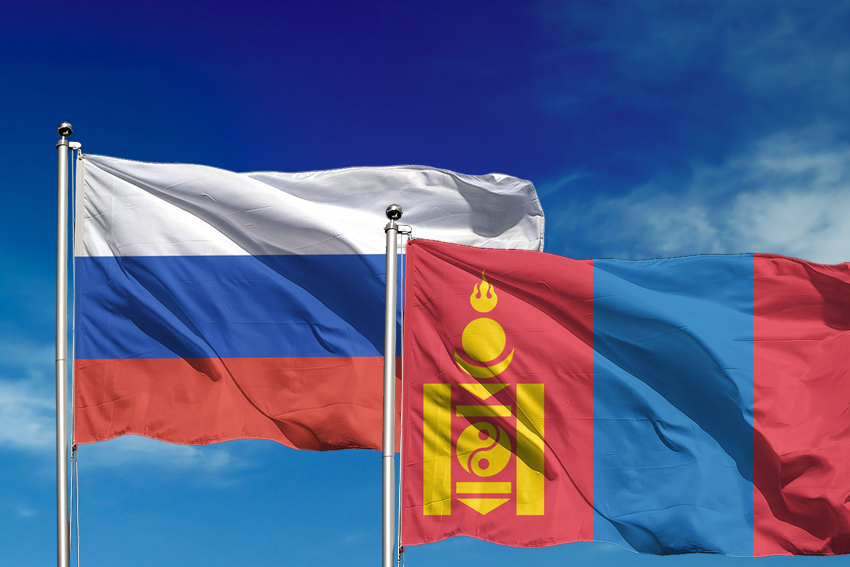
Mongolia occupies a strategic geopolitical position sharing borders with only two countries, Russia and China. Mongolia maintains friendly relations with neighbours across various fields while promoting “Third Neighbour” policy. It presumes creation of partnership with countries that do not share direct borders with Mongolia in order to become more independent in its political and economic sphere[1]. Being rich with natural resources such as copper, coal, rare earth elements (REE), lithium and others Mongolia attracts foreign capital from the developed economies. Thus, it is strategically important for Russia to enhance commercial and political ties with Mongolia.
The Russian concept of Pivot to Asia 2.0 or “Siberisation of Russia” as a national idea is becoming popular in analytical sphere. According to Sergey Karaganov, the integration of Siberia from the Urals to the Far East into a single system will become the pillar of Russia’s future in a changing world[2]. The macro reason for this is a global shift of power from the Western to Eastern hemisphere. Strategic partnership with Mongolia as well as other countries in East Asia is becoming vital for Russian national interests during Pivot to the East. Energy sector is one of the areas of mutual interests for Russia and Mongolia in terms of both supply and demand as both countries have large deposits of resources but different structure of their import, export and consumption. While for Mongolia it is important to diversify its energy sector, make the transition to green energy and satisfy growing domestic energy consumption, Russia searches for new markets for its major energy companies and needs import of newly critical materials such as REEs, lithium, titanium, uranium to create the state-of-the-art industrial products. The article provides and outlook on the Mongolian energy resources, geopolitical strive for its energy project and sums up with Russian prospects in commercial and scientific cooperation with Mongolia.
Russia-Mongolia Relations: Current Status
In 2019, relations between Russia and Mongolia reached the level of a comprehensive strategic partnership[3]. Russian-Mongolian Intergovernmental Commission on Trade, Economic, Scientific and Technical Cooperation established in 1991 is responsible for strengthening bilateral projects. According to Russian Ministry of Economic Development, trade turnover between two countries in 2024 reached about $2.5 bn[4]. Despite the positive trend in trade volume – 20% – growth, experts highlight several obstacles in mutual relations. All of them directly or indirectly affect relations in the energy sector.
Firstly, since the collapse of the Soviet Union Mongolia has lost its military and commercial attractiveness to Russia[5]. Since then Mongolia has drawn attention to the developed economies of the USA, South Korea, Japan and started to implement the so-called Third neighbour policy[6] – enhancing ties with non-bordering countries.
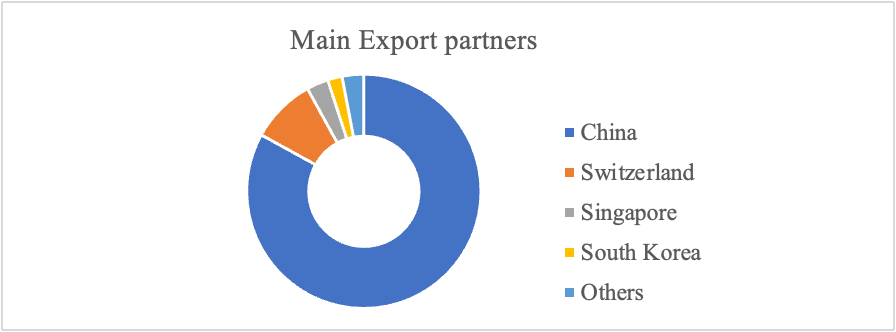
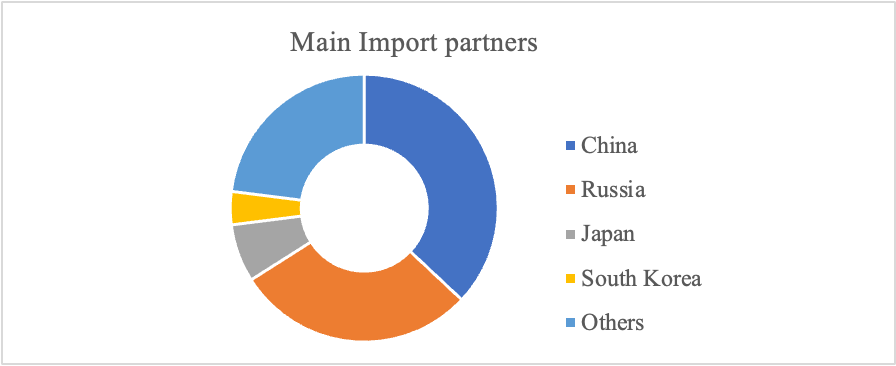
Secondly, the positive trend in trade volume between Mongolia and Russia is marked by the imbalanced structure of exports and imports. Russia is the second Mongolia trading partner. However, the turnover in total numbers is quite small comparing to China. Currently more than 70% of Mongolia’s exports and 40% of imports comes from China[7]. The structure of trade volume between Mongolia and Russia is not diversified. More than half of Russian exports are petroleum products as well as electricity that occupy 90% & 30% of total Mongolian import[8]. Meanwhile, Russia is not in the list of top Mongolia export partners.
Thirdly, Russian private investments in Mongolia energy sectors are insufficient comparing to “third neighbours” from the EU, the USA and APEC countries[9]. The presence of Russian business in Mongolia is quite limited. At present, there are few major Russian companies with the representative office in Ulaanbaatar: “Rosatom”, “Soyuz-Vostok” and a joint venture “Ulanbatorskaya Zheleznaya Doroga” (Ulaanbaatar Railway).
Energy Sector of Mongolia
Mongolia is one on of the fastest developing countries in the world with 5-6,5% annual economic growth rate according to the World Bank Group[10]. Mining and export of commodities ihave been the main drivers of Mongolia’s economic growth for the past years. Mongolia possesses vast deposits of critical mineral resources. The country ranks 7th globally in terms of copper reserves and sixth in concentrate exports. In early 2023, the National Geological Service of Mongolia reported significant copper reserves amounting to 61.4 million tons. Oyu Tolgoi project accounts for 70% of foreign investments and aims at annual production of 500 thousand tons of ore annually by 2030[11].
| Project Name | Location | Primary Minerals | License Status | Joint Venture Partners | Estimated Reserves (tonnes) | Annual Production Capacity (tonnes) | Current Development Stage | Key Challenges | Recent Developments |
| Oyu Tolgoi | South Gobi | Copper, Gold, Silver | Active | Rio Tinto, Turquoise Hill Resources, Erdenes Oyu Tolgoi | 2.7 billion (ore) | 500,000 (copper) | Production (Open pit), Development (Underground) | Power supply, Water management | Underground expansion, Arbitration resolution |
| Erdenet | Orkhon Province | Copper, Molybdenum | Active | Mongolian Government | 1.2 billion (ore) | 130,000 (copper) | Production | Aging infrastructure, Efficiency improvements | Modernization efforts |
| Tsagaan Suvarga | Dornogobi Province | Copper, Molybdenum | Development | MAK, Mongolyn Alt Corp | 240 million (ore) | 40,000 (planned) | Feasibility | Financing, Infrastructure development | Seeking strategic partners |
| Kharmagtai | South Gobi | Copper, Gold | Exploration | Xanadu Mines | 600 million (inferred) | TBD | Advanced Exploration | Resource definition, Project financing | Positive drilling results, Scoping study |
| Bayan Khundii | Bayankhongor Province | Gold | Development | Erdene Resource Development | 3.16 million (ore) | 60,000 oz (gold, planned) | Feasibility | Permitting, Community relations | Definitive Feasibility Study completed |
The main source of energy in Mongolia is coal. Mongolia ranks 10th in the world in terms of coal reserves, with total proven reserves estimated at 150 billion tons by the Ministry of Mineral Resources and Energy of Mongolia. Coal and copper are the main exports commodities of the country.
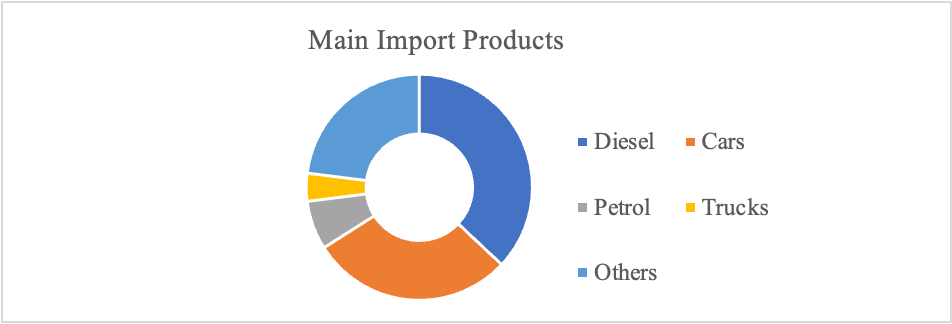
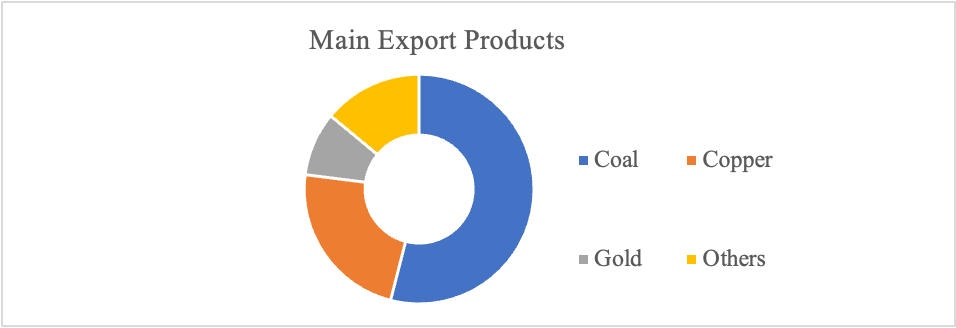
Mongolia is also reach in newly demanded materials such as Uranium, Rare Earth Elements (REE), Lithium and Titanium. Uranium is a non-renewable resource that is crucial for the developed nuclear industry. For Russia as a major player in peaceful nuclear energy sector, research into additional raw material sources for nuclear power plants is highly relevant. Specialized studies in Mongolia have identified four uranium-bearing provinces: Mongolo-Priargunskaya, Gobi-Tamtsagskaya, Khentei-Daurskaya, North Mongolian province. Within these provinces, 13 uranium deposits have been discovered and studied, along with approximately 100 ore occurrences and over 1,400 points of uranium mineralization and radioactive anomalies. Main centers of Uranium reserves are situated in Choibalsan, North and East Gobi regions, Berkhi, Khangail and Central Mongolia. The uranium concentration in the ores of the mentioned regions and deposits reaches 1%, qualifying these ores as high-grade. Across Mongolian deposits, the average uranium content in ore can reach 0.5%, which is characteristic of medium-grade ores. In recent years, uranium deposits have been actively developed in southeastern Mongolia, including the Zoovch Ovoo deposit (with reserves of 93,291 tU) and the Dulaan Uul deposit controlled by the French company Orano (formerly AREVA), while a new hydrogenic uranium deposit Ulzit has recently been discovered in the East Gobi region with ore containing up to 0.17% wt[12].
Rare Earth Elements (REE), also known as rare earth metals, constitute a group of 17 metals. They are essential for the production of special metal alloys, optical devices, medical equipment, semiconductors. The US Geological Survey once put Mongolia on the 2nd place in the REE reserves with 31 million tons[13]. At the present stage, total Mongolia’s reserves are estimated at 3.1 million tons[14]. The southern part of the country is the richest in REE. A large carbonatite complex is located in the south of the country, in the Mushgai Khudag region and Lugiin Gol. A promising deposit with similar to Mushgai Khudag REE distribution is located in Nuurst Khotgor in Northeastern part of Mongolia. The estimated resources are 40 million tons TREO with 1.22 wt.
Currently investors are actively interested in the prospects of mining Mongolian Lithium, which is used in the production of batteries, shock-resistant ceramics, and high-strength glasses for manufacturing TV tubes. According to the recent expert estimates, identified lithium oxide deposits increased from 650 000 to 680 000 tons over the past year[15]. Research results on the composition of lake waters in Northwest Mongolia show elevated concentrations of lithium, bromine, uranium, and boron. For example, in mineralized waters extracted from shallow depths (up to 20 meters) at the Baavkhai Uul deposit in the south of the country, lithium content reaches 811 ppm, while the brines from the neighbouring Urga Naran deposit contain up to 918 ppm of lithium[16]. The main part of the salars of Western Mongolia is located on the border with the Republic of Tuva. The total reserves of lithium in the lakes Khyargas-Nuur, Uvs-Nuur, Davsan-Nuur, Baba Ganush-Nuur can reach 26,000 tons. The highest concentration of this useful resource up to 97,000 μg/l is recorded in the lakes Davsan-Nuur, Baba Ganush-Nuur. The concentration of lithium in the salars of Mongolia is lower than in Tarumovskoye Lake, Dagestan or Qinghai Lake, China. In addition, the lakes are located in extreme climatic conditions. Therefore, mining there is difficult. Nevertheless, the growing needs of industry and the range of application of the resource make Mongolia attractive for investment from Russia, given the proximity of the borders.
Mongolia has proven deposits of Titanium. Bod deposit is located in Bayan-Ölgii aimag situated just 131 km from the Tashanta station, which borders Russia. Currently, the owners are seeking investments for its industrial development.
| Currently Regional | Currently Global | Currently Country specific |
| Cesium (Cs) | Antimony (Sb) | Carbon C |
| Chromium (Cr) | Beryllium (Be) | Fluorine (F) |
| Manganese (Mn) – present | Bismuth (Bi) | Thallium (Tl) |
| Rubidium (Rb) | Cobalt (Co) – present | Barium (Ba) |
| Rhenium (Re) | Copper (Cu) – present | Molybdenum (Mo) – present |
| Tellurium (Te) | Gallium (Ga) | Nickel (Ni) – present |
| Zirconium (Zr) | Germanium (Ge) | Selenium (Se) |
| Scandium (Sc) | Hafnium (Hf) | Arsenic (As) |
| Aluminum (Al) | Indium (In) | Cerium |
| Bauxite | Lithium (Li) – present | Helium (He) |
| Barite (BaSO₄) | Magnesium (Mg) | Neodymium |
| Fluorspar – present | Niobium (Nb) | Potash / Potassium (P) |
| Graphite (natural) – present | Strontium (Sr) | Tin (Sn) |
| Silicon metal (Si) | Tantalum (Ta) | Uranium (U) |
| Boron (B) | Titanium (Ti) – present | And others |
| Phosphorus (P) | Tungsten (W) – present | |
| Coking coal | Vanadium (V) | |
| Phosphate rock | Platinum group metals – present | |
| Rubber (natural) | Rare-earth elements – present |
Mongolia Energy Market: Opportunities and Risks for Russia
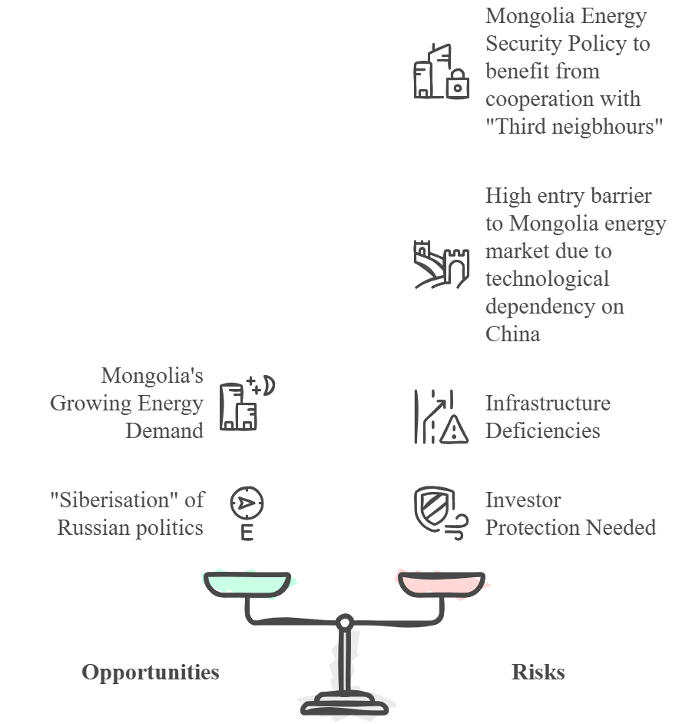
Mongolia with its huge energy resources can be considered as a perspective partner in mineral development and extraction as well as other commercial and scientific energy projects. For Russia, there are several opportunities and risks.
Opportunity one is that Russia can expand the scale of petroleum products and electricity supply with the growing energy demand in Mongolia. According to Mongolia long-term policy “Vision 2050”[17] and “New policy of Revival” Mongolia aims to triple its GDP and double its energy production[18]. Active industrialization requires more energy, while 20% of electricity is already exported from Russia and China. Mongolia is seeing an annual growth of 6-7% in energy consumption, which is expected to reach 3,000 MW by 2035[19]. Mongolia’s ambitious plans to develop infrastructure and become a transit zone under the Belt and Road Initiative will lead to the creation of new satellite cities, which will further increase energy consumption[20]. That is why Russia should further increase exports of energy to Mongolia.
However, this opportunity is accompanied with the risk coming from Mongolia energy security policy. According to the Ministry of Energy of Mongolia, the energy security strategy is based on the goals of increasing the production and export of energy resources and maintaining the sustainability of its own energy[21]. In the country’s development program “Vision 2050”, Mongolia plans to become independent of electricity supplies by 2030, increase the production of infrastructure. By 2040, create a national integrated energy system through the construction of power transmission lines and renewable energy sources. By 2050, implement megaprojects in the mining industry. That is, Mongolia wants to diversify exports and carry out environmental reforms[22].
The second risk lies in the growing interest of non-neighbour countries in the research, exploration and extraction of Mongolia energy resources as well as diversification its energy sector by supplying renewable energy technologies. Germany, France[23], The United States and South Korea[24] have shown interest in cooperation with Mongolia in the sphere of critical minerals development and extraction.
In June 2023, Mongolia and the United States signed a Memorandum of Understanding, within the framework of which they plan to cooperate in the field of REE mining[25]. At the APEC San Francisco Summit on November 17, 2023, Mongolia-U.S.-South Korea established trilateral consultation mechanism on “critical minerals”[26]. Currently the USA in particular is using threat of secondary sanctions against Mongolia as a leverage to impede cooperation with Russia.
In 2024 Germany allocated 2 million Euro for sustainable energy projects of Mongolia within the framework of Strategic Partnership Declaration[27].
In March 2025, South Korea and Mongolia agreed at the energy ministry level to deepen cooperation. By November 2025, it is planned to install equipment and materials for the Korea-Mongolia REE Cooperation Center funded by South Korea. The two sides will conduct joint exploration of key mineral resources through cooperation between research institutes[28].In the horizon up to 2035, the United States plans to provide financial loans and technical instruments to the private sector through the U.S. International Development Finance Corporation, the Export-Import Bank of the United States, and the United States Trade and Development Agency. The United States considers uranium, lithium, electrical steel, nickel, magnesium, platinum, aluminum, copper, titanium, and silicon to be the most important sources of raw materials for export from Mongolia in the short term. REEs such as dysprosium (used in metallurgy, to create reactor control rods, and super-powerful magnets), cobalt, gallium, and graphite are considered to be the most important for production, but risky for investment in mining.
France is a long-standing partner of Mongolia in the field of uranium development[29] and mining and has already decided to invest in the exploration of REE reserves. Orano has entered into a partnership with Mongolia to develop and extract lithium, signing a contract in October 2023 for an investment in exploration of deposits worth 400 thousand euros[30]. On January 18, 2024, Mongolia signed an agreement with the French company BRGM to explore the country’s uranium and lithium reserves[31].
It is worth highlighting the intensification of Japan’s activity in Mongolia. Japan’s Emperor Naruhito paid an official visit to Mongolia from July 6 to July 13, 2025. This visit goes far beyond traditional Emperor diplomacy and aims at bolstering bilateral economic ties[32]. According to Russian expert O. Paramonov, traditionally relations between Mongolia and Japan were described as cold after World War II. For a long time, countries mostly focused on humanitarian and economic agenda. However, currently Japan tries to weaken Mongolian ties with Russia and China offering various forms of security support to the country[33]. Obviously, one of the aims of such policy is to get preferential access to Mongolian vast energy resources for Japanese companies.
The third risk is that Mongolia is currently dependent on China in terms of trade and technology. China controls advanced technologies for separating and refining REE. China has managed to establish a reliable supply of high-energy permanent magnets suitable for use in high-temperature systems such as electric motors used in automobiles. It would be hard to replace Chine but Russia could promote trilateral cooperation.
The fourth risk lies in the inner state situation in Mongolia. Attracting investment in Mongolia’s mining industry is complicated by the lack of necessary infrastructure and energy capacity reserves in the country. Furthermore, Mongolian legislation requires significant development in terms of investor protection. Overall, according to the World Bank, investors suffer from several issues: changes in political course regarding foreign investments and an unstable institutional framework (the investment promotion agency has undergone five iterations over 20 years). Mechanisms for engaging the private sector and addressing investor complaints are inconsistently applied.
Special licenses for REE deposits are held by private companies that refuse to cooperate with the government or use their licenses as collateral for loans. Implementation of large REE mining projects is excessively bureaucratized. To obtain a license for REE exploration and mining, a project must be submitted to the National Security Council of Mongolia and approved at a cabinet meeting, as REEs are classified as radioactive elements under the legislation[34].
Opportunity two is that current geopolitical situation stimulates Russian pivot to East. And Mongolia is a critical ally in this geopolitical shift. The recent intensification of bilateral relations, highlighted by reciprocal presidential visits in 2024–2025, signifies a strategic reorientation towards deepening multidimensional cooperation between Russia and Mongolia. These high-level diplomatic engagements not only strengthened existing ties, but also laid the groundwork for expanded collaboration across various sectors while reinforcing the importance of preserving shared historical memory as a foundation for future partnership. Russia and Mongolia have overcome difficulties of previous energy projects such as joint venture “Dordon Uranium”[35]. The voices of politicians who believed that Russia should pay the penalty are not as strong in the current Mongolian government. There is an opportunity to implement promising projects and conduct scientific research in the energy sphere.
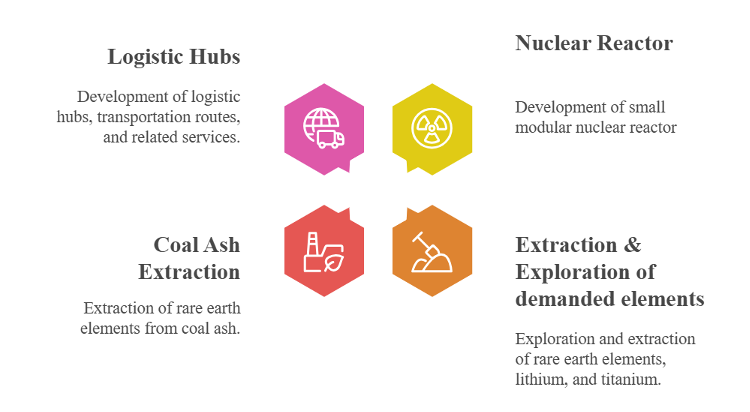
One of the promising projects is the Small Modular Nuclear Reactor (SMNR). On October 19, 2023, Rosatom Energy Projects and MonAtom signed a Memorandum of Understanding on the construction of a SMNR in Mongolia, which laid the foundation for dialogue on the project’s implementation.
We expect the official intergovernmental agreement on the construction of the small modular nuclear reactor to be signed in 2025. has the potential to address Mongolia’s increasing energy consumption needs while simultaneously supporting the country’s sustainable development objectives. Furthermore, it will contribute to the realization of Mongolia’s “Vision 2050” strategy, which focuses on fostering a green economy and promoting environmentally friendly development practices.
There are some other promising scientific projects that meet Russian interests. Firstly, it is geopolitically and economically reasonable to resume Uranium extraction in Mongolia. French Orano has already started extraction, Kazakh and Uzbek companies show interest in this demanded resource.
Secondly, exploration and extraction of REEs, Lithium and Titanium. The increasing industrial demand and the wide range of resource applications are making Mongolia an appealing investment destination for Russia, considering the close proximity of their shared borders. Russia has demonstrated significant interest in Mongolia’s lithium reserves, with ongoing geological mapping activities aimed at assessing the potential of these deposits. The current focus is on evaluating lithium concentration levels to determine the required development capacities, which involves two key objectives: firstly, to update and build upon previous research conducted by Russian scientists, including studies from the Soviet era, and secondly, to conduct a comprehensive analysis of the economic viability of lithium extraction projects. This dual-pronged approach reflects Russia’s strategic intent to thoroughly understand and potentially capitalize on Mongolia’s lithium resources. Pace of such activities should be quick due to ongoing geopolitical competition.
Thirdly, traditional commodities such as coal could also be interested in terms of investment. Currently, the extraction of REEs and other valuable components from coal ash is considered promising. Lanthanoids can be obtained both as a secondary product of thermal power plants and directly at coal deposits. For example, at the Adunchuluun deposit, the uranium content in coal ash reaches 207 grams per ton (g/t), while at the Baganuur deposit, thorium content reaches up to 12.4 g/t[36]. Research indicates that for the profitable extraction of such components, the minimum concentration should range from several grams to several hundred grams per ton, depending on the specific element.
Fourthly, energy projects create value chain structure which promotes strategic partnership between countries. Logistic hubs, transportation routes, services thrive when countries have strong business ties. In this context it is important to enhance bilateral trade ties via agreements. On June 27, 2025 on the sidelines of the meeting of the Supreme Eurasian Economic Council in Minsk, the EAEU signed agreements on free trade in goods with Mongolia. The agreement with Mongolia concerns a temporary treaty involving a restricted range of goods (367 tariff lines). Under this agreement, the majority of goods included in the scope of the agreement, accounting for 89% of Russian exports to Mongolia, will be eligible for duty-free supply[37]. By August 2025 the Agreement still is not ratified for several reasons. Firstly, in recent months the problem of mutual payments has become much more acute. Mongolian banks are concerned about potential secondary sanctions from the US, thus payments have to managed manually. This issue predominantly harms private businesses in both nations, as they have no influence over Mongolian banks. Secondly, due to Mongolian concern about secondary sanctions there the resumption of direct air service between Moscow and Ulaanbaatar remains unresolved, despite evident demand. Only small private air companies operate between Irkutsk, Krasnoyarsk, Kyzyl and Ulaanbaatar.
Conclusion
Russian geopolitical shift to the East, described as Siberisation, promotes intensification of political and commercial ties with Eastern neighbours. The brightest example is the rapprochement between Russia and DPRK. Mongolia is a strategic neighbour to Russia due its geopolitical position on the trade route from China and large amount of strategic deposits of coal, copper, uranium, REE, lithium and titanium. The cooperation between Russia and Mongolia in the energy sector is dependent on internal and external factors. Internal factors in Russia include lack of interest and knowledge about Mongolia from private investors, poor cultural ties after the collapse of the Soviet Union and unsuccessful previous record in energy initiatives. Recent intensification of bilateral contacts on the highest level should push through the positive agenda in the sphere of business development.
The inner situation in Mongolia also affects cooperation. 90% of trade volume and major technologies falls on China which makes market entry difficult and calls into question the profitability of projects. Furthermore, unlike North Korea Mongolia promotes Third neighbour policy which is focused on gaining Western of pro-Western experience and FDI to the country energy sector. The interest in Mongolia’s energy deposits from the USA, EU, South Korea, Japan constrains the entry of Russian investments. However, there are positive factors that promote cooperation in the energy sphere. Firstly, Mongolia’s rapid growth of energy consumption combined with poor ecological situation caused by coal-fired thermal power plants requires new types of energy source. Rosatom Energy Projects and MonAtom have agreed on building SMNR. Secondly, Mongolia and Russia have similar geological conditions thus it is important to build upon previous research conducted by Russian scientists, including studies from the Soviet Union. Mongolia has proven deposits of critical REE, Lithium, Uranium and Titanium. We consider that it is geopolitically and economically reasonable to enter the competition for Mongolia’s energy resources on the stage of geological surveying, cartography, resource assessment and economic viability analysis. In terms of already developed deposits we propose to resume Uranium extraction in Mongolia. Finally, enhancing bilateral trade agreements aimed at facilitating bilateral trade is critical for the future. Both countries should build upon the agreed framework between the EAEU and Mongolia, resume direct flies and set up banking payment system despite pressure of the secondary sanctions from the West.
[1] Rodionov V., Ayushieva I. GThe “Third Neighbour” As An Ideological Political Concept // Vestnik Tomskogo gosudarstvennogo universiteta. 2017. № 420. Pp. 125–130. (in Russ).
[2] Karaganov S., Kozylov I. Pivot to Asia 2.0, or “Siberization” of Russia // Russia in Global Affairs Journal. 2025. Vol. 23. № 1. P. 221-229. (in Russ).
[3] Interview of Deputy Minister of Foreign Affairs of the Russian Federation Andrey.Rudenko to the Interfax news agency, February 10, 2025 // MFA of the Russian Federation. URL: https://www.mid.ru/ru/maps/mn/1995453/ (in Russ.).
[4] Dmitry Volvach: By the end of 2024, mutual trade between Russia and Mongolia will reach $2.5 billion // Ministry of Economic Development of the Russian Federation URL: https://www.economy.gov.ru/material/news/dmitriy_volvach_k_koncu_2024_goda_vzaimnaya_torgovlya_mezhdu_rossiey_i_mongoliey_dostignet_25_mlrd_dollarov.html (in Russ.).
[5] Bezrukov L., Fartyshev A, Features of Mongolian Foreign Trade: Risks for Russia // World Economy and International Relations Journal. 2022. Vol. 66. №3. P. 101-109.
[6] Ignatov I. Mongolian foreign policy concept of the “third neighbour”: history, features and prospects // Problems of the Far East Journal. 2022. No. 1. P. 53–67. (in Russ).
[7] Mongolia’s foreign trade surges 12.3 pct in 2024 // Xinhua. URL: https://english.news.cn/20250110/d5b146d6436a4f5e9b8b8b4ee0ab9373/c.html
[8] Namzhilova V. Russia and Mongolia: Forging Stronger Trade Relations // RIAC. November 18, 2024. URL: https://russiancouncil.ru/en/analytics-and-comments/analytics/russia-and-mongolia-forging-stronger-trade-relations/
[9] Kalinin R., Khatmullin A. Russian-Mongolian cooperation: status and prospects in the context of the struggle for resources in Eurasia // International Affairs Journal. 2024. No. 6. P.62-72. (in Russ).
[10] Mongolia Overview // World Bank URL: https://www.worldbank.org/en/country/mongolia/overview
[11] Oyu Tolgoi To Become the World’s Fourth Largest Copper Mine // MONTSAME News. March 21, 2025. URL: https://www.montsame.mn/en/read/364655
[12] Kalinin R., Khatmullin A. Mongolia as a New Center of Resource Competition: Outlook for Russian-Mongolian Cooperation in Nuclear Energy, Mineral Exploration, and Mining. // PIR-Center, 2024. (No. 41). 43 p. (in Russ.)
[13] Mongolia’s rare earth reserves draw foreign investor interest // The Central Asia-Caucasus Institute and Silk Road
Studies Program Joint Center. June 8, 2011. URL: https://www.cacianalyst.org/publications/analytical-articles/item/12300-analytical-articles-caci-analyst-2011-6-8-art-12300.html
[14] Concerns that US-Mongolia rare-earth cooperation will undercut China’s industry are unwarranted // The Global Times. August 15, 2023 URL: https://www.globaltimes.cn/page/202308/1296348.shtml
[15] D. Khashbat: Mongolia’s lithium oxide resources increased to 680,000 tons // Mining Insight. URL: https://en.mininginsight.mn/index.php?newsid=394
[16] Lithium and uranium in endorheic lakes of Western Mongolia / Shvartsev S., Isupov V., Vladimirov A. [et al.] // Chemistry for Sustainable Development. 2012. Vol.20, №1. p. 43-48. (in Russ.).
[17] Mongolia Vision 2050. URL: https://vision2050.gov.mn/eng/
[18] Oyun-Erdene L: New recovery policy will triple GDP in a short period of time // MONTSAME News Agency. URL: https://montsame.mn/ru/read/294206
[19] The issue of nuclear power plants will be discussed during Emmanuel Macron’s visit to Mongolia, says Minister of Energy // Central Asia Media. URL: https://centralasia.media/news:1914335 (in Russ.).
[20] Altanshagai T. Mongolia’s Precarious Energy Security // The Diplomat, 2024. 16 p.
[21] Ministry’s goals and objectives // Government of Mongolia – Ministry of Energy. URL: https://energy.gov.mn/p/22
[22] Mongolia Vision 2050. URL: https://vision2050.gov.mn/eng/
[23] Mongolia will provide France with critical mineral resources from its mines // Mining Technology. May 23, 2023 URL: https://www.mining-technology.com/news/france-mongolia-uranium-critical-minerals/?cf-view
[24] Ulaanbaatar and Seoul to extract minerals for EVs. // Asia News. URL: https://www.asianews.it/news-en/Ulaanbaatar-and-Seoul-to-extract-minerals-for-EVs-57780.html
[25] United States – Mongolia Memorandum of Understanding on Mineral Resources // U.S. Dept of State. URL: https://www.state.gov/united-states-mongolia-memorandum-of-understanding-on-mineral-resources.
[26] Leaders of IPEF member states agree to launch ‘critical minerals dialogue’ // Yonhap. November 17, 2023 URL: https://en.yna.co.kr/view/AEN20231117003700315
[27] Cooperation Documents Signed Between Mongolia and Germany // MONTSAME News Agency. URL: https://montsame.mn/en/read/337213
[28] Mongolia agrees to stronger bilateral cooperation in rare metals. Korea.net URL: https://www.korea.net/NewsFocus/Business/view?articleId=267959
[29] Mongolia signs uranium mining investment deal with France – PM // Financial One. January 17, 2025. URL: https://fomag.ru/news-streem/mongoliya-podpisala-investitsionnoe-soglashenie-o-dobyche-urana-s-frantsiey-premer (in Russ.).
[30] Lithium-hungry France strikes Mongolian exploration deal // Reuters. October 12, 2023 URL: https://www.reuters.com/markets/commodities/lithium-hungry-france-strikes-mongolian-exploration-deal-2023-10-12/
[31] CGG and France to explore Mongolia for lithium, uranium // Mining Magazine. URL: https://www.miningmagazine.com/surface-mining/news/1463899/cgg-france-explore-mongolia-lithium-uranium
[32] Japan played the emperor card in Mongolia // Nezavisimaya Gazeta. July 8, 2025. URL: https://www.ng.ru/world/2025-07-08/6_9289_mongolia.html. (in Russ.).
[33] Paramonov O. Japan’s Emperor pays a visit to the heirs of Genghis Khan // International Affairs Journal. URL: https://interaffairs.ru/news/show/52230 (in Russ.).
[34] Boosting Mongolia’s Private Sector and Green Competitiveness // World Bank Group URL: https://thedocs.worldbank.org/en/doc/eca151687ba613203727a26c66acb1fa-0070012024/original/Boosting-Mongolia-s-Private-Sector-and-Green-Competitiveness.pdf
[35] Mongolia was fined for uranium // Kommersant Publishing House. March 4, 2015. URL: https://www.kommersant.ru/doc/2679238 (in Russ.).
[36] Shupov V., Shvartsov S., Vladimirov A. et al. Hydro-mineral resources of salt lakes in Western Mongolia // Interexpo Geo-Siberia. 2012. Vol. 1, No. 2. Pp. 43-47. (in Russ.).
[37] Free trade agreements with the UAE and Mongolia will save Russian businesses around 20 billion rubles // Ministry of Economic Development of the Russian Federation URL: https://economy.gov.ru/material/news/soglasheniya_o_svobodnoy_torgovle_s_oae_i_mongoliey_sekonomyat_rossiyskomu_biznesu_poryadka_20_mlrd_rubley.html (in Russ.).
