
CHAPTER 23. IN SEARCH OF GLOBAL EQUILIBRIUM: A VIEW FROM SOUTH ASIA

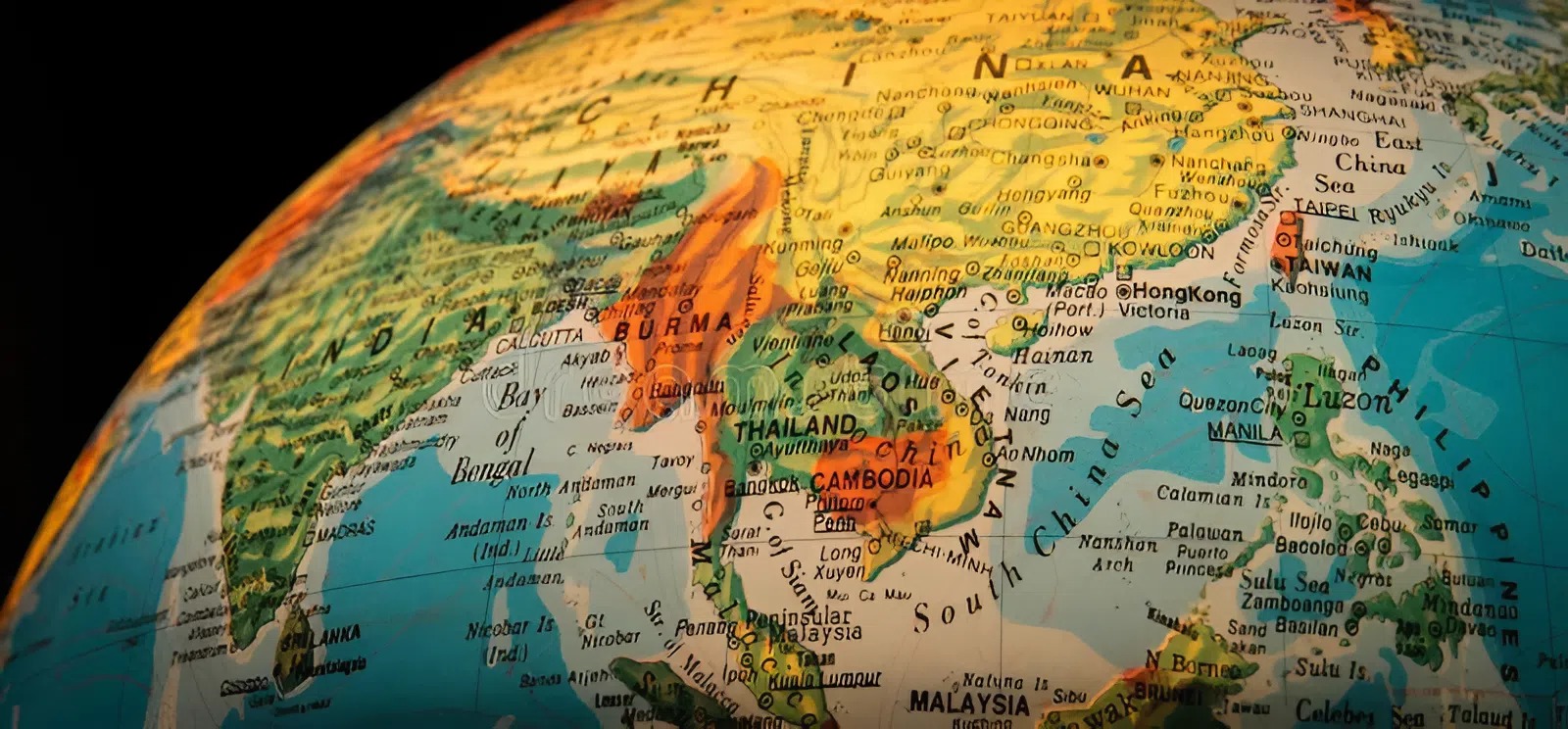
Eseniia Kosulina: Dr. Jayatilleka, let’s start our conversation with a general question. How do you assess the current threat landscape in South Asia? What challenges do you see as the most pressing for the countries in the region today and why? Is there a “unifying threat”?
Dayan Jayatilleka: South Asia narrowly avoided a major war between two neighbours, India and Pakistan, who are nuclear-armed. The most pressing challenge is to maintain peace between these two neighbours as well as between India, and its neighbour China. The threat of war should be the unifying threat. However, despite it being a common threat it has not been a unifying one. There has been no perception of it as unifying and no collective initiatives issuing from this threat.
Eseniia Kosulina: How has the return of US President Donald Trump to the White House affected the situation in the region, in terms of long-term changes? Has US policy in South Asia become more offensive or, on the contrary, balanced with the arrival of the Republican administration?
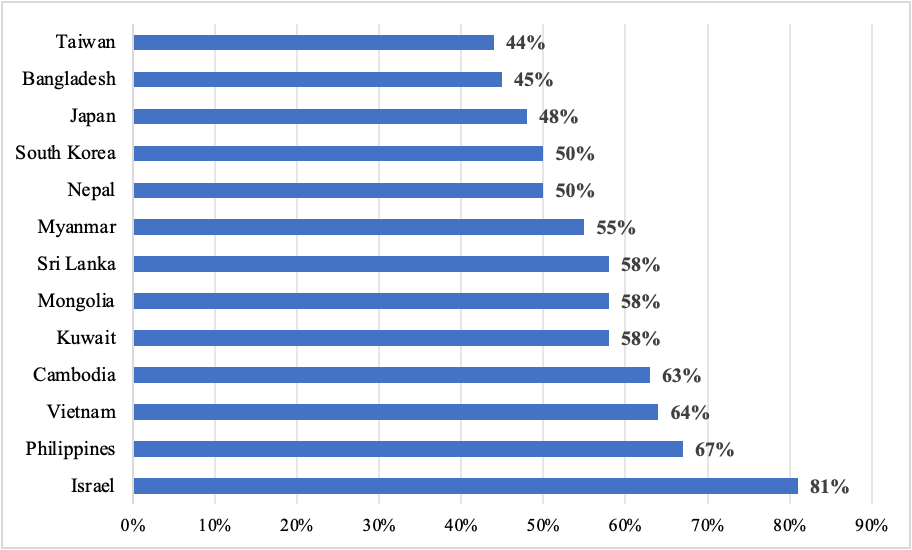
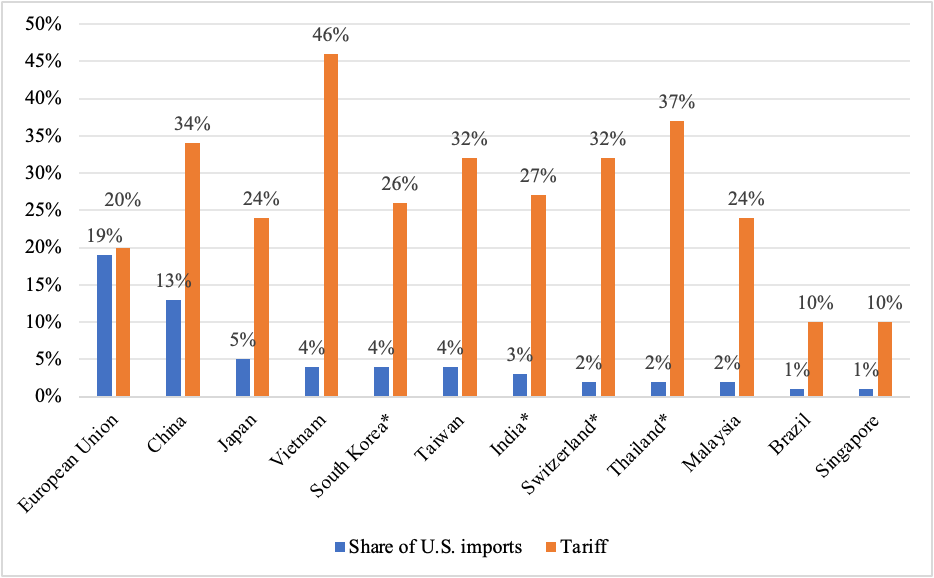
Dayan Jayatilleka: It is too early to talk of long-term changes, because there are many dramatic changes underway and we cannot calculate the cumulative effects of these changes. For instance, we do not know how the US announcement on higher tariffs on its strategic partner India, will affect the relationship and therefore the region as a whole. In some respects, US policy has been helpful as during the clash between India and Pakistan. In other respects, such as the secondary tariffs on India, which may or may not come into effect, US policy has been disruptive.
Eseniia Kosulina: Let’s talk separately about Russian policy – but with a short introduction. You have devoted many years to studying global processes (including Russian policy) through the prism of neo-Marxist theory. In particular, in 2024 you wrote an article about the need for Moscow to adopt a “Global Leninist Strategy”. In your opinion, has Russia come closer to the contours of this strategy in solving foreign policy tasks in South Asia and on the world stage as a whole, or, on the contrary, has it moved further away from them?
Dayan Jayatilleka: Russian policy in the South Asian region has been broadly in accordance with the neo-Leninist policy of Russia-India-China (RIC) enunciated by Foreign Minister and Prime Minister Primakov. However, on the world stage as a whole, Russia is too far from Leninist realism, and has been moving too far in the wrong direction, because of the dominant influence of an ideology which holds that there is a strategic, philosophic and even existential commonality between Trump’s conservative Christian nationalism and Russia’s values and ideology.
Those ideologues who have written in glowing terms about ‘The Trump Revolution’ are ironically making the same mistake as that made by those they regard as foes: Nikita Kruschchev, Mikhail Gorbachev and Boris Yeltsin. Both the Russian nationalist-conservatives and the earlier liberals, adhered to the delusion of a convergence theory. They will soon realize that any convergence between Trump’s USA and Russia is only situational, tactical and temporary. It cannot be the basis of serious strategy, let alone a ‘grand strategy’. It is far more realistic for Russia to go back to the theory and strategy of Lenin, Stalin, and the insights of Molotov, Kaganovich, Grechko, Andropov, Akhromeyev etc.
Eseniia Kosulina: How is Russia’s foreign policy course assessed in Sri Lanka? In particular, Moscow’s work to combat neocolonialism? Are there any points in the Russian foreign policy program that cause particularly zealous support or, on the contrary, fundamental disagreement?
Dayan Jayatilleka: Sri Lankan public opinion is in no way in support of the Ukrainian regime and the warmongering towards Russia of the EU and UK. Sri Lanka is in general, sympathetic to Russia. But Sri Lankan admiration towards Russia has been somewhat confused because most Sri Lankans view Russia through the prism of the Great Patriotic War and the feats of the Soviet Red Army. Most of the information and analysis the Sri Lankan public gets about the Ukraine war is from Western sources, and though this has not made Sri Lankans pro-Western, it has led to a certain degree of disappointment.
Eseniia Kosulina: In 2025, the UN celebrated the 80th anniversary of its founding. Against this background, the voices of sceptics are becoming increasingly louder, who believe that the organization needs to be urgently reformed and, in a sense, even have its powers revised; to give more rights and opportunities to developing countries (the so-called “Global South”). In your opinion, to what extent is this true?
Dayan Jayatilleka: The UN has not played the role it should – Israel’s continuing barbaric war against Gaza and its Palestinian people is the best example – but the world is much better with the UN than it would be without it. The Global South correctly believes that the Security Council should be reformed so as to reflect more accurately, the composition and distribution of humanity.
Eseniia Kosulina: Continuing with the topic raised earlier. To what extent, in your opinion, is the Global South consolidated today? Which countries, in your opinion, contribute most to strengthening its reputation? Are there any who act as “spoilers” of cooperation?
Dayan Jayatilleka: It is a paradox. On the one hand the Global South is stronger than it was during the post-Cold War period of unipolarity in the 1990s. The primary factors are the rising strength of China and the existence of BRICS, which of course is not exclusively of the Global South but is mainly so.
The expanded BRICS is a highly positive factor. As a Realist I would say that the continuing rise of China contributes most to the strengthening of the Global South. As for ‘spoilers’ I would not go so far as to identify any in such terms, but I hope that the insulting manner in which Trump’s USA manages its relations with India, would make India reconsider whether it has gone too far in leaning towards the West through the QUAD[4], and whether it would not be more in its interests to re-balance its relationships, bringing it closer to China and the Global South.
Eseniia Kosulina: What do you think are the prospects for BRICS as a potential platform for uniting the efforts of the Global South? What “formula for success” for this platform do you personally see?
Dayan Jayatilleka: The darkest period for us in the South was the two decades from the dissolution of the USSR to the lynching of Gaddafi. Since then, the return of President Putin, the rapid rise of China, the leadership of President Xi, the close friendship of Russia and China, the economic strength of Asia, and the founding and expansion of BRICS have been the main positive factors. My formulas for success would be twofold: (a) closer strategic integration – similar to NATO – of Russia, China and possibly Iran, and (b) the further expansion of BRICS.
Eseniia Kosulina: In the context of the ongoing transformation of the global world order, what role do you think Sri Lanka will find acceptable in the emerging security system – a mediator, a neutral player, or an independent center of power? What is Russia’s place in this system?
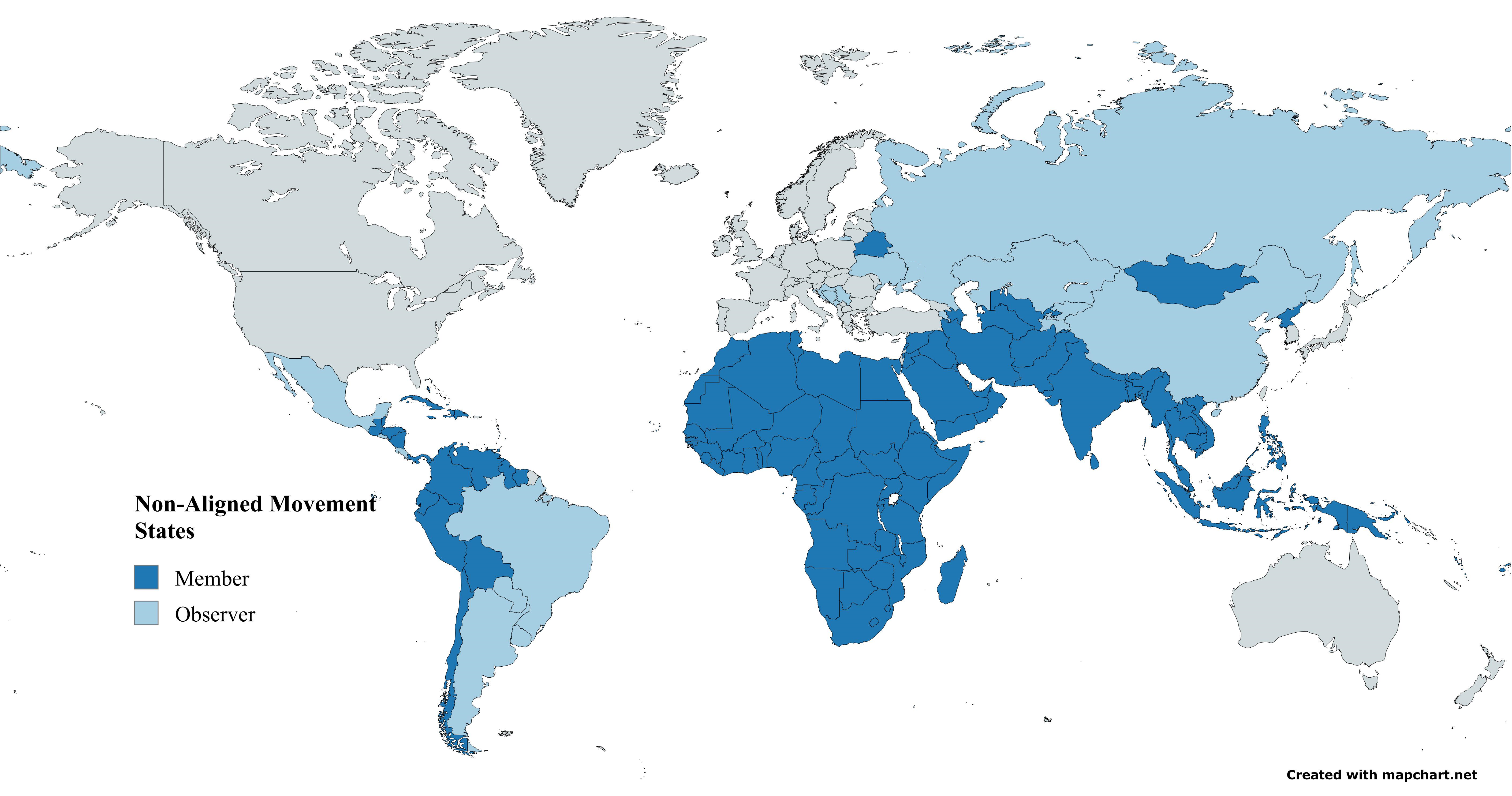
Dayan Jayatilleka: I think that Sri Lanka should become a partner country of BRICS. I also think it should return to an approximation of its active and activist role during the days of the Non-aligned Movement. While Sri Lanka can be neutral in this or that specific conflict, it cannot adopt a general doctrine, policy or posture of neutrality. While the Non-aligned Movement is weak, the global context is such that the relevance of the Principles of Bandung 70 years ago, and the Non-aligned Movement founded in 1961, are greater than ever. Sri Lanka must stand for them and propagate that vision and perspective, in all international arenas as well as during all crises.
Eseniia Kosulina: International cooperation and the construction of a new system of relations are impossible without trust between states. What, in your opinion, contributes most to the development of an international trust regime in the context of growing global instability? How can the countries of the Global South contribute to the formation of multilateral security mechanisms that contribute to a more just and sustainable world order?
Dayan Jayatilleka: A more just and sustainable order, is a more balanced order. In the conceptual terminology of the great Latin American fighters and thinkers Simon Bolivar and Jose Marti, we must fight for the goal of global equilibrium. Any power or phenomenon that helps greater global balance and takes us towards global equilibrium must be endorsed, supported, defended and propagated. Everything and anything that undermines global balance and the project of global equilibrium must be opposed, critiqued and resisted.
Eseniia Kosulina: Not long ago, the world crossed the “small equator of the century”: 2050 has become chronologically closer to us than 2000. In this regard, I would like to ask you to briefly formulate what, in your opinion, should become the main priority in strengthening the global security system in the near future.
Dayan Jayatilleka: We must unite in broader and wider concentric circles to oppose and resist any attempt – such as we now witness – to impose domination in any region and on the world in general. We must resist anyone and anything that would build a world order or regional order based on the domination of one or a few powers. The only truly secure, stable and sustainable world order can only be one which accurately represents the overwhelming majority of humanity. That would be a truly democratic world order.
[1] Russia does not officially recognize Taiwan as an independent state and views it as an integral part of the People’s Republic of China – Editor’s note.
[2] Banned in Russia – Editor’s note.
[3] Russia does not officially recognize Taiwan as an independent state and views it as an integral part of the People’s Republic of China – Editor’s note.
[4] Quadrilateral Security Dialogue (QUAD) – a strategic dialogue between Australia, India, the United States and Japan on security issues in the so called ‘Indo-Pacific region’ – Editor’s note.
