
CHAPTER 28. THE OUTLOOK FOR UAV RESEARCH AND DEVELOPMENT (2013)

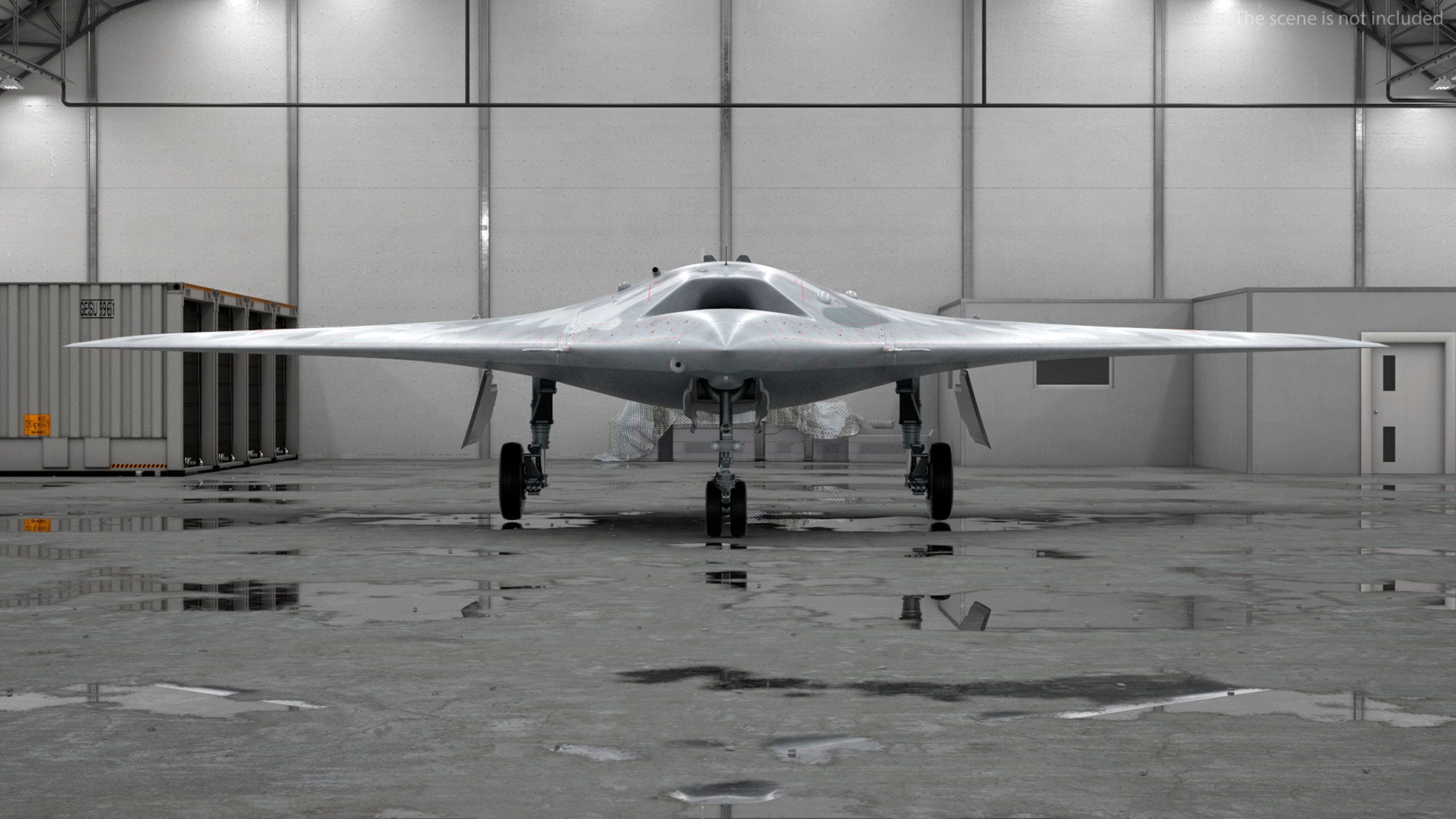
Unmanned[1] aerial vehicles (UAVs) are currently regarded as one of the key instruments for bolstering the fighting ability of combat units and formations in various armed services. The vast majority of experts believe that in future wars and military conflicts of the twenty-first century all militarily advanced countries will base their strategies on the use of UAVs, which tend to be relatively cheap. The cost of losing manned aircraft, along with their pilots, is becoming too high. An advanced manned plane can have a price tag of up to 5060 million dollars. Training a highly professional pilot costs another 10 million. Meanwhile, many of the tasks currently performed by manned aircraft can be done very successfully by reconnaissance or combat UAVs, which cost a lot less. For example, America’s Predator drone costs only about 4.5 million dollars.
It must be recognized, however, that advocates of manned aircraft also have several strong arguments which suggest that UAVs are not going completely to replace the traditional planes and helicopters. If the UAV operator loses control of the aircraft, the consequences could be very serious, whereas a manned airplane has more flexibility. In addition, UAVs are vulnerable to electronic jamming, and to a direct attack on the communications satellite. Unlike UAVs, pilots can react to threats and undertake evasive maneuvers. The American UAVs working in Iraq, Afghanistan, Yemen, or Somali are fairly safe because they are not facing any serious threats in those places. But when UAVs were used over Bosnia and Serbia many were lost to the Serbian air defenses, which operated Soviet and Russian-made AA missiles and artillery[2]. UAVs also have another major flaw: if communication between the aircraft and its operator is lost, the current automation and software systems cannot guarantee successful autonomous operation in every situation. That flaw came to light when the Iranians seized the American RQ-170 Sentinel drone.
Back in 2003 the U.S. Army conducted a comparative study of the capabilities of UAVs and the RAH-66 Comanche, a future army reconnaissance helicopter. The study found that the UAVs could successfully perform only 67 percent of reconnaissance tasks in the combat theater; 50 percent of the tasks which involve guarding and protecting the troops; and 25 percent of the tasks which require destroying a target. As a result, the Americans reached the conclusion that UAVs cannot completely replace army aviation attack helicopters; they can only be viewed as complementary[3].
Yet another problem the Americans are facing – though it has nothing to do with the UAVs themselves – is the deficit of qualified UAV pilots. The United States can build more UAVs, but there are simply not enough pilots to operate all of them. Each Predator drone, for example, requires two operators, who work eight-hour shifts. According to U.S. Air Force representatives, they are facing a 50 percent deficit of trained personnel. In other words, the United States could have twice as many drones over Iraq and Afghanistan as it does now, if only it had more operators.
Nevertheless, UAVs are certainly here to stay. Economically advanced nations are leading the trend of replacing manned aircraft with UAVs, but that trend is gradually spreading to other countries as well. U.S. drones in Iraq and Afghanistan have clocked up more than a million flight hours over the past decade:
In several countries, the reconnaissance fleet already consists solely of UAVs. The range of drones that can be used for these purposes is potentially very broad, from micro- and mini-UAVs to hypersonic orbital craft, as well as subsonic stratospheric drones, which can stay aloft for months or even years at a time. Some of these ideas have yet to be implemented, but R&D is making rapid progress. It is also clear that almost any reconnaissance UAV can be used, with some modifications, as an offensive weapon. That is true even of small UAVs. The hypersonic orbital attack UAVs are a perfect fit for the Prompt Global Strike concept – and unlike ICBMs or SLBMs, they are reusable[4].
Former U.S. defense secretary Robert Gates may well have been right when he said back in 2009 that the new F-35 fighter could turn out to be the last manned American attack aircraft.
Role of Unmanned Aircraft in Present Conditions
In order to understand the role of UAVs, one must first understand the model of combat operations in the twenty-first century. The world’s most advanced armies use UAVs as an integral part of a comprehensive centralized reconnaissance system. Simply discovering the targets is no longer enough. Their coordinates must be determined with sufficient precision to enable the use of modern weapons systems. This is why reconnaissance systems are evolving into reconnaissance-and-attack systems. The ongoing R&D process also involves the development of comprehensive automated reconnaissance, communication, and target designation systems.
The main uses which UAVs are currently being put to include optical-electronic, radar, and combined reconnaissance (monitoring); delivering cargos; relaying communication signals; and attacking targets. In particular, UAVs have proved much more suitable than manned aircraft for such tasks as comprehensive reconnaissance, optical-electronic reconnaissance, signal relay, mine detection, target designation, and pipeline and railway diagnostics. In addition, UAVs can illuminate the target with lasers for laser-guided artillery projectiles; help assess the damage; search and destroy individual targets, etc.
One of the biggest advantages offered by UAVs is that they do not require special airfields with expensive infrastructure. Also, the loss of a UAV does not mean losing the pilot, which is almost inevitably the case with traditional aircraft. Finally, lengthy and complex UAV missions are not affected by such a serious factor as pilot fatigue.
To summarize, there are several important advantages offered by UAVs compared with manned aircraft. The loss of a UAV never leads to the loss of its crew, which is especially important during limited and local conflicts; UAVs can achieve the same objectives at a fraction of the cost of traditional aircraft; they are less easy to spot; they are more maneuverable, and they have better survivability:
At the same time, for all the advantages of using UAV to support ground troops, they have certain limitations. If all the sides of the conflict were to start using large numbers of UAVs, this could partially or even completely disorganize air traffic control over the combat theater. The complexities of coordinating UAV missions between the different armed services and agencies will be further compounded if the enemy also begins to use its own UAVs, which will turn into a kind of flying mines. If we also take into account the adversary’s measures against UAV control systems, including attempts to take control of those systems, either covertly or openly, the consequences could be unpredictable[5].
The countries which have achieved the most advanced UAV capability include the United States, Israel, France, Germany, Britain, and China. More than 250 UAV systems are currently being developed in 32 countries. As of mid-2012, the armed forces of the world’s most advanced countries included about 3,200 weapons complexes equipped with 10,200 tactical, operational and strategic UAVs. Under the Pentagon’s plans for the next three decades, the number of UAVs in service with the U.S. armed forces is expected to quadruple to 28,000. Currently, the most popular UAVs are as follows:
The world’s most mass-produced UAV is the Predator. It can achieve a speed of 120km/h at an altitude of 3 km to 8 km, and stay aloft for 24 hours at a time. It can transmit high-resolution imagery in real time. The Predator can be equipped with Hellfire missiles to destroy individual targets, including buildings, fortifications, cars, and groups of people.
Russian UAVs
In recent years the Russian leadership has come to regard UAV research and development as an important priority. It must be recognized that Russia has lost its world leadership in unmanned aviation over the past 20 years. In the 1960s to 1980s the Soviet Union had some of the world’s most advanced UAVs. In the period between 1976 and 1989 it had produced 950 Tu-143 unmanned aircraft, which still remains an unbeaten world record. But Soviet interest in UAVs began to wane in the late 1980s, when the Stroy R&D program was all but frozen. Nevertheless, the Russian industry has retained some capability in this area, and the financing being allocated by the government to defense procurement, as well as growing civilian uses of UAVs, can generate sufficient demand in the coming years. In addition, Russia has already put in place the necessary organizational, planning, and regulatory framework to facilitate UAV research and development. That framework includes the Inter-agency Concept of Developing Future UAV Systems by 2025.
According to existing documents, the demand of the Russian armed forces for UAVs is estimated at 2,000 long-range (over 500km), medium-range (up to 500km), shorter-range (up to 100km), and short-range (up to 25km) UAVs. Meeting that demand will require more than 300 billion rubles to be spent by 2025.
At present, the Russian armed forces operate the following UAVs: Strekoza and Grusha in the short range; Tipchak, Orlan-10, Eleron-10, and Stroy-PD in the shorter range. In many ways, these systems are not just equal but actually superior to foreign competition. Part of the reason for that, incidentally, is that Russian engineers are very good at finding simple and effective solutions to complex technical and organizational problems.
The main difficulties the Russian UAV developers are currently facing mostly have to do with the fact that many of the necessary parts and components are not produced in Russia. This includes compact optical-electronic reconnaissance sensors, high-performance electronic components, high-capacity autonomous power sources, and piston engines in the 100-200hp range. The best way to address that problem would be for the government to develop and approve national programs in those areas.
In the past few years, the Russian armed forces have also begun to buy imported UAVs. To be fair, there has been less talk of buying foreign-made drones in bulk since the change of leadership at the Ministry of Defense (MoD) in November 2012. What is more, the new MoD leadership has designated the development of Russia’s own UAVs as an important priority and set up a special ministry division in charge of innovative R&D.
In fact, foreign-made UAVs, which have been designed for a certain range of climates, sometimes cannot be reliably operated in the Russian climate. For example, Israeli UAVs, which are very popular with international customers thanks to their good electronics and software, have acquitted themselves very well in southern latitudes. But they are unlikely to work so well in the cold Russian climate. Another important consideration is that foreign suppliers equip the systems destined for Russia only with optical observation systems. They are reluctant to sell us their radars, radio-electronic reconnaissance, and electronic jamming systems used on military drones. Optical systems alone tend to be of little use in Russia’s northern latitudes, where clouds, rain, and snow are the rule rather than an exception. This is why UAVs equipped only with optical reconnaissance systems would be a lot less useful in Russia than they are in the Persian Gulf.
Meanwhile, the Russian developers of non-military drones have their own factors to consider. Many applications, such as Earth imaging, monitoring borders and communications, and signal registration, can be performed by UAVs at a fraction of the cost of traditional aircraft or satellite systems. The development of non-military systems is also being facilitated by the miniaturization and falling prices of electronics.
Nevertheless, three key obstacles still remain in this area. The technical problem is that potential customers are interested not in UAVs as such – even if these drones have excellent specifications – but complete systems which can perform certain functions without requiring complicated and expensive maintenance. The second problem is structural, though it is related to the first. Most of the commercial customers would prefer to buy services (for example, flight hours) from a specialized company rather than buy and operate the drones themselves.
Clearly, the first and the second obstacle can both be overcome as large industrial companies that have the necessary resources and expertise expand into civilian drones. The third problem facing commercial drones is a lot more difficult. It boils down to the absence of the necessary laws and regulations to obtain certification for civilian UAVs and integrate them into the existing air traffic control systems. This particular problem has not been fully resolved anywhere in the world, although significant efforts are being made to identify possible solutions. There are two alternative concepts for integrating UAVs into air traffic control systems. The first is to agree that drones should comply with all the requirements for traditional aircraft, including, for example, identification and collision-avoidance systems. The second is to allocate special zones for UAV flights. Many experts believe that the first concept will eventually prevail, making life more difficult for UAV makers. In any event, unhindered development of civilian (as well as military) drones will require certain changes to be made to the Air Code of the Russian Federation, as well as all the rules and regulations governing the use of Russian airspace.
Meanwhile, many uniformed and law-enforcement agencies, and not just the MoD, are already buying large numbers of drones, without waiting for the necessary laws and regulations to be put in place. These agencies include the Federal Security Service of the Russian Federation (including its special task forces and the border service) and the Emergencies Ministry; both of them need drones to perform some critically important tasks. The procurement policy of nonmilitary customers is different from the MoD’s policy. These customers tend to prefer cheap and reliable systems that are easy to operate.
Outlook for Unmanned Aviation
In the future, new UAV models are expected to have lower radar, optical, and infrared visibility; greater range and autonomy; improved payload capacity, and more compact size for miniature drones.
Developers are focusing their efforts on several UAV categories. The most important of them is attack drones:
The priorities here include developing a reliable system of target identification in autonomous flight mode; developing a jamming-resilient system of communications between manned aircraft and drones; and creating an onboard information processing system. This type of drones will mainly be used for conducting aerial reconnaissance operations and delivering air strikes against stationary objects, especially air defense systems. At some later point these drones can be improved to give them the ability to take out mobile targets on the ground[6].
The Americans have been using their Predator drones in the Middle East for more than a decade. These UAVs have killed hundreds of Al-Qaeda[7] and Taliban fighters. The Predator’s range and payload, however, are very limited, so the drone is only suitable for counterinsurgency warfare.
The MQ-9 Reaper, which has recently entered into service, is a much more capable system. The most advanced drone currently being developed is the X-47B, which incorporates stealth technologies and will not be far behind traditional combat aircraft in terms of its performance characteristics.
This UAV has several important distinctions. First, it can operate in a fully autonomous mode, without the assistance of a human operator. It relies on its own artificial intelligence to adjust its route and build new flight trajectories. The human operator only needs to designate the target, and the drone then chooses its own route to it using satellite navigation. Second, since the drone is carrier-based, there is no need to seek other countries’ permission to use their airfields. Third, the drone has low radar visibility, similarly to the F-35C carrier-based fifth-generation fighter. As a result, it can operate in areas heavily protected by the adversary’s air defenses.
Work on the X-47B project began in May 2010, when the U.S. Navy resumed the development of a stealth reconnaissance and attack system. By the end of 2018 the system will be capable of working in coordination with manned carrier-based aircraft as part of an aircraft carrier squadron. Carriers such as the USS Nimitz or the USS Gerald R. Ford will be equipped with four to six drones of this type, which will be able to operate autonomously and stay aloft for 11-14 hours without refueling. The drones will also be able to refuel in mid-air. They are being designed to work in areas heavily protected by the adversary’s air defenses, which means that they will have low radar visibility, similar to the carrier-based version of the F-35S fifth-generation fighter.
Finally, the United States is also developing the T-RAM attack micro-UAV, a non-reusable craft which will carry a 40mm grenade.
The U.S. attack drones program is being closely watched by the leading European aerospace companies. No one in Europe wants the United States to acquire too great an edge in the latest technologies that will shape future warfare. The Europeans also regard UAVs as a good replacement for their traditional combat aircraft; the European fleets of such aircraft continue to shrink, while losses of aircraft and pilots are becoming increasingly unacceptable. For counterinsurgency operations and small classical wars (such as the one in Libya) drones could prove the most suitable weapon, and it is very unlikely that Europe will ever wage a full-scale war on its own. Germany is currently developing its own tactical attack UAV called Barracuda; the drone is expected to become the European equivalent of the Predator. The French are also developing an attack drone. On December 1, 2012 they tested a demonstrator prototype of the nEUROn, a European stealth attack UAV, at the Istres testing range. The drone is being positioned as Europe’s primary attack UAV, and is roughly similar to the X-47B in terms of its capability. Some experts say, however, that the project may never reach mass production because it is too complex and expensive.
In addition to the nEUROn program, France’s Dassault Aviation and Britain’s BAE Systems are looking into the possibility of developing a future Anglo-French attack UAV, as well as a medium-altitude drone capable of staying aloft for long periods of time:
Naturally, China has also joined the UAV race. It is already far ahead of Europe in that regard, and gaining rapidly on the United States and Israel. In addition to reconnaissance UAVs, the Chinese are also developing attack drones, possibly in an effort to compensate for the remaining gap between China and the leading military powers in traditional aircraft capability. The Chinese WJ-600 attack drone is truly unique in many respects; even the United States and Israel do not have anything similar.
The UAV is designed to gather intelligence, wage radio-electronic warfare, and attack targets on the ground. It can carry at least two air-to-surface missiles. Another Chinese drone, which is much smaller than the WJ-600, is the Ilong (the Pterodactyl). Judging from its outward appearance, the craft is an exact copy of the Predator, although the Americans have not granted a production license for the Predator even to their closest allies, let alone China. The Chinese also have the CH-3, a smaller attack drone with an impressive payload capability of 640 kg. As for reconnaissance UAVs, China unveiled a strategic drone similar to the Global Hawk back in 2009. Four years previously the Chinese also demonstrated the Anjian UAV at an air show in Zhuhai. The drone was described as a supersonic (or even hypersonic) unmanned fighter[8].
It must be said that China is perfectly aware of the need to integrate its reconnaissance UAVs with offensive weapons systems:
In particular, the WS-2 multiple launch rocket system (which has the longest range in the world) includes drones which provide the batteries with reconnaissance data. There have also been reports that a future Chinese main battle tank will be equipped with its ‘‘personal’’ drone. It would be a veritable breakthrough in UAV technology if a proper unmanned fighter aircraft were to be developed; such a weapon would largely devalue all the manned fifth-generation fighters[9].
The Russian armed forces’ requirement for attack drones in the period until 2025 is estimated at about 50 units. In 2011 the Vega Radio Technology Concern, which has been designated as Russia’s main developer of UAVs, demonstrated a prototype of a medium-range reconnaissance and attack UAV developed by the Luch design bureau, a Vega division based in Rybinsk. The most important part in the development of UAV systems is processing the information gathered by the drone and supplying it to the end user rather than building the robotic carrier itself. This is why Vega regards training specialist operators who perform all these tasks as an important priority. Also, in 2011 the MoD signed a contract for the development and manufacture of reconnaissance and attack drones with the Sokol design bureau (based in Kazan) and Tranzas (St Petersburg). First tests of the new UAVs are expected in 2014. Sukhoi, a leading Russian designer of fighter jets, is also involved in the development of a future heavy attack UAV. NPK Irkut (one of the manufacturers of Sukhoi jets) is developing a prototype which should be ready in 2015.
Another important priority in the development of UAVs is:
…to develop new-generation unmanned reconnaissance and attack systems capable of defeating the adversary’s air defenses. The preferred solution here is to have large numbers of stealth reconnaissance drones which can stay aloft for days at a time, conduct reconnaissance missions in all weather conditions, and relay communication signals. The communication channels used for these UAVs must have sufficient bandwidth to transmit high-definition imagery and guide high-precision ammunition carried by the attack drones. The future high-altitude UAVs should also be able to stay aloft for more than 24 hours. Using drones at altitudes of over 1215km offers a number of advantages, including the ability to monitor large areas and maintain communication via direct line of sight. Besides, there is no contrail at such altitudes, which makes the drone more difficult to spot. Finally, there is less of a chance of accidents (since the drones remain above weather fronts), collisions (most other aircraft fly far below), and destruction of the craft by the adversary’s air defenses[10].
The United States has the most advanced R&D programs in this area. One of the next-generation multirole UAVs currently being developed there is the MQ-X, which will replace the MQ-1 Predator and the MQ-9 Reaper.
Another interesting new area of drone R&D is UAVs designed to search and destroy other UAVs. Unmanned aerial vehicles are currently being developed in many countries all round the world. This is why back in the mid-2000s the Pentagon’s DARPA agency launched the Peregrine UAV Killer project. The team working on the project is aiming to produce a small, cheap, and resilient craft capable of destroying all types of the adversary’s UAVs:
Yet, another promising area is ultra-light flying robots. Such UAVs are all but invulnerable in mid-flight because a small airplane flying at an altitude of just a few hundred meters is almost impossible to destroy. It can be destroyed by a bullet fired from a pistol, but actually hitting it is next to impossible even using a sniper rifle. The smallest of the existing UAVs is a 33cm U.S. drone called WASP. It weighs only 200 grams, and can be launched into the air manually, just like a toy plane. The drone is equipped with two tiny video cameras which can transmit imagery to the operator in real time. The craft is controlled by an on-board computer using a GPS signal. It is propelled by an electric motor fed by a small battery, which is recharged in mid-flight using solar panels[11].
Israel is also developing similar UAVs. The Israeli armed forces are already using the Skylark drone, which is launched into the air manually. Despite its small size, the drone can monitor a territory of up to 10km2 and stay aloft for up to 90 minutes. The imagery it transmits is good enough to discern individual people from an altitude of several hundred meters. Russian developers are also conducting projects in this area.
Meanwhile, American UAV programs also include the development of an unmanned helicopter. The project is led by Boeing, which decided to use the existing design of the AH-6J Little Bird helicopter as a starting point rather than designing a new drone from scratch. A similar project to refit an existing helicopter into an unmanned craft is the UH-1 Huey, which will be equipped with the Advanced Precision Kill Weapon System (APKWS).
In Russia, the Vertolety Rossii (Russian Helicopters) holding company is working on a defense procurement contract to develop several helicopter-type UAVs in different range categories.
The capabilities and features of unmanned aerial vehicles in the longer term are unclear. Obviously, the current trends – i.e. miniaturization of the drones and their weaponry, intellectualization, and the development of the theory and practice of group action – will continue into the foreseeable future. It is important that there are no fundamental physical barriers on that path.
The first important point is that the size of a manned craft is ultimately determined by the size of the pilot. An unmanned vehicle can be made as small as technology allows. At some point, the size of such vehicles could reach the nanometer range.
The second point is that the effectiveness of a weapon system benefits more from greater precision than from greater firepower. If a target can be hit with an accuracy of several centimeters, large amounts of explosives could become unnecessary. Of course, there will still be protected targets, such as underground bunkers, and they will require special ammunition to take them out. But some of the targets could be destroyed by using the kinetic energy of the projectile, or disabled by impact on their vulnerable critical parts.
Third, there are no obvious limits to the intellectual capacity of unmanned systems, since there are no fundamental limits to the productivity of ICT-systems. Sustainable progress is being made in such crucial areas as image recognition and learning systems. Fourth, in recent years researchers have been working hard on the theory and practice of military network super-systems as a means of creating distributed intelligence. To summarize, air defense systems will sooner or later have to face aggressive, well-armed, and resilient groups of drones. Thanks to their collective distributed intelligence, these groups will act as parts of a single whole. They will be able to analyze the situation to the same standard of accuracy as humans, only faster. Human operators may be part of their control systems, adding an element of creativity and unpredictability. It is also obvious that cost efficiency will be an important requirement for all future UAVs, so developers will gradually abandon unnecessarily stringent requirements relating to the drones’ payload capacity and the length of time they can stay in the air.
[1] Originally published: Evgeny Buzhinsky. The Outlook for UAV Research and Development // Security Index Journal, №3 (104). 2013, p. 59-65. URL: https://pircenter.org/wp-content/uploads/2022/11/Security-Index-%E2%84%963-104-2013.pdf
[2] The USA: The Future Belongs to Unmanned Aviation // NewsLand. URL: http://newsland.com/news/detail/id/803512 (archived).
[3] The Fashion for Drones Over the Battlefield – One’s Own and The Enemy’s // RUVSA. URL: http://ruvsa.com/reports/moda/ (archived).
[4] UAVs from the MQ-9 Reaper to the WJ-600 Herald a New Era // RUVSA. URL: http://ruvsa.com/reports/mq9/ (archived).
[5] UAVs from the MQ-9 Reaper to the WJ-600 Herald a New Era // RUVSA. URL: http://ruvsa.com/reports/mq9/ (archived).
[6] Blinkov Y. Prospects for the Development of Unmanned Aviation in the Leading NATO Countries // Foreign Military Review Journal. №12, 2012. P. 54-58 (in Russ.).
[7] hereafter – terrorist organization, banned in Russia – Editor’s note.
[8] UAVs from the MQ-9 Reaper to the WJ-600 Herald a New Era // RUVSA. URL: http://ruvsa.com/reports/mq9/ (archived).
[9] Ibid.
[10] Blinkov Y. Prospects for the Development of Unmanned Aviation in the Leading NATO Countries // Foreign Military Review Journal. №12, 2012. P. 54-58 (in Russ.).
[11] UAVs – Weapons of the Future // Lenta.ru. URL: http://www.lenta.ru/news/army/103042/ UAVs (in Russ; archived).
