
CHAPTER 5. OUTER SPACE: ARENA FOR AN ARMS RACE OR A PLATFORM FOR INTERNATIONAL COOPERATION?


Nowadays, the intensity of space activities is rapidly growing, especially in the military sphere, new technologies are emerging that change strategic approaches and capabilities, private companies are becoming increasingly involved in space exploration, the intensity of space traffic has increased sharply, which together have made the possibility of dual use of almost all spacecraft a reality[1].
In this context, the very nature of space security is changing – a “narrow” understanding of security no longer corresponds to reality.
The militarization of space, including its “weaponization”, that is, the deliberate deployment of precursors of strike systems, the development of anti-satellite weapons, space-based missile defense elements, the possibility of non-kinetic – non-observable impact on individual spacecraft and satellite constellations, the uncontrolled increase in space debris, as well as cyber threats – all this creates a complex and interconnected system of risks for various areas of activity in space and requires a systematic and comprehensive approach.
As the scope of space activities expanded, the number of launching states increased, new technological capabilities emerged, and the number of spacecrafts increased dramatically, space became a potential arena for confrontation[2].
A striking example of how space security issues became increasingly linked to global strategic stability was the American Strategic Defense Initiative (SDI) program[3].
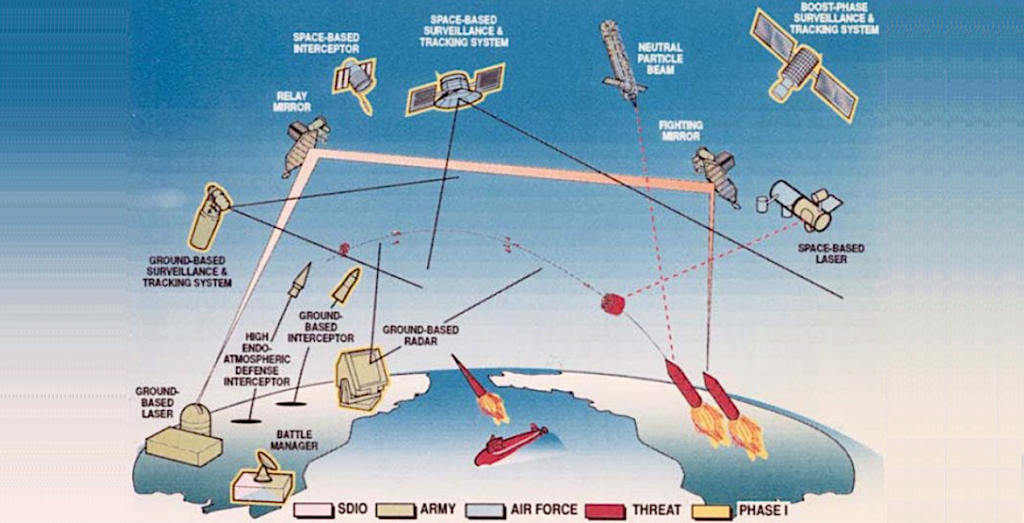
These trends were accompanied by the increasing complexity of space activities, the densification of space traffic with the simultaneous development of space cooperation. A broader concept of space activity security began to form.
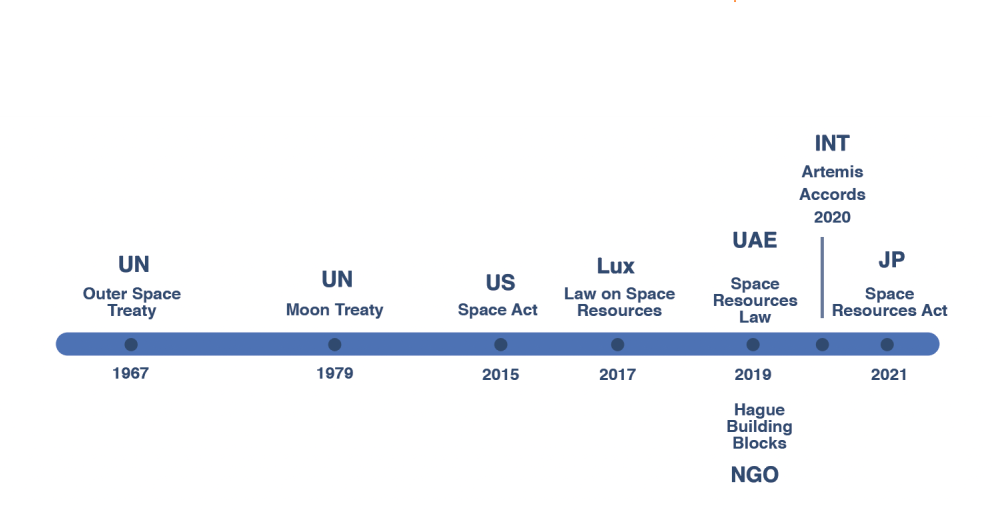
Even despite the progressive role of a number of international agreements, primarily the basic Outer Space Treaty of 1967 and subsequent international instruments in this area, in modern conditions space security faces growing new challenges[4].
In this context, the increasing dependence on space infrastructure in virtually all areas of human civilization as a whole makes us vulnerable to a wide variety of threats, ranging from cyberattacks to deliberate destruction or unobserved negative impact on spacecraft[5]. Thus, the security of space activities, without which cooperation and collaboration are impossible, is called upon to evolve from a narrow focus on the protection of space property to a broader understanding, including ensuring sustainable and responsible exploration of space in the long term.
In this context, it should be recognized that we are currently approaching a situation where, due to the development of new military-technical and information capabilities, space is already effectively becoming a new sphere of confrontation and even, potentially, a theater of military operations.
To avoid a catastrophic scenario, it is necessary to move towards strengthening international cooperation, accompanying these efforts with measures to create effective mechanisms of international legal control, including the still existing possibility of preemptive measures to prevent space from becoming a “battlefield”. We are talking about a legally binding agreement. The basis is there – the PPWT project, as well as a number of basic parameters, enshrined in the final report of the Second Groups of Governmental Experts (GGE) on Prevention of an arms race in space (PAROS) from August 2024[6].
Certainly, such agreements, supported by qualitatively new technological solutions, in particular, a space situation monitoring system, would allow the foundations to be laid for agreements on strategic stability, space security and cooperation.
Arms Race in Space – How Real is It?
Are there currently grounds to speak of the existence of prerequisites for the deployment of weapons in outer space? The answer to this question is more likely affirmative than negative. There is a widespread opinion that, in essence, the space arms race has already been unleashed. There are international legal gaps that allow the deployment of weapons in outer space, and corresponding military-strategic prerequisites and, as one might assume, scientific and technical capabilities.
How might the possible implementation of concepts for placing weapons in space affect strategic stability and international security, as well as the safety of space activities in general? To answer this question, it seems appropriate to consider some possible strategic situations.
It is impossible to rule out the possibility that other countries will not be able to counter the US efforts to create space weapons for various purposes, as well as anti-satellite weapons of various types of basing, with adequate measures for military-technical and economic reasons. The United States, through substantial financial injections into the relevant branches of science and industry, can achieve a technological “breakaway” and create a powerful structure of space weapons. In combination with a global missile defense system with possible elements of space basing, the factor of the US monopoly on space weapons and anti-satellite weapons can play a primary role in shaping the military-political situation in the world, ensuring dominance both in “peaceful” space and on Earth[7].
The monopoly of space weapons would cause the international community a constant psychological feeling of the sword of Damocles. The strategic situation in space would become difficult to predict due to the global zone of action of space weapons, the possibility of covert influence on space objects of other countries and their disabling.
The international situation would be subject to a strong destabilizing effect due to the possibility of a sudden use of space weapons. At the same time, selective space weapons would sharply lower the “threshold” for their use.
The deployment of strike weapons in space would lead to the emergence of suspicion in relations between states.
However, it seems more realistic to proceed from the fact that industrially developed countries are unlikely to remain indifferent to the possible intentions of one state to place strike weapons in outer space. Most likely, attempts may be made to prevent this and to counteract such intentions by creating and deploying their own types of space weapons, means of countering space weapons systems, or by building up other types of weapons, including nuclear weapons. The result will be a qualitative arms race, the danger of armed confrontation, the undermining of the nonproliferation regime, the stimulation of armed rivalry, but now with the coverage of a new sphere – outer space.
In this case, the prospect of the gradual transformation of outer space into an arena of armed confrontation, into a potential theater of military operations is not something abstract. In these conditions, talking about the safety of space activities, about cooperation and collaboration in the exploration of outer space and celestial bodies will hardly be appropriate at all.
As of 2025, no nation has deployed a strike weapon into space that was specifically designed and produced as a “weapon”. However, this does not mean that the elements of such weapons systems, their precursors are no longer being tested in space. Unfortunately, evidence of such trends is only multiplying. In addition, unobservable methods of influence can also be used to destroy or disable objects in space – lasers, directed energy, high-frequency and electromagnetic radiation, etc.[8].
At the same time, it is becoming increasingly difficult to draw a line between “peaceful” spacecraft and military spacecraft, which leads to the realization that almost the entire space potential of states can be considered as potential that can be used for military purposes. This new reality is gradually making its way and, in part, has already found its reflection, for example, in the report of the second GGE on PAROS from August 2022[9].
The preparation of the foundations for the development of a full-scale arms race in space is becoming a reality. This worst-case scenario can only be avoided by developing and adopting a legally binding document containing reliable guarantees against the introduction of weapons into space, to which all significant space powers will become participants. An analysis of the existing indirect and direct signs of preparation for an arms race in space allows us to assert that there is less and less time and opportunity for preemptive diplomatic steps on PAROS.
Modern Militarization of Space
It should be recognized that in modern realities, space is considered a vital environment that creates conditions for ensuring strategic superiority in the military sphere and specific economic advantages in the light of the intensifying competition in outer space.
Using the US as an example, we can talk about colossal budgets for space exploration and the broad involvement of the private sector in military space activities.
In this context, it is appropriate to recall that the US withdrawal from the ABM Treaty in 2002, which contained a direct ban on the creation, testing, and deployment of space-based missile defense systems or components (Article V), in fact, opened the way to the creation and deployment of space-based strike systems, as well as anti-satellite weapons, due to the proximity of the targets and technologies.
It is also quite significant that the United States, with its “Defense Space Strategy” of 2020, have officially recognized the process of turning space into a sphere of confrontation and the emergence of armed conflict as inevitable[10].
| National Security Space Strategy (2011) | Defense Space Strategy (2020) | |
| Key objectives | – Strengthen Safety, Stability and Security in Space; – Maintain and enhance the strategic national security advantages afforded to the United States by Space; – Energize the space industrial base that supports US national security. | – Maintain Space Superiority; – Provide Space Support to National, Joint and Combined Operations; – Ensure Space Stability. |
| Key “lines of effort” (approaches) | – Promote responsible, peaceful and safe use of space; – Provide improved US space capabilities; – Partner with responsible nations, international organizations and commercial firms; – Prevent and deter aggression against space infrastructure that supports US national security; – Prepare to defeat attacks and to operate in a degraded environment. | – Build a comprehensive military advantage in space; – Integrate military space power into National, Joint and Combined Operations; – Share the strategic environment; – Cooperate with allies, partners, industry, US Government departments and agencies. |
An important modern area of US military-technical preparations in space is monitoring the geostationary orbit, which has strategic significance, since it is where the so-called “hovering points” of spacecraft are located, performing reconnaissance, communications, and surveillance functions, and key elements of the early warning system for a missile attack.
With the help of the Geosynchronous Space Situational Awareness Program (GSSAP) constellation of inspector satellites, which uses pairs of small inspector satellites, the United States not only tracks space objects in this distant orbit, but also reserves the ability to influence them, which could have far-reaching strategic consequences.GSSAP demonstrates the US desire not only to control, but also to actively interfere in the activities of space infrastructure, and in an externally unobservable manner[11].
New threats in space also include ensuring cybersecurity of spacecraft and satellite constellations. New risks include:
An example worth mentioning is the 2022 cyberattack on Viaset, a company that provides satellite internet to tens of thousands of subscribers in Europe[13].
The new reality requiresnew international legal approaches. International instruments mainly focus on physical security, but cyber security issues also require additional efforts. Under these conditions it is becoming increasingly important to put a legal barrier to the weaponization of space through concrete proposals.
In this context it should be noted that the US and its close allies are still politicizing the problem, looking for pretexts and bottlenecks to reject such proposals. It is becoming more obvious that the goal pursued by the West is to ensure a strategic advantage in this most important area. It is through space and the information environment that the US is trying to maintain its leading position in the conditions of sharply intensified competition in the world. This is as well the goal of attempts to develop acceptable “norms” and “rules” of “behavior” of countries in space, where the US would retain control functions[14].
Efforts to turn technological advances and achievements in space into strategic advantages are clearly demonstrated by the ability to effectively use the essentially civilian Starlink low-orbit broadband Internet system to support ground-based military operations by providing intelligence data from civilian satellites to engage over-the-horizon ground targets[15].
One of the most dangerous developments is using new generations of communication the US satellites for IBMs launch denial[16]. This could have a profound negative influence on strategic stability.
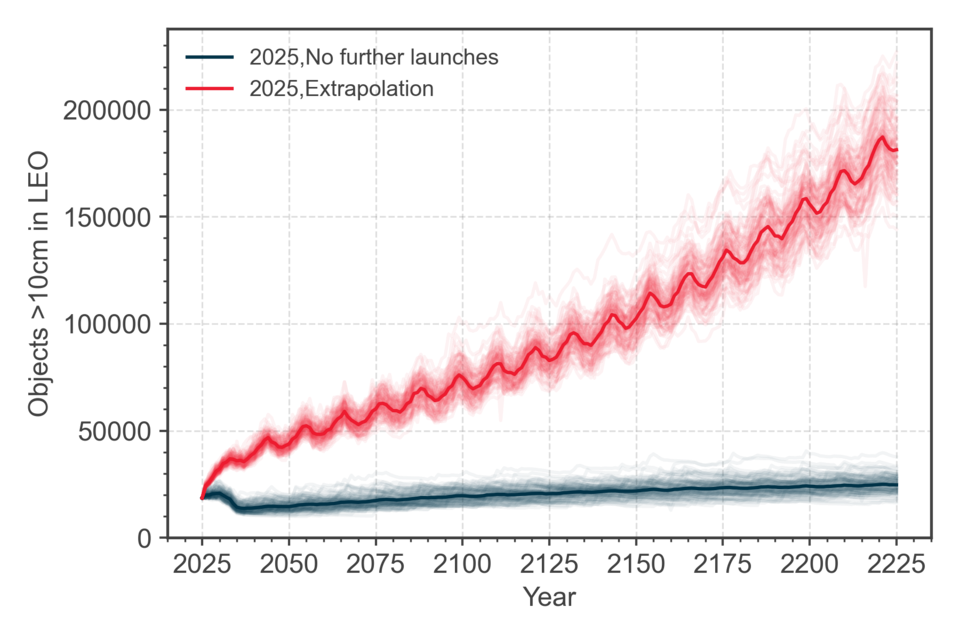
In turn, space debris can also become a weapon, since a collision with it can cause a cascade reaction of spacecraft destruction, which can actually lead to a state where access to space or space activities will be either sharply hampered or impossible. Such a chain reaction of collisions has been called the “Kessler Syndrome”[17], the risk of which is increasingly growing in modern conditions[18].
In the context of the above, it is appropriate to cite the words of US President J.F. Kennedy, spoken by him during the Cold War: “The cold expanses of the universe must not become the arena of an even colder war”[19].
Cooperation in Space: Achievements, Prospects, Problems
In recent years, there has been an active growth of international cooperation in space. It is enough to cite the example of the International Space Station (ISS) project, approved in 1998 in the relevant intergovernmental agreement. It is noteworthy that other “players” such as Japan, Canada and the European Space Agency have joined the ISS project. The role of China and India is strengthening, the capabilities of international organizations, non-governmental actors and private companies are expanding.
Most projects are joint. There is a consolidation of scientific experience, which ultimately allows for the implementation of a joint scientific mission.
It should be noted that certain areas of cooperation in space have quite successfully withstood the crisis phenomena in world politics. Even the geopolitical crisis in Ukraine, which has hit a number of international space projects with Russia’s participation, such as the ExoMars mission, has not had a negative impact on the work of Russian specialists with Western partners within the framework of such a large and existentially important project as the ISS. Moreover, Roscosmos and NASA signed an agreement regarding the flights of integrated crews on Russian and American manned transport ships in July 2022, and already in the fall of 2022 and winter of 2023, two Russian cosmonauts went to the ISS on American Crew Dragon spacecraft[20].
However, the ISS service life is coming to an end. Therefore, it is important to look for alternative forms of interaction that would allow for active joint work to continue in the future, after the station’s service life has expired. A logical continuation of the partnership between states on the ISS project could be the Russian-Chinese initiative on the International Scientific Lunar Station (ISLS), secured by the relevant intergovernmental agreement of 2022[21].
In contrast to this project, there is the American initiative Gateway, which also involves the creation of a lunar station. Unlike the International Scientific Lunar Station (ISLS) project, Gateway does not have parity principles, the leading role of the United States is fixed, which was the reason for Russia’s refusal to participate in this project. The Gateway project goes in conjunction with the Artemis Accords signed in 2020[22].
The principles and technical standards adopted at the international level, which, despite general geopolitical tensions, contribute to the expansion of cooperation in space.
An example of international standardization in the field of space technology and space exploration are standards in terms of life support systems in manned space missions[23].
In many ways, international technical standardization correlates with the Guidelines for Ensuring the Long-Term Sustainability of Outer Space Activities, adopted in 2019 during the 59th session of the Scientific and Technical Subcommittee of the UN Committee on the Peaceful Uses of Outer Space[24].
These guidelines were adopted at the initiative of Russia and address key issues on the space agenda: space traffic management, space weather, space debris, raising awareness of space activities, scientific and technical research and development. The guidelines themselves serve as another example of the possibility of creating a universal mechanism for developing a single vector in space exploration.
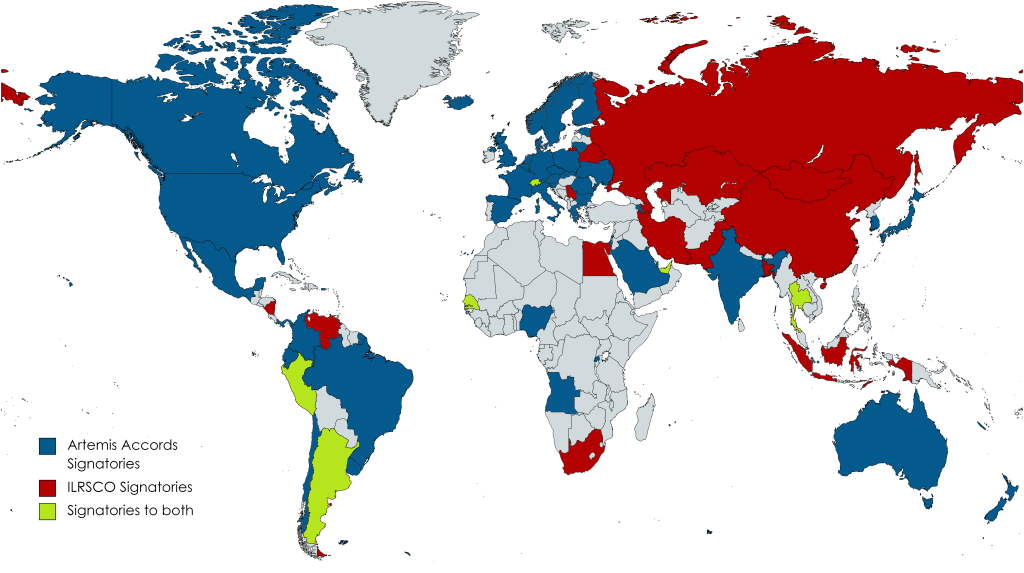
Regional powers that do not have a sufficient resource base join either one or the other initiative. In turn, the initiatives of the Russian Federation and China, together with American initiatives, form the trends of space cooperation, leading regional powers and the rest of the world community.
However, such relative space “bipolarity” can provoke mistrust and division. Therefore, it is important to find common ground and develop a consensus base for preventing potential crisis situations in space.
Commercialization of Space – Forms and Possible Consequences
The process of commercialization of space opens up significant economic opportunities. The global space market is currently valued at $400 billion and includes spacecraft manufacturing, launch services, data collection and processing, and ground infrastructure. The main driving force behind this growth is private companies such as SpaceX, which, thanks to innovations such as the reusable Falcon 9 rocket, have significantly reduced the cost of launching cargo into orbit. For example, launching an astronaut into orbit on Crew Dragon costs $55 million, which is significantly cheaper than traditional launch vehicles.
Technological progress serves as the basis. The process itself is implemented in the creation of reusable carriers, micro and nanosatellites, as well as systems for collecting and processing space data. All this, in turn, changes the structure of the market. SpaceX has not only provided cheaper access to space, but also created the infrastructure for projects such as Starlink, which provides global Internet. And although the total investment in the space market over the past decade does not exceed $30 billion, its potential is enormous.
However, there is also a downside – the emergence of new challenges, such as an increase in the volume of space debris, unregulated norms and standards, and growing competition, which could lead to increased conflict[25].
Commercialization of space raises complex issues. The Outer Space Treaty declares space to be the common property of all mankind, but does not regulate private companies[26].
At the same time, this basic document lacks a clear legal position on the issue of extraction and commercial use of space resources. Such legal uncertainty may in the future give rise to conflicts between states and between states and private entities.
The monopolization of space by large corporations could increase global inequality, and resource extraction on celestial bodies could cause unwanted physical changes with unpredictable consequences[27].
The problem is aggravated by the fact that a number of states have already undertaken legal efforts that effectively allow their companies to engage in resource extraction in space. A very clear example in this context was the adoption of an executive order by President Donald Trump in his first term approving the commercial development of resources on the Moon and planets of the Solar System. It is quite expected that such steps have caused a negative reaction from a number of countries, including Russia. Potentially, such unilateral steps may rather lead to an aggravation of interstate relations, an increase in the potential for conflict and a weakening of space security than pave the way for cooperation in this area[28].
Thus, in the field of space resource extraction, there is a significant contradiction between the established universal approaches and national interests, as well as the planned practice, which allows us to consider this area more as a conflict zone, rather than an area of constructive cooperation. This, in turn, already at this stage requires understanding and specific international legal steps.
The Artemis program and the corresponding Accords can serve as a very indicative example of attempts to monopolize certain areas of space activity related to the prospective exploration of the Moon and celestial bodies.
In 2017, Trump signed Directive No.1 on the return of the United States to the Moon and in the same year launched NASA’s Artemis program, worth $35 trillion, with the goal of landing a crew on the Moon by the mid-2020s. In 2020, Trump signed an Executive Order in support of commercial development of resources on the Moon and other celestial bodies. Against this background, the Artemis Accords appeared[29].
The bulk of the program’s implementation was expected to fall on the private sector: Musk’s SpaceX, Bezos’s Blue Origin, and Branson’s Virgin Galactic.
It is quite significant that the Accords attempt to circumvent the provisions of the Outer Space Treaty of 1967 by promoting the concept of “safety zones” and the provision on privatization of resources with the aim of securing exclusive rights to the development of the Moon for the United States and its allies[30].
Thus, international space law is being seriously transformed, essentially emasculating the principle of space as the property of all mankind and calling into question the principle of equality of all in the exploration of outer space.
Moreover, promoting the Accords through bilateral formats contradicts the principles of functioning of the UN multilateral mechanisms, emphasizing the strategic goal of the United States to establish dominance in the governance of outer space.
At the same time, the Artemis Accords does not have legal force and the fact that it is based on a set of bilateral agreements, and not the product of multilateral negotiations, effectively deprives the document of the status of a binding international legal act. Thus, paradoxically, in practice the “soft law” underlying the development of the Agreements largely allows the United States to turn them into an instrument of dominance in the management of space and space activities in general.
There are still concerns that the race for the richest resources in space may take uncontrolled forms, the chances of developing a universal treaty on resource development may not be realized, and a special body within the UN will not be created to regulate the access of private individuals to resource extraction in space. In fact, the Artemis Accords are being formed bypassing the UN Committee on Outer Space.
Thus, such forms of cooperation in space activities rather “work” not for universal interaction, but for a split into opposing blocs – after all, Russia and China, not wanting to accept these “rules of the game”, deliberately quitted participating in it, although Russian representatives initially took part in the discussion of the provisions of the Accords.
A format of cooperation under the auspices of the UN, being it the product of multilateral negotiating efforts, could be a truly effective alternative.
The principles of a “zero-sum game” in this context clearly do not work, but only create additional conflict potential.
The Problem of Space Debris – Possible Solutions
Another type of problematic aspect is the issue of space debris, which is discussed at the Scientific and Technical Subcommittee of the UN Committee on the Peaceful Uses of Outer Space (COPUOS). From the array of information on this “fashionable” topic, it is worth highlighting a number of aspects that are relevant to the subject of our research.
Space debris issue could pose a threefold threat. Firstly, it is a potential threat of collision with spacecraft in Earth orbit. Secondly, – the fall of large man-made objects on Earth. Moreover, the higher the activity in space, the greater this kind of a threat manifests itself. Thirdly, there is a danger of a chain reaction of spacecraft collisions, creating “fields” of debris, which will be more dangerous with more numerous mega-groups of satellites in orbit. The situation will be complicated by the use of mini and nano-satellites using the “swarm” method.
The result is a complete inability to further use space in practice and the virtual paralysis of human civilization. In terms of international law, as well as in terms of security, potential actions to forcibly remove spacecraft from orbit under the pretext of their “garbage” danger, without regard to its jurisdiction, may cause particular concern.
Such attempts, in particular, were recorded at one time in the draft Code of Conduct in Outer Space prepared by the EU. Article 4.a of the draft directly spoke about this kind of possibility[31].
The most adequate method of combating space debris may be the further development of relevant norms, including legal ones, in this area, as well as the establishment of a mechanism for exchanging information between countries on the presence of space debris objects in orbit.
Attempts in this direction are being made, but they are at best very limited in nature, agreements between a number of specific countries. An example is the draft Rules for the stay of upper stages of launch vehicles in Earth orbit presented by NASA in 2023 – “Mitigation Methods for Launch Vehicle Upper Stages on the Creation of Orbital Debris”[32]. This set of rules is aimed at standardizing the approach in this area between the public and private sectors, as well as with the regulation of the Zero Debris Approach adopted by the European Space Agency in 2023, aimed at stopping the growth of space debris by 2030[33].
It is fundamentally important to understand that talking about practical international efforts in this area will be useless in case of the development of a qualitative arms race in space and the launching of strike space vehicles into space.
It would be important to ensure transparency in the regulation of the orbital debris clearance process by involving international structures, in particular COPUOS, while ensuring rotation of leadership positions and equal access to information. This could increase trust in global institutions and prevent their excessive politicization – a “disease” that unfortunately affects many specialized international organizations.
Efforts to Keep Space Peaceful – Should We Continue?
It is appropriate to emphasize that at multilateral specialized platforms, as well as during bilateral contacts, Russia consistently implements the key thesis that without the development and adoption of an international legally binding document containing reliable guarantees of non-placement of weapons in outer space, it is already becoming practically impossible to resolve any serious issues of ensuring international security, strategic stability and space activities in their various aspects. A solid and essentially the only basis for such negotiations (no one has proposed other alternatives) is the Russian-Chinese draft treaty on the prevention of the placement of weapons in outer space, the threat or use of force against space objects (PPWT, an updated version was presented at the Conference on Disarmament in Geneva in June 2014)[34].
Russia is also promoting an international initiative/political commitment, put forward in 2004, not to be the first to place weapons in outer space. The number of full-fledged participants in the initiative has grown to 30. At the same time, the United States and its allies consistently ignore Russian initiatives in this area.
An international legally binding agreement on the prevention of an arms race in space (PAROS), elements of which the specialized first and second UN GGE attempted to develop, would also be of great significance[35]. The initiative to create the first GGE belongs to Russia and China, whose goal was to give additional impetus to the discussion of the PAROS issue with subsequent negotiations at the Conference on Disarmament in Geneva. Unfortunately, the first group failed to adopt the final report in 2018 – it was blocked by the American representative. As for the second group, which completed its work by adopting a final report in August 2024, the initiative to create it belongs to Russia.
When talking about possible agreements, the following should be kept in mind. International law is intended to form the basis of any agreement on space. At the same time, space has its own specifics. It is appropriate to distinguish the threat posed by the placement of weapons in space from the risks associated with the objective development of space activities. Approaches to solving these problems also might differ.
In case of placing weapons in space, we can still talk about taking preventive measures. It is important to note that in the context of the possible deployment of strike weapons in space, agreements are ensured through the development of a legally binding instrument. Diplomatic practice shows that this is the only way to develop effective international legal instruments.
At the same time, efforts are continuing to promote the PAROS idea at multilateral diplomatic venues, within the framework of the so-called UN disarmament “triad” – the First Committee of the UN General Assembly, the UN Disarmament Commission and the Conference on Disarmament.
Thus, the First Committee, within the framework of the 79th session of the UN General Assembly, adopted a report for its main body and, based on its recommendations, the General Assembly adopted a number of traditional “space” resolutions, in particular, the key resolution 79/19 “prevention of an arms race in outer space”[36].
What is important is that the resolution clearly states the special responsibility of states with major space potential for keeping space free of weapons.
Along with resolution 79/20, “No first placement of weapons in outer space”, resolutions 79/21 and 79/22, “Further practical measures to prevent an arms race in outer space”, and resolution 79/51, “Transparency and confidence-building measures in outer space activities”, were also adopted[37].
The purpose of these resolutions is to promote the PAROS issue by considering the results of the work of the groups of governmental experts and open-ended working groups (OEWG) in the relevant areas. It seems important that in order to increase the productivity of work on this topic, the First Committee decided to establish a new OEWG for the period 2024-2028, which could consolidate the results of the activities of the previous groups and consider the broadest possible range of issues related to the PAROS topic in its various aspects, including complex issues of space security[38].
At the same time, discussions on “space” within the UN also reflected serious contradictions in approaches to key aspects of space security.
Evidence of this was the adoption of the “strange” resolution 79/18, entitled “Weapons of Mass Destruction in Outer Space”, at the 79th session of the UN General Assembly. That was actually for the first time in modern history that such a document has been adopted. The document was initiated by a group of states led by the United States. The resolution essentially duplicates the provisions of other similar documents, in particular, it calls for work on measures to prohibit the placement of weapons in space, while referring to the key provisions (Article IV) of the 1967 Outer Space Treaty on the prohibition of placement of WMD into space and reminding all states of this obligation. The motive for introducing the document has been based on a false premise, not supported by facts, about Russia’s alleged intentions to launch nuclear weapons into space[39].
It seemed that the US was deliberately diverting international attention from the real practical threats of launching space strike systems into space, trying to reduce the discussion on PAROS to the WMD issue. Not to mention that these efforts practically weaken the existing legal norm regarding the direct ban on launching WMD into space, already contained in the Outer Space Treaty of 1967.
Quite expectedly, Russia voted against this resolution, using its veto power. It is quite significant that, while explaining the reasons for the decision to veto, Russian representatives pointed to the rejection of amendments proposed by the Russian side, which would have expanded the scope of the resolution and would have affected not only nuclear weapons but also other types of weapons[40].
Unfortunately, the ability of another key element of the UN disarmament “triad” – the Conference on Disarmament – is sharply limited due to its continued inability to launch a meaningful negotiation process, including on the topic of PAROS.
As for the UNDC, despite the importance of the body, its decisions are advisory in nature. However, it should be noted that the Commission has done a significant amount of work to prepare the final report for 2023, where the topic of space in various aspects was touched upon very broadly.
Unfortunately, the final report of 2024 no longer contained any significant “space” elements[41].
An important potential for expanding the possibilities of constructive interaction in the development of outer space is contained in the joint activities of the First and Fourth Committees of the UN General Assembly. The Fourth Committee, among other things, considers issues of “peaceful” outer space, interacting for these purposes with the Committee on the Peaceful Uses of Outer Space.
Conclusion
The efforts undertaken have not yet resulted in the imposition of legal obligations on states not to place weapons in outer space. Attempts to launch negotiations on this issue or to develop such norms through the UN Security Council have also not led to concrete results.
As a consequence, despite the fact that the majority of states support the idea of banning the deployment of strike weapons into space, due to the position of a number of states that are in the quantitative minority but have significant space potential, it is not yet possible to develop practical legally binding barriers to the “weaponization” of space.
To prevent a qualitative arms race in space, a good amount of work is needed along the several directions. Among them:
It is important to fully comprehend that with the introduction of strike weapons into space, the global strategic situation in the world would undergo significant negative changes. The development of large-scale space activities and international cooperation in these conditions will be deprived of practical prospects.
[1] Launches // Roscosmos. URL: https://www.roscosmos.ru/launch/2022/ (in Russ.); United Nations Register of Objects Launched into Outer Space // UNOOSA. URL: https://www.unoosa.org/oosa/en/spaceobjectregister/submissions/states-organisations.html
[2] Countries with Space Programs 2023 // World Population Review. URL: https://worldpopulationreview.com/country-rankings/countries-with-space-programs
[3] See: Stares P. The militarization of space: U.S. policy, 1945-1984 // Ithaca, N.Y.: Cornel University Press, 1985. P.147-149; National Security Space Strategy. Unclassified Summary. January 11, 2011. URL: http://archive.defense.gov/home/features/2011/0111_/docs/NationalSecuritySpaceStrategyUnclassifiedSummery/Jan2011.pdf; FitzGerald F. Way out there in the blue: Reagan, Star Wars, and the end of the Cold War // N.Y.: Simon & Schuster, 2000; Wright D., Grego L., Anti-satellite Capabilities of Planned US Missile Defense Systems // Disarmament Diplomacy. 2002. №68. URL http://www.acronym.org.uk/old/archive/dd/dd68/68op02.htm
[4] Treaty on Principles Governing the Activities of States in the Exploration and Use of Outer Space including the Moon and Other Celestial Bodies // United Nations. URL: http://www.un.org/ru/documents/decl_conv/conventions/outer_space_ governing.shtml (in Russ).
[5] On the Impact of the Militarization of Outer Space on Strategic Stability and International Security // MFA of the Russian Federation. URL: https://mid.ru/ru/foreign_policy/international_safety/1709128/ (in Russ.); Designation Of U.S. Air Force Projects. URL: https://www.designation-systems.net/usmilav/projects.html; Robotic Manipulation and Capture in Space: A Survey // Frontiers. July 19, 2021. URL: https://www.frontiersin.org/journals/robotics-and-ai/articles/10.3389/frobt.2021.686723/full
[6] Report of the Group of Governmental Experts on further practical measures for the prevention of an arms race in outer space // UNODA. URL: https://meetings.unoda.org/meeting/67322; Draft – Treaty on the Prevention of the Placement of Weapons in Outer Space, the Threat or Use of Force against Outer Space Objects // United Nations. URL: http://www.un.org/ru/document/ods.asp?m=CD/1985
[7] Defense Space Strategy Summary. June 2020 / US Department of Defense. July 17, 2020. URL: https://www.defense.gov/Newsroom/Releases/Release/Article/2223539/department-of-defense-releases-defense-space-strategy/; “We are in danger”: how the USA will defend space // Gazeta.ru. June 18, 2020. URL: https://www.gazeta.ru/army/2020/06/18/13121929.shtml (in Russ.); Ensuring U.S. leadership in space // Space Foundation. 04.03.2016. URL: http://www.spacefoundation.org. Graham W. SpaceX launches first X-37B launch with a Falсоn 9 // NASA Space Flight. September 6, 2017. URL: http://www.nasaspacefligh.com/2017/09/spacex-first-x-37b-launch-falcon-9/; NATO approves alliance concept for deterrence in space // TASS. June 27, 2019. URL: https://tass.ru/mezhdunarodnaya-panorama/6600988 (in Russ.), etc.
[8] Richelson J. The wizards of Langley: inside the CIA`s Directorate of Science and Technology. Boulder: Westview Press, 2001. P. 247-249; Space Threats: Orbit Militarization in 2025 // AviaPro Agency. April 19, 2025. URL: https://avia.pro/blog/kosmicheskie-ugrozy-militarizaciya-orbity-v-2025-godu (in Russ.); NASA Space Flight. Soyuz 2-1B launches EKS-1 to upgrade Russian Early Warning System // NASA Space Flight. URL: https://www.nasaspaceflight.com/2015/11soyuz-2-1b-eks-1-russian-early-warning-system/
[9] Report of the Group of Governmental Experts on further practical measures for the prevention of an arms race in outer space // UNODA. URL: https://meetings.unoda.org/meeting/67322
[10] Defense Space Strategy Summary. June 17, 2020 // US Department of Defense. URL: https://www.defense.gov/Newsroom/Releases/Release/Article/2223539/department-of-defense-releases-defense-space-strategy/; “We are in danger”: how the USA will defend space // Gazeta.ru. June 18, 2020. URL: https://www.gazeta.ru/army/2020/06/18/13121929.shtml (in Russ.); Ensuring U.S. leadership in space // Space Foundation. March 4, 2016. URL: http://www.spacefoundation.org; New National Space Strategy emphasizes «America first» policies // SpaceNews. March 24, 2018. URL: https://spacenews.com/new-national-space-strategy-emphasizes-america-first-policies/; Trump Authorizes a Space Command. Next, He Wants a Space Force. // New York Times. August 29, 2019. URL: https://www.nytimes.com/2019/08/29/us/politics/trump-space-command-force.html
[11] The US has revealed that it is preparing weapons against Russian and Chinese satellites // RBC. October 26, 2024. URL: https://www.rbc.ru/politics/26/10/2024/671c1f189a79476cdb78944e (in Russ.).
[12] The five deadly Ds of the Air Force`s cyber arsenal // Foreign Policy. December 4, 2024. URL: https://foreignpolicy.com/2013/04/12/the-five-deadly-ds-of-the-air-forces-cyber-arsenal/
[13] Case Study: Viasat // CyberPeace Institute.June 11, 2022. URL: https://cyberconflicts.cyberpeaceinstitute.org/law-and-policy/cases/viasat
[14] Ensuring U.S. leadership in space // Space Foundation. March 4, 2016. URL: http://www.spacefoundation.org
[15] Berman M. The “Space Laser” Wars Have Begun – And America Wants to First to Develop the High-Powered Weapons // Popular Mechanics. May 20, 2025. URL: https://www.popularmechanics.com/military/weapons/a64244333/space-laser-satellite/; Siegel E. Will Musk’s Starlink satellites lead to Kessler Syndrome? // Big Think. September 28, 2023. URL: https://bigthink.com/starts-with-a-bang/musk-starlink-satellites-kessler-syndrome/
[16] Advanced Extremely High Frequency (AEHF) Military Communications Satellite // Air and Space Force Magazine. URL: https://www.airandspaceforces.com/weapons/aehf/
[17] Kessler Syndrome – is a hypothetical scenario in which the density of orbiting space debris becomes so high that a cascade of collisions occurs, creating more and more debris and rendering Earth’s orbit unusable. First proposed by NASA scientist Donald Kessler in 1978, the syndrome predicts that collisions would create a chain reaction that could jeopardize existing satellites, space stations, and future space activities for many years – Editor’s note.
[18] Siegel E. Will Musk’s Starlink satellites lead to Kessler Syndrome? // Big Think. September 28, 2023. URL: https://bigthink.com/starts-with-a-bang/musk-starlink-satellites-kessler-syndrome/
[19] Eidenmuller M. American rhetoric: John F. Kennedy – Address to the UN General Assembly. URL: https://www.americanrhetoric.com/speeches/jfkunitednations.htm
[20] Roscosmos and NASA Sign Agreement on Cross-Flights to ISS // RIA Novosti News Agency. July 15, 2022. URL: https://ria.ru/20220715/mks-1802761742.html (in Russ.).
[21]Agreements between the Government of the Russian Federation and the Government of the People’s Republic of China on cooperation in the field of creating an international scientific lunar station // MFA of the Russian Federation. 25.11.2022.URL:https://www.mid.ru/ru/foreign_policy/international_contracts/international_contracts/2_contract/61731/ (in Russ.).
[22] Memorandum of Understanding between the UNITED STATES OF AMERICA and CANADA // US Department of State. December 11, 2020. 20 p. N9–2022: ExoMars suspended // European Space Agency. March 17, 2022. URL: https://www.esa.int/Newsroom/Press_Releases/ExoMars suspended; The Artemis Accords: Past, Present, and Future. December 12, 2022. URL: https://swfound.org/events/2022/theartemis-accords-past-present-and-future
[23]New international standards for space environment research developed by Russian experts // Rosstandart. URL: https://www.rst.gov.ru/portal/gost/home/presscenter/news?portal:componentId=88beae40-0e16-414c-b176-d0ab5de82e16&navigationalstate (in Russ.).
[24] Guiding principles for the long-term sustainability of outer space activities // UNOOSA. 20.08.2019. URL: https://www.unoosa.org/res/oosadoc/data/documents/2019/a/a7420_0_html/V1906079.pdf
[25] Danilin I. Commercial Space and the Phenomenon of “Astropartnerships” // RIAC. June 16, 2020. URL: https://russiancouncil.ru/analytics-and-comments/analytics/kommercheskiy-kosmos-i-fenomen-astroprenyerstva/ (in Russ.).
[26] Treaty on Principles Governing the Activities of States in the Exploration and Use of Outer Space including the Moon and Other Celestial Bodies // United Nations. URL: http://www.un.org/ru/documents/decl_conv/conventions/outer_space_ governing.shtml (in Russ).
[27] UK Space Agency/Axiom Space Astronaut Mission Projects // The UK Government. December 4, 2023. URL: https://www.gov.uk/government/publications/request-for-information-uk-space-agencyaxiom-space-astronaut-mission-projects-20242025
[28] Hadley G. Space Force Wants Your Help Naming all Its Satellites // Air and Space Force Magazine, 2024. URL: https://www.airandspaceforces.com/space-force-satellites-weapons-names-and-it-wants-guardians-help
[29] Artemis Accords // NASA. October 13, 2020. URL: https://www.nasa.gov/wo-content/uploads/2022/11/Artemis-Accords-signed-13Oct2020.pdf?emrc=6719de61ec3cf
[30] Treaty on Principles Governing the Activities of States in the Exploration and Use of Outer Space including the Moon and Other Celestial Bodies // United Nations. URL: http://www.un.org/ru/documents/decl_conv/conventions/outer_space_ governing.shtml (in Russ).
[31] Draft International Code of Conduct in Outer Space // European Union External Action. March 31, 2014. URL: https://eeas.europa.eu/sites/eeas/files/space_code_conduct_draft_vers_31-march-2014_en.pdf
[32] Mitigating Methods for Launch Vehicle Upper Stages on the Creation of Orbital Debris // Department of Transportation Federal Aviation Administration. URL: https://www.faa.gov/newsroom/Orbital-Debris_NRRM-Issuance.pdf
[33] The Zero Debris Charter // European Space Agency. URL: https://www.esa.int/Space_Safety/Clean_Space/The_Zero_Debris_Charter
[34] Draft – Treaty on the Prevention of the Placement of Weapons in Outer Space, the Threat or Use of Force against Outer Space Objects // United Nations. URL: http://www.un.org/ru/document/ods.asp?m=CD/1985 (in Russ.).
[35] Report of the Group of Governmental Experts on further practical measures for the prevention of an arms race in outer space // UNODA. URL: https://meetings.unoda.org/meeting/67322
[36] Prevention of Arms Race in Outer Space. Report of the First Committee // United Nations. URL: https://docs.un.org/eng /A/79/406; Resolution 79/19 // United Nations. URL: https://docs.un.org/ru/A/RES/79/19 (in Russ.).
[37] Resolution 79/20 // United Nations. URL: https://docs.un.org/ru/A/RES/79/20 (in Russ.); Resolution 79/21 // United Nations. URL: https://docs.un.org/ru/A/RES/79/21 (in Russ.); Resolution 79/22. // United Nations. URL: https://docs.un.org/ru/A/RES/79/22 (in Russ.) etc.
[38] Prevention of Arms Race in Outer Space. Report of the First Committee // United Nations. URL: https://docs.un.org/ru /A/79/406 (in Russ.).
[39] Resolution 79/18 // United Nations. URL: https://docs.un.org/ru/A/RES/79/18 (in Russ.); Treaty on Principles Governing the Activities of States in the Exploration and Use of Outer Space including the Moon and Other Celestial Bodies // United Nations. URL: http://www.un.org/ru/documents/decl_conv/conventions/outer_space_ governing.shtml (in Russ).
[40] US Tells Russia May Launch Anti-Satellite Nuclear Weapon into Space This Year // Bloomberg. February 20, 2024. URL: https://www.bloomberg.com/news/articles/2024-02-20/us-tells-allies-russia-may-put-anti-satellite-nuclear-weapon-in-space-this-year; Russia Blocks UN Security Council Resolution on Non-Deployment of Nuclear Weapons in Outer Space // Interfax. 24.04.2024. URL: https://www.interfax.ru/world/957640 (in Russ.).
[41] Report of the UN Disarmament Commission. 2024 // United Nations. URL: https://docs.un.org/ru/A/RES/79/42 (in Russ.); Report of the UN Disarmament Commission, 2023 // United Nations. URL: https://docs.un.org/ru/A/RES/78/42 (in Russ.); Conference on Disarmament // United Nations. URL: https://disarmament.unoda.org/conference-on-disarmament; Report of the Conference on Disarmament.2024 session // United Nations. URL: https://digitallibrary.un.org/records/4050670/files/A_79_42-ENG.pdf
