
CHAPTER 9. THE SECOND TRUMP ADMINISTRATION AND THE RUSSIA-US RELATIONS


Though in early November of 2024 decision-makers in the Kremlin had no compelling reasons to stand by Vice President Kamala Harris, who was destined to continue the tough Joe Biden’s policy towards Russia, their immediate reaction to the victory of Donald Trump was predictably cautious and restrained. The relatively fresh experience of the first Trump Administration (2017–2021) called for a careful expectation management on the Russian side.
During the election campaign in the autumn of 2016 the Republican candidate made a couple of far-reaching statements underscoring his firm commitment to deliver positive changes to already quite complicated and difficult relations between Washington and Moscow. The surprising Trump’s victory in November of 2016 over Russia-skeptical Hillary Clinton generated a high wave of enthusiasm and hope among many Russia’s politicians, opinion-makers and experts[1].
However, this enthusiasm turned out to be unreasonable and short-lived. The overall decline of Barak Obama’s Reset Policy[2] that had graphically manifested itself already in 2012–2016, continued through the four years of the first Trump Administration as well despite all the encouraging rhetoric of the 45th President of the United States.
The only full-fledged bilateral Trump-Putin summit meeting in four years that took place in Helsinki on July 16, 2018 failed to change this negative trajectory; quite amicable discussions in the Finnish capital were followed by an avalanche of US sanctions and other hostile moves from the American side. It is hard to say whether most of these moves were initiated by Trump himself or were imposed on the reluctant leader by powerful political coalitions on the Capitol Hill and within the Deep State, but the bilateral US-Russian relationship continued to deteriorate. Moreover, it was during the first Trump Administration, when the United States began large-scale supplies of modern weapons to Ukraine – the fact that Donald Trump later on reminded Volodymir Zelensky of during their heated exchange in the Oval Office on February 28, 2025[3].
In sum, there were many reasons for politicians in Moscow to take all the pro-Russian statements made by Trump in course of the 2024 election campaign with a grain of salt[4]. Besides, there should have been concerns in the Kremlin about another likely round of US accusations regarding a “malign Russian interference” into the American politics. Therefore, Russian leaders did their best to distance themselves from the 2024 elections, and President Putin even half-jokingly stated that Russia should support the Democratic candidate[5]. There is no factual evidence suggesting that Russian officials could have already built direct contacts to Trump’s team prior to November elections and could have discussed in advance possible changes in the bilateral relations. This cautious approach, however, did not prevent the Biden Administration from accusing Russia (together with China and Iran) of interfering into the 2024 election campaign by spreading disinformation through social media; the perceived perpetrators were put under sanctions[6].
Expectation Management
When the news of the second Trump’s victory reached Moscow in the morning of November 6, the Russian leadership made clear its intention to work with the new Republican Administration, but also indicated that it had no illusions regarding the overall US foreign policy goals and anticipated a tough and protracted negotiating process with no guaranteed positive outcomes[7]. Many Trump’s statements made during the election campaign, especially on Ukraine, sounded ambiguous and controversial or at least detached from existing political realities. Likewise, not all of Trump’s nominations suggested a swift change in the bilateral relations for the better. In particular, former US Senator Marco Rubio, selected as the new Secretary of State, and Keith Kellogg, Trump’s special envoy for Ukraine, were considered to share quite hawkish positions towards Moscow, while Vice President JD Vance and Steve Witkoff, special envoy to the Middle East, were allegedly more Russia-friendly.
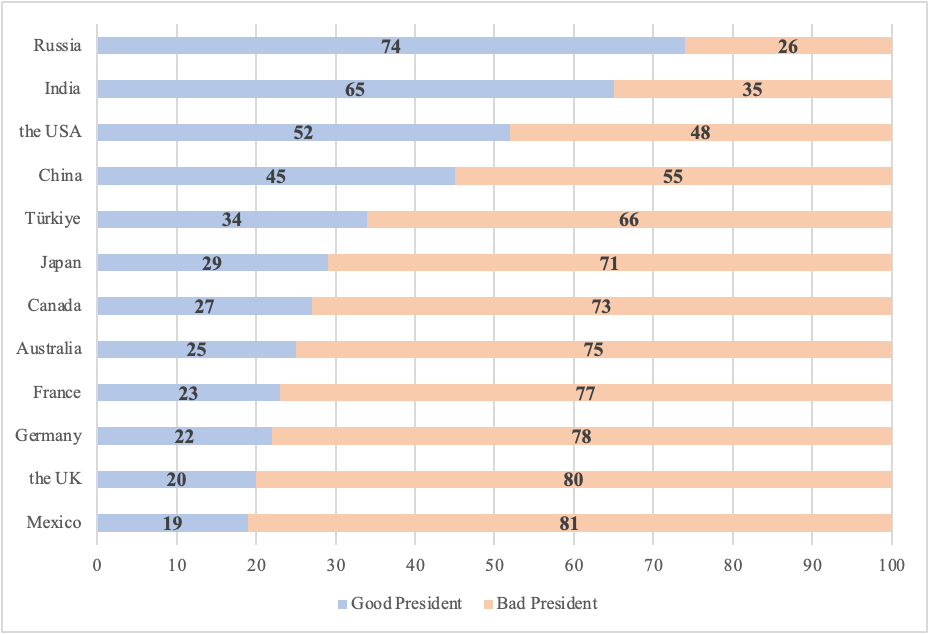
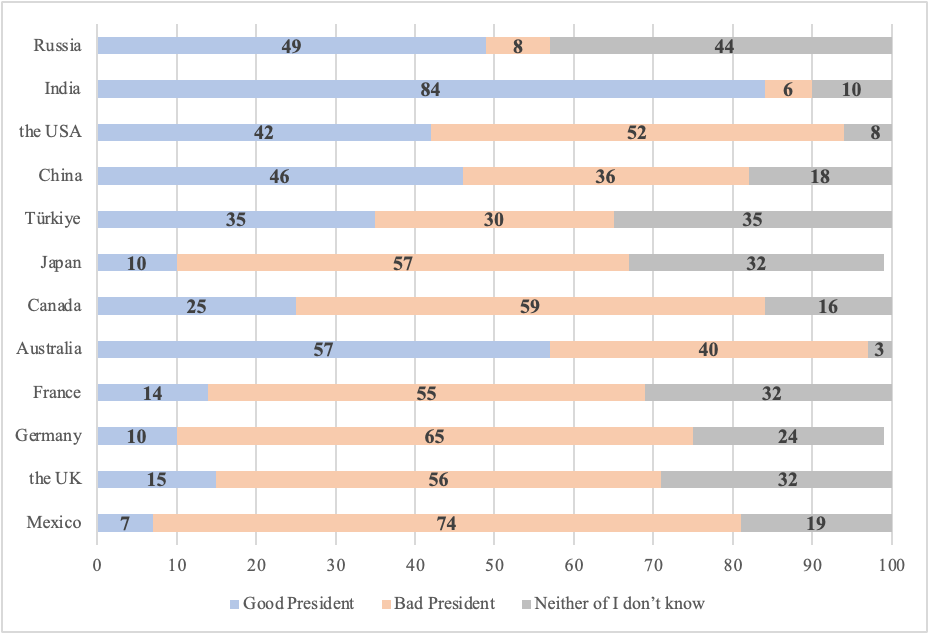
The predominant views on Russia in the US Congress remained mostly adversarial and focused on potential punitive US measures, particularly through new economic sanctions. To some extent, these moods reflected the long-standing perceptions within both Republican and Democratic Parties electorates[8]. Some of US experts also argued that the moods on the Capitol Hill were at least partially shaped by the American defense sector that used the bugbear of a new “Russia’s threat” to lobby for more spending on military procurement[9]. In any case, the Trump Administration could not count on any major support for its efforts to reinvent US relations with Moscow to come from the Hill.
It is fair to say that given the above-mentioned grounds for skepticism and doubts on the Russian side, the 47th President of the United States exceeded initial expectations in the Kremlin; he demonstrated a clear intention to thoroughly review and to radically revise some of the approaches to Moscow practiced by his predecessor. For instance, he radically changed the established US official narrative about the origins of the Russian-Ukrainian conflict arguing that Kiev itself was responsible for the outbreak of military activities since the Ukrainian side had not done enough to avoid it through diplomatic means[10]. Furthermore, in early March of 2025 the White House ordered a pause on military aid to Ukraine[11] – a move that was predictably welcomed in Moscow and criticized in most of European capitals.
The initially cautious and reactive approach to the new US leadership gradually gave way to a more energetic and proactive Russian policy with the intention to engage the Republican Administration into a productive dialogue. The two sides agreed to start working on a broad range of problems in their bilateral relations and to activate political and diplomatic contacts at various levels. The first important US-Russian governmental meeting took place in Riyadh, Saudi Arabia on February, 18. From the Russian side it was attended by Sergey Lavrov, Russia’s Foreign Minister, Yuriy Ushakov, Foreign Affairs Assistant to the President, and Kirill Dmitriev, CEO of the Russian Direct Investment Fund (RDIF). The US side was represented by Marco Rubio, Secretary of State, Mike Waltz, National Security Advisor to the President and Steve Witkoff, US special envoy to the Middle East. The agenda of the 4.5-hour meeting was broad; participants discussed means to restore the crippled diplomatic relations, political settlement in Ukraine and a number of other regional crises. Later on, President Putin expressed his satisfaction with the outcomes of the meeting and argued that such meetings cold raise the level of trust between the two nations[12].
On March 24, Russia and the United States held another meeting in Riyadh. This time the Kremlin dispatched to the Saudi capital Grigory Karasin, Head of the Council of Federation’s International Affairs Committee, and Sergey Beseda, Advisor to the head of FSB. The US negotiating group was led by Michael Anton, Director of Policy Planning at State Department. The details of the meeting have never been made public since the participants focused on technical matters[13]. One of these technical matters was the Black Sea “grain initiative”, but since the meeting lasted for about twelve hours, one can conclude that it was not the only topic discussed in Riyadh.
Centrality of the Ukrainian Problem
The core aspect of the relationship was, of course, the White House attitude to the Russia-Ukraine conflict. Trump, who on many occasions directly blamed the Biden Administration for the military confrontation in the very center of Europe, came up with his own Peace plan that was much more conducive to Russia’s aspirations and expectations than any official Western proposal that had been articulated over the first three years of the conflict. It took the Trump team about three months to move from rather general political statements on how to end the conflict to more specific suggestions and proposals; the main components of the Trump Plan were made public by mid-April. The plan included a number of important concessions to Moscow, including a de-jure US recognition of Crimea as a Russian region, a de-facto acceptance of other Russia’s territorial acquisitions made since February of 2022, a commitment not to allow Kiev joining NATO and gradual lifting of Western sanctions imposed on Moscow[14].
It goes without saying that Trump invested a lot of his personal political capital in forging the new US approach to the conflict and he apparently expected his plan to be welcomed by the Russian side. After the tense meeting with President Zelensky in Washington in the end of February the Republican Administration had reasons to believe that it would encounter more resistance to the US mediation coming from Kiev than from Moscow. It was also clear that the US President had better personal chemistry with his Russian colleague than with the Ukrainian leader – partially due to his earlier track record with each of them[15]. Apparently, in the White House they expected the Kremlin to seize the opportunity to put an early end to a protracted military confrontation even without guaranteed prospects for a more comprehensive political settlement in the immediate future.
Yet, as it turned out, the Trump Plan still fell short of what they could readily accept in the Kremlin in spring – summer of 2025. For instance, it did not include any quantitative or qualitative restrictions on the Ukrainian military capabilities, on the Western security assistance to Kiev or on a direct military presence of selected European NATO member-states on the territory of Ukraine. Neither it included any “denazification”, i. e. any reload of the Ukrainian political system with the aim to exclude form this system all the radical nationalist parties and movements. In his view, Russia was not in a position and should not be allowed to “take all of Ukraine” or to have a veto power over Ukraine’s political future.
Disagreements between the White House and the Kremlin on the future of Ukraine became explicit already by mid-spring[16]. When in late March President Putin suggested that Ukraine should be put under an international control as a failed state[17], this suggestion was promptly and unambiguously turned down by the White House[18]. In sum, Trump insisted on keeping Ukraine fully sovereign, heavily armed, pro-US and potentially hostile to Russia for years to come, even with a significant loss of territory and an imposed neutral status. Moreover, as a consolation prize for offering Kiev a NATO membership, Trump suggested that Ukraine should instead receive a fast track in its future accession to the European Union. Given the growing security ties between the EU and NATO, one could conclude that the Trump Administration was looking for a way to have an upper hand in future Ukraine’s security matters without taking any binding security commitments to the Ukrainian state.
Diversifying the Political Investment Portfolio
It seems that these deep, if not irreconcilable, divisions between US and Russia’s positions on the settlement in Ukraine were evident to the political leadership in Moscow already at the earliest stage of the renewed Russia–US dialogue in winter – spring of 2025. However, to put the overall relations with the United States back on track was perceived in the Kremlin as an impotent foreign policy goal in itself, even if the chances to reconcile diverging positions of the two sides on Ukraine looked disappointingly low. Since early spring of 2025 the Russian side tried to use its newly restored connections to Washington in order to diversify Moscow’s political investment portfolio with the United States and, hopefully, to broaden the extremely narrow pro-Russian political and economic power groups within the US establishment[19].
In particular, in early April Kirill Dmitriev, head of the RDIF, paid a visit to Washington, where he discussed possible joint Russia-US projects ranging from restoring a direct air traffic between the two counties to a US access to Russia’s rare-earth deposits to joint bilateral initiatives in the Arctic region[20]. Within the Russian expert community, they also discussed future collaboration in space research, public health and AI. In the end of July Dmitri Bakanov, Head of Roskosmos, visited Houston to have discussions with his counterpart at NASA, which was the first meeting between the two national space agencies in eight years[21]. The idea evidently was to make sure that even if the sides fail to agree on Ukraine, they would still have a lot of potential areas of cooperation. This approach appeared to be preemptive tactics with the goal to mitigate likely Trump’s discontent resulting from a slow progress in Ukraine’s settlement.
There were two rounds of consultations on the irritants in the diplomatic dimension of the relations addressing mostly reciprocal restoration of almost completely frozen activities of Embassies and consulate services. It is also worth mentioning multiple trips of Steve Witkoff, the US special envoy, to meet with Vladimir Putin (in February, in March, two times in April and one more time in early August).
However, if in Washington they hoped that prospects for a broad economic cooperation and for resuming a meaningful political dialogue could change the Russian position on Ukraine in the direction of a greater flexibility, such hopes never came through. There were no even symbolic changes in the proposed terms for a peace settlement since Vladimir Putin outlined his views on this matter at a meeting with the Russian Foreign Ministry senior personnel on June 14, 2024[22]. Moreover, in spring – summer of 2025 the pace of the Russian offensive in Ukraine increased, which apparently further consolidated the existing consensus on desirable and acceptable to Russia terms on the settlement with Ukraine.
At the same time, Russian officials tried hard to avoid any direct criticism of President Trump and his team; the changed US “pragmatic” approach to Moscow was juxtaposed to the ideology driven “Russo-phobia” of the European political mainstream. The public reports on Putin-Trump phone conversations sounded optimistic and respectful to the US leader even if the two Presidents could not reach any specific agreements[23]. This new rhetoric was a radical departure from the 2022-2024 Russia’s foreign policy narrative, in which the United States was routinely presented as the omnipotent center of the global anti-Russian alliance, while European states were presented as powerless satellites and even puppets of Washington forced by the latter to follow the US hostile strategy towards Russia against their own will and fundamental interests[24].
Limited Opportunities for Cooperation
If the intention on the Russian side was indeed to diversify the agenda of the dialogue with the Republican Administration, it could not change the centrality of Ukraine in the overall Trump’s approach to Russia. “Peace” in Ukraine – even in the form of a very preliminary ceasefire without a comprehensive political settlement – is not just another item on the agenda of US-Russian negotiations, it is the critical precondition for progress in all other dimensions of interaction between the White House and the Kremlin. In the eyes of Donald Trump, it is the ultimate test of Russia leadership’s credibility and its good will. Any US-Russian “deal” that did not include a Russian-Ukrainian settlement, would appear in Trump’s eyes if not as a complete failure, then at least as an unfinished business.
One should also note that beyond Ukraine opportunities for any large-scale bilateral cooperation between Moscow and Washington remain limited at best.
Donald Trump has never been particularly interested in bilateral strategic arms control that for half a century was the cornerstone of US-Soviet and later on – of US – Russian relations. Back in 2018, he decided that the United States should withdraw from the US-Soviet INF Treaty signed in 1987. The Republican Administration demonstrated no commitment to the New START Treaty concluded in 2010 with the expiration date in early 2021; the Treaty was hastily extended till 2026 only when the Biden Administration took office in January of 2021. Today (in September of 2025) there are no signs that Moscow and Washington might be in a position to agree on a replacement for the New START by early 2026, when the 2021 extension finally expires. At best, the two sides can reach a political (non-binding) agreement that they will stay within the New START ceilings after the Treaty expires[25]. In fact, Trump has never cared much about strategic stability at large, given his stated intention to develop and to deploy the so-called Golden Dome that should grossly devalue the Russian strategic deterrence capacity. If there is limited interest in managing the ongoing global arms race, the interest is directed towards Beijing rather than Moscow. In early August of 2025, the Russian leadership decided to terminate its unilateral moratorium on the deployment of ground-launched intermediate-range and shorter-range missiles[26], which can be regarded as an implicit recognition that the INF Treaty is finally and irrevocably dead.
In the end of September Vladimir Putin came up with a proposal that Russia and the United States could extend their New START arms control treaty that expires in February of 2026 till at least February of 2027 without imposing any additional conditions; one extra year could be used by Moscow and Washington to work on a new arrangement in this area[27]. It took the US President about two weeks to react to the proposal; finally, Donald Trump stated that it was “a good idea”[28]. However, it remains unclear whether any serious negotiations on this matter can take place in the absence of a visible progress on the Russian-Ukrainian track.
Economically, the bilateral trade has never been critically important for either side. Even at its peak during the heydays of Barak Obama’s “Reset” it constituted only 3,3% of the overall Russia’s trade turnout compared to 49,4% share of the European Union[29] and remained fundamentally unbalanced in Russia’s favor. The trade plummeted after 2014 and especially after 2022; today its levels ($3.5 billion in 2024) are the lowest since the times of the Soviet disintegration. Some Russian experts argue that with positive geopolitical dynamics the bilateral trade can more than double in 2025 reaching $6–8 bln.[30], but even this steep rise would not constitute a new solid foundation for the bilateral relationship. Furthermore, the Russian and the US economies are not mutually complimentary as, for instance, Russia’s and China’s economies; in many important global markets (hydrocarbons, food stock, arms) Russian and the United States are outright competitors rather than potential partners.
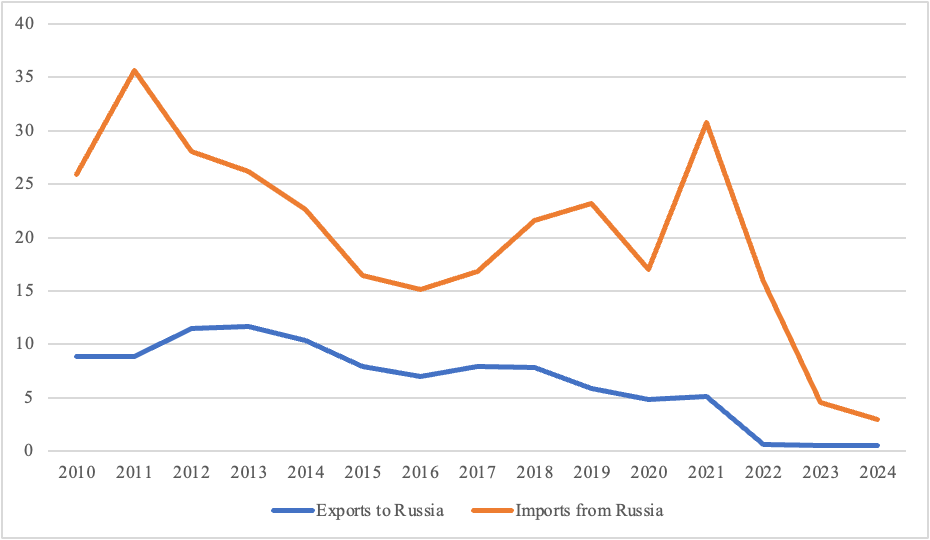
Of course, the United States might benefit from purchasing Russia’s titanium for Boeing, enriched Uranium for US nuclear power-plants or even the Russian heavy oil for some of American refineries. It might explore opportunities with the Russia rare-earth resources. However, Russia is not a sole source of any of these commodities for the United States; there are many alternative suppliers that the US side can consider. Besides, even Trump is not in a position to remove all the US anti-Russian sanctions overnight, which means that any US-Russian economic cooperation in the foreseeable future will be seriously constrained. In any case, by the end of July, 2025 no single major US investor indicated its intention to launch new projects in Russia[31]. There were rumors that the US energy giant Exxon Mobile might reclaim its share within the Sakhalin-I oil project[32], but the odds are that such a comeback an happen only after the military conflict in Europe comes to its end. The odds are that if US investment institutions do consider opportunities in Russia in the immediate future, these opportunities will be looked for in short-term speculative operations in the national financial markets rather in long-term direct investments into the Russian economy.
Prospects for an intense cooperation between the White House and the Kremlin on burning regional matters look doubtful at best. US and Russian interests in most of them hardly significantly overlap; in many cases in Washington, they consider Russia’s direct or indirect engagement in regional crises to be a part of the problem rather than a part of the solution. It was not surprising that Trump flatly rejected Putin’s offer to serve as a mediator in the recent cycle of military escalation between Israel and Iran[33]. On the other hand, it looks almost inconceivable that the Kremlin might opt for any significant changes in its current approaches to Tehran, Pyongyang, Havana or Caracas, not even to mention Beijing, in order to accommodate US interests and concerns. Such a step would seriously undermine Moscow’s credibility as a strategic partner and might have significant negative repercussions for Russia’s positions in various regions of the world. Critics of Trump argue that his policies – especially related to rearranging the NATO Alliance – might eventually further consolidate the Russia-China strategic partnership rather than weaken it[34].
Finally, given the present high level of anti-Russian sentiments within the US public, it is hard to imagine that bilateral relations in education and R&D, arts and culture, civil society and media could boom in the immediate future. Donald Trump did have an impact on the US public views on Russia, but it is a least premature to talk about a radical shift of the public opinion. The public opinion shift in Russia toward a more positive approach to the United States might be more visible and articulated, but it might also be only skin-deep and highly vulnerable to unpredictable changes in the geopolitical atmospherics. There is a numerous and mostly economically successful Russian – or rather post-Soviet diaspora in the United States; according to various estimates, this community comprises from 2.5 to 6 million people. But this diaspora is split along very many lines and a large share of post-Soviet immigrants to America remain explicitly hostile to the political system that exists in Russia today.
Fading Hopes
When it became clear that no fast progress on the Ukrainian track is achievable, the White House started losing most of its interest in other areas of potential cooperation. After the first two rounds of negotiations (February 27 and April 10), the proceedings of the bilateral group on irritants in bilateral relations were frozen by the US side.[35] Though initially the Russian Foreign Ministry was insisting on resuming the negotiations as soon as possible, by the end of July the Russian approach started changing and Deputy Foreign Minister Sergey Vershinin argued that “the irritants should be removed foremost by the US side, and decisions regarding a new round of negotiations on these matters are premature”[36].
In July, the Administration made a politically important decision to resume its arms supplies to Ukraine[37], including the most controversial deliveries of the Patriot missile defense systems, though it changed the terms of American military hardware deliveries imposing their costs on the US European allies. Though it would be wrong to argue that in half a year the Trump Administration fully returned to the old Biden’s approaches to the Russian-Ukrainian conflict, it definitely retreated from some of its initial explicitly critical and condescending positions toward Ukraine.
In February – June of 2025, Trump had three face-to-face meetings with Zelensky (February 28 – a tense encounter at the Oval Office in Washington, April 26 – a more constructive private meeting inside St. Peter’s Basilica at the Vatican during Pope Francis’s funeral, a lengthy and substantive conversation on the sidelines of the NATO summit in the Hague), but not a single such meeting with Vladimir Putin. True, over the first five months of the Republican Administration the two leaders had at least six phone calls[38], but this form of communication cannot fully replace face-to-face meetings.
Half a year after Donald Trump had returned to power in Washington, Dmitry Peskov, Putin’s Press Secretary, argued that the time for a Russia-US summit was not yet ripe and that the two sides have to do “a great deal of work” to make it possible[39]. By early August there were no indications that any practical preparation for a summit meeting had already started. Over time, the US President became more and more critical in his public statements related to his Russian colleague and started entertaining the idea of imposing new economic sanctions on Russia and on its main trading partners. In July this approach resulted in the “Trump’s Ultimatum” that implied a broad package of sanctions focused mostly on Russia’s energy sector and its clients – countries like China and India. The “Ultimatum” should be enforced if there is now Russian-Ukrainian ceasefire agreement in 50 days after its announcement. Later on, the US President change the announced deadline to ten days indicating that he had no hopes to see any significant change in Russia’s performance in Ukraine.
The initial Russian reaction of the Ultimatum was explicitly dismissive though many experts predicted that such a US move would significantly complicate Russian trade relations with a number of key partners in the Global South. Yet, Russia’s officials continued avoiding any harsh criticism of Trump personally apparently anticipating remaining potential for at least a limited progress in bilateral relations. In the beginning of August, the Russian leadership abstained from any comments on Trump’s threats, except for a rather emotional exchange between Dmitri Medvedev, Deputy Chairperson of Russia’s Security Council and US Republican Senator Lindsey Graham (added by Rosfinmonitoring to the list of individuals and organizations believed to be involved in extremist or terrorist activities since February 20, 2024)[40]. At the same time, on August 1 Russia’s Foreign Minister Sergey Lavrov expressed a rather positive view on the state of Russian – US relationship, arguing that the “substantive discussion of the Ukrainian matters is very useful and yields results. It was exactly thanks to the persistent efforts of President Trump that the regime in Kiev agreed to our proposal to resume the Istanbul negotiations”[41].
A Tale of Two Summits
The improvised US-Russian summit meeting in Alaska, which took place on August 15, was a consorted attempt by both sides to reverse the negative dynamics in the bilateral relationship. On the eve of the summit meeting, both sides did their best to secure themselves against a possible failure. They announced quite in advance that no documents were supposed to be signed in Anchorage and that no specific agreements were expected to come out of the negotiations. Shortly before the meeting, the White House Spokesperson Karoline Leavitt described the summit as a “listening exercise for the president”[42], and Russian President Vladimir Putin argued that in negotiations too high expectations inevitably lead to disappointments[43].
Furthermore, the preparation of the summit, as far as one can judge, did not in any significant way affect the intensity of military confrontation along the line of Russian–Ukrainian contact. Attacks of Ukrainian drones against a number of Russia’s regions and the consistent advances of Russian forces deeper into the Ukrainian territory continued with no pauses or interruptions; both sides routinely accused each other of continuous strikes against civilian targets. There were no signs of even a limited de-escalation on the eve of the Alaska meeting; on the contrary, many observers argued that the overall intensity of the conflict even increased in early August.
The announcement of the summit did not stop or slow down the work of Brussels officials on the next, 19th package of European Union sanctions against Russia. Neither it removed the prospect of an increased American economic pressure on Moscow and its trading partners from among the leading countries of the countries of the South. The deadline of the Trump ultimatum to Putin expired on August 8, but the US President did not take this threat off the table, apparently hoping to use it as a bargaining chip at the meeting in Anchorage.
Nevertheless, expectations from the meeting remained high – not only in Moscow and in Washington, but all over the world as well. An unusual haste in organizing, the lack of reliable leaks on the substantial outcome of Steve Witkoff earlier visit to Moscow and, finally, the very representative composition of the delegations of Russia and the United States in Anchorage, which suggested discussing a wide range of issues from strategic arms control to joint economic projects, contributed to the political and media hype around the event. There was no shortage of speculations about possible agreements in various exotic areas like large-scale cooperation in the Arctic region or resurrecting US-Russian collaboration in space.
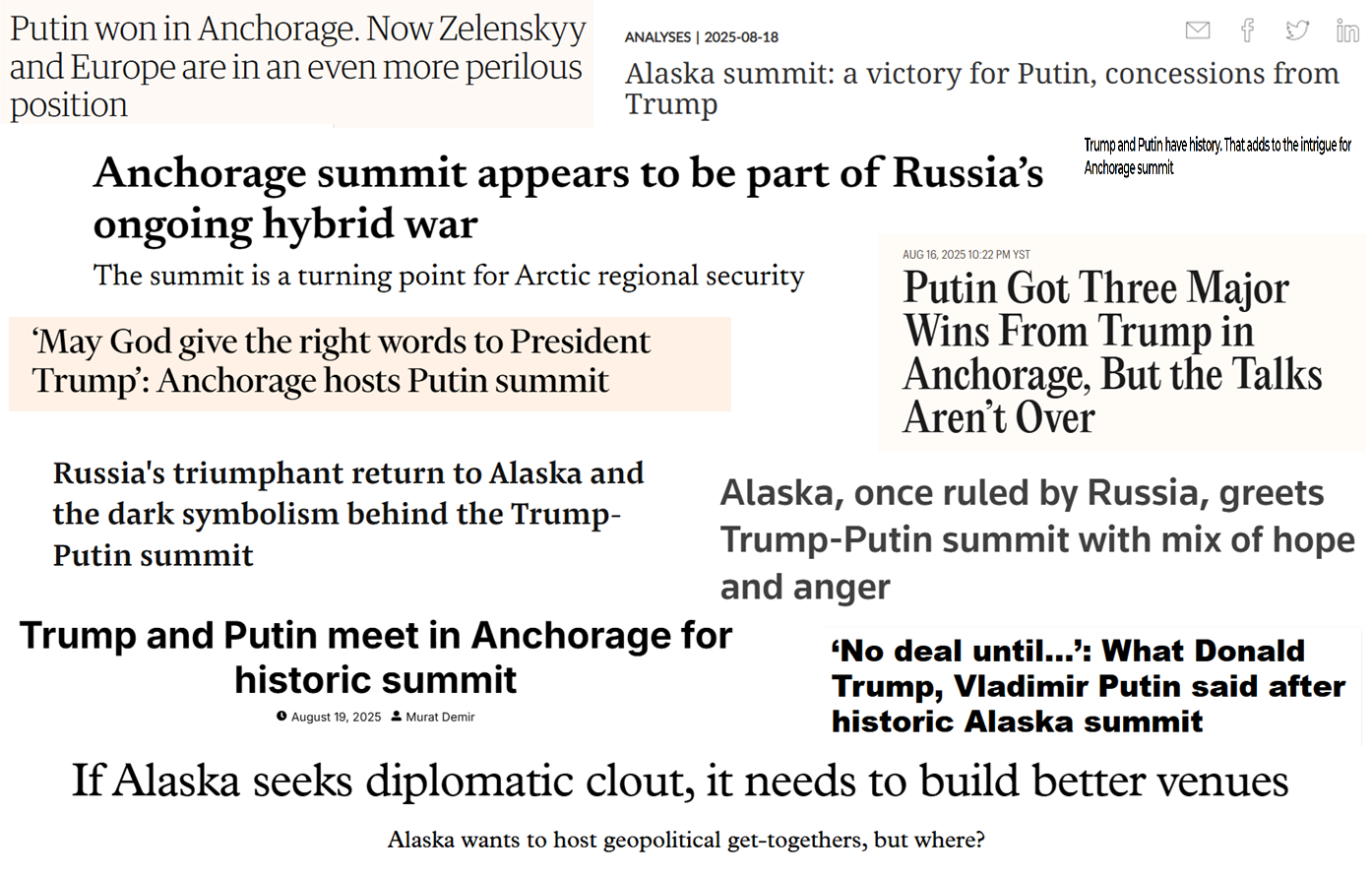
If in Moscow many hoped for a miracle, then in Kiev and in most European capitals they were scared that a miracle might indeed happen. The Western media were filled with the gloomiest forecasts, painting “conspiracy of the two autocrats” and prospects of a New Yalta to be decided over the heads of other international actors and out of the frameworks of the established multilateral bodies. The mere fact of the bilateral meeting was interpreted as a major foreign policy victory for Russia[44]. The opinions were also expressed that the experienced, cautious and prudent to details Putin would easily outplay the impulsive, exalted and details-blind Trump.
The summit in Alaska is commonly and rightfully regarded as a major foreign policy victory for President Putin though not as a crushing defeat for President Trump. The Russian leader demonstrated his impressive power of persuasion, completely revering the most recent negative dynamics of Trump’s attitude to Russia and its leadership. First, Putin was able to convince his US counterpart that a comprehensive political settlement of the conflict with Ukraine is more important than a temporary ceasefire and that the ceasefire should not be a precondition for negotiating the peace settlement. Second, after the US-Russian summit the idea of a new devastating US secondary sanctions package against major Russian trade partners was put on a back-burner, if not completely abrogated. Third, Putin managed to shoot the ball into Zelensky’s court; after the negotiations in Alaska Trump stated that the Ukrainian President could immediately end the conflict if he only accepted the terms being offered to him[45].
Ukrainian and European leaders were summoned on August 18 in the White House, where they desperately tried to undo these outcomes. They thoroughly avoided any discussions of possible Ukrainian concessions – at least in the open part of their meeting. President Zelensky stated that the Ukrainian Constitution did not allow any territorial changes and also argued that all territorial matters should be discussed only between him and President Putin[46]. The main focus of the Washington’s summit was on future security guarantees for Ukraine short of the full membership to the NATO Alliance, but similar to what Article 5 of the North Atlantic Treaty offers. Predictably, Trump’s interlocutors called for more US military hardware for Ukraine and for more American economic pressure on Russia. Finally, Europeans tried hard to make sure that when peace talks start, Europe will have its rightful seat at the negotiating table.
Did European and Ukrainian leaders succeed in their attempts to “cancel” Anchorage and to restore the pre-Anchorage geopolitical momentum around the conflict? Probably not. Donald Trump did not change his negative view on the prospect of the US boots on the Ukrainian ground though he vaguely promised to consider some kind of air support for a future peace settlement in and around Ukraine. He showed no interest in a more direct European engagement in the peace negotiations, which could complicate these uneasy negotiations even further. Neither he demonstrated any intention to promptly follow Europeans on their next 19th sanction package against Moscow that bureaucrats in Brussels intended to approve already in September[47]. Ukraine could get more US-made weaponry in future, but only if it or its European partners were in a position to pay for it. Whether Europe can afford to foot the US bill remained an open question.
Still, in the Kremlin they could not simply brush off the results of the Washington summit as irrelevant and not worthy of consideration. The ball was back to the Russian court – Trump firmly supported Zelensky in his quest for an early Russian-Ukrainian summit. This was clearly not an easy situation for the Kremlin. Any excessive delays in reacting to the political show in Washington could start eroding the most important Alaska accomplishments and destroying personal trust between the Russian and the US leaders. On the other hand, a poorly prepared Russian-Ukrainian summit could turn into an epic failure blocking any immediate prospects for a peace settlement. In early September Vladimir Putin suggested that his meeting with President Zelensky could take place in Moscow[48], this proposal was promptly rejected by the Ukrainian side[49].
A Shaky Foundation
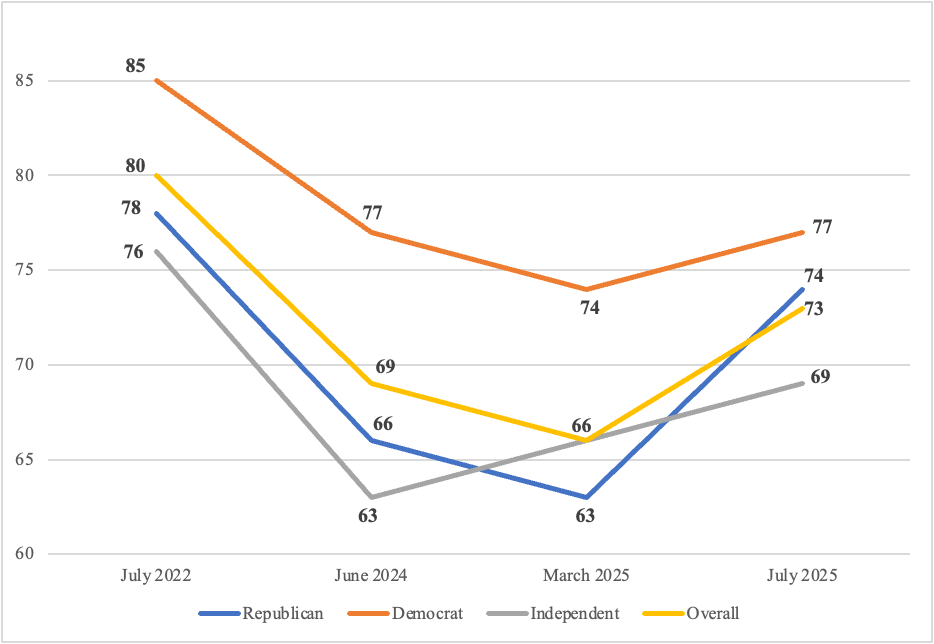
One should note that many powerful political groups on the Capitol Hill, within the federal government, in mainstream media and influential think tanks and foundations across the United States had never supported the revisionist approach of Donald Trump to Russia, considering it to be a self-defeating “appeasement”. Even within the Trump Administration itself, there have always been many skeptics, who have had many doubts about feasibility of “resetting” US-Russian relations. As early as March of 2025, the majority of US citizens, including 25% of the Republican Party supporters, expressed their concerns about the “pro-Russian bias” in Trump’s foreign policy[50].
A more general shift in the US public opinion typical for post-election phases in the US political cycles became another factor limiting potential Trump’s ‘reset’ initiatives. After the first six month of the second Trump’s term in power his overall popularity in the United States plummeted: the president’s approval ratings went down to 37% from 47% in January. Only 33% of Americans supported Trump’s approach to the Russian–Ukrainian conflict, which was significantly lower that the public support of Trump’s foreign policy in general (41%)[51].
This is not to say that the Russia-US relations are doomed to get back to where they were prior to November 6, 2024. First, Trump understands that Russia is winning, not losing in Ukraine and all the Western assistance cannot change the overall dynamics of the conflict[52].
Second, in US strategic priorities Ukraine is inevitably getting overshadowed by other foreign policy challenges and concerns related to China, Iran, Palestine and so on. Third, mounting social and economic problems at home will also require more attention from the White House. It is hard to imagine that Trump might decide to put the Russian-Ukrainian crisis back into the very center of the US foreign policy and security agendas, where it was under the Biden Administration. The US military and other assistance to Ukraine will be more modest and with many more strings attached than it was back in 2022–2024.
In fall of 2025 the Trump Administration demonstrated many examples of its ambiguous and not always consistent approach to Russia. On the one hand, it tried hard to display its readiness to impose more pressure on Moscow in order to incentivize the Russian leadership to show more flexibility on a future settlement with Ukraine. On the other hand, it clearly indicated its intention to avoid a collapse in the bilateral communications or to provoke an excessively hard reaction to US actions from the Kremlin. For instance, on October 16, Trump announced a forthcoming US-Russian summit to be held in Budapest[53]. However, as soon as October 22, the US leader cancelled the meeting over the alleged Russia’s refusal to back down from its maximalist claims on Ukraine[54].
Simultaneously, the US Department of the Treasury’s Office of Foreign Assets Control (OFAC) announced new sanctions against Russia’s Rosneft and Lukoil energy corporations calling for an immediate ceasefire in Ukraine[55]. But already on December 1, top ranking Trump’s representatives Steve Witkoff and Jared Kushner after having talked with Vladimir Putin for around five hours in the Kremlin, seemed to be satisfied with the overall spirit of the meeting[56].
Arguably, the most significant signal of the changing US attitude towards Russia was the release the 2025 National Security Strategy (NSS) on December 4-5, which adopted a less confrontational tone compared with earlier NSS versions, prioritizing dialogue, strategic stability, and an “expeditious end to the Ukraine conflict over containment”[57]. Not surprisingly, Vladmir Putin’s Press Secretary Dmitry Peskov promptly reacted to NSS-2025, stating that the changes in the American strategic posture to a large extent coincide with the Kremlin’s vision of the world[58].
…It is a core interest of the United States to negotiate an expeditious cessation of hostilities in Ukraine, in order to stabilize European economies, prevent unintended escalation or expansion of the war, and reestablish strategic stability with Russia, as well as to enable the post-hostilities reconstruction of Ukraine to enable its survival as a viable state (p.25).
<…>
Our broad policy for Europe should prioritize reestablishing conditions of stability within Europe and strategic stability with Russia (p.27).
National Security Strategy of the United States of America
November 2025
https://www.whitehouse.gov/wp-content/uploads/2025/12/2025-National-Security-Strategy.pdf
In sum, the first year of the second Trump Administration, all the unquestionable changes in the US approaches to Moscow notwithstanding, has already demonstrated how hard it is to reverse the negative dynamic of the US-Russia relations. It seems obvious that even political will of the top leaders on both sides does not guarantee a successful outcome of this ambitious undertaking.
[1] State Duma greets news of Trump’s victory with applause // RIA Novosti News Agency. November 9, 2016. URL: https://ria.ru/20161109/1480965810.html (in Russ.).
[2] Reset Policy (also known as The Russian Reset) was an attempt by the Obama administration to improve relations between the United States and Russia in 2009–2013 – Editor’s note.
[3] Zhao H. The New ‘Reset’ of US-Russia Relations and Its Possible Prospects // Valdai Discussion Club. March 14, 2025. URL: https://valdaiclub.com/a/highlights/the-new-reset-of-us-russia-relations/
[4] Sergei Ryabkov: We know Trump from his previous run for power // Interfax. November 9, 2024. URL: https://www.interfax.ru/interview/990928 (in Russ.).
[5] Teasing Putin says Russia backs Kamala Harris, cites her ‘infectious’ laugh // Reuters. September 6, 2024. URL: https://www.reuters.com/world/europe/putin-says-moscow-supported-its-own-citizens-major-east-west-prisoner-swap-2024-09-05/
[6] US imposes sanctions on Russian and Iranian groups over disinformation targeting American voters // The Associated Press. January 1, 2025. URL: https://apnews.com/article/russia-iran-trump-disinformation-election-959d3f36ffc81f3e5d07386122076e7e
[7] Later on Sergey Ryabkov, Deputy Russia’s Foreign Minister confirmed this position: “We are open to dialogue, and we are ready for hardcore negotiations with due regard for realities on the ground and our national interests based on history and geography”. See: Deputy Foreign Minister Sergey Ryabkov’s answer to a question // MFA of the Russian Federation. February 5,2025. URL: https://mid.ru/ru/foreign_policy/news/1994864/ (in Russ.).
[8] Dunn A. Republicans and Democrats alike view Russia more as a competitor than an enemy of the U.S. // PewResearch Center. January 26, 2025. URL: https://www.pewresearch.org/short-reads/2022/01/26/republicans-and-democrats-alike-view-russia-more-as-a-competitor-than-an-enemy-of-the-u-s/
[9] Shapiro D., Martirosyan A. Why Does Congress Not Care About Normalizing Relations With Russia? // Russia Matters. Harvard Kennedy School, Belfer Center for Science and International Affairs. February 26, 2020. URL: https://www.russiamatters.org/analysis/why-does-congress-not-care-about-normalizing-relations-russia
[10] Trump says Ukraine ‘should have never started’ war in Ukraine // NBC News. February 19, 2025. URL: https://www.nbcnews.com/politics/donald-trump/trump-says-ukraine-should-never-have-started-it-remarks-war-russia-rcna192710
[11] Trump Suspends Military Aid to Ukraine After Oval Office Blowup // The New York Times. March 5, 2025. URL: https://www.nytimes.com/2025/03/03/us/politics/trump-ukraine-military-aid.html
[12] Putin comments for the first time on the results of Russia-US talks in Riyadh // Forbes. February 19, 2025. URL: https://www.forbes.ru/society/531170-putin-vpervye-prokommentiroval-rezul-taty-peregovorov-rossii-i-ssa-v-er-riade (in Russ.).
[13] Peskov explained why they decided not to make public the content of the talks in Riyadh // RTVI. March 25, 2025. URL: https://rtvi.com/news/peskov-obyasnil-pochemu-reshili-ne-obnarodovat-soderzhanie-peregovorov-v-er-riyade/ (in Russ.).
[14] Trump Pressures Ukraine to Accept a Peace Plan That Sharply Favors Russia // The New York Times. April 23, 2025. URL: https://www.nytimes.com/2025/04/23/world/europe/ukraine-cease-fire-talks-london.html
[15] How Trump’s history with Putin and Zelenskyy set the stage for an Oval Office blowup // PBS News. March 3, 2025. URL: https://www.pbs.org/newshour/politics/how-trumps-history-with-putin-and-zelenskyy-set-the-stage-for-an-oval-office-blowup
[16] Saradzhyan S., Arreguín-Toft I., Flood A. Readouts of Trump-Putin Call Reaffirm Divergence of US, RF Views on Path to Peace // Russia Matters. March 20, 2025. URL: https://www.russiamatters.org/blog/readouts-trump-putin-call-reaffirm-divergence-us-rf-views-path-peace
[17] “External Management Is One of the Options”: Putin Proposes New Plan for Ukraine // Gazeta.ru. March 26, 2025.URL: https://www.gazeta.ru/politics/2025/03/28/20783252.shtml (in Russ.).
[18] Trump administration rejects Putin’s proposal that the U.N. should govern Ukraine // NBC News. March 28, 2025. URL: https://www.nbcnews.com/news/world/putin-trump-russia-ukraine-zelenskyy-un-guinea-timor-yugoslavia-rcna198520
[19] Matviyenko urged not to reduce relations between Russia and the US to the Ukrainian case only // Gazeta.ru. July 24, 2025.URL: https://www.gazeta.ru/politics/news/2025/07/24/26340776.shtml (in Russ.).
[20] Key points from Kirill Dmitriev’s statements following his trip to Washington // Expert Journal. April 4, 2025.URL: https://expert.ru/news/glavnoe-iz-zayavleniy-kirilla-dmitrieva-po-itogam-ego-poezdki-v-vashington/ (in Russ.).
[21] Head of Roscosmos Arrives in the US // RIA Novosti News Agency. July 29, 2025. URL: https://ria.ru/20250729/bakanov-2032045162.html (in Russ.).
[22] The President held a meeting with the leadership of the Ministry of Foreign Affairs of the Russian Federation // President of Russia. June 14, 2024. URL: http://www.kremlin.ru/events/president/news/74285 (in Russ.).
[23] Commentary by Aide to the President of Russia Yuriy Ushakov following the telephone conversation between Vladimir Putin and President of the United States Donald Trump // President of Russia. July 3, 2025. URL: http://en.kremlin.ru/events/president/news/77354
[24] The Concept of Foreign Policy of the Russian Federation (approved by the President of the Russian Federation on March 31, 2023) // MFA of the Russian Federation. March 31, 2023. URL: https://www.mid.ru/ru/detail-material-page/1860586/?ysclid=mdlsv0kuj3315630024 (in Russ.).
[25] Kimball D. Making Sense of Trump’s Talk of ‘Denuclearization’ // Arms Control Association. March 10, 2025. URL: https://www.armscontrol.org/act/2025-03/focus/making-sense-trumps-talk-denuclearization
[26] Statement by the Ministry of Foreign Affairs of the Russian Federation on the moratorium on the deployment of ground-launched intermediate-range and shorter-range missiles // MFA of the Russian Federation. August 4, 2025. URL: https://mid.ru/en/foreign_policy/news/2039749/ (in Russ.).
[27] A meeting with permanent members of the Security Council // President of the Russian Federation. September 22, 2025. URL:http://kremlin.ru/events/president/news/78051 (in Russ).
[28] Trump says Putin’s proposal on New START ‘sounds like a good idea’ // TASS. October 5, 2025. URL: https://tass.com/world/2025407 (in Russ.).
[29] Presidents’ Dreams: Why Nothing Will Change in US-Russia Trade Relations // Finam.ru. May 20, 2025. URL: https://www.finam.ru/publications/item/mechty-prezidentov-pochemu-v-torgovykh-otnosheniyakh-ssha-i-rossii-nichego-ne-izmenitsya-20250520-1748/ (in Russ.).
[30] You owe the goods: Russia-US trade could double in 2025 // Izvestia. May 20, 2025. URL: https://iz.ru/1856762/olga-anaseva/s-vas-tovar-torgovlya-rf-i-ssha-mozhet-vozrasti-vdvoe-v-2025-m (in Russ.).
[31] Ministry of Finance: No applications from foreign companies to return to Russia have been received // Russian Gazette. July 24, 2025. URL: https://rg.ru/2025/07/24/minfin-zaiavok-ot-zarubezhnyh-kompanij-o-vozvrashchenii-v-rf-ne-postupalo.html (in Russ.).
[32] Wallace J., Paris C., Leary A., Eaton C. Exxon Held Secret Talks With Rosneft About Going Back to Russia // The Wall Street Journal. August 26, 2025. URL: https://www.wsj.com/business/energy-oil/exxon-rosneft-russia-oil-talks-f524e81f
[33] Shane Croucher. Trump Rejected Putin’s Iran Offer: ‘I Need Help With You’ // Newsweek. June 24, 2025. URL: https://www.newsweek.com/trump-putin-iran-deal-ukraine-war-russia-2089972
[34] Turker H. Trump’s Russia Strategy: Breaking the Sino-Russian Alliance or Strengthening It? // Geopolitical Monitor. February 23, 2025. URL: https://www.geopoliticalmonitor.com/trumps-russia-strategy-breaking-the-sino-russian-alliance-or-strengthening-it/
[35] The Foreign Ministry announced the cancellation of talks on “irritants” at the initiative of the United States // RBC. June 16, 2025.URL:https://www.rbc.ru/politics/16/06/2025/685014689a7947fdda1ef4b3 (in Russ.).
[36] The Foreign Ministry called for eliminating irritants in relations between Russia and the US // RIA Novosti News Agency. July 31, 2025. URL: https://ria.ru/20250731/diplomatiya-2032505235.html (in Russ.).
[37] US to send more weapons to Ukraine, Trump says // Al Jazeera. July 8, 2025. URL: https://www.aljazeera.com/news/2025/7/8/us-to-send-more-weapons-to-ukraine-trump-says
[38] Putin, Trump hold 2025’s sixth phone talk // TASS. July 3, 2025. URL: https://tass.com/politics/1985185 (in Russ.).
[39] Peskov said that Putin’s meeting with Trump “will definitely happen” // Forbes. July 20, 2025. URL: https://www.forbes.ru/society/542237-peskov-zaavil-cto-vstreca-putina-s-trampom-obazatel-no-slucitsa (in Russ.).
[40] How Medvedev and Senator Graham Argued Over the Ultimatum on Ukraine // RBC. July 29, 2025. URL: https://www.rbc.ru/politics/29/07/2025/688887169a794771e0c35949?ysclid=mdr0szthh4657303999 (in Russ.).
[41] Answer of the Minister of Foreign Affairs of the Russian Federation Sergey Lavrov to the media question // MFA of the Russian Federation. August 1, 2025. URL: https://mid.ru/ru/foreign_policy/news/2039314/ (in Russ.).
[42] Iordache R. White House tames expectations for Trump-Putin summit // CNBC. August 13, 2025. URL: https://www.cnbc.com/2025/08/13/white-house-tames-expectations-for-trump-putin-summit.html
[43] Putin: All disappointments in negotiations occur due to excessive expectations // TASS. August 1, 2025. URL: https://tass.ru/politika/24687549 (in Russ.).
[44] Kupchan C., Fix L, Stares P. What to Expect From the Trump-Putin Alaska Summit // Council on Foreign Relations. August 14, 2025. URL: https://www.cfr.org/article/what-expect-trump-putin-alaska-summit
[45] Trump says Ukraine’s Zelenskyy could end war ‘almost immediately’ // Al Jazeera. August 18, 2025. URL: https://www.aljazeera.com/news/2025/8/18/trump-says-ukraines-zelenskyy-can-end-war-almost-immediately
[46] Zelensky: Territorial issues should be discussed with Putin // Kommersant Publishing House. August 18, 2025. URL: https://www.kommersant.ru/doc/7973458 (in Russ.).
[47] Broadwater L., MacFarquhar M. Takeaways From Trump’s Meeting With Zelensky and European Leaders // The New York Times. August 18, 2025. URL: https://www.nytimes.com/2025/08/18/us/politics/takeaways-trump-zelensky-putin.html; Ultimately, the sanctions package was approved at the end of October 2025. The US Government also imposed sanctions against a number of major Russian energy companies in October 2025 – Editor’s note.
[48] Putin said that his meeting with Zelensky is possible // Gazeta.ru. September 3, 2025. URL: https://www.gazeta.ru/politics/news/2025/09/03/26645120.shtml (in Russ.).
[49] “He can come to Kiev”: Zelensky refused to go to Moscow and invited Putin to Ukraine // Gazeta.ru. September 6, 2025. URL: https://www.gazeta.ru/politics/2025/09/06/21655634.shtml (in Russ.).
[50] Americans worry Trump too closely aligned with Russia, Reuters/Ipsos poll finds // Reuters. March 13, 2025.URL: https://www.reuters.com/world/us/americans-worry-trump-too-closely-aligned-with-russia-reutersipsos-poll-finds-2025-03-13/
[51] Independents Drive Trump’s Approval to 37% Second-Term Low // Gallup. July 24, 2025. URL: https://news.gallup.com/poll/692879/independents-drive-trump-approval-second-term-low.aspx
[52] On the other hand, the United States continues to provide significant assistance to Ukraine as an arms donor. Moreover, discussions are ongoing in the Oval Office regarding the possible supply of Tomahawk missile systems to Ukraine – Editor’s note.
[53] Trump says he will meet with Putin in Budapest to discuss war in Ukraine // CNN. October 17, 2025. URL: https://edition.cnn.com/2025/10/16/politics/putin-trump-hungary-ukraine-war
[54] Trump’s hopes for quick second summit with Putin have stalled out // CNN. October 22, 2025. URL: https://edition.cnn.com/2025/10/20/politics/trump-putin-meeting-possible-delay-russia-ukraine
[55] Treasury Sanctions Major Russian Oil Companies, Calls on Moscow to Immediately Agree to Ceasefire // U.S. Department of the Treasury. October 22, 2025. URL: https://home.treasury.gov/news/press-releases/sb0290.
[56] Witkoff and Kushner met Putin for five hours on Ukraine plan // Axios. December 2, 2025. URL: https://www.axios.com/2025/12/02/putin-witkoff-kushner-meeting-ukraine-plan
[57] National Security Strategy of the United States of America // The White House, November 2025. URL: https://www.whitehouse.gov/wp-content/uploads/2025/12/2025-National-Security-Strategy.pdf
[58] Peskov Commented on Changes to the US National Security Strategy // RIA-Novosti News Agency. December 7, 2025. URL: https://ria.ru/20251207/usa-2060397469.html (in Russ.).
