
CHINA AT THE PEAK OF DEVELOPMENT: THE ERA OF XI JINPING

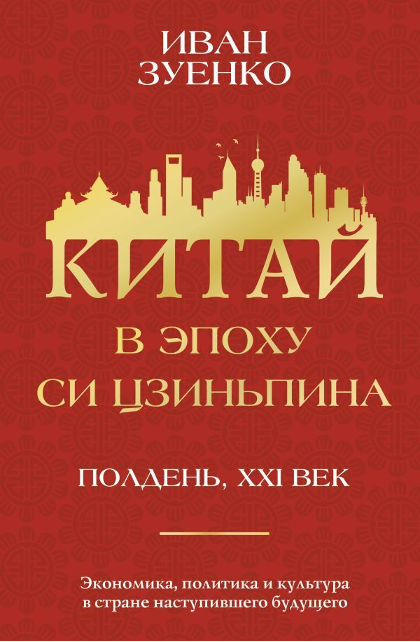
CHINA IN THE ERA OF XI JINPING
Ivan Zuenko
Moscow: AST Publishing House, 2024
ISBN 978-5-17-159611-8
(published in Russian)
URL: https://ast.ru/book/kitay-v-epokhu-si-tszinpina-876157/
The publication of Dr. Ivan Zuenko’s book “China in the Era of Xi Jinping” can be welcomed in every way, since, despite the statements about the emergence of Russian-Chinese cooperation at a strategic level and the definition of bilateral relations as “exceeding the level of a union”, there are very few works in Russian that allow one to become comprehensively and qualitatively acquainted with the specifics of the state of socio-political development of the People’s Republic of China (PRC).
However, the situation is beginning to change. Recently, remarkable works have begun to be published devoted to the study of the period of development of the PRC, which is already called the “Xi Jinping era” and is associated with the socio-political, ideological, economic, cultural and other changes that have occurred in China since the coming to power of the Secretary General of the Communist Party of China (CPC) (since 2012) and Chairman of the PRC (since 2013) Xi Jinping.
The author of the book, Ivan Zuenko, is a prominent Russian sinologist, associate professor of the Oriental Studies Department at MGIMO University and senior research fellow at the Institute of International Studies at MGIMO University. Dr. Zuenko has over 15 years of experience studying China’s foreign and domestic policies; he is the author of over 70 scientific papers; and runs a large Telegram channel dedicated to modern China[1].
Dr. Zuenko’s book was one of the first publications to offer a systemic analysis of the development of modern China, paying attention to both the personality of the first person of the state, Xi Jinping, and the process of his coming to power (pp. 17-67), as well as issues of the fight against corruption (pp. 70-79), environmental problems (pp. 80-89), the campaign for social equality in China (pp. 90-99), urbanization issues (pp. 100-108), changes in demographic policy (pp. 109-118), the processes of “Sinicization” of culture and religion (pp. 119-131), infrastructure development (pp. 142-154) and digitalization (pp. 155-168). Attention is paid to the problems of censorship and social control (pp. 169-180), the change in the “language” of Chinese diplomacy (pp. 181-189), the development of the armed forces (pp. 190-200), as well as changes in the field of cinematography (pp. 201-214) and sports (pp. 215-224). An attempt is made to acquaint readers with all aspects of the contemporary Chinese socio-political agenda, emphasizing the significant changes in the PRC that have occurred in the decade or so since Xi Jinping came to power.
The basis of the material for the book is a multitude of “notes, journal and scientific articles, posts on social networks and Telegram channels”, as well as “diary entries”, which the author of the book wrote during 2012-2023 (p.5). The author’s guideline was the format of popular science literature; at the same time, the text does not contain personal or subjective impressions; the author of the work sought to create a kind of “guide” to the study of modern China (pp. 6-7).
The chronological framework of the work, although focused on the socio-political development of the PRC after 2012, also covers the history of the country’s development during the times of Mao Zedong, Deng Xiaoping, Jiang Zemin and Hu Jintao, with a special emphasis on the 1980s, 1990s and 2000s as the time that formed the basis for the changes that took place in China in the 2010s and 2020s.
In the chapters of the work, or as the author himself calls them “essays”, Dr. Zuenko draws attention to the fact that the changes that have occurred in China in the last ten years or so have been inextricably linked with the experience of the past, and the demand for these changes began to take shape back in the 1990s – 2000s. Thus, the current period of China’s development is integrated into the general political history of the country, which allows us to perceive it not just as a set of facts, but to see these socio-political processes in dynamics.
The decade-plus of Xi Jinping’s rule, designated by the expression “new era”, is defined as the time of China’s flourishing. The author notes that for more than thirty years after the start of the reform and openness policy, the PRC was gaining strength and wealth, while in the 2010s – 2020s the country finally reached its “design capacity”. In this regard, the author makes a fundamental conclusion: today’s China is the peak of the country’s development (pp. 12-13).
The book is divided into three parts, telling about the personality of Xi Jinping; about changes in the PRC in various spheres of socio-political and economic life; as well as about current problems facing China in the long term up to the middle of the 21st century.
Dr. Zuenko pays tribute to the Chinese historical and political tradition, focusing on the personality of Xi Jinping in the context of current socio-political changes (p.11; pp. 17-68). It should be noted that the author has successfully managed to conduct a comprehensive biographical study of Xi Jinping’s personality. The author presents the path of Xi Jinping’s personal development, his origins (pp. 19-20), the period of “labor education” in the village of Liangjiahe (p. 23), obtaining a university education, the beginning of his political career in the 1980s and its subsequent takeoff (pp. 25-39); an analysis of his personality during his immediate stay in power is conducted (pp. 42-67).
It is important that there is no desire to show the “ideal” life of Xi Jinping; attention is drawn to the facts of erasing certain periods of his life from his official biography (p. 21) or to the fact that the current Secretary General of the CPC was accepted into the Komsomol only on the seventh attempt, and into the party – on the tenth attempt (p. 24).
The author provides a detailed analysis of the development of Xi Jinping’s political career, emphasizing his caution and political insight, which ultimately allowed him to ascend to the Chinese political Olympus in the early 2010s.
Xi Jinping, having come to power, received a difficult political legacy: systemic problems related to the further development of the country had been accumulating for years; painful issues requiring expenditure of political capital; no one wanted to deflate the economic “bubble”, which led to a drop in efficiency; there was a crisis of ideology, the highest level of corruption and moral decay of the party elite. All this was accompanied by a growing demand from the population for social justice (pp. 36-39).
Although the actions of Xi Jinping and his team to correct the situation are often perceived from the outside as a well-structured and meticulously planned strategy, the author believes that at the beginning of his rule, Xi Jinping hardly had a clear plan of action. A hypothesis is proposed: the PRC chairman used the methodology of economic reforms of the 1980s – he acted situationally: having solved the most pressing problems, he moved on to others that were“highlighted”byprevious actions (p. 42).
Situational actions were based on a strict ideological foundation: Xi Jinping began the fight against corruption and called for moderation and modesty in everyday life, setting an example himself (p.43). Ideological innovations acquired importance, the basis of which was the concept of the “Chinese Dream of the Great Revival of the Chinese Nation”, which acted as a kind of “motto of governance” (p. 46).
The need to resolve the numerous problems of the political legacy of their predecessors led to the fact that, as Dr. Zuenko rightly demonstrates, changes in the socio-political life of the country were reflected in almost all spheres of Chinese everyday life.
The fight against corruption, which took on a total character under the slogan “beat tigers and flies”, created conditions for the consolidation of power and opened the way for overcoming inter-factional contradictions in the CPC and the moral recovery of the party apparatus (pp. 70-79).
Environmental issues, traditionally the second most important problem, were also on the agenda: attempts were made to promote the concept of an “ecological civilization”. The pinnacle of environmental ideas was the promise to achieve carbon neutrality in a short time frame (by 2060) (pp. 80-89).
The third key task was the struggle for social equality, expressed in the desire to overcome the distortions of social inequality that emerged as a result of the first decades of the reform and openness policy. In essence, to build a relationship between economic growth and balanced social development (pp. 90-99).
Interestingly, the solution to the above problems has had an impact on many areas of Chinese life. In terms of urbanization, with Xi Jinping coming to power, it became possible to talk about the PRC as a “city state”, since it was only in 2011 that the urban population exceeded the rural one (p. 100). Changes affected demographic policy: China ceased to be the most densely populated country in the world, giving way to India, and the rapid aging of the population put forward the requirement for each family to have not one, but three children (pp. 109-118).
Attention is paid to innovations in Chinese foreign policy: Chinese diplomacy has acquired a new “language” aimed at defending the country’s positions in international affairs (pp. 181-189); by 2027, the goal of “transforming the Chinese military into a world-class armed force” will be realized (p.199).
Concluding the book, Dr. Zuenko draws attention to the challenges that China faced by the mid-2020s. Among them are complex competition with the United States (pp. 226-239), social contradictions highlighted by the coronavirus pandemic (pp. 240-252), as well as the problem of integrating Hong Kong and Macau into China and resolving the Taiwan issue (pp. 253-266). Despite the fact that these challenges are of different nature, the author emphasizes that they all risk introducing “Black Swans” into Chinese socio-political life, provoking unexpected negative events.
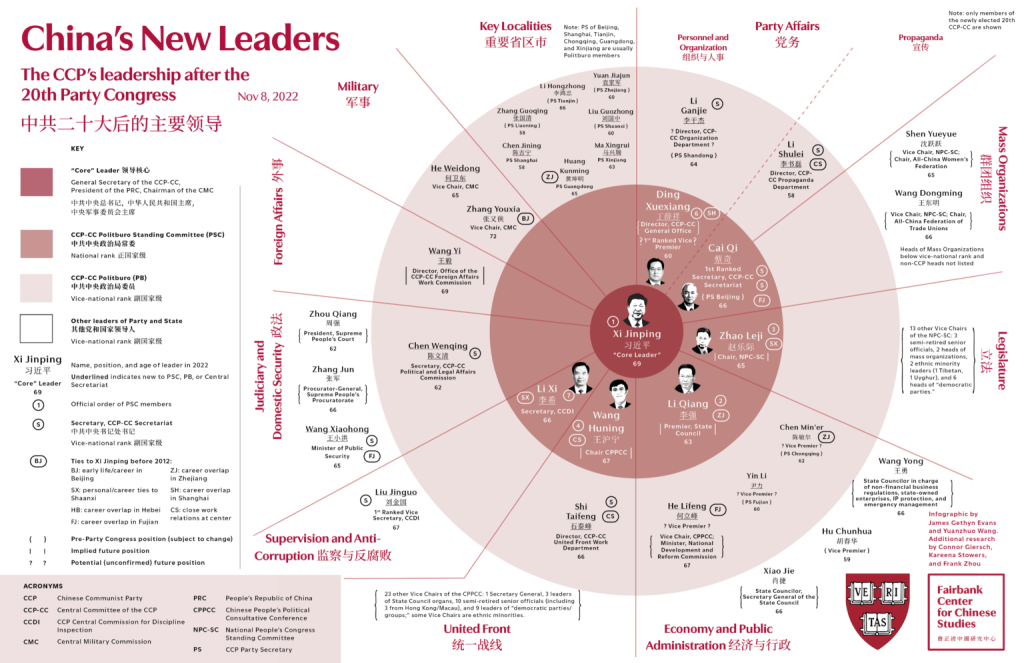
The book concludes with two “guides”. The first is a detailed chronology of the main events during Xi Jinping’s rule, covering 2012–2023. The second is a diagram of the highest organs of power and governance in China, making the book easy to read even for those who are not professionally involved in Chinese political issues.
The study and analysis of the current state of the socio-political and economic system of the PRC is of particular importance in view of the fact that the further strengthening of China’s international positions, as well as the continuation of the rivalry between China and the United States, coupled with the deepening partnership between Moscow and Beijing, require from the expert and political community of Russia a current, deep and clear understanding of the current conceptual foundations of the domestic and foreign policy of the PRC, which is undergoing significant changes at the peak of its development.
[1] China. 80s and beyond. URL: https://t.me/china80s (in Russ.).
