
PIR-Post № 4 (18), 2026. After New START: Must the World Face Disaster Before Restraint

March 23, 2026
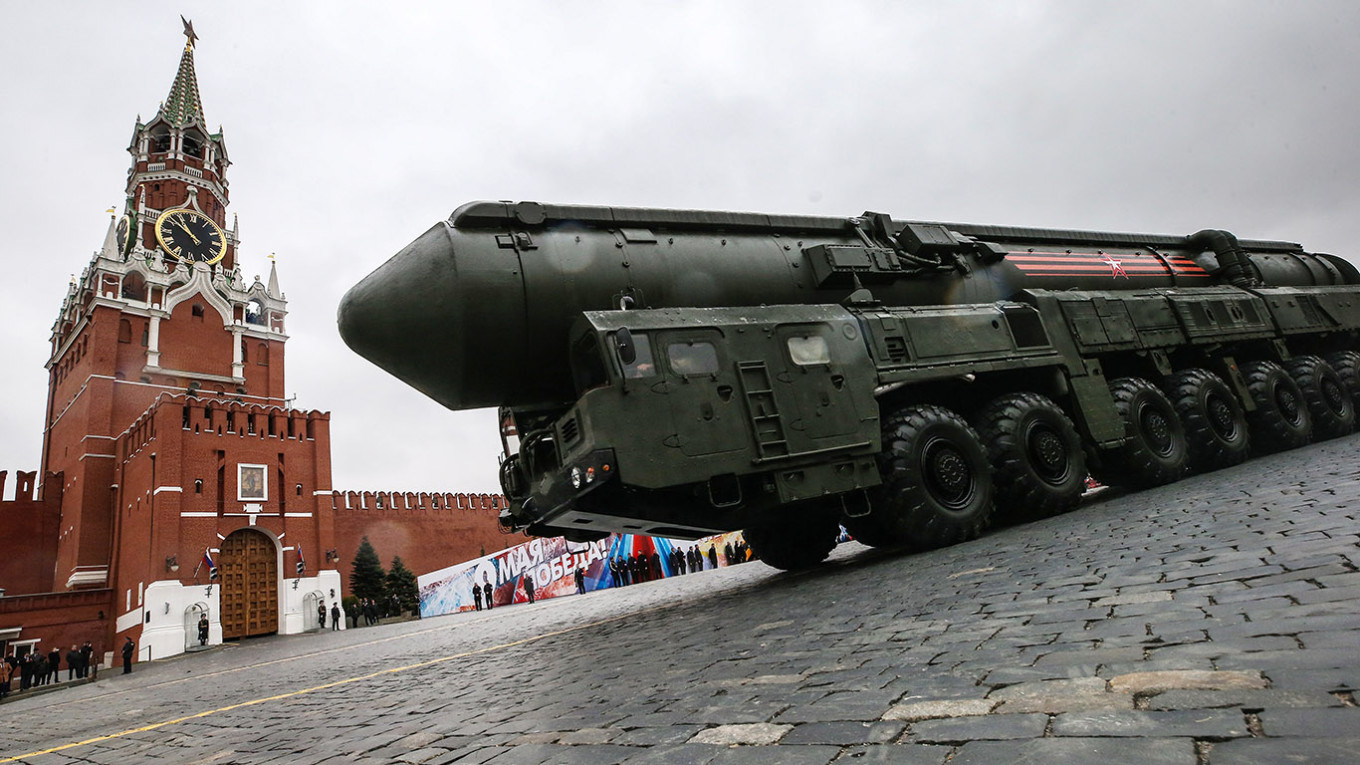
Do nuclear treaties only come after near-catastrophe? The question, often explored by researchers and scholars worldwide, is more relevant in the aftermath of the expiration of New Strategic Arms Reduction treaty (New START) in February 2026. The treaty’s expiration come at a time when global arms control architecture is already in a state of flux and fears surrounding the growing global nuclear arsenals intensified. New START’s expiration marks more than the termination of a US-Russia bilateral agreement. Rather, it represents the dissolution of the only remaining pillar of the Cold War era arms control framework. In the last five decades, Russia-US rivalry was managed through bilateral arms control agreements however, this is the first time that world’s two largest nuclear powers are operating outside legally binding limits on their deployed strategic arsenals and in the absence of a functioning verification regime. This trend poses a fundamental question to modern nuclear governance: do significant arms control arrangements arise only when the international system faces the edge of a nuclear disaster, and is the modern system able to endure a similar shock again?
New START was not a mere numerical limit on deployed warheads and delivery systems. Its greater contribution was to maintain predictability, transparency, and mutual confidence among nuclear rivals. It institutionalized a common operational image of the strategic forces through on-site inspections, data exchanges and notifications, thus diminishing incentives for worst-case planning and crisis instability. These mechanisms maintained a low level of trust even in times of geopolitical confrontation.
Its expiration thus eliminates three stabilizing functions concurrently. To begin with, the lack of legally binding restrictions allows unrestrained force-posture adjustments. Second, the ending of verification abolishes regular understanding of adversary capabilities and deployments. Third, the symbolic erosion of the last bilateral arms control treaty weakens the normative expectation that nuclear competition should be regulated. The loss is thus structural as well as numerical – a shift from managed competition toward opaque rivalry.
The Nuclear Arms Control Pattern
Scholars of nuclear strategy have long argued that major arms control breakthroughs followed periods of acute instability. As John Lewis Gaddies noted in his book The Cold War: A New History, that Periods of intense nuclear tension often precede strategic accommodation. Nuclear weapons history has shown a pattern that significant agreements have been preceded by periods when leaders had decided that nuclear confrontation had gotten too close. The closest example is the Cuban Missile Crisis, which precipitated the Hotline Agreement and the negotiation of the Partial Test Ban Treaty (PTBT) by Washington and Moscow to minimize the risk of accidental war and nuclear proliferation.
This was a crisis-based thinking that continued during the Cold War. The Treaty on the Non-Proliferation of Nuclear Weapons (NPT) was influenced by escalation fears surrounding the Berlin Crisis and increasing worries of nuclear proliferation. The Strategic Arms Limitation Talks (SALT) I and the Anti-Ballistic Missile (ABM) Treaty are the results of strategic anxiety that unregulated offensive and defensive missile competition would threaten deterrence stability. High nuclear tensions in the Euromissile Crisis in Europe culminated in the Intermediate-range Nuclear Forces (INF) Treaty, which abolished an entire category of destabilizing missiles.
This pattern is further reinforced by Late Cold War misperception. The nuclear panic surrounding the Able Archer 83 exercise added to the political impetus for strategic arms reductions reflected in START I. Fears of unsecured nuclear arsenals and proliferation threats motivated cooperative dismantlement actions and later agreements like the START II, even after the collapse of the Soviet Union. Lastly, the deterioration of previous structures and the fresh strategic competition during the 2000s created the desire to reestablish predictability in the form of the New START Treaty. In all these instances, arms control was not the result of stable deterrence but rather a time when leaders felt that deterrence itself was becoming too unreliable. The historical trend is thus obvious: nuclear restraint has been pursued most frequently after experiencing danger rather than anticipating risk.
This repeated pattern can be attributed to several structural and psychological factors. Nuclear weapons remain embedded in national security doctrines as ultimate guarantors of sovereignty, making limitations politically costly unless threat perceptions are acute. Deterrence stability is often presumed, not actually tested; the policy makers often believe that mutual vulnerability is self-enforcing until it is proven otherwise. Reciprocal concessions are also necessary in arms control in the presence of mistrust, and crises temporarily harmonize threat perceptions, making cooperation politically possible. The bureaucratic and technological momentum further encourages modernization and competition, and restraint demands a unique political impetus.
Near-catastrophe has therefore served as a historical focusing event that surpasses inertia and makes risk-reduction a greater priority than competitive advantage. The risk is in the presumption that such crises may be survived again and converted into cooperation.
Why Today’s System May Not Survive Another Near-Catastrophe
The modern nuclear landscape is quite different compared to the previous times when the arms-control had been driven by crisis. There are three salient features. Multipolarity; nuclear competition is no longer principally bilateral. The growth of arsenals and capabilities of more nuclear-armed states establishes overlapping deterrence relations, which diminish the clarity that allowed Cold War management of crisis. Technological acceleration: hypersonic delivery systems, cyber operations affecting nuclear command-and-control networks, dual-capable conventional weapons, and artificial intelligence-assisted decision tools compress decision timelines and blur escalation thresholds. The evolution of the crisis might be faster than the political discussion. Erosion of guardrails; as the New START reaches its expiry, there will be no legally binding transparency or verification regime between the key nuclear powers. Crisis management would take place in a state of increased uncertainty and decreased institutionalized communication in comparison to previous times.
A combination of these reasons suggests that a nuclear crisis may occur more rapidly, unpredictably, and uncontrollably in the future than those that have historically spawned arms-control breakthroughs. This premise that states can once again move towards catastrophe and then bargain for restraint is thus becoming less tenable. A system, which used to be able to survive shocks in order to learn about them, may now be so complex and opaque that it can no longer safely absorb similar shocks.
History has shown that nuclear treaties have been made after leaders realized that deterrence was almost failing. However, the expiry of New START demonstrates that stabilizing structures may weaken even in the absence of such a catalytic shock. It is a dangerous gamble, therefore, to wait for another near catastrophe to revive arms control.
The proactive stabilization process in a multipolar and technologically accelerated nuclear environment, either in the form of formal agreements or interim transparency and risk-reduction arrangements, is necessary. Nuclear history should not teach us that disaster is the only thing that can lead to cooperation, but that dependence on crisis as a restraint method is increasingly becoming hazardous as the system becomes more complicated. If the world again requires a moment of nuclear terror to rediscover arms control, it may find that the next crisis is not survivable enough to produce it.
Keywords: Strategic Stability; Arms Control
AC
E16/SHAH – 26/03/23
