
Hot topic № 6 (19), 2026. The Shanti Act: Why India’s Nuclear Energy Will Never Be the Same: Interview with Shah Nawaz Ahmad by Maksim Nosenko

August 31, 2026
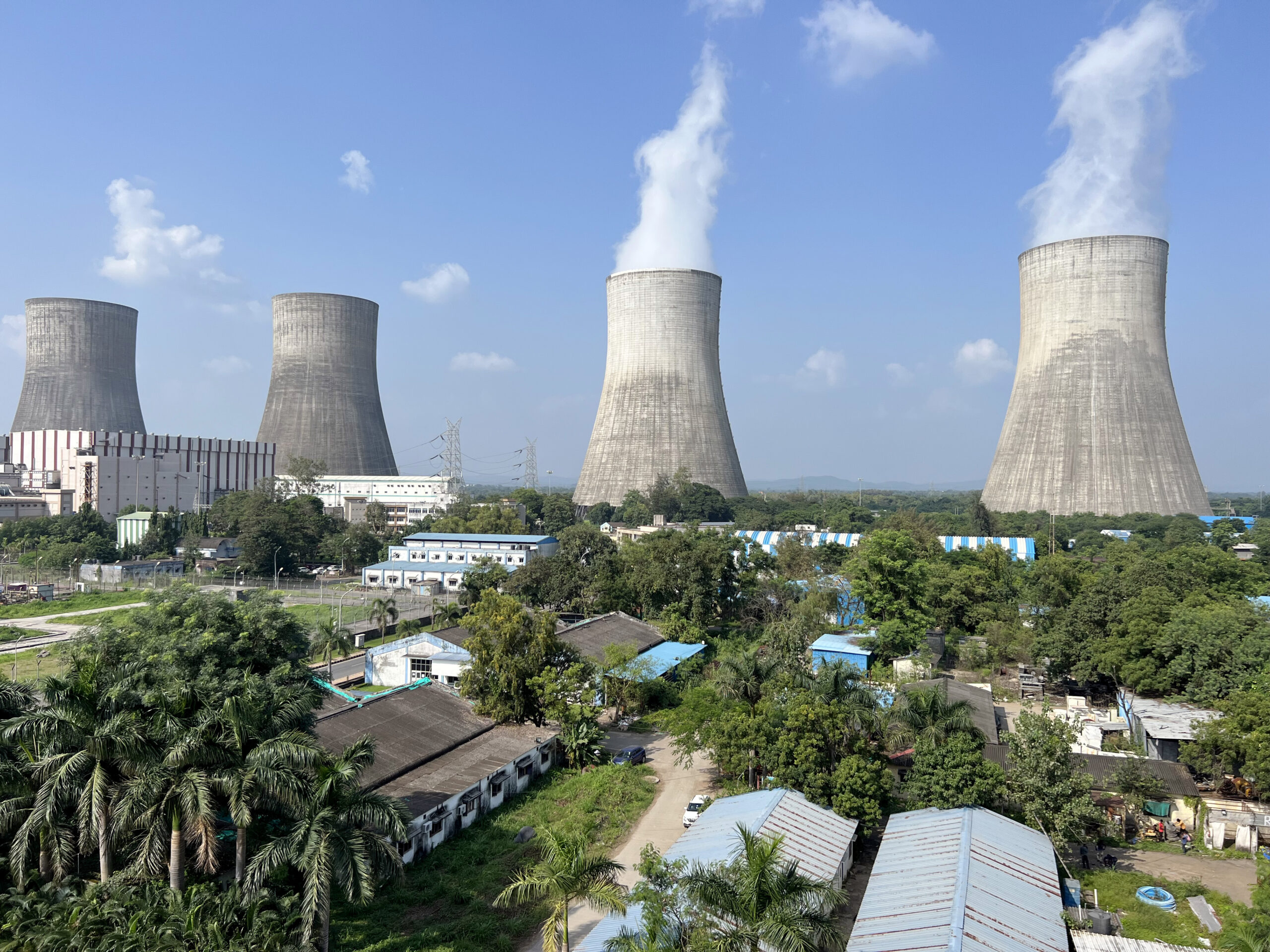
On August 17, India launched public consultations regarding the draft rules for its landmark SHANTI Act, a framework enacted last year to trigger a historic transformation in the nation’s nuclear sector. This regulatory revolution dismantles a 60-year state monopoly to help achieve a bold target of 100 GW by 2047. By opening the industry to private capital and overhauling restrictive supplier liability laws, the new framework completely rewrites the rules for global players. We spoke with Dr. Shah Nawaz Ahmad, Senior Advisor at the World Nuclear Association, to analyze how these changes will transform Indian nuclear future.
The interview was conducted by Mr. Maksim Nosenko, Information, Publications & Digital Communications Program Coordinator at PIR Center.
Mr. Maxim Nosenko: What critical grid balancing upgrades should India deploy in order to hit the 100 GW nuclear target by 2047? What development strategy is the most viable?
Mr. Shah Nawaz Ahmad: India’s total electricity generation capacity will approximate 2,100 GW by 2047. A large part of the electricity mix will comprise renewables, with roughly 1,200 GW of solar, 400 GW of wind, 100 GW of nuclear, and hydro (including pumped systems). Coal usage will reduce ahead of 2070 Net Zero goal.
Since 2013, India has been operating under a single national electricity grid that runs on a unified 50 Hz frequency. The existing transmission network presently works on a somewhat rigid supply-following model. By 2047, a large amount of variable renewable power will have been connected to the grid. With the induction of 100 GW of, largely base load, nuclear power, the current model could lead to grid instability.
To resolve the issues likely to arise, namely congestion, high ramping requirements and periods of oversupply, a complete revamp is being planned. This will require large-scale backup systems such as Battery Energy Storage and Pumped Hydro Storage systems. However, inverter-based solar and wind resources reduce physical inertia from the grid and could lead to rapid, difficult to manage, frequency changes. Static Synchronous Compensators and repurposed remaining coal plants with high ramp rates could mitigate the problem. Advanced AI based systems are also on the agenda.
Grid security is a vital consideration. As countries increase deployment of both nuclear and variable renewables, the challenge becomes one of system integration rather than simply building generation capacity. International experience shows that grid flexibility, transmission expansion, storage deployment and advanced system operation tools are all essential supplements to new nuclear capacity.
India’s nuclear program has a two-pronged approach. The deployment of indigenous Pressurized Heavy Water Reactors (PHWRs), along with advanced imported reactors, can rapidly ramp up generating capacity, while utilizing indigenous technical capabilities. The deployment of small modular reactors (SMRs) will enable decentralized flexible energy for off-the-grid and industrial application.
The Association’s World Nuclear Outlook Report helps put this into context. India is alongside China, Russia, the USA and France, the countries whose targets and deployment plans will be central to global nuclear capacity by mid-century. As the World Nuclear Supply Chain Conference highlights, countries pursuing large nuclear expansion programs should simultaneously invest in workforce and industrial capability to scale up delivery and deployment.
Mr. Maxim Nosenko: Does the SHANTI Act primarily aim to mobilize domestic private capital or to draw in foreign direct investment? Private capital demands quick returns, whereas thorium energy requires long-term R&D. Will the SHANTI Act truly accelerate India’s thorium transition, or will private investors pivot toward faster-yielding uranium technologies?
Mr. Shah Nawaz Ahmad: One primary aim of the SHANTI Act is to mobilize domestic private capital by encouraging Indian conglomerates to invest in nuclear power. It also provides incentives for foreign capital. Private Indian entities can hold equity in joint ventures to construct and run reactors. Policy-wise non-government stakes are limited to a maximum of 49%, and the same limit applies to foreign investors. Areas such as fuel enrichment, heavy water production, spent fuel reprocessing and waste management are still off-limits to private equity.
India’s long-established three-stage nuclear program is designed to progress the country’s three-stage program for nuclear energy and envisages the following route:
Stage 1: Pressurized Heavy Reactors (PHWRs). Natural uranium is used as fuel to generate electricity and produce Plutonium 239 (Pu-239) as a by-product.
Stage 2: Fast Breeder Reactors (FBRs). Pu-239 mixed with uranium is used as fuel. Thorium-232 (Th232) is used as a blanket and gets converted to Uranium-233 (U233).
Stage 3: Thorium-Based Reactors. A mix of Th232 and bred U233 is used. Th232 transmutes into U233, providing a thermal breeding route for sustained power generation, from natural uranium reactors to fast reactors and ultimately to large-scale thorium utilization.
While that long-term objective remains unchanged, commercial investment is likely to focus initially on technologies that are already deployable and capable of generating returns within established investment timeframes.
The 500 MWe Prototype Fast Breeder Reactor has recently been commissioned. The performance of this reactor will largely determine the trajectory of utilization of thorium through this route. Private capital is not expected to fund thorium research. However, with the flow of private funds for Stage 1 uranium reactors, more government funds can be made available for Stages 2 and 3.
Recently, a US firm has developed thorium-based fuel which blends abundant Th232 with a small amount of High Assay Low-Enriched Uranium (HALEU) as trigger material. Tests done have yielded promising results. This fuel is considered suitable for use in current PHWRs. This is but one example.
Mr. Maxim Nosenko: The SHANTI Act positions SMRs as an appealing power solution for heavy industries and AI data centers. What is the projected Levelized Cost of Electricity (LCOE) for the indigenous Bharat SMR compared to commercial solar plus storage? Is it competitive without heavy government subsidies?
Mr. Shah Nawaz Ahmad: In India, the raw LCOE of a solar photovoltaic utility is substantially lower than that of new nuclear, one study putting it at about half that of new nuclear. However, the picture radically changes when you consider firm 24×7 LCOE, i.e. the whole energy system which in many systems narrows or reverses the cost advantage often attributed to standalone solar generation.
There are several reasons for that. Nuclear power is inherently firm, with capacity factors in the mid 80s. Solar, with capacity factors of mid 20s requires massive battery back-up systems to deliver firm power. Moreover, on a per MWh basis, system integration costs for nuclear are a small fraction when compared with solar.
Raw LCOE for the Bharat SMR is likely to be higher than solar. However, when asset life, integration costs, plant land requirements and overall capacity factors are considered, firm LCOE for the Bharat SMR is likely to be competitive.
Nuclear is capital intensive and can have a long construction period. The discount rate applied to financing has a strong bearing on the final cost. Keeping financing costs low and building projects on time is the key, as also investing in scale.
The first of its kind, the Bharat SMR project, will need to be subsidized through the Government’s Nuclear Energy Mission, wherein Government has committed an initial deployment budget of ₹20,000 crore. The true value of nuclear power is that it can supply uninterrupted 24×7 base load over long periods needed by energy users, including AI data centres and industrial processes.
The Association’s Small Modular Reactor (SMR) Global Project Tracker provides an overview of the status of SMR projects worldwide and illustrates how industrial applications, data centres and off-grid energy users are becoming increasingly important drivers of SMR development.
Mr. Maxim Nosenko: How does the SHANTI Act balance the entry of private capital with the maintenance of strict nuclear safety and security standards? How does the Act ensure absolute operational security regarding nuclear waste management and spent fuel handling when a plant is operated under a joint venture with private or foreign equity?
Mr. Shah Nawaz Ahmad: The State, via the provisions made in SHANTI Act, maintains strict nuclear safety and security standards. It follows an approach that simultaneously brings the dynamism of the private sector to the nuclear program, though under strict guidelines, keeping safety, national security and international obligations uppermost. The private sector is allowed a 49% stake in a nuclear project, while the State maintains at least 51%, giving it control over all aspects of the project, be it financial, technical, safety or security.
Furthermore, the government retains statutory control and ownership over strategic nuclear materials like uranium and thorium. The government maintains exclusive control over the back-end of the nuclear fuel cycle. However, policy frameworks are evolving which could permit licensed private entities to import uranium. The framework is designed to ensure that strategic nuclear materials, safeguards compliance and spent fuel management remain under state oversight regardless of the ownership structure of a particular generating asset. Similar ownership and governance models exist internationally where private participation is permitted but responsibility for safeguards, security and international obligations remains firmly under national authorities.
Mr. Maxim Nosenko: In what ways does the SHANTI Act structurally safeguard the regulatory independence of the Atomic Energy Regulatory Board (AERB)? How will the board maintain its institutional autonomy from government bodies involved in promoting nuclear energy?
Mr. Shah Nawaz Ahmad: The AERB was originally established in 1983 by an executive order under the 1962 Atomic Energy Act. The 2025 SHANTI Act has upgraded the AERB to a Statutory body accountable through a statutory framework established by Parliament. This structurally safeguards and enhances the regulatory authority and independence of the AERB.
The Act provides for strict, and legal, separation between oversight and policymaking. The Department of Atomic Energy (DAE) retains jurisdiction over national strategy, policymaking, commercial project licensing and promotion of nuclear energy. The AERB is exclusively responsible for safety oversight and enforcement, radiation protection, and emergency preparedness. The intention is to place nuclear regulation on a clearer statutory footing with defined responsibilities, appointment processes and enforcement powers. International experience consistently demonstrates that strong, independent and well-resourced regulation is one of the foundational requirements for sustained nuclear expansion programs.
Keywords: The SHANTI Act; nuclear power; uranium; thorium; grid; spent fuel; SMR; India
NPT
E16/NOS – 26/08/31
