
№ 4 (52), 2026. PIR Center hosted a seminar titled «Nuclear Programs of Australia and Germany: Politics, History, and Their Place in the Architecture of International Security»
February 13, 2026
MOSCOW. FEBRUARY 13, 2026. PIR PRESS. «The nuclear club is not only composed of countries officially recognized as nuclear powers. It also includes states that, in fact, possess such capabilities. I am confident that in the future, the number of nuclear powers will grow, as many countries, especially amid global instability, may conclude that nuclear weapons are the optimal form of defense. A number of states already have the technical capabilities to develop a military nuclear program. The boundary between peaceful nuclear energy and military weapons is becoming increasingly fluid», – Dmitry Medvedev, Deputy Chairman of the Security Council of the Russian Federation.
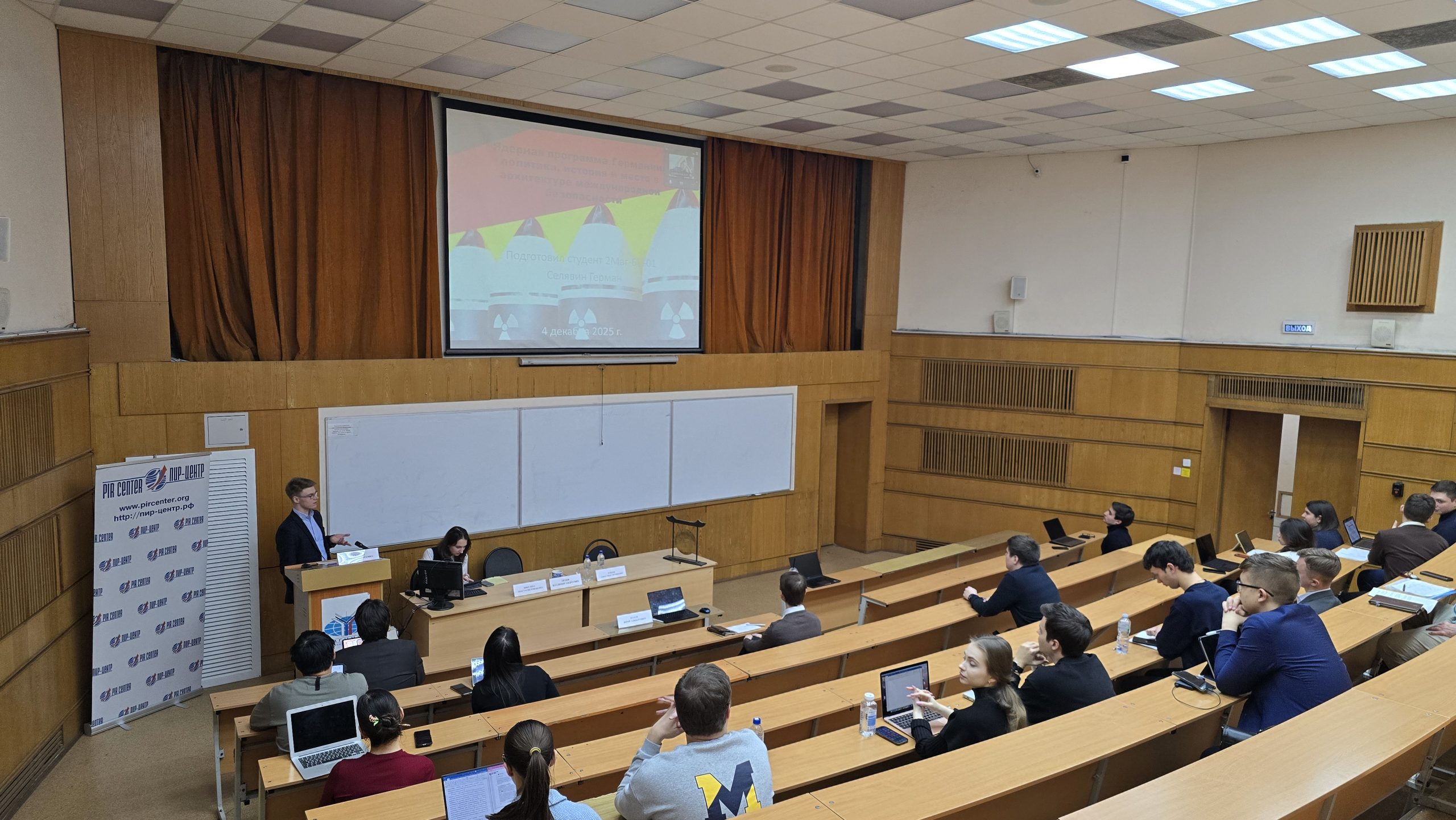
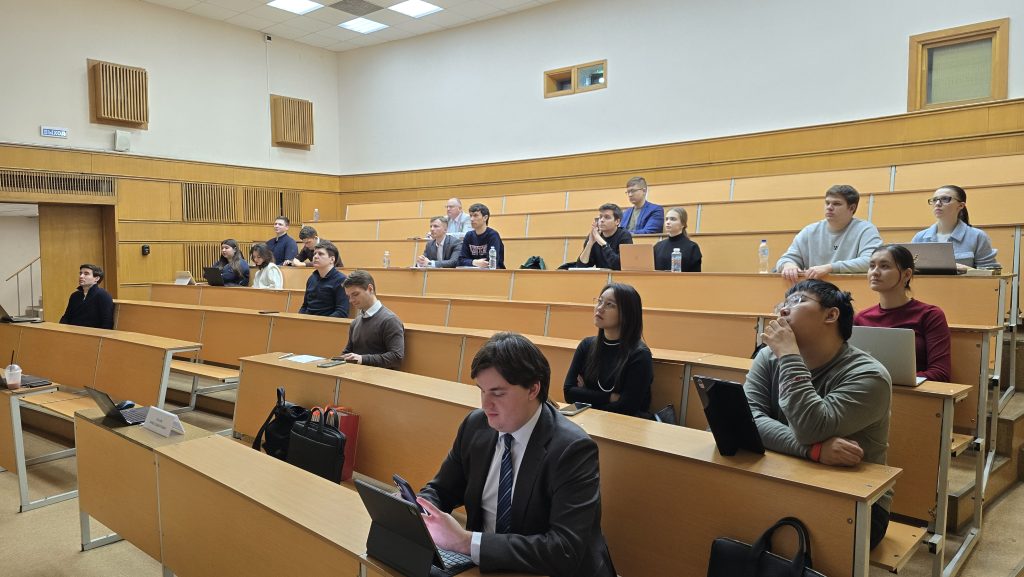
PIR Center, jointly with MGIMO University, hosted a seminar titled «Nuclear Programs of Australia and Germany: Politics, History, and Their Place in the Architecture of International Security». This event was held as part of PIR Center project “Assessing Nuclear Proliferation Threats in the World: Who the Emerging Actors Are.”
The main speakers were Yuriy Shakhov and Herman Selyavin, second-year MA students of the “International Security” program at MGIMO University and PIR Center.
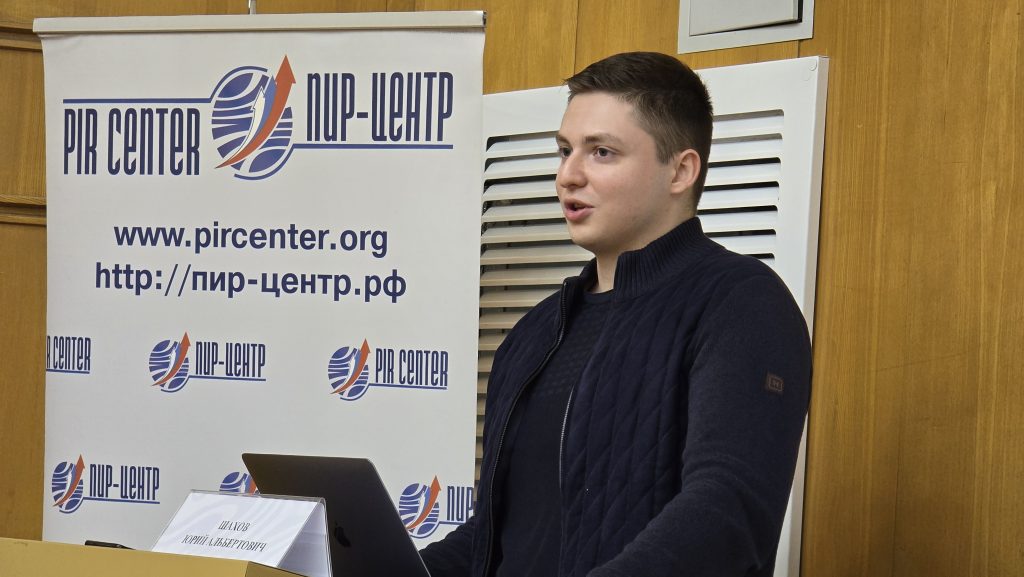
Yuriy Shakhov delivered a presentation analyzing the evolution of Australia’s nuclear policy and its place within the international security system. He noted that as early as the late 1960s, Australia had laid the groundwork for achieving a threshold nuclear status, as evidenced by plans to construct a nuclear power plant at Jervis Bay and the development of its own research infrastructure. However, the signing and ratification of the Treaty on the Non-Proliferation of Nuclear Weapons formalized the country’s rejection of the military nuclear path and its transition towards international cooperation and engagement with the IAEA.
Special attention was paid to Australia’s contemporary nuclear infrastructure. The presentation’s centerpiece was the OPAL research reactor and ANSTO’s activities, which together form the core of the national scientific and technological cluster. It was emphasized that Australia is among the world’s leading producers of medical isotopes and has a well-developed research base in neutron science, accelerator technologies, and materials science – fields with both civilian and potential defense relevance.
Turning to human resources and material factors, the speaker noted that Australia is one of the world’s largest holders of uranium, controlling up to one-third of global identified uranium reserves, while consciously refraining from developing a full nuclear fuel cycle on its own territory. Following the conclusion of the AUKUS agreement, the training of nuclear specialists has become strategically important, and cooperation with the United States and the United Kingdom has become a key element of Australia’s defense policy.
In conclusion, it was emphasized that Australia possesses significant scientific, technological, and resource potential to achieve greater nuclear autonomy. Nevertheless, under current conditions, the country prefers to rely on allied mechanisms within AUKUS rather than fully realizing its own nuclear potential.
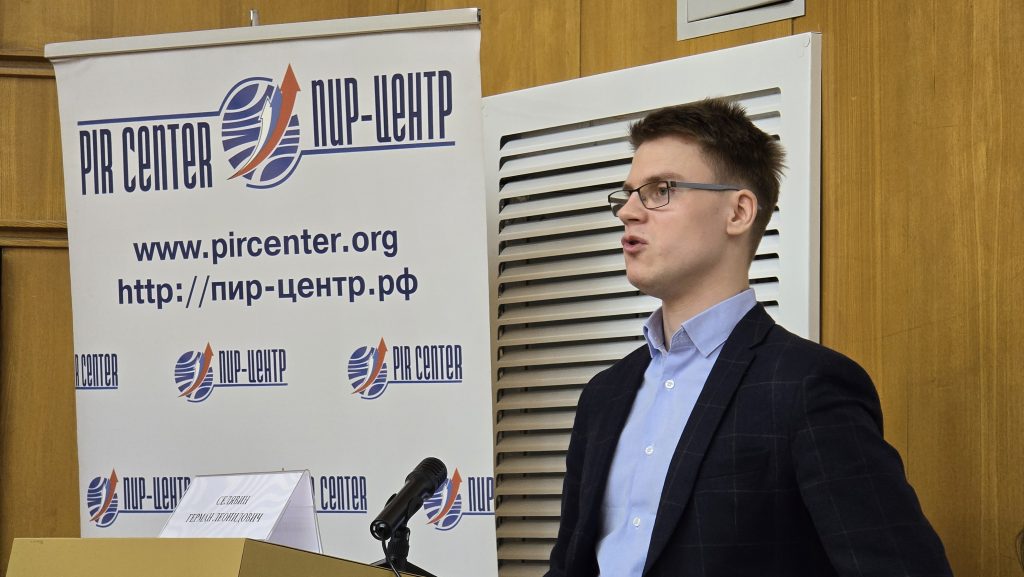
Herman Selyavin presented an analysis of Germany’s “nuclear paradox”– the combination of high scientific and technological capacity with a persistent political rejection of possessing national nuclear weapons. It was emphasized that Germany occupies a special place in debates on European security: interest in nuclear strategy has intensified amid the crisis of arms control regimes, while Germany has simultaneously completely phased out nuclear energy and shut down its operating nuclear power plants.
The speaker recalled that, under the 1954 Paris Agreements, Germany voluntarily renounced the development of weapons of mass destruction, later signing the NPT in 1969 and ratifying it in 1975. At various points, proposals for nuclear cooperation in Europe (including formats involving France and Italy) were discussed; however, political factors and fears of Germany’s militarization prevented these initiatives from materializing.
A separate section addressed Germany’s scientific and industrial base. It noted that Germany retains advanced research infrastructure and expertise in reactor and applied nuclear research, as well as experience in handling nuclear materials. At the same time, the university-level “civil clause” [Ed.note – (Zivilklausel) A voluntary commitment by German academic institutions to conduct exclusively civilian research] and the reorientation of research towards nuclear decommissioning tasks significantly reduce the likelihood of deploying a military nuclear programme.
When discussing potential risks, the speaker noted that Germany retains elements that, in theory, increase its “rapid breakout” potential, including uranium enrichment capacities within international cooperation frameworks and specific research facilities. Nevertheless, it was concluded that the most realistic path in any hypothetical nuclearization scenario would be uranium-based, while the plutonium route is assessed as virtually closed.
Regarding delivery systems and military policy, the speaker emphasized that Germany’s participation in NATO’s nuclear deterrence mechanisms remains a key factor, including the deployment of U.S. nuclear weapons under nuclear sharing arrangements and the modernization of the air component through the acquisition of F-35A fighter aircraft. Against this backdrop, rising defense expenditure, the strengthening of the defense industry, and the expansion of missile defense programmes were viewed as elements of broader militarization, intensified after 2022.
In conclusion, several scenarios were outlined: preservation of non-nuclear status as the most likely outcome; potential nuclearization as a risk; and less probable options, such as the creation of a regional European nuclear arsenal or the development of a full-scale national nuclear programme. It was emphasized that Germany possesses resources and competencies that could theoretically enable it to approach the creation of a nuclear explosive device; however, political constraints and public opinion, characterized by prevailing anti-nuclear sentiments, make such a course unlikely.
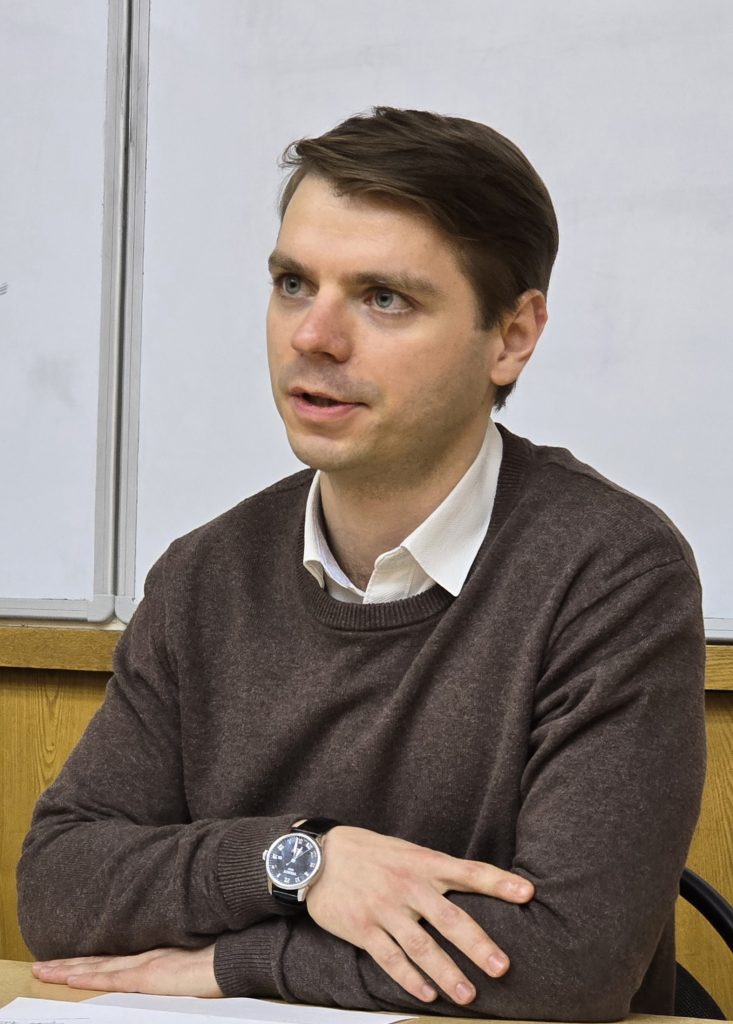
Alexander Pavlov, member of PIR Alumni Community since 2024, winner of the XXIII International School on Global Security, Junior Research Fellow, Sector of Military Economy and Innovations, Staff Member, Department of Military and Economic Security, Research Staff Member, Center for International Security,provided expert commentary.
Commenting on the presentation on Australia, the expert highlighted the topic’s relevance and emphasized that, like Germany, Australia finds itself at the epicenter of contradictory regional and global trends that directly affect its security and defense policy. At the same time, he noted insufficient attention to Australia’s role within the AUKUS alliance and to the internal logic of Australia’s “nuclear programme” as an integrated politico-strategic project. In particular, questions were raised about whether Australia has clearly articulated goals and a strategic plan in the nuclear domain, and whether these goals and the strategic plan align with the alliance’s military-political and military-technological objectives.
Turning to the German case, Alexander Pavlov noted that Germany is undergoing a profound transformation of its strategic identity, shaped by the end of the Cold War. The expert emphasized that interest in nuclear weapons in Germany had intensified well before the events of 2022 and was largely linked to crises in transatlantic relations beginning in 2016. At the same time, according to the expert, the current public debate is often superficial and focused on nuclear weapons as a technology, without sufficient analysis of nuclear deterrence concepts, their costs, risks, and institutional consequences for Germany.
Special attention was paid to the notion of Germany’s “latent nuclear potential.” The expert questioned the clarity of such assessments, noting that in the 1980s Germany possessed a significantly higher level of nuclear latency than it does today and has, since the 1990s, deliberately distanced itself from the nuclear threshold. It was emphasized that technical capabilities, the availability of nuclear materials, and infrastructure alone do not equate to the ability to create full-fledged nuclear forces, which require not only an explosive device but also delivery systems, doctrines, storage infrastructure, and trained personnel.
In conclusion, the debate on nuclear weapons in Germany was emphasized as an important indicator of the state of its relations with allies, above all, the United States, and as reflecting a broader process of transformation in German security policy within the framework of the so-called Zeitenwende. The expert noted that the greatest risks are associated not with an immediate “nuclear prospect,” but with the build-up of conventional and medium-range missile capabilities and the overall militarization of Germany.
«In the cases of Australia and Germany, discussions of nuclear issues emerge against the backdrop of a crisis in security systems and alliance relations and serve as indicators of broader, contradictory processes of transformation in their defense and foreign policies», – Alexander Pavlov.
In April 2023, PIR Center released a report titled “The New Nuclear Nine? Assessing Nuclear Proliferation Threats in the World,” (in Russian), prepared by a team of 12 researchers under the leadership of PIR Center Founding Director Dr. Vladimir Orlov and PIR Center Research Fellow Sergey Semenov. The report analyzes potential radical scenarios that could lead to the emergence of new nuclear states on the global stage amid the threat of nuclear proliferation.
Currently, PIR Center continues its in-depth research on the nuclear programs of several threshold and near-threshold states, including Australia and Germany, as well as other potential candidates for nuclear power status. This work will be included in a new PIR Center report to be released in 2026, which will examine the expansion of the nuclear club and address current threats of nuclear weapons proliferation and the potential emergence of new nuclear states.
Keywords: Nuclear Nonproliferation; Australia; Germany
NPT
E16/SHAH – 26/02/13
