
№ 2 (50), 2026. PIR Center hosted a seminar titled «Current Issues of Space Security»
February 6, 2026
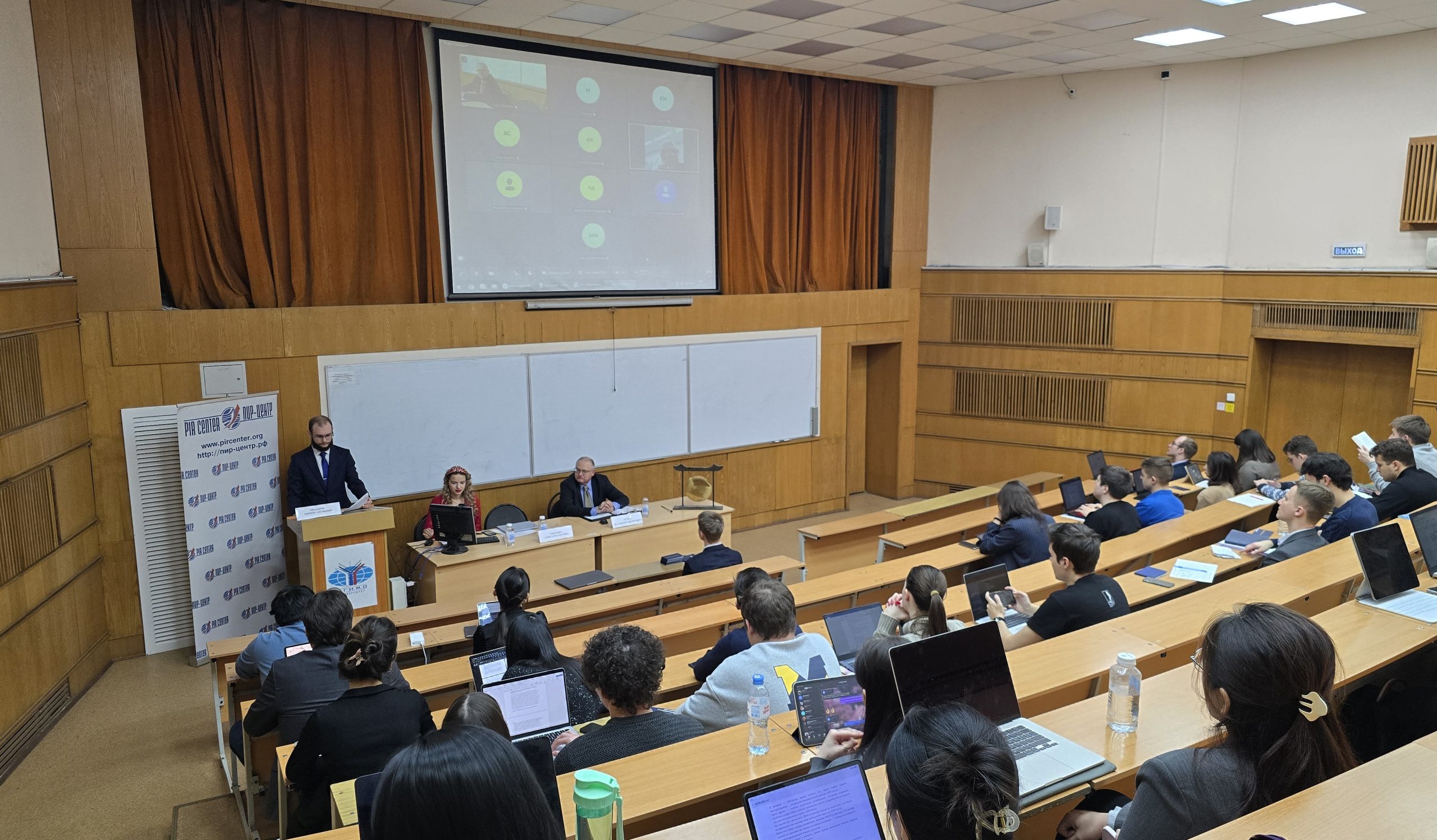
MOSCOW. FEBRUARY 6, 2026. PIR PRESS. «Today, the focus is not on demilitarizing outer space or banning its militarization. Instead, it is on preventing the weaponization of space – specifically, stopping the deployment of weapons in this domain. Outer space is still the only area without weapons; land, air, and sea are armed, but space remains weapon-free. The military systems present there are mainly informational, not offensive», – Dr. Mikhail Lysenko, Ambassador Extraordinary and Plenipotentiary (ret.), Advisor to the Director General of Rosatom State Corporation, member of PIR Center Advisory Board since 2004.
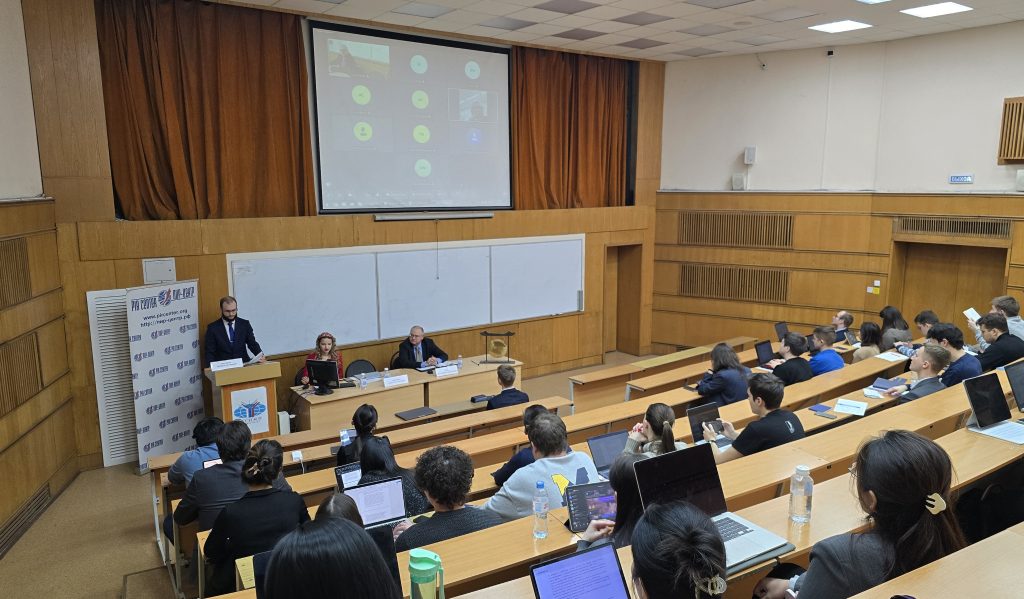
PIR Center, jointly with MGIMO University, hosted a seminar titled “Current Issues of Space Security.”
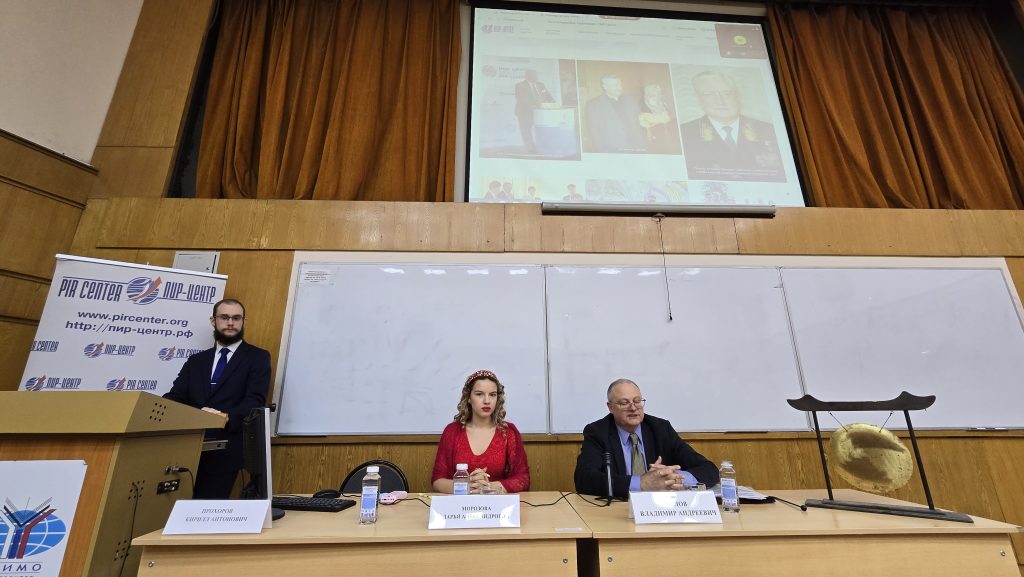
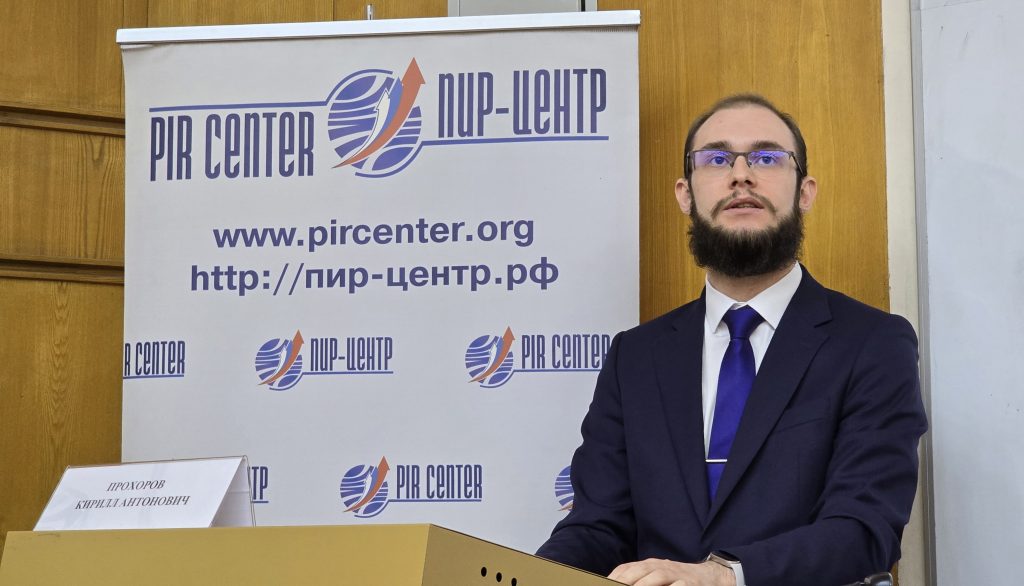
The keynote presentation was delivered by Kirill Prokhorov, a second-year MA student of the “International Security” program at MGIMO University and PIR Center, and the winner of the Vyacheslav I. Trubnikov Grant Competition in 2025. The speaker offered a detailed analysis of the history and current state of space weaponization and militarization. The student suggested a phased approach to analyzing this development, pinpointing four major stages, from early efforts at nuclear interception and the use of weapons of mass destruction in space to modern developments such as the integration of missile defense and anti-satellite systems and the growth of military space infrastructure.
The presentation highlighted that during the initial phases of space exploration, concerns about the harmful effects of space militarization prompted the creation of international legal restrictions. The key outcome was the 1967 Outer Space Treaty, which banned the placement of weapons of mass destruction in space and declared that the Moon and other celestial bodies are meant for peaceful use only. However, the speaker pointed out that the Treaty does not ban the deployment of conventional weapons in orbit, leaving significant legal gaps.
Special attention was focused on the Cold War era, when the USSR and the United States actively developed anti-satellite systems and military influence tools in outer space. At the same time, they engaged in diplomatic efforts to prevent an arms race. Although several bilateral and multilateral initiatives were adopted, most were non-binding and did not create new legally enforceable control mechanisms.
In discussing the modern stage, the speaker emphasized the rise of new space actors, including nations from Asia, Africa, and Latin America, as well as the growing influence of military-political alliances in space. It was emphasized that outer space is vital to both civilian and military systems, including communications, navigation, reconnaissance, and early warning. These factors, combined with the swift development of dual-use technologies and the lack of explicit bans on space-based weapons, set the stage for a potential new arms race.
In conclusion, the speaker observed that current international space law standards, combined with transparency and risk-reduction measures, are insufficient to effectively curb the weaponization of space. He suggested several potential steps forward, including increasing multilateral dialogue, broadening international expert and academic discussions, and supporting initiatives to prevent the deployment of weapons in outer space and to enhance strategic stability.
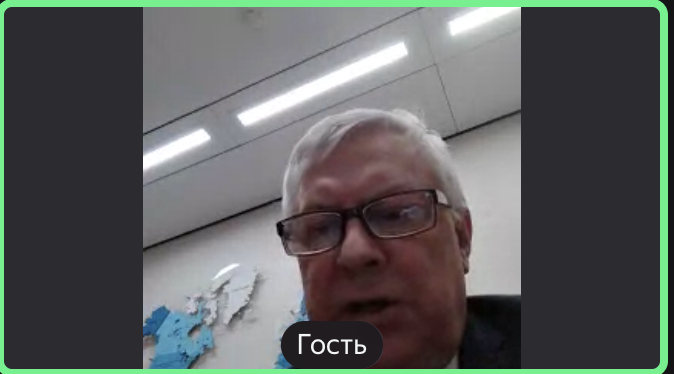
Dr. Mikhail Lysenko, Ambassador Extraordinary and Plenipotentiary (ret.), Advisor to the Director General of Rosatom State Corporation, member of PIR Center Advisory Board since 2004, provided an expert commentary, praising the presentation for its high professionalism and strong empirical and analytical basis.
The expert emphasized the importance of clearly distinguishing between core terminological concepts. It was observed that political and expert debates frequently confuse the ideas of space militarization and space weaponization. During the initial phases of space exploration in the late 1950s and early 1960s, the primary concern was preventing outer space from becoming militarized. Today, however, no nation with substantial space capabilities opposes militarization outright.
The expert emphasized that outer space is already actively used for military activities, including communications, reconnaissance, targeting, and monitoring compliance with arms control agreements. The key concern today is not demilitarization but preventing weaponization, specifically banning the deployment of weapons in space. It was highlighted that space is the only domain without weapons so far, with orbiting military systems primarily serving informational rather than offensive purposes.
It was also noted that Russia and China have regularly advocated for initiatives to prevent the placement of weapons in outer space, including a draft international treaty. The expert highlighted the ongoing deadlock at the Conference on Disarmament, where the draft treaty is effectively stalled, and stressed the importance of exploring alternative diplomatic and expert-level channels to advance the discussion.
Dr. Mikhail Lysenko highlighted several potential avenues for future work, including making greater use of the UN General Assembly as a platform, continuing informal talks within the Conference on Disarmament, and starting discussions at the UN Security Council. Special focus was given to the use of civilian satellite infrastructure in military conflicts, an area not yet covered by international law, underscoring the need for the development of legally binding regulations.
In conclusion, the expert highlighted that the 60th anniversary of the Outer Space Treaty offers a valuable opportunity to boost global academic, expert, and diplomatic efforts to prevent an arms race and militarization of outer space.
Keywords: Arms Control; Outer Space
AC
E16/SHAH – 26/02/06
