MainPIR Press News№ 45 (103), 2025. International expert seminar on “Russia-Africa: Analyzing Prospects for Strategic Cooperation & Identifying Obstacles. From uranium to high technologies” was held in Moscow. It was organized by PIR Center in cooperation with the Trialogue Club International
№ 45 (103), 2025. International expert seminar on “Russia-Africa: Analyzing Prospects for Strategic Cooperation & Identifying Obstacles. From uranium to high technologies” was held in Moscow. It was organized by PIR Center in cooperation with the Trialogue Club International
MOSCOW. DECEMBER 9, 2025. PIR PRESS. “I appreciate discussions today. We discussed both uranium in the sahel region and Africa-Russia relationship in general. The two topics give us more information and ideas”, – H.E. Mr. Sosthene Ndemby, Ambassador Extraordinary and Plenipotentiary of Gabon in Moscow.
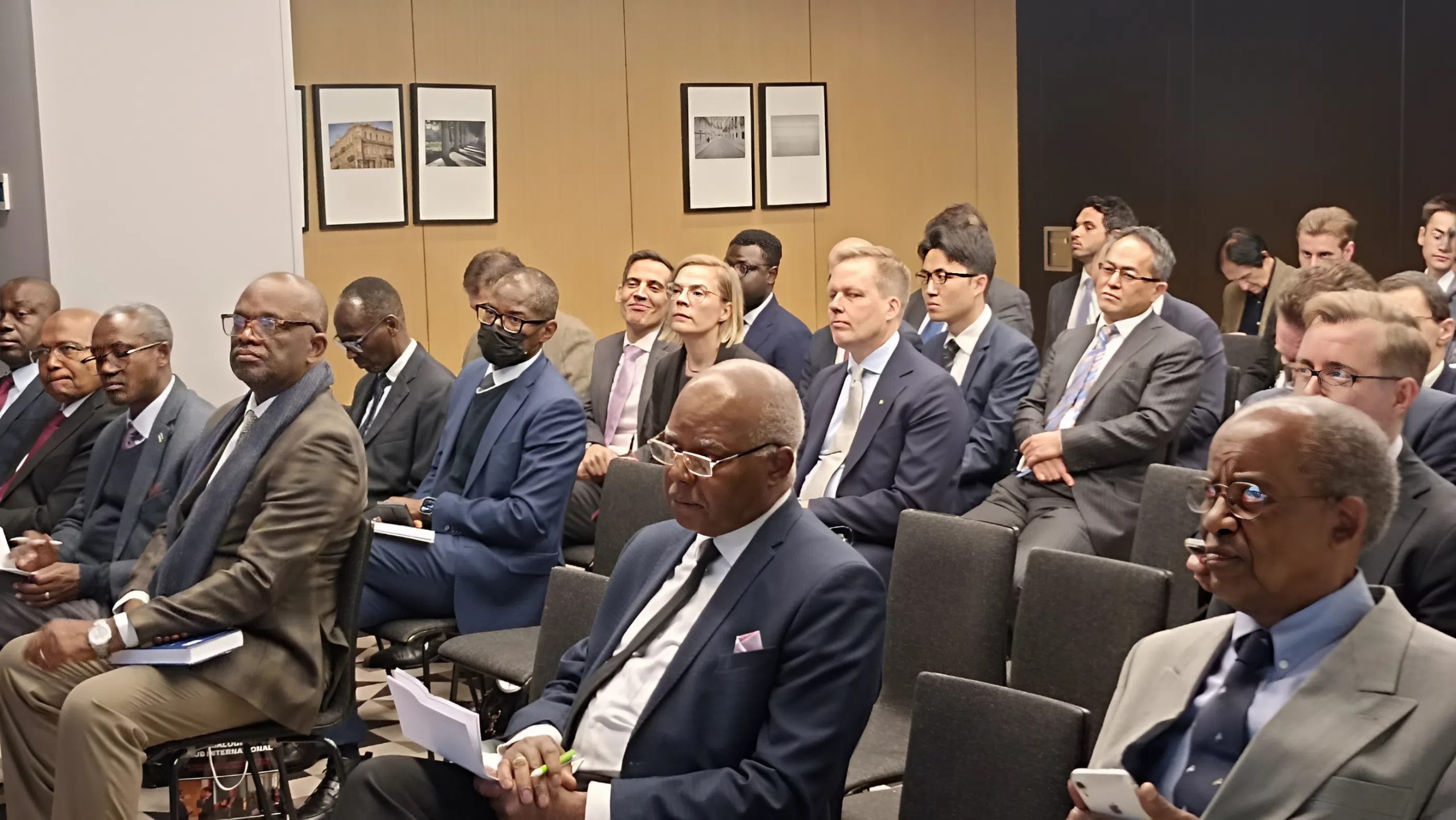
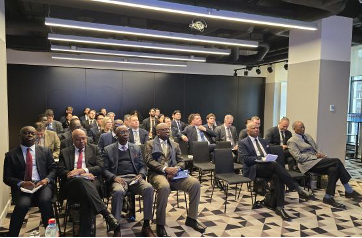
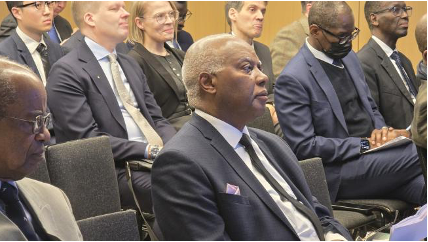
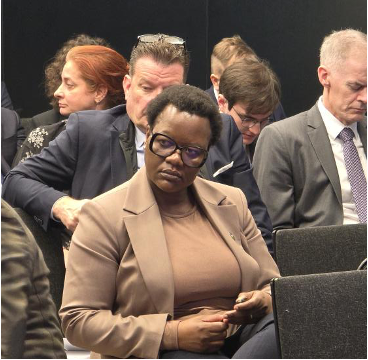
On November 14, 2025, international expert seminar was held in Moscow on the topic “Russia-Africa: Analyzing Prospects for Strategic Cooperation & Identifying Obstacles. From uranium to high technologies.” It was organized and conducted by PIR Center in cooperation with the Trialogue Club International (as part of the 128th Winter Session of the Club). The event was attended by ambassadors, senior diplomats, business representatives, experts and young professionals from 25 countries, namely Russia, Chad, the Democratic Republic of the Congo, Gabon, Ghana, Egypt, Eritrea, Kenya, Rwanda, Niger, Namibia, Brazil, Australia, Finland, France, Israel, Germany, South Korea, Spain, Singapore, Sweden, Switzerland, New Zealand, Japan, the USA, the delegation of the International Committee of the Red Cross in Moscow, among others.
“At PIR Center we have long been engaged with African issues. Our research and reports have received high praise both in Russia and across the African continent. Now, let’s delve deeper, as they say. We are in-depth interested in the strategic cooperation between Russia and African states, whether it’s nuclear energy, digital technologies, or other fields. We are ready to contribute to a better understanding of these issues”, Director of PIR Center underlined.
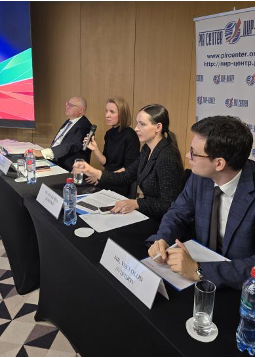
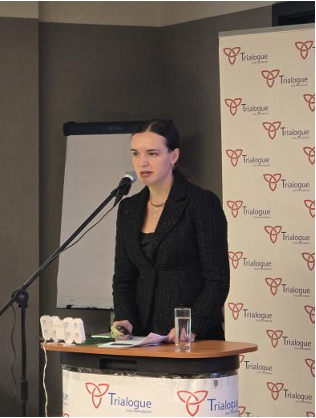
Mr. Vsevolod Sviridov, Deputy Director of the Faculty of World Economy and International Affairs / Centre for African Studies of HSE University, and Ms. Alexandra Zubenko, Consultant of PIR Center, delivered their keynote speeches.
“The growing importance of Russian supplies for the sovereignty and economic sustainability of African countries is undeniable: Russia now provides more than 20% of Africa’s fertilizer market, plays a major role in wheat and oil product deliveries, and exports over 50% value-added goods – a structure that fundamentally distinguishes Russia-Africa trade from Russia’s trade with Europe or even China”, Vsevolod Sviridov noted in his speech. His presentation is posted here.
“The Sahel remains one of the most resource-rich but least explored regions in the world, where political instability and security threats have long overshadowed commercial opportunities. However, Russia occupies a unique position that allows it to work effectively in these conditions due to political ties, an expanding institutional presence and a pragmatic approach to regional dynamics. All this gives Moscow the opportunity not only to enter the uranium market, but also to form a new model of cooperation in line with the aspirations of the Sahel states”, Alexandra Zubenko, Consultant of PIR Center, said in her speech. She presented to the audience the key conclusions from the new 200-page report (in Russian) of PIR Center “Uranium Competition in the Sahel Region and Russia’s Interests. Current Situation. Assessment of Prospects. Recommendations”. Her presentation is posted here.
Following the keynote remarks, a traditional Q&A session ensued. The session was moderated by the Club Co-Chair Dr. Elena Chernenko, Member of PIR Center Executive Board, Special Correspondent of the Kommersant Daily.
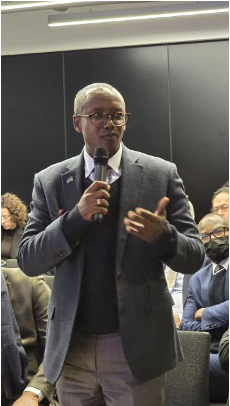
H. E. Mr. Joseph Nzabamwita, Ambassador Extraordinary and Plenipotentiary of the Republic of Rwanda, contributed to the discussion, “First of all, Africa seeks to develop and seeks to build relations with partners across the world. Africans are yearning for a brighter future, for a developed continent. We can have friends and partners from all over the world, including Russia.
Firstly, it shows the wonderful relationship and the partnership that is emerging between Russia and Africa, building on what the Soviet Union contributed to the liberation of Africa. But with all the research, let me tell you that we as Africans, I think the main work is on our side. Therefore, this comment is to complement what you have said and to tell you that we need to put our own houses in order.
Secondly, with all the elements you have highlighted, there is one important aspect missing. You can have the resources, you can have everything, but unless you invest in leadership and governance, your resources will be exploited, for example, by France in some of our French-speaking countries. Let me tell you that in some of our countries there is actually a neo-colonial law which states that our sovereign countries have sovereign rights over what is above the soil, but what is below the soil belongs to our former colonial masters. Just imagine – in 2025 we still have such a law. So yes, we are fighting neo-colonial policies and colonial policies, but we cannot blame everything on the colonialists. We cannot blame Europe or America.
Neither should we expect miracles, that simply because Russia is coming back to Africa, Russia will bring miracles and Africa will suddenly develop. The issue goes back to leadership and governance in our respective countries.”
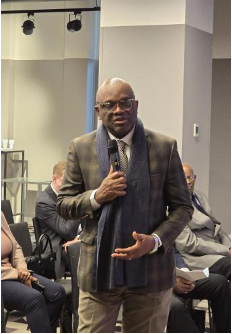
H. E. Dr. Koma Steem Jehu-Appiah, Ambassador Extraordinary and Plenipotentiary of the Republic of Ghana, also shared his opinion on the main topic, “I believe that this discussion has come at the right time. And as an ambassador for my country, I want to say that this is important, because we need help to build our future. We should not reduce the talks about cooperation only to the issue of employment of the local population. We are talking about much more than that – about comprehensive development that will allow us to move forward.”
Mr. Joseph Kindundu Mukombo, Counselor of the Embassy of the Democratic Republic of the Congo, provided his comments on the topic of the meeting, “The partnership between Russia and Africa should be viewed not as an attempt to replace someone else’s presence, but as a niche strategy and a form of influence. Russia cannot – and probably does not seek – to compete with China economically. Its strengths are a flexible approach to security issues, high–tech solutions in selected sectors such as nuclear and cybersecurity, as well as a political discourse consistent with the desire of many African elites to strengthen sovereignty.”
“I appreciate discussions. We discussed Sahel uranium and Africa-Russia relationship. The two topics give us more information and ideas”, H.E. Mr. Sosthene Ndemby, Ambassador Extraordinary and Plenipotentiary of the Gabonese Republic, shared his impressions of the seminar.
“The session was quite a good one and I appreciate that you invited me. Keep up good work”, Mrs. Esther Mwoombola, Counsellor of the Embassy of the Republic of Namibia, emphasized.
Key words: Russian-African relations; Sahel; High technologies