
№ 34 (82), 2026. On June 25, students of the MGIMO and PIR Center joint MA program “International Security” completed their final graduation examinations.
July 7, 2026
MOSCOW. JULY 7, 2026. PIR PRESS. “Two years have passed… And our МA program International Security – a joint project of PIR Center and MGIMO, where I serve as founder and academic director – is no longer ‘new’: we are graduating our first cohort. The second cohort is currently studying. In August, we will select the third cohort. The Master’s program is a success. This can now be said with certainty, as final state examinations have concluded, students have defended their Master’s theses, and the state commission has signed the protocols,” said Vladimir Orlov, Academic Director of the program, Founder and Director of the PIR Center, and Professor at MGIMO University.
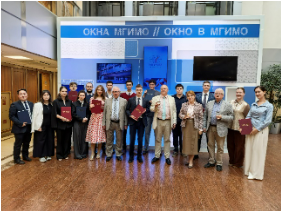
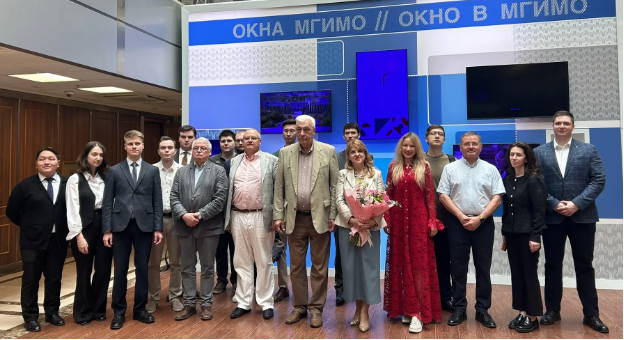
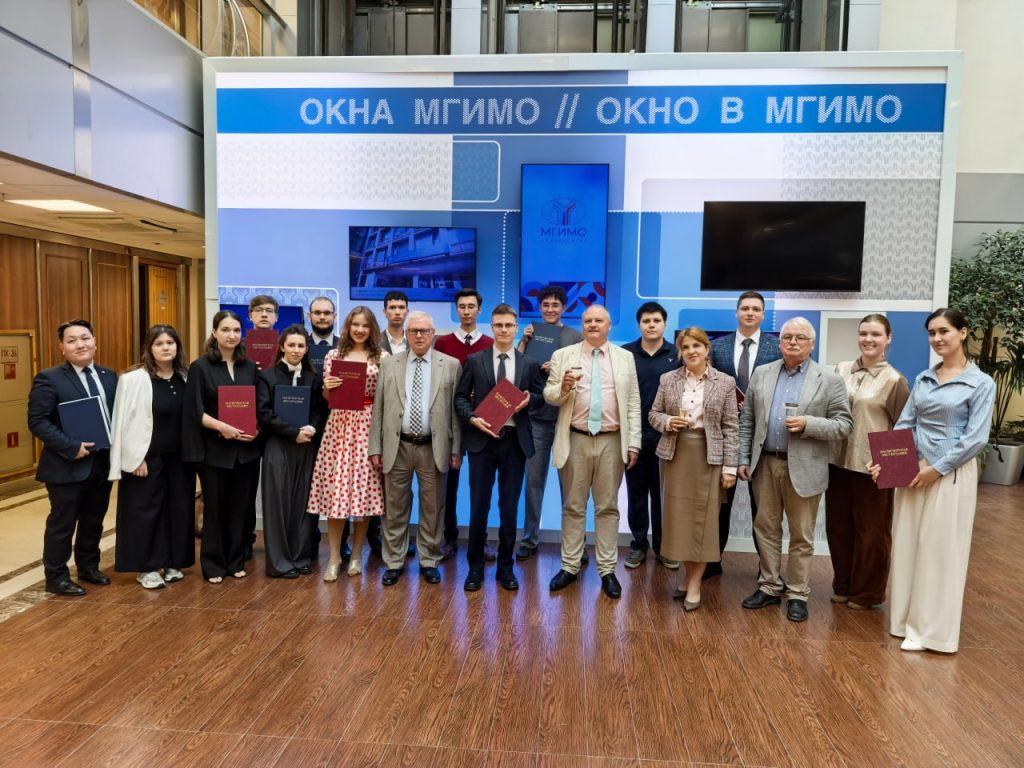
On June 25, 2026, MGIMO University hosted the graduation of the first cohort from the “International Security” joint Master’s program run by MGIMO and PIR Center. Launched in 2024 as part of the project Global Security, Strategic Stability, and Arms Control under the auspices of the “Priority 2030” Strategic Academic Leadership Program, the curriculum trains specialists for foreign policy organizations operating in the field of international security. This inaugural graduation marked a major milestone in the development of this educational track, confirming the high demand for a format that seamlessly combines fundamental academic preparation with active engagement in practical expert work.
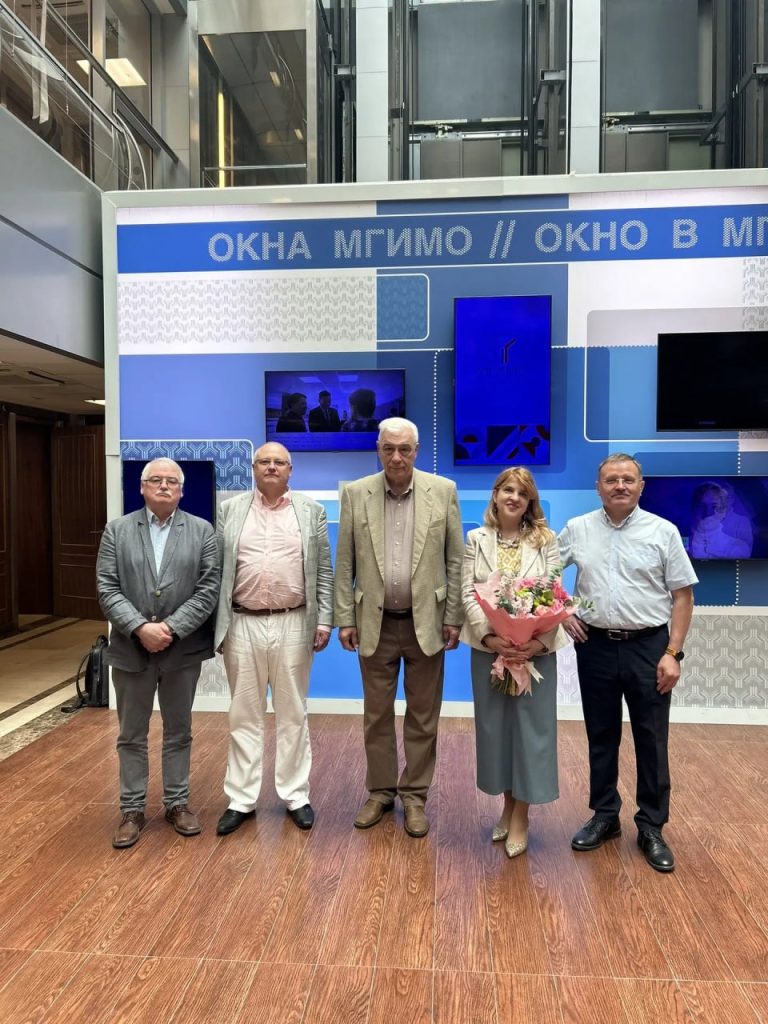
The Master’s theses were defended before the State Examination Commission, which included leading faculty members from MGIMO University, representatives from PIR Center, as well as invited experts from relevant agencies and research organizations. The commission was chaired by Vladimir Orlov, Academic Director of the program, Founder and Director of PIR Center, and Professor at MGIMO University. Other commission members included Andrey Malov, Leading Expert at the MGIMO Institute for International Studies; Evgeny Buzhinsky, Chairman of the PIR Center Council and Co-Chair of the Trialogue International Club; Mikhail Lysenko, Ambassador Extraordinary and Plenipotentiary (Ret.) and Advisor to the Director General of State Corporation “Rosatom”; Anna Velikaya, Senior Research Fellow at IMEMO RAS; and Vadim Kozyulin, Board Member and Consultant at PIR Center, and Chief Research Fellow at the Center for Military-Political Studies within the Institute of Contemporary International Studies at the Diplomatic Academy of the Ministry of Foreign Affairs of Russia.
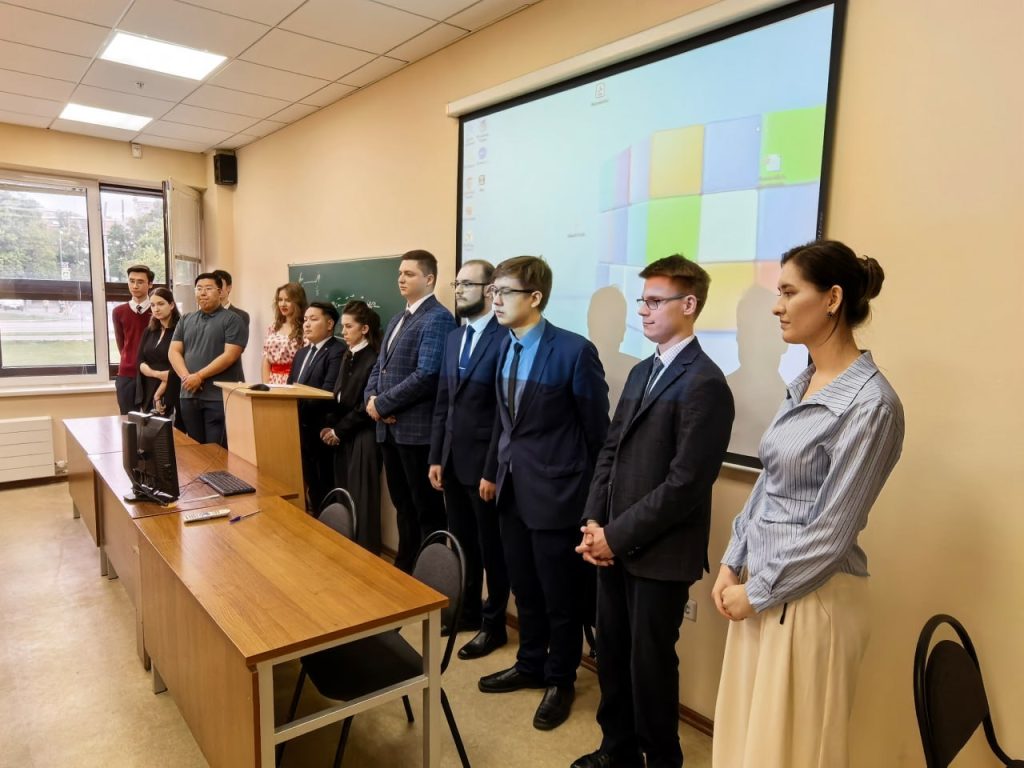
The Master’s theses presented for defense covered a wide range of contemporary international security issues – from nuclear security and cyber threats to economic and technological competition between great powers. The graduates addressed topics such as financial and currency cooperation between Russia and China, US-Russia strategic rivalry, Israel’s nuclear program, Russia’s cooperation with the Persian Gulf states in nuclear nonproliferation and atomic energy, a comparative analysis of Moscow and Washington’s strategic documents, Russian-Japanese energy diplomacy, the prospects of weapons deployment in outer space, as well as Brazil’s nuclear policy and global nuclear energy development. The students demonstrated a deep understanding of regional dynamics in East Asia, Central Asia, and Latin America, and showed fluency in the agendas of key international organizations and alliances – including AUKUS, ASEAN, IAEA, and the European Union. The Commission noted the exceptionally high quality of the research: the vast majority of graduates received A90+ grades, proving the rigorous analytical skills developed by the students throughout their studies.
An essential component of the educational process was the students’ participation in a series of informal expert seminars organized by the PIR Center and MGIMO University as part of the “Current Issues in International Security” course. During these sessions, the program’s students had the opportunity to attend lectures and discuss contemporary global security challenges with both emerging experts and seasoned diplomats, renowned researchers, and analysts. Throughout the two-year study period of the first cohort, 17 seminars were held, covering a range of pressing international security issues, including:
MGIMO University and the PIR Center continue to accept applications for the “International Security” Master’s program for the 2026/2027 academic year. Admission is competitive and based on the results of a specialized professional interview, a portfolio competition, and an English language examination. Detailed information regarding application deadlines and requirements is available on the official MGIMO website and the program’s dedicated section on the PIR Center website. Prospective students who aspire to tackle key global security challenges as future experts or public servants are highly encouraged to apply.
Graduates of the inaugural cohort shared their thoughts on the program:
The Master’s program is highly engaging and packed with various events. For instance, at the ‘Russia-Africa: What’s Next?’ youth forum, we had the opportunity to connect with African students and discuss international security issues with them. I would like to note that all the professors in the program are practicing professionals who possess immense practical experience and deliver truly substantive lectures, covering topics ranging from arms control and nuclear nonproliferation to economics, energy, and food security. My brightest memory was the 9th Timerbaev Debates on the topic ‘Is the threat of using nuclear weapons in the next decade real?’. The event’s format allowed us not only to study a vast amount of material on the debate topic but also to hone our public speaking skills and analyze our opponents’ perspectives.

What I appreciated most about this Master’s program was its interdisciplinary nature and versatility. We studied various facets of international security, including nuclear security, chemical and biological weapons issues, as well as aspects of food, information, and energy security. The program is heavily focused on developing analytical thinking and writing skills, which has provided us, as graduates, with a solid foundation and a launchpad for our future careers and further research pursuits. A distinctive feature of this program is the series of lectures and seminars within the ‘Current Issues in International Security’ course, featuring guest speakers from the PIR Center, the Ministry of Foreign Affairs, and State Corporation ‘Rosatom.’ In the future, I plan to pursue a PhD and enter public service in the Republic of Kazakhstan, where I am originally from.
The decision to enroll in the ‘International Security’ Master’s program played a significant role in my life and career, as it shaped my future professional trajectory. Thanks to this program, I had the opportunity to work alongside and gain experience interacting and cooperating with leading practitioners, professors, and active diplomats – individuals who work for the good of the Fatherland every day, bring honor to our country, and pass their expertise on to us. I would like to express my gratitude to the academic director of the Master’s program, Vladimir Andreeвич Orlov, for the unique opportunity to not only gain applied knowledge but also to put it into practice through activities within the ‘PIR Alumni Community

This Master’s program is and will remain the flagship Master’s program in the field of international security. I am happy and proud to have graduated from it. What I remember most is the course on nuclear energy, which stood out due to its deep dive into technical aspects. For me, this course opened a window into the peaceful use of nuclear energy and applied nuclear technologies. I am grateful for this, first and foremost, to the program’s academic director, Vladimir Orlov, who became a guide for all of us into this fascinating world of international security and global stability.

From a practical standpoint, I believe the ‘International Security’ Master’s program is one of the best, thanks to its rigorous and in-depth focus on the practical application of all aspects of international security, as well as the opportunity to engage firsthand with prominent members of the expert community in this field.
The Master’s program offers a highly comprehensive approach to international security issues. The curriculum covers diverse aspects related to military security, nuclear energy, nuclear nonproliferation, outer space, and non-traditional challenges, including food and economic security. If a student is interested in studying international security and aims to pursue a future career in this field, this Master’s program is the finest choice among all international relations programs in Russia. The program allowed me to combine professional and academic tracks: while writing my Master’s thesis, I simultaneously presented the findings of my outer space security research at various events during the PIR Center seminars. This made my studies both diverse and productive.

Keywords: MA program International Sеcurity
ISMA
E16/PASH – 26/07/07
