
Status: Open
№ 40 (88), 2026. XXIV PIR Center International School on Global Security Held From June 23 to July 15, 2026
July 29, 2026
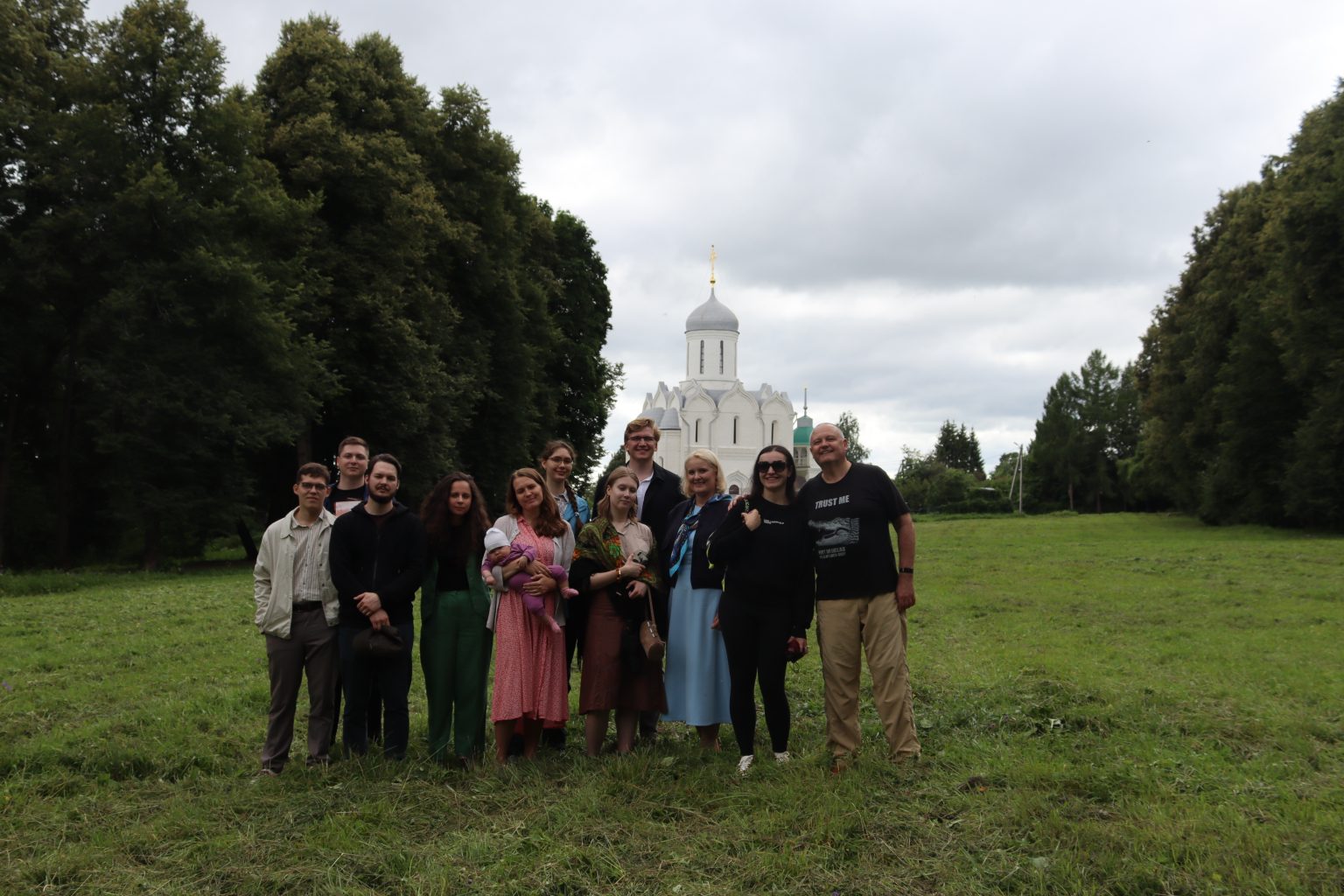
MOSCOW. JULY 29, 2026. PIR PRESS. From June 23 to July 15, 2026, the XXIV PIR Center International School on Global Security, one of the most established and prestigious educational events in its field, took place. The school was organized by PIR Center in cooperation with MGIMO University as part of the Priority 2030 strategic academic leadership program. The School’s events were attended by young scientists and journalists, undergraduates and postgraduates from Russia, Belarus, Chad and South Korea. The central topics were the future of nuclear non-proliferation, artificial intelligence and advanced technologies.
The Opening day of the School, which took place online on June 23, was dedicated to an introduction to the School’s agenda and preparation for the modeling seminar and the X International Timerbayev Debate. Evgeny Buzhinsky, Head of the Selection Committee and PIR Center Executive Board Chairman, and Vladimir Orlov, the academic director of the School, PIR Center Founding Director, Professor at MGIMO, welcomed the participants.
In his speech, Evgeny Buzhinsky noted that over the past 24 years, the School has showed itself as “an established expert and educational platform for discussing current challenges to global and regional security“ which is of great interest to young international specialists from around the world. It is where high-ranking diplomats and leading representatives of the scientific and expert community give lectures. Vladimir Orlov stressed that within the framework of the School it is planned to consider not only traditional PIR Center issues related to nuclear weapons and non-proliferation, but also the problem of the impact of new technologies on security. The central event of the day was a series of lectures on artificial intelligence and autonomous weapons.
In his lecture titled “Artificial Intelligence and Autonomous Weapons: the Transformation of International Security and Russia’s Interests“, Vadim Kozyulin, PIR Center Executive Board member and Chief Researcher at the Center for Military and Political Studies at the Institute of Current International Issues at the MGIMO Diplomatic Academy, presented an in-depth analysis of the use of modern autonomous weapons systems and highlighted Russia‘s military and strategic priorities in this area. Yulia Tseshkovskaya, PIR Center Advisory Board member and Head of Marketing at Evocargo, highlighted the prospects for international legal regulation of artificial intelligence in her lecture headed “The Development of Artificial Intelligence and Prospects for its International Legal Regulation in the Context of International Security“. The day program ended with a preparatory meeting before the X International Timerbayev Debates and “Autonomous Technologies as a Factor of Geopolitical Influence“ modeling seminar, at which the School participants presented their reports.
On July 6, in the course of the full-time part of the School in Zvenigorod, there was held a meeting for participants with Deputy Minister of Foreign Affairs of the Russian Federation Mr Sergey Ryabkov on the topic “International Security Today and Tomorrow: Global Challenges and Interests of Russia“. In his opening remarks, the moderator of the event, Vladimir Orlov, emphasized that the “main dish“ at the School was the speakers and welcomed Sergey Ryabkov. During an staight and lengthy conversation, the diplomat shared with the young specialists his vision of Russia’s global challenges and strategic interests and answered participants‘ questions. Sergei Ryabkov mentioned that the global security situation continues to deteriorate due to the increasing force factor and disregard for legal norms and institutions. Among the serious threats to peace and security, the lecturer named the expansionist policy of the so-called collective West, the expansion of the geography of NATO’s activities, the growing conflict in the Middle East and Ukraine, and the US sanctions pressure on Russia. The lecturer drew the attention of the audience to the fact that “European remilitarization programs have actually led to the strengthening of general military power potentials, including their nuclear component, which can be quickly turned against Russia in their entirety.“ Speaking about the process of building a new security system in Europe without Russia, Sergei Ryabkov noted that the term “European security“ is misleading: “The security of some states cannot be strengthened at the expense of the security of others. And that is exactly the point of NATO’s expansion, and now the militarization of the European Union.“ The diplomat stressed the close connection between arms control issues and Russia-US relations in the field of strategic dialogue: “The appropriate conditions for launching cooperation are the rejection of encroachments on each other’s fundamental interests, readiness for comprehensive work to reduce conflict potential on the basis of equality, mutual consideration of concerns and addressing fundamental contradictions.” Summing up, Sergei Ryabkov underlined that “the negative scenario of the situation is not predetermined, and there is always an opportunity to prevent the proliferation of conflict space.“
On July 7, a rich educational program awaited the School participants. Vladimir Orlov delivered a lecture titled ”Prospects for the nuclear non-proliferation regime” and touched upon a range of issues from the three ”pillars” of the international non-proliferation regime, the history of nuclear programs in various countries of the world to the states that are ”exceptions” to the NPT rule.
This was followed by a lecture and discussion on the topic of “The future of the Non-Proliferation and Multilateral Disarmament Regime after the 11th NPT Review Conference” with Andrey Belousov, Ambassador-at-Large of the Russian Foreign Ministry and Head of the Russian delegation to the 11th NPT Review Conference in 2026. The participants had a unique opportunity to learn first-hand about the progress and results of the conference, as well as about Russia’s position on key issues of nuclear disarmament and non-proliferation.
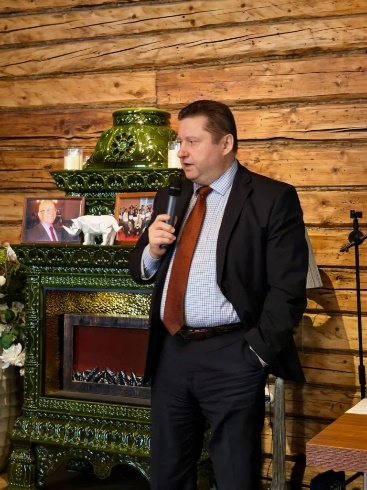
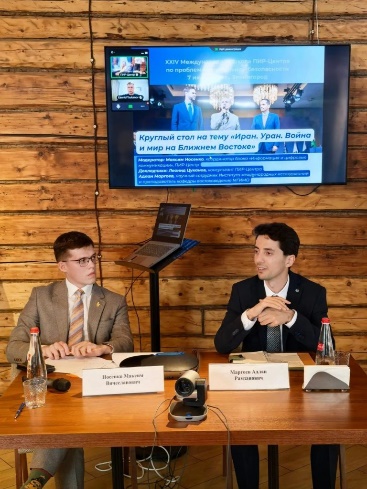
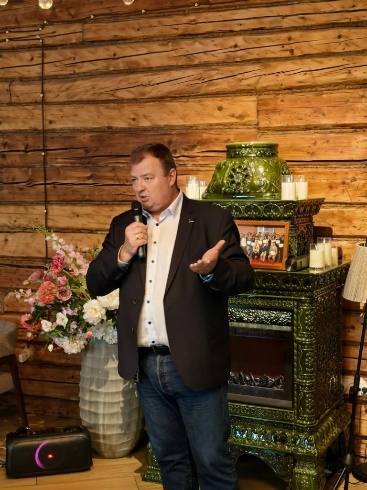
Then the round table “Iran. Uranium. War and Peace in the Middle East“ during which experts Leonid Tsukanov, a PIR Center consultant, and Adlan Margoev, a researcher at the Institute of International Studies and a lecturer at the MGIMO Department of Oriental Studies, discussed the Iranian nuclear program in the context of the escalation of the regional conflict in the Middle East and analyzed the domestic political situation in Iran.
The day continued with the workshop “A New Era in Nuclear Technology: Opportunities for Russia in the Face of Global Competition“, in which Gleb Efremov, Deputy General Director of JUSTA Group, immersed the audience in the topic of global uranium markets, spoke about uranium production and the leading countries in its reserves and highlighted innovations and advanced technologies in the nuclear industry. The expert also answered questions about the future of nuclear generation and forecasts for the growth of the share of nuclear generation in the global volume. At the end of the seminar, the lecturer invited the participants to solve two thematic business cases.
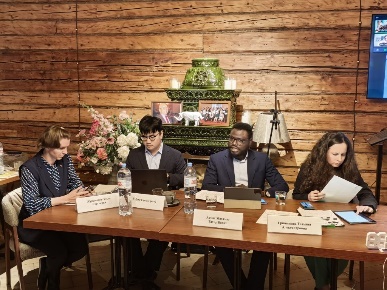
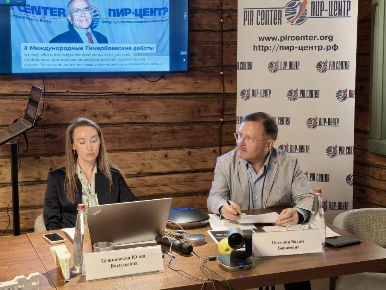
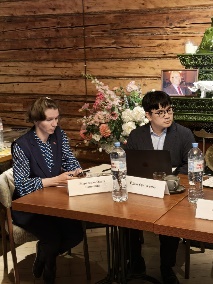
In the afternoon, a simulation seminar “Autonomous technologies as a factor of geopolitical influence” was held, during which the School participants presented their reports on a wide range of topics: from the role of technological giants and the transformation of strategic stability under the influence of autonomous weapons to the humanitarian aspects of autonomy and the prospects for an “algorithmic world order”.
The final event of the day was the X International Timerbayev Debate on “Military Artificial Intelligence in the Context of Global Confrontation between World Powers: a Strategic Resource for Russia or a Source of New Threats to National Security?” Representatives of the two teams addressed the Areopagus of the Debate represented by Vadim Kozyulin and Yulia Tseshkovskaya. Team № 1, consisting of Olga Zhuravskaya, Associate Professor of the Department of International Relations at the Faculty of International Relations of the Belarusian State University, and Greg Yoo, a graduate student in Political Science at MGIMO Univertity, who worked under the guidance of Adlan Margoev, a researcher at the Institute of International Studies and a lecturer at the MGIMO Department of Oriental Studies, presented the position that military artificial intelligence is a source of new threats to national security. The view that military artificial intelligence is a strategic resource for Russia was defended by Team № 2, which included Ahmat Mahamat Tahir Bakhit, a journalist at the Sputnik Africa news agency, and Tatiana Grishanina, an independent researcher. Leonid Tsukanov, a PIR Center consultant, was the mentor of the team. According to the results of the voting, Team № 2 was called upon to win, which managed to convince some of the viewers who previously considered military artificial intelligence a source of new threats.
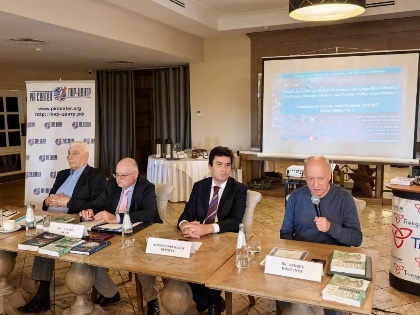
On July 8, the 130th summer meeting of the International Trialogue Club on “Russia in a Time of Global Uncertainty and Geopolitical Rivalry: Challenges, Strategic Choices, and Foreign Policy Opportunities” was held at the School, traditionally in English. Vladimir Orlov opened the meeting and presented the second volume of the Security Index Yearbook 2026/2027 Global Edition. The first session “Russia and Global Security Challenges” was attended by Dmitry Trenin, RIAC President, Professor at the Higher School of Economics, and Dmitry Stefanovich, Researcher at IMEMO RAS. The experts gave a description of Russia’s foreign policy course during the period of geopolitical confrontation and focused on military-strategic challenges and security parameters. The second session “Regional Security and Russia’s Interests“ was devoted to regional aspects. Presentations were made by Marat Berdyev, Ambassador-at-Large of the Russian Foreign Ministry, and Andrey Kortunov, expert of the Valdai Club. The sessions were moderated by Evgeny Buzhinsky, Chairman of the PIR Center Board and co-chairman of the International Trialogue Club. Attention was paid to the economic dimension of global and regional security, as well as the prospects for bilateral relations between Russia and the United States. After the solemn buffet on the occasion of the Club meeting, a lecture-discussion “New Technologies and the Future of Arms Control in the Era of a Contractual Vacuum“ was held, conducted by Dmitry Stefanovich. The expert spoke about the dual effect of new technologies, which, on the one hand, open up opportunities to increase the effectiveness of the armed forces, and on the other, create risks to strategic stability and complicate arms control.

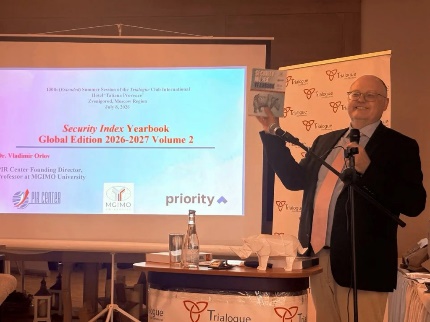
The day ended with the IV Maslin Fest, a bright and important annual event for all members of the PIR Alumni Community, which is held in memory of Colonel-General Evgeny Maslin, and combines informal communication between graduates, lecturers, friends and partners of PIR Center with a creative program, such as singing guitar songs, reading poems and prose of Russian writers. Traditionally, a charity auction was held within the framework of the meeting in support of educational projects of PIR Center.
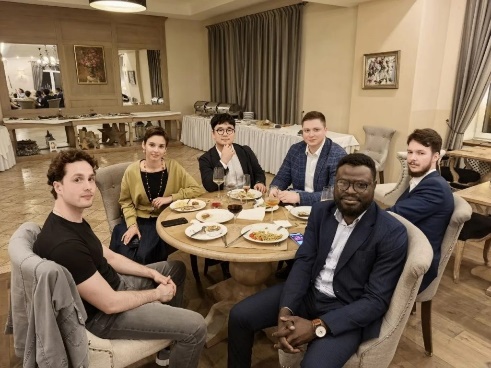
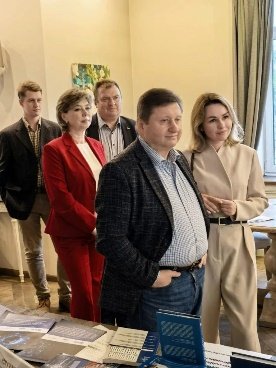
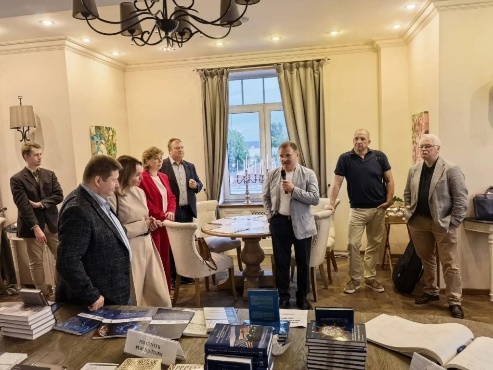
The final full-time day of School, July 9, providesan opportunity to get to know ancient Zvenigorod from a new perspective. The participants and organizers went on a guided tour aroudn the town, visited the pearls of Russian architecture – the Assumption Cathedral and the Savvino-Storozhevsky Monastery, enjoyed the picturesque landscapes of the Moskva River floodplain from the height of Myasina Gora and read poems by Alexander Pushkin. This day, filled with history, the beauty of nature and informal communication, became a bright finale of the School, leaving unforgettable impressions for the participants.
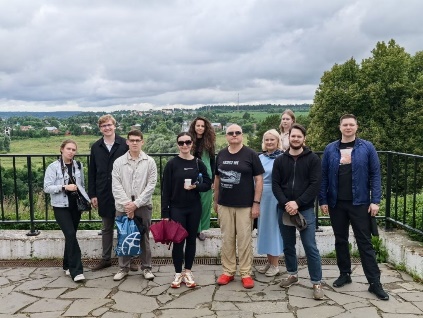
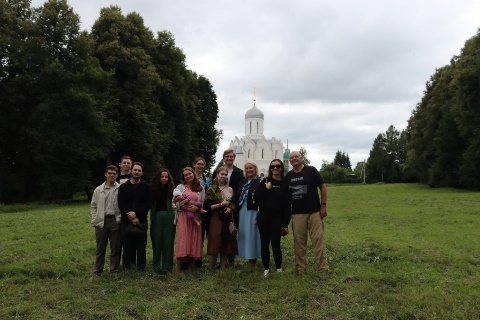
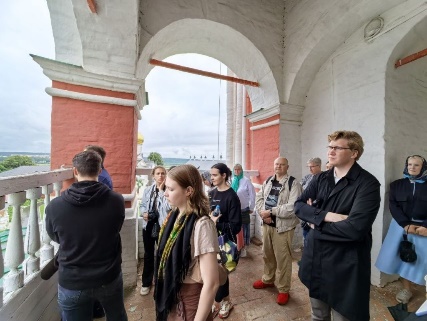
The XXIV PIR Center International School on Global Security ended on July 15 in an online format, when the School participants successfully completed the final test tob e eligible for certificates by PIR Center and MGIMO University. The audience also shared their impressions of the educational and cultural part of the event, expressing special gratitude to Vladimir Orlov, Alexandra Zubenko and other members of the Organizing Committee for the variety of events within the School, the opportunity to communicate with major Russian experts in the field of international security, a warm and friendly atmosphere, ample opportunities for exchanging views with colleagues and creating new contacts.
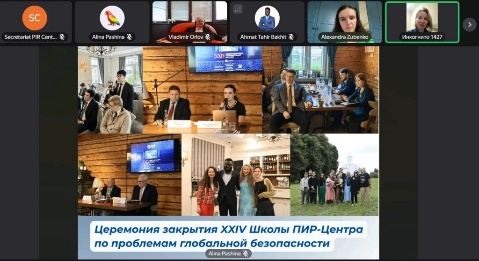
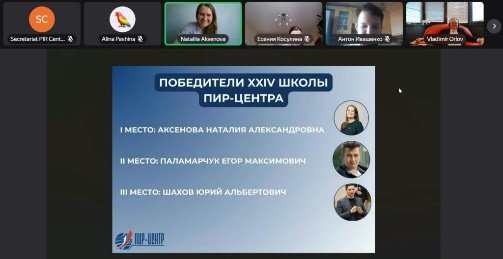
Three School winners were determined based on the total points scored. Natalia Aksenova, Chief Expert of the Balanced Nuclear Fuel Cycle project team, TVEL JSC (Rosatom State Corporation), was announced the winner, Egor Palamarchuk, Junior Researcher at the Center for Strategic Planning Studies, Institute of World Economy and International Relations and postgraduate student, European University in St. Petersburg, took the second place and Yuri Shakhov, graduate of the PIR Center and MGIMO University International Security Master’s program came third.
Participants of the XXIV PIR Center International School on Global Security shared their opinions about the event:
First of all, I was impressed by the high level of organization of the School. The participation of Mr Sergey Ryabkov, Deputy Minister of Foreign Affairs of the Russian Federation, was particularly memorable. His speech once again showed that Russia attaches much greater importance to international security issues and strategic stability. I would also like to note the high professionalism of the lecturers and experts who generously shared their knowledge and their many years of experience with us. Communication with participants from different countries, universities and organizations was a great opportunity to exchange views and expand the circle of professional contacts. A special place in the program was occupied by the International Timerbayev Debates, in which I was lucky enough to participate. It was a very useful experience that allowed us to better understand modern challenges in the field of international security and learn how to defend our position in a reasoned manner. Despite the fact that the School lasted only a few days, it turned out to be extremely eventful. It allowed me to take a fresh look at international security issues, nuclear non-proliferation, strategic stability and the use of artificial intelligence in the military sphere – topics that today determine the future of international relations. Specifically, I would like to mention the choice of Zvenigorod as a School venue. This beautiful and historic city was a real discovery for me and created a wonderful atmosphere for exploring and socializing. I sincerely thank PIR Center, Professor Vladimir Orlov, the organizers, lecturers and experts for the high level of the School, the warm atmosphere and the opportunity to become a part of this wonderful community. I am sure that the acquired knowledge and new acquaintances will be very useful in my future professional activities.
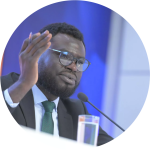
I would like to express my deep gratitude to Dr Vladimir Orlov and the organizers of the 2026 International PIR Center School. I really enjoyed the whole program. It was especially important for me to have the opportunity to talk with many well-known experts, including Mr Sergey Ryabkov, Deputy Minister of Foreign Affairs of the Russian Federation. I was also very pleased to meet young specialists from different countries and with different professional experience. This school became a new challenge for me as I could only communicate in Russian most of the time. Sometimes it was difficult, but it made the experience even more interesting and rewarding. I think it’s essential to participate in such events. Perhaps some of the information is already familiar, but while communicating with experienced experts and other participants, you can always hear a novel idea, conduct new analysis, or look at the problem from a different angle. This is especially important today, which is why the international security situation is changing rapidly. The accommodation and food were also very good. Everything was comfortable and well organized. Once again, many thanks to Dr Vladimir Orlov, the PIR Center team, the experts and all the participants for this wonderful experience.

The XXIV PIR Center International School on Global Security is an unforgettable experience. Firstly, it is a unique platform where you can listen to lectures by leading experts in the field of nuclear non-proliferation and the use of artificial intelligence. Secondly, it is a great opportunity to participate in seminars, business cases and Timerbayev Debate. This was my first such experience working in a team with an expert from the Republic of Korea, Greg Yoo. Thirdly, it is worth noting the highest level of organization of the event, the cultural program. The Maslin Fest was held with sincerity and warmth. During my time in Zvenigorod, I met a lot of extraordinary people, whose communication was immensely direct, interesting and informative from both a professional and a universal point of view. Being the only representative from Belarus, I will definitely share these impressions with colleagues and students in the framework of the International Security course, and will tell them about PIR Center and its publications.

The School is extremely useful for any international specialist as it offers a large amount of information and assessments on the most pressing issues of international security, presented in a comprehensive form by leading experts in the field. Moreover, the School combines various formats of interaction between participants and experts (lectures, debates and informal communication), which, in addition to gaining new knowledge and skills, also contributes to the development of participants’ own expertise and building personal contacts. I particularly remember the events of the most interactive format (the Timerbayev Debates). The composition of the invited lecturers, including representatives of the scientific and analytical community, as well as permanent practitioners in the field of global security, allows us to reflect not only various aspects of a single issue as such, but also the specifics and dynamics of its real implementation in the international arena. Specifically, in a positive way, it is worth noting the high intensity of the School’s work program. Holding it in Zvenigorod allows you to feel the atmosphere that is characteristic of a small but ancient Russian city – especially in this regard, I would like to highlight the impressions of religious architecture and the natural beauties of Zvenigorod land. I plan to apply the knowledge, skills and contacts I gained during School in the course of my professional career. Among other things, the School also helps to better understand the role of the PIR Center in the Russian expert and professional community.

The XXIV PIR Center School is not just an educational intensive, but a real brainstorming session, where the theory of international relations collides with the living practice of global politics. It leaves you not only with a mountain of notes, but also with a clear understanding: we are at the bifurcation point of global security, and young specialists will have to look for answers to challenges that did not exist yesterday. The start was online, but even then the bar was set high. Lectures on artificial intelligence and autonomous weapons, as well as preparations for the X Timerbayev Debates, immediately immersed us into the agenda. The full-time part in Zvenigorod began with a bright note – a meeting with Deputy Foreign Minister Sergey Ryabkov. The dialogue on “International security today and tomorrow” provided a unique opportunity to gather Russia’s position first-hand. The key block was represented by Vladimir Orlov’s lectures on the future non-proliferation regime. The round table “Iran. Uranus War and Peace in the Middle East” was where expert analysis seamlessly oozed with lively discussion. X Timerbayev Debates, the topic of which was “Military AI in the Context of Global Confrontation between World Powers: a Strategic Resource for Russia or a Source of New Threats to National Security?”, urged me to take a fresh look at the problem of autonomy. A separate event is the 130th summer meeting of the International Trialogue Club, which was held in English. The discussion about global uncertainty, Russia’s regional interests, and the presentation of the Security Index Yearbook 2026/2027 were at the level of leading think tanks. The presentations of many experts provided a deep insight, allowing us to break away from a superficial view of world processes. There was also an informal part. The IV Maslin Fest allowed for a warm conversation with colleagues from different countries, and a guided tour of Zvenigorod with a visit to the Savvino-Storozhevsky Monastery added a human dimension to the busy schedule. The PIR Center School provides what even the best university programs lack – direct access to decision makers and an environment for honing analytical skills in real-world formats. Many thanks to the organizers, led by Vladimir Orlov and Alexandra Zubenko, for the impeccable level of the event. I am convinced that the School of 2026 will be the starting point for many of us in the career of an international security expert.

At the XXIV PIR Center International School, we were offered a real a la carte intellectual menu: nuclear non-proliferation and the impact of new technologies on global security. And you know, the deeper we got into the program, the more this menu reminded me of molecular cuisine. Everything was based on an academic approach with knowledge of subtle nuances and a desire to see the familiar from a completely new perspective. I was particularly impressed by the lively dialogue with diplomats, experts and participants of the School. The lectures continued with questions, discussions, and conversations after classes. And at some point, we became the creators of intellectual dishes ourselves, mixing our experiences, ideas, doubts and arguments in test tubes. The air dessert was the final day in Zvenigorod when we visited the Savvino-Storozhevsky Monastery and the Assumption Cathedral. We got acquainted with the history of these places and saw the incredible Zvenigorod landscapes. Zvenigorod has become a real place of power for me. I am sincerely grateful to Vladimir Orlov, chef de cuisine of this program, the PIR Center, the invited experts and the entire team of organizers for the depth of the content, the high level of discussions and the atmosphere of a straight conversation. Special thanks to Alexandra Zubenko for her professionalism, attention to each participant, kindness and great organizational work. After such a menu, the intellectual appetite only gets stronger. I would like to explore the rich menu with enthusiasm, reflect and continue the dialogue in the PIR Center community.

Keywords: PIR Center International School on Global Security
IS
E16/NOS – 26/07/29
