
№ 48 (106), 2025. The digital edition of the Security Index Yearbook 2026-2027 by PIR&MGIMO Vol. 2 Digital Edition: a global premiere today
December 29, 2025

MOSCOW, DECEMBER 29, 2025. PIR PRESS. «Volume Two of the Security Index Yearbook maintains the high standard set by its predecessor. Each contribution reflects the work of leading Russian experts and practitioners representing key research centers», – Acad. Anatoly Torkunov, Chairman of the International Editorial Board, Rector of MGIMO University in his Foreword to the Security Index Yearbook 2026-2027.

On New Year’s Eve, PIR Center is pleased to offer our readers – and experts worldwide – a gift of appreciation. We invite you today to the global premiere of the Security Index Yearbook 2026-2027 by PIR&MGIMO Vol. 2 Global Edition – a comprehensive analytical product that builds on the global premiere and reader success of Volume 1 (2024-2025).
Volume Two of the Yearbook was prepared as part of PIR Center and MGIMO University consortium, and our joint project Global Security and High-Tech Breakthrough Opportunities for Russia on New Frontiers under the auspices of the Priority 2030 Program.
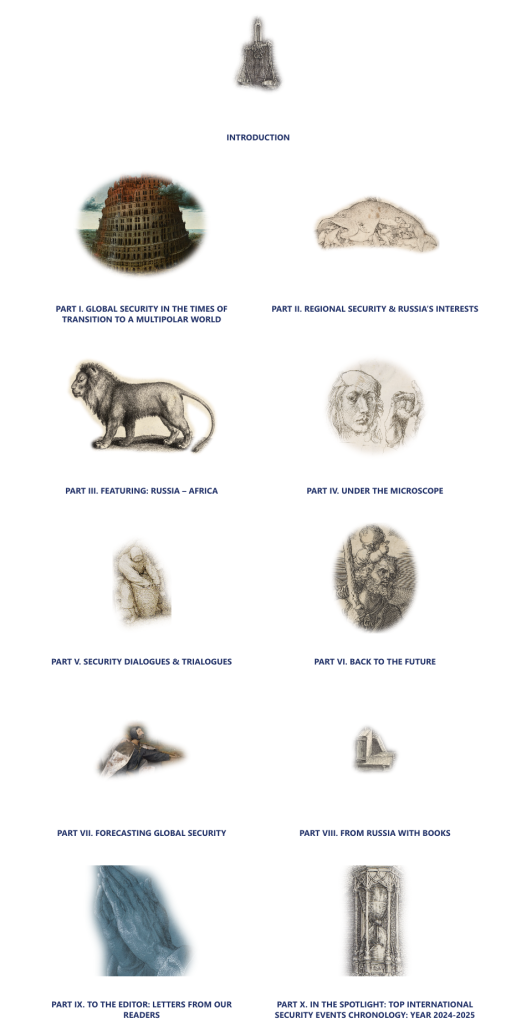
Digital Edition of the Volume Two includes 10 sections and 29 chapters, prepared by 27 experts from Russia and other countries. The authors include renowned Russian experts in international security, ministers (including Belarusian Foreign Minister Maxim Ryzhenkov), deputy ministers (including Deputy Foreign Minister Sergey Ryabkov), ambassadors, and former presidents (including former Kiribati leader Teburoro Tito).
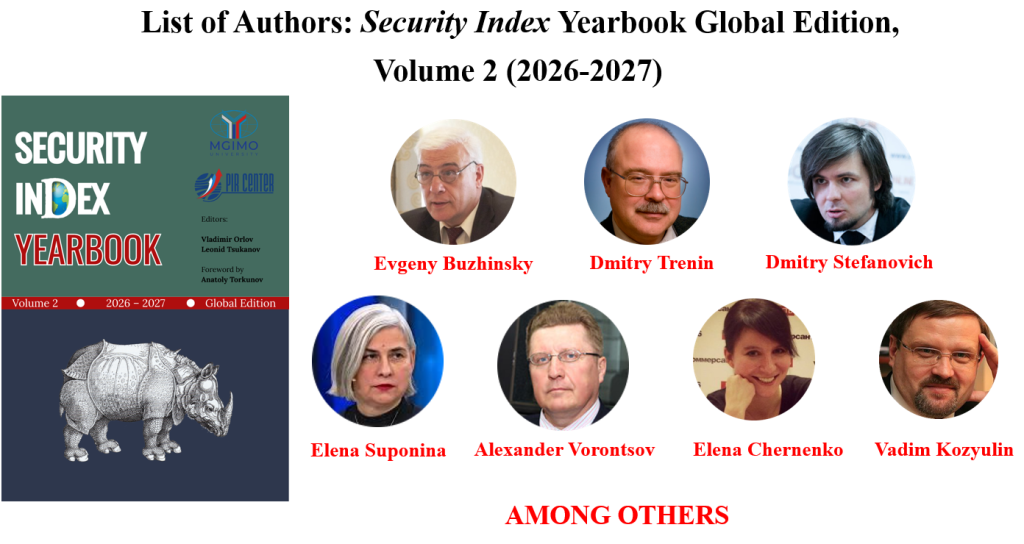
Read more about Security Index Yearbook authors
The Yearbook covers a broad range of global security and arms control issues (including international information security and the military application of AI technologies), as well as the dynamics of Russia’s relations with key global political powers (China, the United States, leading Middle Eastern powers, etc.). Volume 2 devotes special attention to Africa, examining relations with the region through the lens of high technology and resource wars. Some of these issues are explored, among other things, through interviews with Russian and foreign experts, diplomats, and political figures. This allows for a comprehensive view of the issues raised, from both the inside and the outside.
Volume 2 retains the continuity, main features and structure of the Volume 1.
Dr. Vladimir Orlov, the Yearbook’s Editor-in-Chief and PIR Center founding director, in the Introduction draws the reader’s attention to three special features of the new volume:
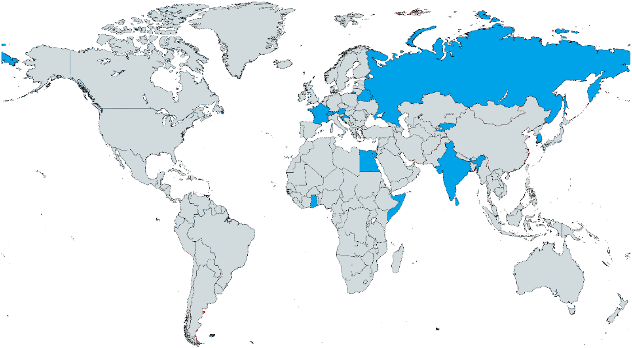
A key distinguishing feature of the Yearbook is its broad geographic range of opinions: authors discuss Russia and leading global security issues not only from Russia itself, but also from Ghana, Belarus, Somalia, Kiribati, Sri Lanka, and other countries of the Global Majority. Significantly, these contributions also include experts living in countries unfriendly to Russia but who do not share the anti-Russian approaches of their countries’ leaders – in particular, from France, Croatia, Switzerland, and Canada.
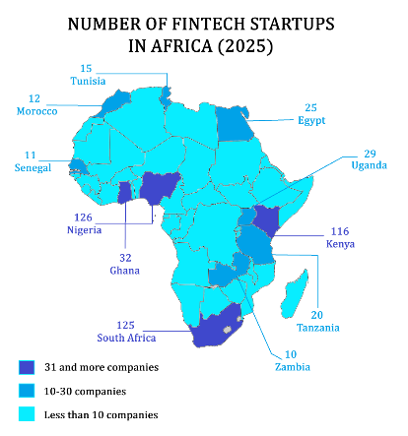
The Digital Edition features a significant focus on infographics. It includes 118 figures, 25 maps, and 18 tables – most of them were prepared exclusively for the Yearbook.
Read Security Index Yearbook Vol.2 Digital Edition
« What posed the greatest challenge in preparing Volume Two? – Dr. Vladimir Orlov, Editor-in-Chief of the Yearbook, shares his impressions. – It is the extreme volatility and pace of change in contemporary international affairs. As the Russian poet Sergei Yesenin once noted “great things are seen only from afar”. Yet, our editorial team, bound by strict publication schedule, lacks the ability to step back and discern which of the current events will prove truly significant for history and for the future of our planet and which are transient, destined to fade from memory. We are truly aware that some narratives analyzed by our authors in October-November 2025 may be viewed from a different perspective in 2026.
Great dynamism is the parent of turbulence and unpredictability. We do engage in forecasting global trends. Moreover, we do find it necessary. At the same time, we do not practice pseudo-scientific charlatanry through prophecies and divination. Such an approach is banned in our Yearbook. We have therefore chosen the contrary one – it is aligned with the principle articulated by Alexander Pushkin via the character of the chronicler Pimen:
When you are free
From your spiritual feats
Write down unpretentiously
All that you’ll witness in your life:
War, peace, the rule of sovereigns…
It is precisely the principle of unpretentious direct analysis – without much ado! – that has guided our review of the latest global and regional security developments covered in this yearbook», – concludes Dr. Vladimir Orlov.
We are aware of the fact that readers around the world have been eagerly awaiting the new volume of the Yearbook. Since the release of the Volume one, the Yearbook editorial team has received numerous reviews from all corners of the planet. Here are just a few:
Read more in the Part “Letters to the Editor” in the Security Index Yearbook Vol. 2
For general questions regarding the Security Index Yearbook, please contact the Executive Editor of the Security Index Yearbook, PIR Center consultant Leonid Tsukanov via email tsukanov@pircenter.org.
Paperback Edition of Security Index Yearbook Vol. 2 (2026-2027) Global edition will be available in early 2026. PIR Center and MGIMO will make special announcements on that occasion, and an event with official launch of the paperback edition will follow.
Keywords: Security Index; Global Security
SIY
E16/SHAH – 25/12/29
