This project is completed. Information is not being updated

"The International Arms Trade Treaty is a bold initiative, which is ahead of its time. Today a lot of complicated issues are to be agreed on. It is noteworthy that the Russian position is undergoing a notable evolution. Russian experts have the opportunity to make a significant contribution to the project agreement. "

Director of the PIR Center Project "Prospects for the Arms Trade Treaty"  Vadim Kozyulin

Documents

Library

Useful links

Arms transfers are a tool of big politics. This is an area of domestic policy, where the ratio between defense exports and domestic consumption of arms reflects the attitude of the country’s leadership towards armed forces. This is an area of foreign policy, through which current and future alliances can be traced, changes in the balance of power become visible, challenges and threats are exposed.

In the modern world, effective management of weapons transfers becomes particularly important. One of the possible regulation mechanisms is the International Arms Trade Treaty (IATT). Today the UN is preparing an international conference on IATT in 2013. The PIR Center experts actively participate in the development of recommendations on such IATT aspects as the scope of regulation of the Treaty (controlling legal trade or preventing illegal trade), the issue of the Register, the need to incorporate the human rights issue in the Treaty.

According to the data available to the PIR Center experts, today the Russian exporters are losing some of the traditional regional markets due to the emergence of new arms producers. There is a significant price increase in the Russian defense production, which creates problems both for the Russian Armed Forces, and for Russian arms exports.


The PIR Center’s Project

The Aim of the Project on Conventional Arms and the prospects for the ATT is the study of defense production in the Russian Federation and arms exports from Russia; the development of international law on conventional arms control, with an emphasis on processes related to the discussion and adoption of the international Arms Trade Treaty.

For all questions on the Project please contact Director of the Project Vadim Kozyulin,  tel:   +7 (495) 987-1915, fax: +7 (495) 987-1914, or via e-mail: kozyulin at pircenter.org

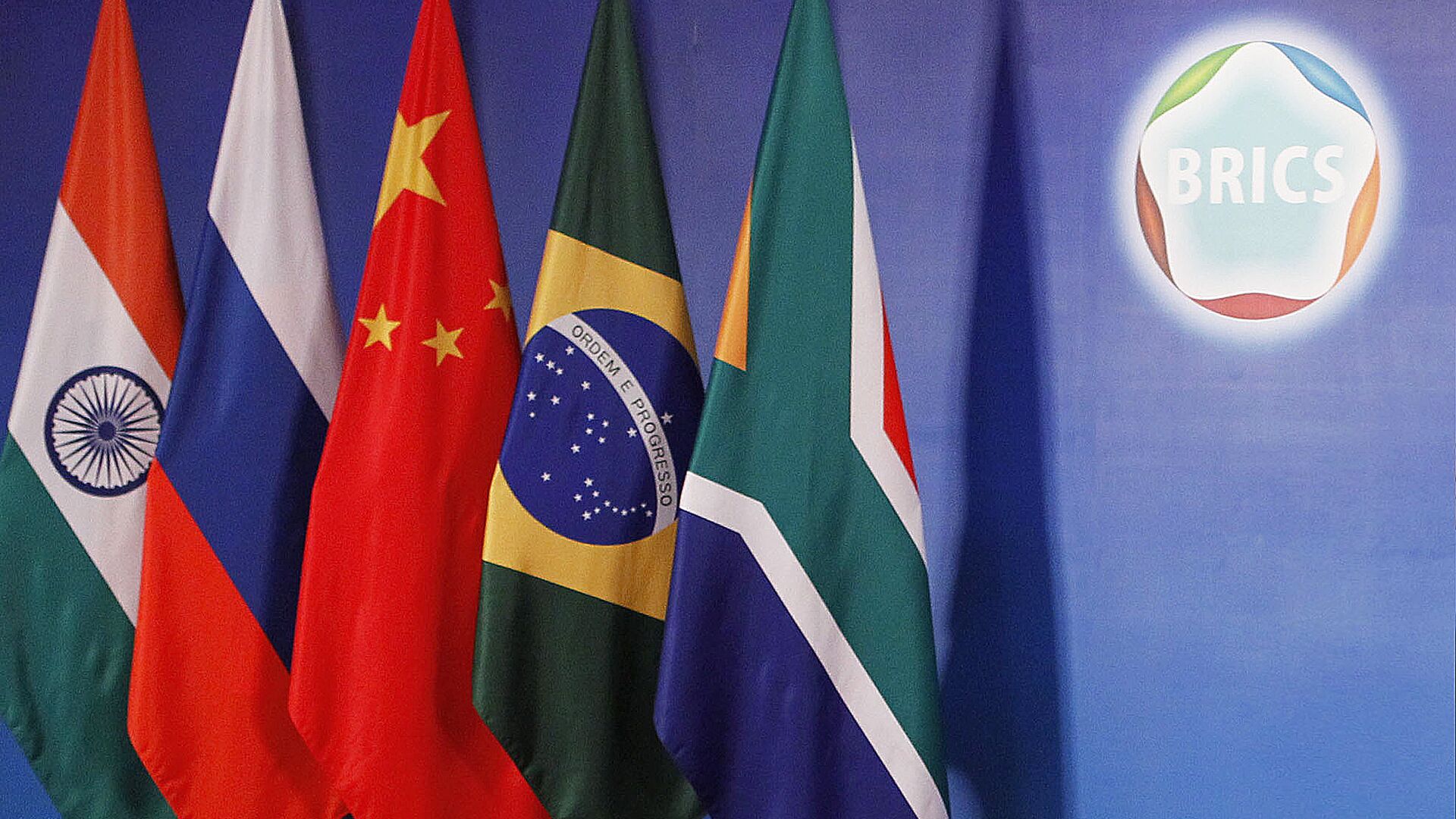
BRICS_thumb.jpg

PIR Center President Vladimir Orlov took part in expert descussions among representatives of Russia, PRC, India and Brazil when the very cocept of the group was only being developed, and we have been closely fallowing the situation since. 

PIR Center analyses Russia's participation in BRICS formate and high-tech cooperation with its members (nuclear energy, informational technologies and use of outer space). PIR Center takes active part in drafting Russian strategy towards BRICS, our experts are members of National Committee on BRICS Research

Project description in pdf format

All the presentations and lectures organized by PIR Center at Seliger deserve the highest praise for their exceptional quality and for the very broad range of issues they covered. I think Vladimir Orlov was the best speaker at Seliger; he showed himself not just as a great public speaker but also as a brilliant lecturer. His complete openness and friendly tone in conversations with the students, and his engaging and lively answers to their questions had me completely fascinated with the subject and helped me to get actively involved in the lectures.”

Jehangir Akram Malik,

MBA student, Pakistan, Participant of the Seliger Forum 2011.


Seliger is an international forum attended by thousands of participants from all over the world. The venue, Lake Seliger, offers stunning views of the Russian countryside. For PIR Center lecturers this was the most colorful event of 2010 and 2011. In 2011 the organizers of the Forum and the Russian Federal Agency for Youth Affairs invited PIR Center to take part in the Forum for the second time.

sel_10_en.jpg

sel11_en.jpg


In 2010 we only held three round tables; in 2011 we offered a full-blown course, with 20 classes focusing on key issues of international politics and global security. The international shift of the Forum was attended by more than 700 students of leading Russian and foreign universities. PIR Center’s classes attracted more than 250 participants of the International Politics section and other sections from Russia, Algeria, Brazil, Britain, Croatia, Egypt, Germany, India, Indonesia, Pakistan, Spain, and the United States. In 2010 Seliger participants discussed key European security, nonproliferation and disarmament issues with Lt. Gen. Evgeny Buzhinsky, Senior Vice President of PIR Center and Dmitry Danilov, Head of the European Security Department at the Russian Academy of Sciences’ Institute of Europe and PIR Center Advisory Board member. Army General Vyacheslav Trubnikov, Member of the Board of Directors of the IMEMO RAS institute delivered the central lecture of 2011, entitled “Diplomacy and Intelligence in the 21st Century”. Vladimir Orlov hosted debates and delivered interactive lectures focusing on nonproliferation and disarmament. Vadim Kozyulin organized seminars on the subject of arms trade. One of the key topics was internet governance and international information security; a cycle of lectures on this subject was delive red by Mikhail Yakushev, Chairman of the PIR Center Executive Board. Dmitry Polikanov, Vice President of PIR Center, hosted a debate on the future of relations between Russia and NATO; he also led a practical class on preparing political speeches. Professor Viktor Murogov, Director of the International Center for Nuclear Education and Deputy Director General of the IAEA (1996–2003), and Irina Mironova, Assistant to Editor-in-Chief of the Security Index journal, hosted a debate on the future of the energy sector.

For PIR Center, participation in the Seliger Forum has been the first and very successful step in working with such a broad audience of young people. We will continue along this path.


Every Midweek Brainstorming is like a chamber concert; there are no accidental people present. A discussion of a problem or an expert report debated by a small number of highly qualified professionals makes it possible to learn new things and, more significantly, to discuss the nature of the problem honestly, regardless of the personalities involved".


Pavel Luzin, PhD in Political Sciences, PIR Center Alumnus


NS_2.JPG“It was useful, I’ve got several new ides” – such feedback is the main criterion of success for the organizers of the Midweek Brainstorming sessions, a series of informal seminars hosted by PIR Center. Interested people gather at PIR Center, including researchers, Foreign Ministries and Defense Ministries diplomats, analysts, engineers and journalists. Some of them are young specialists; some have decades of experience under their belt.

What needs to be done to ensure the long-awaited success of the military reform? The future of China’s nuclear policy – is Beijing willing to consider reducing its arsenal, or is it trying to ramp it up? Is the new constitution of Kyrgyzstan in line with the national character of the country? Will it calm the country down, or lead to another revolution? What exactly is being studied by hundreds of students from Myanmar at nuclear universities? These and many other fascinating questions have been discussed during Midweek Brainstorming sessions over the past year.

The Midweek Brainstorming sessions are held in two formats. One is where an experienced expert takes the center stage; the other is where young researchers defend their theses and thereby begin their professional career. As a rule, the topic chosen for such theses is something new, with no experienced experts available for that narrow subject. But the event is always attended by professionals who can give valuable advice as to what to change, what to add or remove from the thesis, and how to polish it.

The defense of a thesis turns into an insightful debate between real professionals, which especially impresses the young researchers. If the outcome is positive, the young trainee’s piece of research can be recommended for publication. And after such a discussion, an article even by a beginner can take its rightful place among works by well-known professionals. Tea and snacks are offered during the two-hour sessions.

Midweek Brainstorming Sessions:

  • Presentations of research papers at PIR Center – new projects by experienced professionals, and first projects by young scholars
  • Free exchange of opinion and thoughts on key international security issues
  • Meetings with colleagues and new interesting people

For information about the upcoming Midweek Brainstorming sessions, please call +7 (495) 987 19 15 or check “Events Schedule” at our main page

loading