
№ 6 (20), 2026. The Promise of the Premise: The Implications of SMDA between Pakistan and Saudi Arabia amid the Escalation in the Middle East: Interview with Taimur Khan by Maksim Nosenko
April 6, 2026
Exclusive Interview

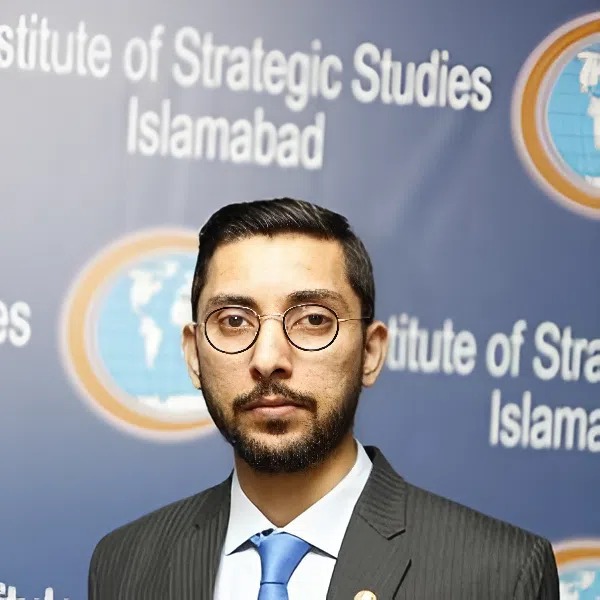
The test of this alliance was not long in coming. Following the Iranian strikes on Saudi Arabia, the question of whether Pakistan should take action to protect its ally naturally arose. For now, the provisions of the Strategic Mutual Defense Agreement (SMDA) between the two countries have not been publicly activated, nor have the Gulf states taken any significant measures. In an interview with the PIR Center, Mr. Taimur Khan, a Visiting Researcher at the Institute of Oriental Studies and a Research Associate at the Institute of Strategic Studies Islamabad (ISSI), explains the dimensions of the SMDA and what it may entail in the near future.
The interview was conducted by Mr. Maksim Nosenko, PIR Center intern.
Mr. Maksim Nosenko: What, in your opinion, are the main dimensions of the SMDA, particularly regarding its nuclear component?
Mr. Taimur Khan: In my view, the SMDA should be read on three levels at once: as a political-strategic signal, a conventional military framework, and a deliberately ambiguous deterrence instrument. The only publicly confirmed language is limited because Pakistan’s and Saudi Arabia’s official statements say the agreement is meant to deepen defence cooperation, strengthen «joint deterrence against any aggression», and treat aggression against one as aggression against both. The full treaty text has not been made public, so any interpretation beyond it should be approached with caution.
My first point would be that the SMDA is not just a military pact, but it is a response to a changing regional order. It emerged amid growing Gulf doubts about the reliability of external security guarantees and after a series of regional shocks in 2025. That is why its most immediate function is to reassure and signal. Riyadh shows that it has a serious Muslim-majority strategic partner, while Islamabad gains status, leverage, and a stronger footprint in Middle Eastern security. I would argue that the pact formalizes a deep pre-existing relationship more than it creates an entirely new alliance architecture.
Second, the SMDA has a clear conventional-operational dimension. Pakistan and Saudi Arabia already had decades of defense ties, including Pakistani training, advisory, and security roles in the kingdom. So, the agreement likely matters most in practical terms for interoperability, joint planning, intelligence coordination, training, possible air and missile defense cooperation, and potentially defense-industrial collaboration. That is why I would describe it less as an instant Article 5-style war guarantee and more as a framework for structured military coordination in a crisis.
Third, and most importantly for your question, the SMDA has a nuclear shadow but no explicitly demonstrated nuclear clause. Publicly, the agreement does not mention nuclear weapons. Pakistani officials in the immediate aftermath said nuclear weapons were «not on the radar» of the pact, while a senior Saudi official described it as a «comprehensive defensive agreement» covering «all military means». At the same time, Pakistan’s defense minister also made a separate public comment suggesting that Pakistan’s «capabilities» would be available under the pact. Taken together, this does not amount to proof of a formal nuclear umbrella; rather, it suggests strategic ambiguity. So, my own assessment is this: the nuclear dimension is best understood as latent or implicit extended deterrence, not overt nuclear sharing. In other words, the pact creates a psychological and political deterrent effect because Pakistan is the only nuclear-armed Muslim-majority state, and KSA knows that fact changes regional calculations even if no formal nuclear guarantee has been announced. That ambiguity itself may be useful to Riyadh, because it strengthens deterrence without forcing either side to cross the legal and diplomatic threshold of openly declaring a nuclear umbrella. I strongly believe the agreement is primarily a political signal of solidarity and strategic cooperation, not evidence of an unconditional Saudi nuclear shield.
I would add one more layer. The nuclear question must be viewed in the context of Saudi Arabia’s broader nuclear trajectory. Riyadh is still pursuing a civil nuclear arrangement with Washington, and the current debate in the United States is precisely over how many safeguards and limits on enrichment or reprocessing Saudi Arabia should accept. That matters because it shows the kingdom is not relying on one track alone; it is hedging across multiple tracks, such as U.S. security ties, civil nuclear development, regional diplomacy with Iran, and now the Pakistani connection. Given the latest developments in the Middle East, especially the war in Iran and Pakistan’s current mediating role among Saudi Arabia, Turkey, and Egypt, the SMDA’s immediate utility appears to be crisis coordination and political leverage, not nuclear activation. Pakistan is currently trying to use its ties with Riyadh and Tehran to position itself as a mediator, though a caveat is that the same pact could also draw Islamabad into regional entanglements if the conflict widens. That reinforces my conclusion that the SMDA’s nuclear aspect is more about deterrent signaling than operational nuclear commitment.
Mr. Maksim Nosenko: How possible is the activation of the SMDA amid the strikes on Saudi Arabia?
Mr. Taimur Khan: My assessment is that SMDA activation is possible, but a full-scale activation is still less likely than a limited, phased, and mostly non-public one. The reason is simple: the pact’s public language is strong as it says the agreement is meant to strengthen joint deterrence and that aggression against one will be treated as aggression against both, but the full operational text has not been made public. It was reported at the time of signing that Pakistan’s Defense Minister Khawaja Asif said the arrangement would «become operative» if the parties were threatened, even while publicly downplaying an explicit nuclear role. Given the current situation, the threshold question is no longer hypothetical. Saudi Arabia has already been hit during the present war, as it was reported that Iranian missiles targeted Riyadh on March 18, with debris falling near a refinery, and hundreds of Iranian missiles and drones have been fired at Saudi Arabia since the conflict began. So, in practical terms, I would say that a limited or de facto activation is highly plausible and may already be underway in consultations, intelligence exchange, contingency planning, and military coordination. That is the most likely form of activation because it is politically useful, strategically credible, and easier to calibrate. It allows Pakistan to honor the spirit of the pact without making an immediate leap into overt combat or declaratory nuclear commitments.
By contrast, a maximal activation meaning overt Pakistani combat deployment in direct support of Saudi retaliatory operations, or public nuclear signaling on Saudi Arabia’s behalf, remains possible but still unlikely at this stage. There are three reasons in my opinion. First, Pakistan is currently positioning itself as a mediator in the Iran war, including hosting Saudi, Turkish, and Egyptian officials and offering channels for diplomacy. Second, I see Pakistan at risk of being drawn into the war precisely because of the Saudi defense pact, which means Islamabad has incentives to avoid crossing that line too early. Third, Pakistan still has to balance its ties with Riyadh with its relationship with Iran and manage domestic sectarian and economic constraints. So, the best answer is that SMDA activation is possible in a narrow sense now, but not yet inevitable in a full military sense. The most likely pathway is graduated activation, meaning first intelligence and command coordination, then perhaps air defense, logistics, training, defense-industrial or advisory support, and only in a much more severe scenario, any overt Pakistani operational role. A true high-end activation would become much more likely only if Saudi Arabia suffers sustained mass-casualty strikes on major cities, critical oil infrastructure, leadership nodes, or religiously symbolic sites, and if Riyadh formally requests visible Pakistani support.
Mr. Maksim Nosenko: Could Saudi Arabia opt to acquire nuclear weapons in the wake of the escalation, and if so, could it seek assistance from Pakistan?
Mr. Taimur Khan: Yes, in political terms, Saudi Arabia could decide after a major escalation that it wants a nuclear weapons option. But that is different from being able to quickly obtain a usable nuclear arsenal. Riyadh has long signaled that it would not remain passive if Iran crossed the nuclear threshold. MBS said in 2018 that if Iran developed a bomb, Saudi Arabia would follow as soon as possible. More recently, Saudi Arabia has kept pushing for an expanded civil nuclear program and publicly stated in January 2025 that it wants to enrich uranium and produce yellowcake, while the current U.S.-Saudi nuclear talks have been controversial precisely because of concerns over enrichment, reprocessing, and weaker non-proliferation guardrails. That means Saudi Arabia is best understood as a hedging state, not openly building a bomb, but trying to preserve strategic latitude under worsening regional conditions. That said, the legal and diplomatic barriers remain substantial. Saudi Arabia is a party to the NPT, and Article II commits non-nuclear-weapon states not to receive nuclear weapons or control over them. Saudi Arabia has also publicly affirmed its peaceful nuclear commitments and moved away from its earlier Small Quantities Protocol framework toward a fuller implementation of safeguards with the IAEA. So, if Riyadh were to pursue actual weapon acquisition, it would not be a normal policy adjustment; it would amount to a major break with its treaty obligations and invite acute international pressure, scrutiny, and likely sanctions.
Specifically, regarding Pakistan, Saudi Arabia can certainly ask. In fact, if Riyadh were ever to look externally rather than indigenously, Pakistan is the most obvious state it would look to. The two countries have deep strategic ties; Pakistan is the only nuclear-armed Muslim-majority state, and their SMDA deliberately strengthened deterrence language while leaving the nuclear question ambiguous. I will join other analysts in stating that this has revived long-running speculation about a Pakistani nuclear umbrella or some form of emergency understanding for Saudi Arabia. But asking is far easier than getting. There is no public evidence of a formal arrangement for Pakistan to transfer nuclear weapons, warheads, or control to Saudi Arabia, and I would caution against reading the SMDA as proof of a Saudi nuclear umbrella. Publicly, Pakistani officials have downplayed a nuclear role in the pact. In practical strategic terms, a direct Pakistani transfer would be the least likely option because it would entail enormous diplomatic, military, and proliferation costs for both Islamabad and Riyadh. Therefore, my own judgment is that Saudi Arabia could move from hedging toward weapon-seeking if it concluded that Iran had crossed the line and that U.S. protection was no longer credible. But the most plausible Saudi response would still be a graduated one, not immediate weapon acquisition. In that extreme scenario, Pakistan would be the first country I would suspect Saudi Arabia of turning to, but that remains politically conceivable, not publicly demonstrated or strategically easy.
Keywords: Nuclear nonproliferation; Strategic alliance; Regional security
NPT
E16/SHAH – 26/04/06
