‘Australia has emphasised it is committed to adhering to the highest standards for safeguards, transparency, verification, and accountancy measures to ensure the non-proliferation,’: Interview with John Carlson by Artem Astvatsaturov
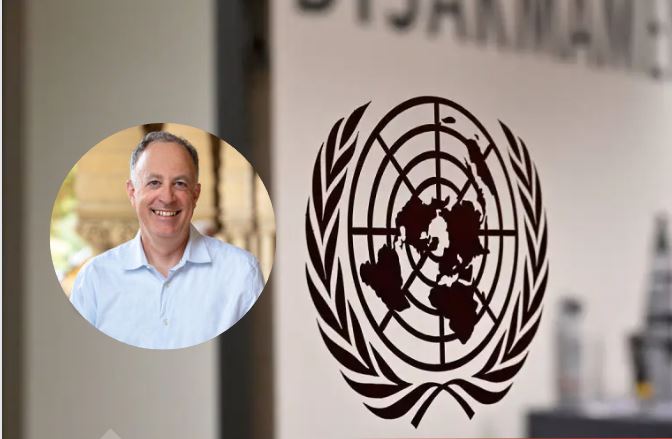
Mr. John Carlson,
Non-Resident Senior Fellow, Vienna Center for Disarmament and Non-Proliferation
12 October 2026
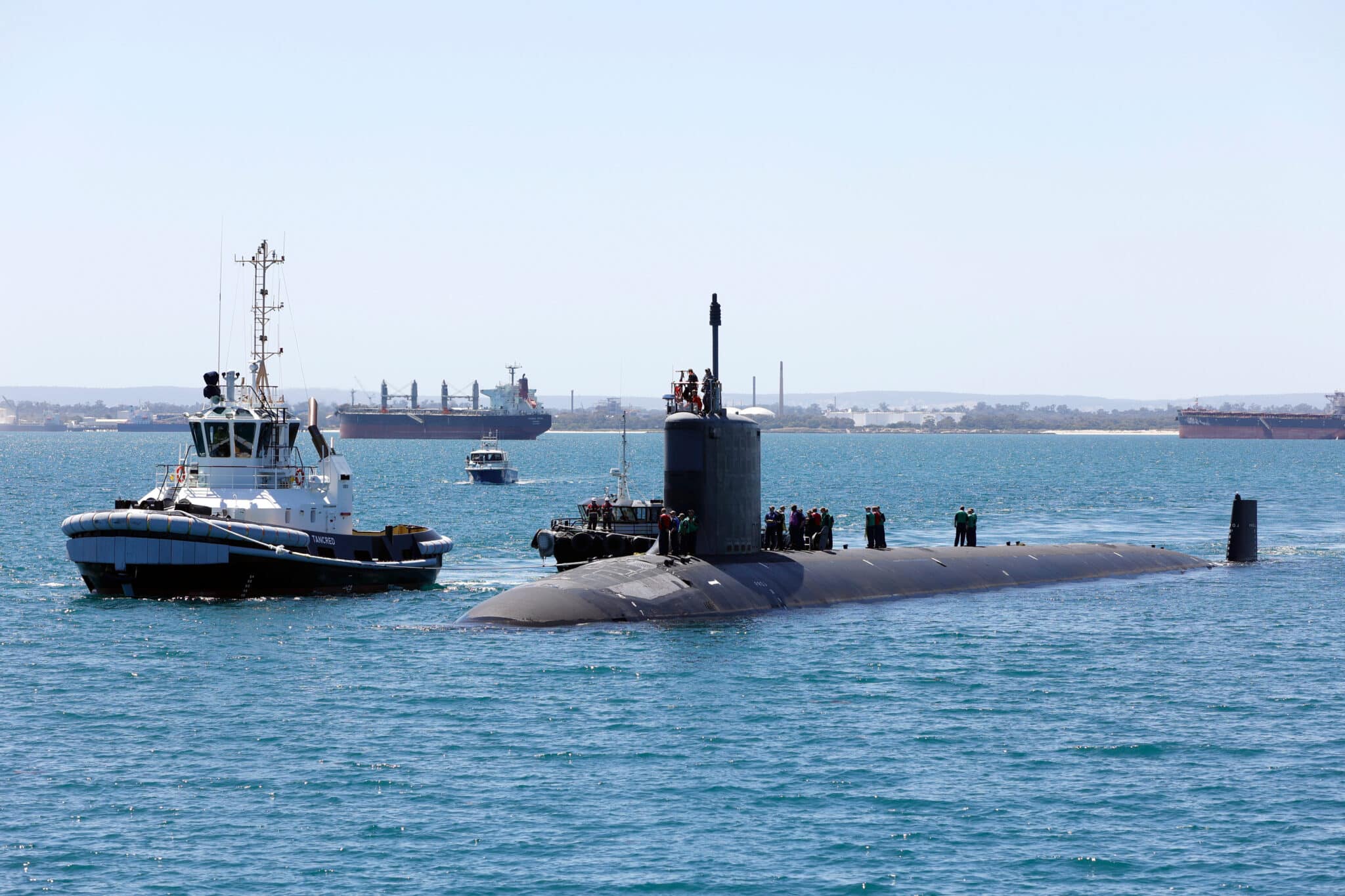
Nowadays, the entire global community has faced a new challenge for the nuclear non-proliferation regime – Australia’s SSN programme coupled with the activity of AUKUS in the South Pacific. Referring to AUKUS Pillar I, Australia is expected to receive three in-service Virginia-class SSNs. There is no doubt that the US decision to sell SSNs to non-nuclear weapon state is railing the current international relations architecture. Is the current nuclear non-proliferation regime still fit against the backdrop of the latest developments? There is an unfolding debate surrounding probable repercussions of sharing SSNs to Canberra. Indeed, some analysts argue such action could provoke future crises and even weaken the institutional regime of the NPT Treaty. We have tried to scrutiny the peculiarities of the SSN programme of AUKUS, with particular attention being paid to IAEA safeguards. Today, our guest is Mr. John Carlson who acts in the capacity of non-resident fellow at Vienna Center for Disarmament and Non-Proliferation (VCDNP). Mr. Carlson had previously served as the Director General of the Australian Safeguards and Non-Proliferation Office (1989-2010). He had also acted in the capacity of the chair of the IAEA Standing Advisory Group on Safeguards Implementation (SAGSI) (2001–2006) and the Alternate Governor for Australia at the IAEA Board of Governors, Australian Sherpa to the Nuclear Security Summit in 2010.
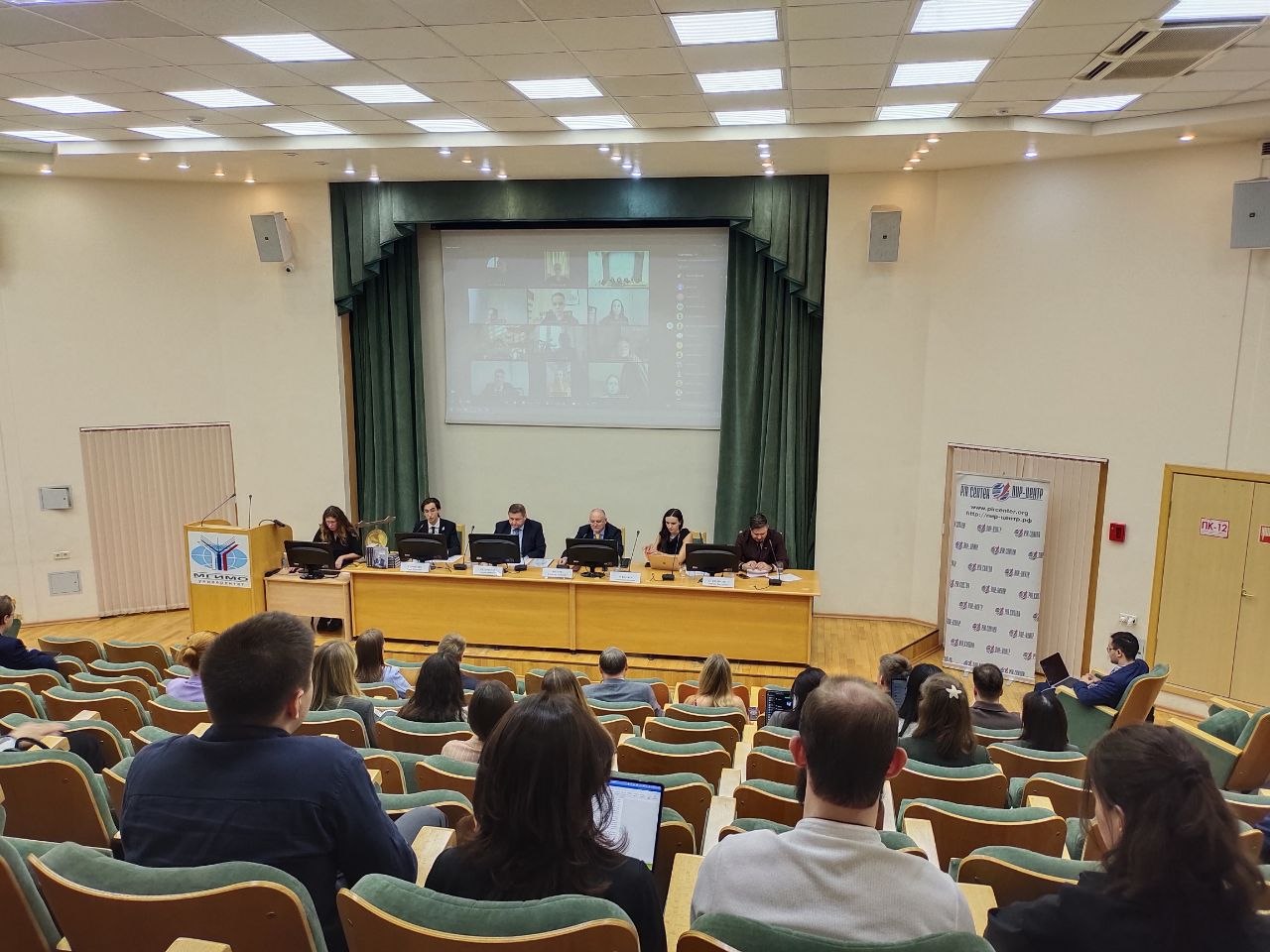
The interview has been conducted by Mr. Artem Astvatsaturov, MA Candidate in International Security at MGIMO University and the member of PIR Alumni Community since 2025.
Mr. Artem Astvatsaturov: Paragraph 14 of INFCIRC/153 has never been applied in more than fifty years of comprehensive safeguards. What is the legal basis for applying it now? Some states on the IAEA Board of Governors argue that this creates a military exemption.
Mr. John Carlson: The reason paragraph 14 of INFCIRC/153 has never been applied is that until recently the circumstances for application have never arisen. Paragraph 14 deals with the situation of a non-nuclear-weapon state (NNWS) wishing to use nuclear material for a non-proscribed military purpose, that is, a military purpose other than the acquisition or manufacture of nuclear weapons (which under the NPT is absolutely prohibited for a NNWS). When the NPT was negotiated, it was anticipated that in the future a NNWS might wish to use nuclear energy for naval propulsion (a non-proscribed military purpose), and the NPT allows for this possibility. This led to the inclusion of paragraph 14 in INFCIRC/153, the model agreement for safeguards pursuant to the NPT.
However, for various reasons – such as complexity and cost – a NNWS nuclear naval propulsion programme has not been a practical issue until now. Canada considered acquiring nuclear-powered submarines in the 1980s but did not proceed. Brazil has had a programme for developing a nuclear-powered submarine for some decades, but this has not yet reached the stage where paragraph 14 would be applicable. The AUKUS programme was announced, and discussions on paragraph 14 arrangements initiated with the IAEA, in 2021. Brazil initiated paragraph 14 discussions with the IAEA in 2022. Recently South Korea announced plans to develop a nuclear-powered submarine and has also initiated discussions with the IAEA on safeguards and other measures.
Paragraph 14 refers to ‘non-application’ of ‘the safeguards provided for in the Agreement’ while nuclear material is in a non-proscribed military use. This is not a general exemption from all safeguards. Rather, the purpose of paragraph 14 is to accommodate the special circumstances of military activities, particularly legitimate concerns to protect sensitive information, such as design of naval reactors and details of submarine deployments. For nuclear material in a non-proscribed military use, the IAEA and the state are to agree on appropriate verification arrangements that are sufficient for the IAEA to provide credible assurance of the non-diversion of the nuclear material to nuclear weapons. The IAEA has made it clear that safeguards under the safeguards agreement are to apply to nuclear material when it is not actually in the non-proscribed military use.
If the IAEA considers it is unable to provide credible assurance of non-diversion it should withhold agreement under paragraph 14 and report the situation to the Board of Governors.
Mr. Artem Astvatsaturov: The reactors used in US submarines are fueled with highly enriched uranium, over 90 % – this is weapons-grade material. How can transferring it to a non-nuclear-weapon state under military control be reconciled with the NPT Treaty and with the highest standards of non-proliferation?
Mr. John Carlson: As I have discussed, the supply of fuel for naval reactors was anticipated by the NPT, and this is fully consistent with the NPT provided satisfactory verification arrangements are put in place. There are verification issues to be resolved, but as noted under the next question, the HEU will not be readily accessible to Australia. The practical difficulty of access assists the IAEA’s verification task. From the non-proliferation perspective, the AUKUS situation compares favourably with alternative naval fuel scenarios under which a state operates enrichment facilities to produce its own fuel. In such a case it will be an ongoing demand on safeguards to ensure fuel cycle capabilities are never misused – this involves not only safeguarding declared facilities and material but ensuring the technology is not replicated in an undeclared programme.
Mr. Artem Astvatsaturov: AUKUS partners underscore that Australia would receive complete, welded power units, and that removal of nuclear material would be extremely difficult and would render the unit and the submarine inoperable. You have discussed this design. Is that a technical safeguard or a design feature? What prevents a state from cutting open the unit in a dockyard, extracting the HEU, and later claiming the submarine was simply decommissioned?
Mr. John Carlson: Verification approaches should take account of the characteristics of the technologies and materials involved. The proposed AUKUS submarines were not designed so as to make access to the HEU fuel difficult, but fortuitously the design has this consequence, and this is an advantage from a non-proliferation perspective.
On the question of decommissioning, there are two possibilities – retirement of the submarine at the expected end of its operating life, discussed under question 5 below, or early decommissioning. On the latter possibility, in view of the military significance and enormous costs of nuclear-powered submarines, it is extremely unlikely a state would decommission a submarine early, and doing so would attract very close scrutiny by other states as well as the IAEA.
It is essential for the paragraph 14 arrangements to include a requirement to notify the IAEA of any intended submarine decommissioning. It will also be important for the paragraph 14 arrangements to be complemented by appropriate reporting and access for the IAEA under the state’s Additional Protocol (AP). The IAEA might also want to see the AP supplemented by additional measures focused on proliferation-sensitive materials and technologies.
Verification and detection issues are discussed further under questions 4 and 5.
Mr. Artem Astvatsaturov: If the material is excluded from IAEA safeguards under Paragraph 14, how does the IAEA maintain continuity of knowledge? Would inspectors have to rely on state declarations? How would they verify that no material has been removed?
Mr. John Carlson: As discussed above, nuclear material under paragraph 14 arrangements will not be ‘excluded from safeguards’. The paragraph 14 arrangements will include appropriate verification measures. Continuity of knowledge will be an important aspect of these. The situation would be analogous to nuclear material categorized as difficult to access – there are established safeguards procedures for such material. Continuity of knowledge includes taking account of the physical containment of the nuclear material, and measures to establish that the material has not been removed from this containment.
The primary objective of safeguards for the AUKUS programme will be to verify that Australia does not remove the HEU fuel from the submarines and divert the HEU to nuclear weapons. Diversion would require removing the fuel from the reactor. To access the reactor and fuel, it would be necessary to cut into the hull, a major operation which would make the submarine inoperable. It would be obvious to observers if a submarine is at a port undergoing major rebuilding over a period of several months. Verification to establish that the fuel has not been diverted will involve periodic observation of the submarine. Specific measures are likely to include confirming the submarine’s identity (to ensure against substitution), confirming the hull is intact (it has not been opened and re-welded), and confirming the reactor is operating as expected.
Part of any safeguards approach is to look for ‘downstream’ indicators of diversion in case nuclear material has been removed without detection. A key factor here is that once a submarine reactor is in operation the fuel will be highly radioactive. Any attempted diversion would require careful handling (use of shielded containers, etc.) and the fuel would have to be reprocessed to separate the residual HEU from fission products. An essential aspect of the overall safeguards approach will be looking for indicators of undeclared nuclear capabilities required for reprocessing.
Measures such as complementary access under the AP, and information collection and analysis (including satellite imagery, possibly also wide area environmental monitoring), will be very important for looking for/investigating possible indicators relating to diversion and reprocessing of submarine fuel. Specific measures could include monitoring dockyards where cutting into a submarine hull, removing radioactive fuel, and substantial rebuilding work might be possible; and checking whether Australia has shielded containers and large hot cells suitable for handling radioactive fuel, and monitoring these (these items are specifically covered by the AP).
Another key aspect could be looking for possible weaponisation activities (possibly including measures similar to Section T of the JCPOA).
These various verification and analysis activities will not be unique to Australia and other NNWS operating nuclear naval propulsion programmes but are part of the range of measures the IAEA can employ in establishing the absence of undeclared nuclear activities in any NNWS.
Information provided to the IAEA by other states could also be important. In looking for possible indicators of undeclared nuclear activities, the IAEA does not have the resources of a major state. If states acquire information that could indicate undeclared nuclear activities in a NNWS they should share this with the IAEA for investigation if necessary.
Any programme to withdraw nuclear submarines from service, and remove and reprocess fuel, would involve hundreds, if not thousands, of people (naval crews, shipyard workers, nuclear personnel, etc.). Likewise, any programme to develop and deploy nuclear weapons would involve a large number of people. It is not plausible that in an open society like Australia such activities would go unnoticed.
Mr. Artem Astvatsaturov: AUKUS partners say that opening or cutting the power unit would disable the submarine. But what if the submarine is already being retired? Then disabling it is not a deterrent. How would the IAEA detect such an operation? What mechanism would prevent it?
Mr. John Carlson: Obviously dealing with spent fuel when a submarine is decommissioned is a key issue. As noted above, the IAEA requires application of safeguards under the safeguards agreement when the non-proscribed military use has ended. It will be necessary to establish appropriate safeguards procedures to cover removal of the fuel from the reactor and the subsequent handling of the fuel.
If by the time of decommissioning the details of the design of the reactor and the fuel are still highly classified, the safeguards procedures may need to be similar to those considered for verification of nuclear weapons dismantlement. Appropriate methods were examined in the IAEA-US-Russia Trilateral Initiative and have been further considered under the International Partnership for Nuclear Disarmament Verification (IPNDV).
Mr. Artem Astvatsaturov: There are reports that other countries are now considering nuclear submarine programmes and may seek similar Paragraph 14 arrangements. Do you accept that AUKUS could create a precedent that undermines the NPT and the safeguards regime?
Mr. John Carlson: The Australian government is well aware that the AUKUS arrangements could set a precedent for the application of paragraph 14 elsewhere. This is seen as a positive opportunity, to set a high standard for other paragraph 14 arrangements. Australia has emphasised it is committed to adhering to the highest standards for safeguards, transparency, verification, and accountancy measures to ensure the non-proliferation, safety, and security of nuclear material and technology.
Mr. Artem Astvatsaturov: Independent experts note that HEU in naval reactors is not in a form directly usable in a weapon without further chemical processing. As a safeguards specialist, how long would such processing take? And how would the IAEA know it was happening?
Mr. John Carlson: The IAEA has established timeliness criteria for use in determining timely detection for safeguards purposes. For recovery of HEU from irradiated fuel and conversion to nuclear weapon components, this is in the order of 1 to 3 months. Whether this is realistic in a specific case depends on a number of factors, including the level of preparation, the scale of facilities available, and so on. This does not include the time required for developing a nuclear weapon, delivery systems, deployment arrangements, etc – this would be in the order of years.
IAEA measures to detect such activities are outlined under question 4.
Mr. Artem Astvatsaturov: Some analysts propose using antineutrino detectors to monitor reactor cores in port without opening them. Is this a realistic safeguards tool for AUKUS submarines, or is it still theoretical? What are the technical limitations?
Mr. John Carlson: Radiation measurement can be used to establish that a reactor is operational and therefore contains fuel. However, in the case of AUKUS submarines, the concern to protect sensitive information about the submarine and its reactor will preclude inspector access to the reactor. Consequently, remote detection techniques are being examined. One such technique is antineutrino detection. There is confidence this would be effective, but currently there is the disadvantage that the equipment is bulky. It seems the equipment would need to be installed at a dock, and each submarine would need to return to this dock – or detectors might have to be installed at a number of docks. One area for research is whether portable neutrino detectors are feasible.
Another possible method is neutron detection. Inspectors could use portable neutron detectors to take measurements adjacent to the submarine. The question here is whether neutron measurements could reveal sensitive data – further studies are required on this aspect.
Mr. Artem Astvatsaturov: The reactors are designed to operate for decades without refueling. After that, the spent fuel will contain plutonium. Where will this spent fuel go? Who will have access to it? And how does this affect the safeguards equation?
Mr. John Carlson: With AUKUS submarines, the spent fuel will contain very little plutonium. This is because of the very low proportion of U-238 in the initial fuel. Of greater proliferation relevance is the enrichment level of the residual HEU. After the expected reactor operating life, the residual HEU would be sub-optimal for weapons but could still be close to weapon grade. For this reason, it would be preferable for the spent fuel to be taken back by the US, but the US had said the fuel will be Australia’s responsibility. In view of US concerns about protection of classified information (such as details of the reactor and the fuel), the US position is surprising and might change with further reflection. In the past, Australia has sent spent HEU research reactor fuel to the UK and taken back equivalent radwaste – a similar approach would be desirable for the AUKUS spent fuel.
Mr. Artem Astvatsaturov: AUKUS allies claim the design makes extraction extremely difficult. But difficult is not impossible. What specific technical barriers exist that would prevent a determined state from extracting the HEU? And if those barriers are only procedural or political, then what does that mean for the NPT Treaty?
Mr. John Carlson: Very little is physically impossible. The situation with AUKUS fuel is analogous to most other nuclear fuels – there is no technical barrier, other than the need for reprocessing capability, to stop a determined state reprocessing fuel and recovering HEU (or, in the case of power reactor fuel, plutonium). Likewise, there is no technical barrier, other than the need for enrichment capability, to stop a state producing HEU. To divert HEU from AUKUS fuel would be a major treaty violation, especially of the NPT. Severe international repercussions could be expected. There is no serious suggestion that Australia would take any such action.