
№ 7 (21), 2026. The Less One Knows the Better. How does the SMDA between Pakistan and Saudi Arabia Create Understatement as a Tool of Strategic Deterrence: Interview with Maryyum Masood by Maksim Nosenko

April 8, 2026
Exclusive Interview

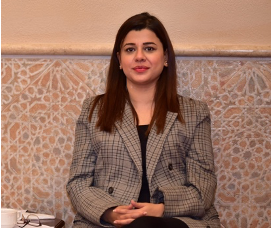
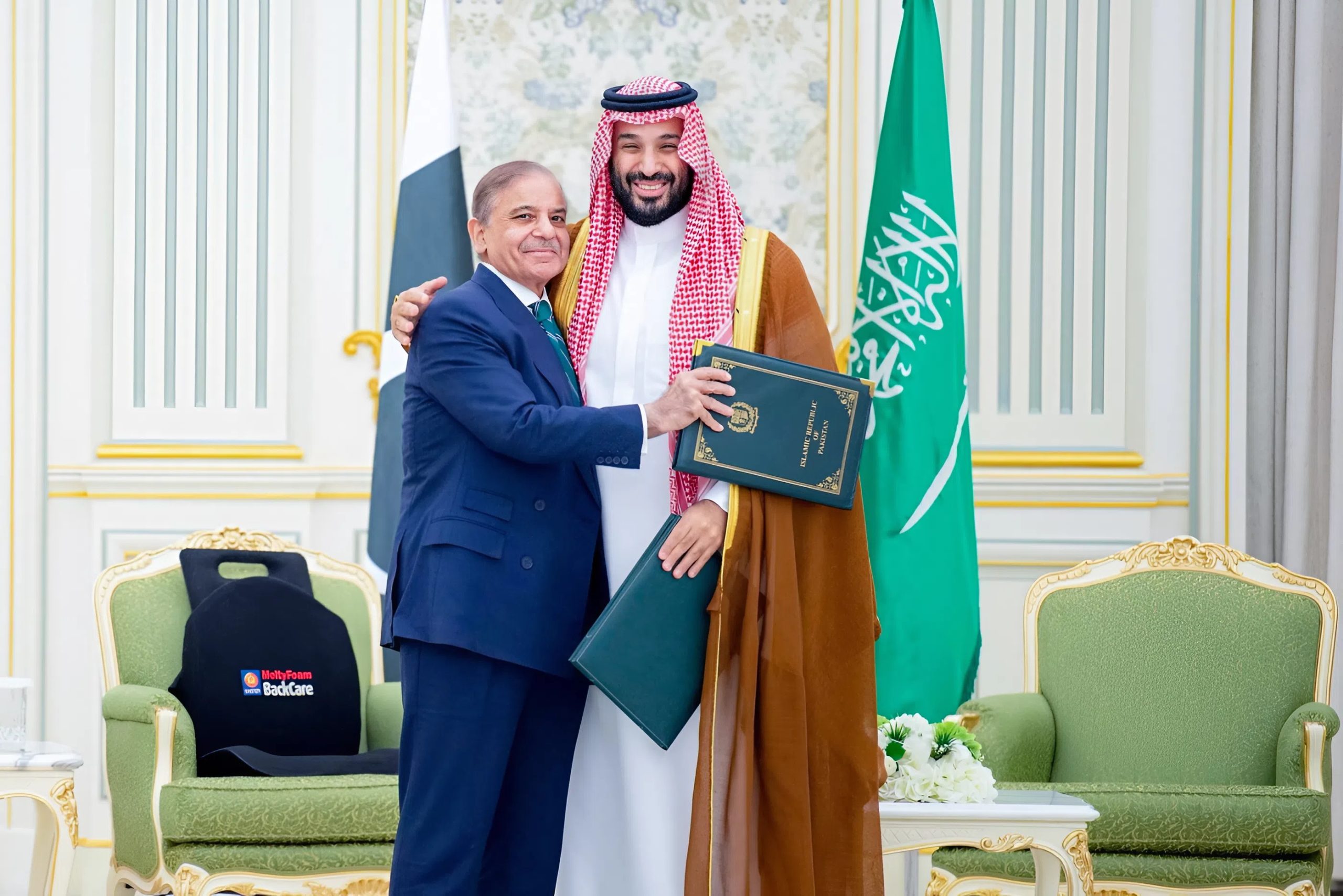
We continue to analyze the implications of the ongoing war in Iran for the Strategic Mutual Defense Agreement between Pakistan and Saudi Arabia. Another important question is whether we view the SMDA between the two countries as an example of strengthening cooperation among middle powers in the sphere of security. Ms. Maryyum Masood, a Research Officer & Associate Editor at the Center for International Strategic Studies (CISS), gives us a comprehensive overview of this matter and shares with us her opinion on the SMDA.
The interview was conducted by Mr. Maksim Nosenko, PIR Center intern.
Mr. Maksim Nosenko: What is the importance of the Strategic Mutual Defense Agreement (SMDA) for Eurasia in terms of strategic stability? Does it represent a new trend of cooperation between middle powers?
Ms. Maryyum Masood: Let me start with what the SMDA is not. It is not a sudden development. It is the formal institutionalization of a defense relationship that has been operational for over six decades. Pakistani troops served on the Saudi frontiers from 1967. We have trained tens of thousands of Saudi military personnel. The infrastructure for cooperation was already in place. What September 2025 did was provide it with a legal framework and visibility, which carries its own deterrent value. Both governments have been clear that the agreement resulted from years of dialogue and is not directed at any specific country or event.
Now, on Eurasian stability, the most consequential dimension here is the Iran question. The SMDA has been widely read, particularly in Western capitals, as implicitly anti-Iranian. I want to push back on that. Pakistan shares a long border with Iran. We have our own bilateral relationship with Tehran. Pakistan cannot and will not position itself as part of an anti-Iran coalition. That is not our strategic interest, and it would be contrary to the spirit of our own stated policy that the SMDA is not directed at any third country. What the SMDA does is send a deterrent signal that any escalation against Saudi Arabia will have consequences. That is a stabilizing function, not a destabilizing one, if it is correctly understood.
The second Eurasian dimension is Russia. Pakistan is a member of the Shanghai Cooperation Organization. We value our relationship with Russia, and we are aware that Moscow views Iran as a partner, one that the current conflict has placed under severe pressure. Our position is that the SMDA is a bilateral defensive arrangement between two sovereign states. It is consistent with the principle of multipolarity – two non-Western middle powers building a security architecture outside the Western alliance system.
The third dimension is Central Asia. The instability radiating from the current war (disruptions to energy markets, the risk of broader regional escalation, and the strain on states that depend on remittances from Gulf workers) affects the Central Asian republics acutely. Pakistan’s deeper engagement in Gulf security, through the SMDA, is arguably a stabilizing factor for that corridor as well. A more secure Saudi Arabia, with diversified deterrence, is less likely to be the flashpoint for a broader conflagration that draws in Central Asian states through their ties to Iran and Russia.
The fourth dimension is the SCO. Pakistan is an SCO member. So are Russia, China, India, and Iran. The SCO is Russia’s primary institutional vehicle for Eurasian security architecture, and a legitimate question is whether a bilateral defense pact between Pakistan and Saudi Arabia, a state outside the SCO, creates any tension with Pakistan’s commitments within that framework. Our position is that it does not. The SCO and the SMDA operate on entirely different tracks. The SCO is a multilateral framework focused on counterterrorism, regional connectivity, and confidence-building among its members. The SMDA is a bilateral defensive arrangement that addresses a potential threat environment in the Gulf. There is no institutional conflict between the two, and Pakistan has no intention of allowing the SMDA to complicate its engagement within the SCO.
A related point on Türkiye, which your framing of Eurasian stability would logically include. There were reports in early 2026 that Türkiye was considering joining the SMDA. Those reports proved unfounded, and it has since been confirmed that the agreement will remain strictly bilateral. Pakistan’s position on this has been consistent: the SMDA is between Pakistan and Saudi Arabia, and there are no current plans to expand its membership. Türkiye’s interest, however, briefly reported, reflects a broader appetite among Muslim-majority middle powers for security arrangements that reduce dependence on Western guarantees. That impulse is real and will not disappear. But the SMDA is not the vehicle for it.
Finally, the India dimension. India has reacted with studied restraint, noting it will monitor the situation. That is a political posture, not a strategic one. Saudi Arabia is India’s largest oil supplier and hosts millions of Indian workers. Neither Riyadh nor Islamabad has any interest in disrupting that relationship. The SMDA does alter India’s security calculus at the margins, particularly given that Defense Minister Khwaja Asif noted that the agreement does not name any specific country, leaving open the theoretical question of whether it could apply in a South Asian context. But that is a theoretical concern, not an operational one. Pakistan’s position is that the SMDA is a Gulf-oriented defensive arrangement, and we have no interest in entangling Saudi Arabia in the complexities of our relationship with India.
Mr. Maksim Nosenko: How likely is the activation of the SMDA in light of strikes on Saudi Arabia? Does the current situation necessitate such a move?
Ms. Maryyum Masood: The ongoing Iranian strikes on Saudi oil infrastructure like Ras Tanura, the Yanbu refinery, targets in Riyadh, and the Eastern Province, are serious. They constitute a direct assault on the Kingdom’s economic sovereignty and civilian infrastructure. Pakistan has noted this. Our Foreign Minister Ishaq Dar has recently formally reminded Iran of the SMDA in March. That reminder was deliberate and calibrated. It was not a declaration of war, but it was a deterrent signal.
Let me be direct about what the SMDA does and does not require in this situation. The agreement’s key clause states that any aggression against either country shall be considered aggression against both. That language is clear. But how that clause is operationalized, what constitutes an obligation to act, at what threshold, and by what means, is precisely where the agreement’s deliberately open-ended nature becomes a strategic plus rather than a liability. Ambiguity, in deterrence theory, is not a weakness. It compels a potential aggressor to calculate worst-case scenarios. Iran knows what Pakistan is capable of. The fact that it must account for Pakistani involvement in its calculations is itself a deterrent contribution.
Now, as for whether Pakistan should be mobilizing forces for direct military intervention, I would say that the situation, while grave, has not yet crossed the threshold that would necessitate it. Saudi Arabia is absorbing these strikes with considerable resilience. Its own air defenses have intercepted the vast majority of incoming projectiles. It has not formally requested Pakistani military deployment. Moreover, Pakistan’s own security environment, following the events on our eastern border in May 2025, requires us to maintain full readiness at home. We cannot afford to extend our military commitments in a way that leaves us exposed.
There is also a broader point about what “activation” means. People imagine it as a binary – Pakistan is either at war alongside Saudi Arabia, or it is doing nothing. That is a false dichotomy. Pakistan can contribute through the enhanced presence of advisory and technical personnel and the political and diplomatic weight that comes with public alignment with Riyadh. These are meaningful contributions to Saudi security that do not require us to engage militarily. Activation, in that sense, is already underway.
As for whether the situation “necessitates” full-scale military activation, I would argue that it does not, not yet. What it necessitates is exactly what we are doing: close coordination, clear communication, and diplomatic support. If KSA’s survival is at stake, the calculus may change. But we are not there, and both sides have incentives to avoid crossing that line. Meanwhile, Pakistan is actively engaged diplomatically to bring the Iranian and Saudi sides together.
Mr. Maksim Nosenko: Could Saudi Arabia opt to acquire nuclear weapons following the recent escalation? If so, might they turn to Pakistan for assistance?
Ms. Maryyum Masood: On Saudi nuclear acquisition, Riyadh is a signatory to the NPT. Saudi Arabia has consistently maintained, as a matter of official policy, that its nuclear program is for civilian energy purposes. Crown Prince Mohammed bin Salman’s well-known statement that Saudi Arabia would seek nuclear weapons if Iran acquired them is a conditional deterrent message, not a policy decision. It is important to read it as such. The current Iranian strikes on Saudi territory, however serious, do not constitute Iran’s resort to nuclear level. That threshold has not been reached.
As for Pakistan, our nuclear doctrine is strictly India-centric. Our weapons were developed to deter a conventionally superior adversary with whom we share a contested border and a history of hostility. Our National Command Authority has exclusive and centralized control over our nuclear forces. No bilateral agreement, however important, changes that structure. The Defense Minister’s initial comments after the SMDA signing were quickly and correctly clarified: nuclear weapons are not on the radar of this agreement.
There is also a practical dimension that commentators often overlook. Extended nuclear deterrence is not simply a political declaration. It requires the forward deployment of forces, integrated command-and-control structures, shared planning cycles, dedicated basing infrastructure, and formalized legal arrangements, all of which take decades to build. NATO’s nuclear sharing arrangements were decades in the making. Pakistan and Saudi Arabia have none of these components in place in the Gulf. The idea that Pakistan has simply handed Saudi Arabia a nuclear umbrella by signing a bilateral defense agreement misrepresents how deterrence actually functions.
What Pakistan offers Saudi Arabia is a formidable conventional military capability, a professional and battle-tested army, established military-to-military channels, and yes, the political weight of being a nuclear state. The very uncertainty about what the SMDA’s collective defense clause encompasses serves as a deterrent. Pakistan has not extended its nuclear deterrent to Saudi Arabia, and Islamabad is aware of the fact that it would face crippling international consequences (sanctions, diplomatic isolation, damage to our nonproliferation credentials) if it were to attempt to do so.
My assessment is that Saudi Arabia is far more likely to pursue the consolidation of its conventional defenses, accelerated investment in its own air and missile defense systems, and continued engagement with the United States as its primary security partner than to pursue access to nuclear weapons capability. The risks of the latter for Saudi Arabia’s international standing, its economic modernization program, and its relationship with Washington are prohibitive. In that context, the SMDA is better understood as part of Riyadh’s strategy to strengthen its overall deterrence through diversification, rather than as a shortcut to nuclear capability.
Keywords: Pakistan; Saudi Arabia; Strategic stability
RUF
E16/SHAH – 26/04/08
