
№ 1 (2), 2026. Old Continent, New Problems. Dmitry Danilov and Andrey Zagorsky on Pressing Issues of European Security


February 19, 2026
Polemics

Relations between the United States and its European allies stand at a crossroads. The widening rift between the Trump administration and Brussels has highlighted the future of Europe’s security and arms control policies, both within the European Union and within NATO. What are the prospects for the US nuclear umbrella? What does the deployment of intermediate-range missiles in Germany entail? On what terms will the Greenland crisis end? And to what extent are the initiatives of the “coalition of the willing” feasible? We discuss these and other topics with Dr. Dmitry Danilov, PIR Center Advisory Board Member, professor in the Department of Integration Process at the MGIMO University, Head of the Department for European Security at the Institute of Europe of the Russian Academy of Sciences, and Dr. Andrey Zagorsky, PIR Center Advisory Board Member, Head of the Department for Disarmament and Conflict Resolution Studies, Head of the Sector Section for Non-Proliferation and Arms Limitation of the Center for International Security.
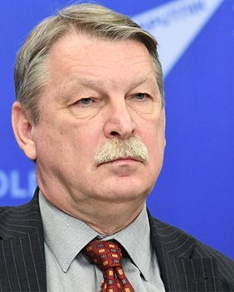

The polemics was moderated by Mr. Ilya Subbotin, PIR Center intern.
Mr. Ilya Subbotin: Intensifying friction between the United States and its European allies is once again raising the issue of strategic autonomy in EU capitals – particularly regarding nuclear deterrence. In your view, what are the prospects for the US nuclear umbrella over Europe? Does it actually “work”? Is the idea of a French nuclear umbrella feasible? Should we expect other alliance members, such as the Federal Republic of Germany (FRG), to acquire their own nuclear weapons?
Dr. Andrei Zagorsky: The issue of replacing the American “nuclear umbrella” with an autonomous European one (French or Franco-British) is not currently on the agenda of either American or European policy. The current discussion reflects a more complex process: the transformation of the Western deterrence posture in Europe and Northeast Asia.
Despite Europe’s increasingly peripheral nature in the system of US global interests, Washington does not intend to “leave” Europe. American strategy, as evidenced by the unclassified version of the US National Defense Strategy released in early 2026, is evolving in the same direction as that proposed under the “Nixon Doctrine” in 1969. That is, US allies must bear the burden of responsibility for their own defense, while America offers a “nuclear umbrella” in the event of a threat from a nuclear state.
Pressure on allies to substantially increase defense spending, along with the planned reduction of already limited US conventional forces in Europe, fits squarely into this trend. This also aligns with the clear shift toward a doctrine of “deterrence by denial” rather than “deterrence by punishment” in the National Defense Strategy.
European allies are increasingly concerned about their military dependence on Washington. Doubts regarding the reliability of American security guarantees, including nuclear ones, are growing. However, despite louder calls for defense autonomy, at this stage, they prefer reforming alliance relations within NATO, including the preservation of U.S. nuclear guarantees.
Against this backdrop, and given the vagueness of President Macron’s statements in recent years regarding what nuclear guarantees France could offer European allies (so far, this is nothing more than the theoretical possibility of deploying French Rafales, certified for nuclear missions, on the territory of some European countries), both the Franco-British and Franco-German agreements of 2025 clearly prioritize continued strategic cooperation within NATO.
For certain countries, particularly Poland, the option of hypothetical French guarantees serves more as a hedge against risks amidst the uncertainty of U.S. policy. However, the issue of acquiring independent nuclear weapons, while raised in discussions, is not a practical consideration for either Germany or Poland.
The direction of the European discussion will be revealed by the interim results of the “strategic dialogue” initiated by Macron in the second half of 2025. It is quite possible that vague (and even less convincing than American) French nuclear guarantees could be inscribed into the broader context of burden-sharing between the US and European allies under the “deterrence by denial” doctrine.
Dr. Dmitry Danilov: In my view, any “Europeanization” of French or even Franco-British nuclear capabilities is completely unrealistic for many reasons. First, issues of collective command and control within both NATO and the EU would need to be resolved. This is hardly feasible, as France is not a member of NATO’s Nuclear Planning Group (NPG), whereas Britain is, and British nuclear weapons are planned within a command system led by Washington, albeit under a NATO framework. French proposals are understandable in the context of building European defense autonomy (based on a French template), but they are quite speculative and unrealistic.
Let us imagine that France decided to pursue the Europeanization of its nuclear forces (a topic raised previously, immediately after the Cold War). In practice, this would mean France abandoning its fundamental principles of defense sovereignty and the original Gaullist doctrine of independence in nuclear planning and employment (tous azimuts – defense in all directions) by joining the NATO Nuclear Planning Group. But that would be a completely different France – one that has renounced the pillars of its independent security policy as a nuclear power and UN Security Council member, thereby losing the structural supports of its great-power status. That is not European autonomy; it is the deprivation of the very instruments required for European independence. Another option: France decides to retain its sovereignty and act within the European Union, agreeing with partners to provide (additional) nuclear guarantees to European states for Euro-defense. In that case, it is not European strategic autonomy either, because decision-making remains with France rather than with collective EU governance. These issues, in my opinion, are insurmountable.
In general, Macron’s initiatives, however loudly proclaimed, are typically not supported by political resources, sufficient instruments, or long-term goal setting. Therefore, I do not view the “strategic dialogue” launched in 2025 as a viable process for developing a common strategic vision in Europe. Especially if, à la Macron, the intent is French leadership in this process.
It is also important to note that Macron has established a reputation as an unreliable partner, not only for Washington but also for partners within the EU (including Germany and the UK). Thus, this is likely not a path toward making strategic decisions, but rather the unifying rhetoric of leaders in decline. The “E3” (France, Germany, UK) is burdened by numerous internal disagreements; their motivations do not align, and the political capital and public support of their leaders are critically shrinking.
Regarding the probability of deploying French Rafales (including nuclear-capable ones) outside national territory, it is politically unlikely, although hypothetically possible. Imagine Rafales in Poland. Warsaw, which has long declared its readiness to host an enhanced US presence (including nuclear weapons), would in this case become hostage to French military planning (outside NATO) and would lack the ability to make decisions of high strategic significance related to its own sovereignty and collective security. However, France would likely find it interesting. It would gain new leverage in relations with partners and grounds to claim European leadership, but it would simultaneously undermine transatlantic balances and place itself in opposition to the US and to collective guarantees within NATO. Therefore, while scenario analysis is possible – like a falling meteorite – the probability is close to zero.
Regarding the U.S. nuclear umbrella, European doubts have long existed. It is not automatic, just as the US invocation of Article 5 of the Washington Treaty is not automatic. During the bipolar era, it was obvious that in the event of a conflict in Europe, Washington would inevitably intervene, including with nuclear weapons. Now, Trump has demonstrated that guarantees are based on the principle of “we will not defend Europe if it does not defend itself.”
For Trump, this is not about returning to or relying on new editions of old nuclear doctrines. Trump has his own doctrine, emphasizing his “exceptionalism” and anti-establishment nature. His administration acts pragmatically within a model of hard political realism; thus, it matters little which doctrines are cited or what “useful” elements are borrowed from the American legacy. That legacy exists, and it must be utilized.
What matters is what Trump does and why. Regarding the nuclear umbrella, one could say that Trump (even if not publicly) is calculating the real dividends (including in non-European theaters) that can be gained from reducing the US military presence in Europe and increasing the uncertainty surrounding American guarantees. Transatlantic rifts initiated by Washington carry risks; therefore, pressure on partners and the use of uncertainty – even blackmail – must be calibrated. Otherwise, Washington risks knocking over the chair it has reoccupied (that of the leader/moderator/chairman of the board). That is a position of self-destruction. Consequently, Americans will never abandon the nuclear umbrella in Europe, nor their strategic presence in the region generally. Europeans understand this and fight to have these guarantees confirmed in one way or another.
The acquisition of nuclear weapons by other European states is a problem not so much of technical capability – though this must be assessed within a realistic planning horizon – but of political strategy. Although international nuclear control regimes have weakened, nuclear proliferation in Europe would not only undermine the socio-political systems of potential possessor states but would also destroy Europe from within. If this question is raised, it will likely be provocatively injected into the public debates solely to demonstrate how vulnerable Europe is today and how necessary it is to advance toward so-called “European unity” and the endowment of Europe with hard power.
Mr. Ilya Subbotin: The deployment of conventionally armed US intermediate-range missiles in Germany is set to begin in 2026. What goals is the US pursuing with this step? How probable is the nuclear re-equipment of these missiles in the future? Can we draw parallels here with NATO’s famous “Double-Track Decision” of 1979?
Dr. Dmitry Danilov: The United States likely envisioned the deployment of intermediate-range and shorter-range missiles even before the decision to withdraw from the INF Treaty was made. Therefore, it is not surprising that this is happening now. Why? Fundamentally, this is about the necessity of an integrated security system in Europe, primarily focused on American strongholds in the region. The US continues to consistently build a comprehensive system supported by multilayered missile and air defense, taking into account the evolving conflict in Ukraine. These are the military-technical grounds.
The political justifications are also clear: The US must secure its place in Europe, partially in response to persistent demands from European states (Poland and others) to strengthen the American “umbrella.” What role do these wishes play, and does anyone want to listen to them? It would be a simplification to believe Washington wants to leave Europe and tell it to defend itself. The US is interested in securing its place and presence in Europe, particularly in military and political terms.
By the way, the current Greenland issue clearly illustrates this: The US views Europe not as allies it must protect, but as part of a global defense system tied to Washington’s national interests. Thus, the question is less about European motivations and more about the expediency of these steps for US national security. They are, of course, not interested in undermining the Atlantic link to a point where it cannot be maintained or restored based on new transatlantic balances. European policy recipients have valid grounds to believe they are of interest to the US and that America needs Europe.
Regarding warheads, it is absolutely clear that the Mk41 systems can be used for the delivery of nuclear weapons. The issue here is not technical; it concerns how the system of American guarantees in Europe will be formalized (for whom and what, exactly, they will be). Legally, following the collapse of the INF Treaty, there are no obstacles for the US – especially for the Trump administration. We must base our analysis on the development of the military-political situation in Europe and the extent to which nuclear deterrence of Russia (and China) will depend on US forward presence in Europe.
It would be strange to think that US leadership plans missile deployment programs based on short-term expectations; these are long-term programs. “Deploy today, remove tomorrow” is certainly not a strategic approach. As for bargaining – yes. The Trump administration is inclined to bargain, but with what? This is a serious question that requires consideration of the entire military-political landscape. Germany and the Baltic region are currently key areas of military tension and planning, as evidenced by the establishment of a new naval command headquarters in Rostock and other developments. Washington is demonstrating readiness for potential escalation in the Baltic region and Russia’s north (Kaliningrad and Leningrad Oblasts). These are precisely the regions that could potentially serve as strongholds for Russian missile reinforcement, as could the territory of allied Belarus, given the deployment of tactical nuclear weapons there. All of this suggests that we are not discussing potential “exchanges” but rather a mutual compensation for growing risks, including those associated with the collapse of the INF and New START treaties and the rising risk of tactical nuclear weapon use.
Dr. Andrei Zagorsky: The discussion regarding American missiles (currently not nuclear-armed) should be supplemented with a broader context. In all scenarios regarding the evolution of the policy of “containing Russia”, European states prioritize the formation of their own capabilities regarding high-precision ballistic and cruise missiles with long ranges (up to 2,000 km or more). Various programs in this field were supplemented in 2024 by a UK-Germany initiative, which now involves seven European countries. In extreme scenarios, we are talking about the deployment of up to 15,000 missiles in Europe, a massive buildup of indigenous air and missile defense systems, and means for detecting and suppressing enemy missile defenses.
Statements from the Russian side that American (and presumably not only American) missiles capable of striking targets within the Russian Federation would be targeted by Russian deterrence forces do not resolve the problem. Perhaps here we can see a parallel with the “Euromissile crisis” of the late 1970s and early 1980s: Then, Moscow also warned of strikes on US missile deployment sites, but this not only failed to stop deployment but strengthened European resolve to implement NATO’s “Double-Track Decision.”
All of this indicates that Europe is being drawn into a missile arms race – part of a broader arms race on the continent – resembling a classic “security dilemma” scenario, which lowers rather than raises the security level of participating countries. Reducing the danger of military collision generated by this race is only possible if Russia and NATO agree to establish specific limits on the quantity and quality of planned deployments. American missiles would become part of such an agreement.
Mr. Ilya Subbotin: Recent events surrounding Greenland cannot be ignored. Sharp statements from Trump, rather chaotic decisions by European states first to send troops to the island, then to withdraw them – what was that all about? Is Europe ready to fight for Greenland, and does the US really want to get it? And fundamentally, how significant is this crisis for NATO? Can we speak of an irreparable rift between the US and its European allies?
Dr. Andrei Zagorsky: The conflict over Greenland has indeed seriously poisoned Washington’s relations with its European allies – even more so than the US National Security Strategy released in November 2025. For many in Europe, this conflict demonstrated a deep value gap with the Trump administration (though the question remains whether this rift is long-term or temporary). It exacerbated the discussion regarding the end of the transatlantic alliance era and the need to invest in independent European defense.
Surely, the deployment of a limited number of troops to Greenland and plans for NATO exercises there did not envision a scenario of defending the island against a US military invasion. On the one hand, they were intended to demonstrate solidarity with Denmark; on the other, to show Washington that there is an alternative to protecting Greenland other than the island’s annexation by the US in one form or another. On this basis, a compromise was eventually reached; time will tell how durable it is.
The situation is complicated by the fact that the US, as indicated in its 2026 National Defense Strategy, views Greenland not in the context of Euro-Atlantic security, but in the context of Trump’s claims to dominance in the Western Hemisphere under an expanded Monroe Doctrine. The terminology used by the U.S. administration in this regard (“Trump Corollary”) directly references the expansion of this doctrine by President Theodore Roosevelt in 1903 (“Roosevelt Corollary”), which justified American interventionist policy in Central America in the first half of the 20th century.
The US’s return to a policy from a century ago further highlights the emerging value gap with European allies, and the Greenland issue plays a special role in this context.
Dr. Dmitry Danilov: The US stance on Greenland is quite provocative. Trump is playing the Greenland card both for the American audience, motivated by domestic political priorities, and in relations with Europeans.
Can one imagine Europe fighting for Greenland? Of course not. That is precisely Trump’s point. He understands perfectly well that Europe has no real leverage in the situation. This was demonstrated by the purely symbolic military presence of Europeans in Greenland. It is possible Europeans did this precisely because they understood that Trump would not fight for Greenland either. A US military intervention would mean the end of NATO and American guarantees in Europe, which benefits neither side and is, moreover, strategically disastrous.
Now, the next aspect. When Trump says he needs Greenland, he points out that this is important not only for strengthening US military-strategic capabilities but also as an opportunity to compensate for European weaknesses – including, and perhaps primarily, in the containment of Russia and China. Trump is saying: “Yes, I am ready to protect you (referring back to the first question), I am ready to provide you with a nuclear umbrella. But for all this to happen, you must give something to America. For us, this [Greenland] is very important.”
The motives of the Trump administration are not simply to secure dominance in the Western Hemisphere, in the spirit of the Monroe Doctrine. This is about global strategy and pragmatic calculations. It is called “Let’s Make America Great Together.”
Concerning the “compromise” in Greenland: in essence, no compromise has been reached. Trump and Mark Rutte are simply selling a specific option to European allies as a compromise. Firstly, Rutte, as NATO Secretary General, is a highly skilled, high-level political manager and a convenient figure for strategic communication between Washington and Brussels. Without Washington’s support, Rutte’s appointment would not have happened, and he retransmits the American position, which the EU cannot refuse.
Secondly, Washington consistently, and under Trump especially persistently, uses NATO instrumentally. Issues that were difficult for Trump to negotiate with Europe on other platforms (due to the weakness of European governance and key figures in EU institutions) are much easier to address within NATO. And when the dialogue is moved there, the US positions become impenetrable. Trump has already shown that if allies in NATO challenge them, this would be evidence of the Alliance’s collapse and would place the Europeans to blame. European capacity for resistance is dropping significantly.
Finally, I would note that US-Europe disagreements are not limited to the specific administration. Biden fully leveraged the legacy of Trump’s first administration. The same applies now –whatever Trump manages to achieve will be seen as dividends by the next administration, as American assets. This includes the levers and instruments Trump secures within the Euro-Atlantic dialogue, or “partnership” (let’s call it that) during his current presidency: strengthening US leadership in the Euro-Atlantic community and, returning to the first question, diminishing the prospect of any European autonomy. The EU’s overall position in relations with Washington will be consistently weakened.
It would be too convenient for many in Europe to say now that Trump has little time left and needs to be “waited out”: endure, don’t escalate contradictions, and stall for time. However, this is not a strategy; it is a shortsighted tactic. Europe is once again demonstrating a lack of strategic vision. What comes after Trump might be slightly more favorable for Europe, but it will not change the main trends in strategic development, which remain unfavorable to Europe.
Mr. Ilya Subbotin: Speaking of European security, it is impossible to ignore the Ukrainian conflict. For quite some time, several European capitals (especially London and Paris) have publicly declared plans to deploy a European military contingent to Ukraine after the conflict settlement, within the framework of a “coalition of the willing”. Meanwhile, Russia’s position on this issue is unambiguously negative and unchanging. The question arises: why then does the “coalition of the willing” continue to discuss the prospect of deploying troops to Ukraine so intensively and assertively, as if it is inevitable? Is it wishful thinking, or are European hawks guided by some rational calculation?
Dr. Dmitry Danilov: Actually, this is a topic for an entire lecture. Let’s start from the beginning: what is meant by the “conflict settlement”? In Europe, this is understood as inflicting a strategic defeat on Russia. Could Russia possibly view negotiations on the Ukrainian conflict in the context of the potential deployment of European or NATO troops to an as-yet-unknown territory of an as-yet-unknown Ukraine? Probably not. Conflict resolution from Russia’s perspective implies creating a situation that mitigates the risks of a renewed Russian-Ukrainian conflict and regional escalation in general – precisely what Europe openly discusses when claiming Russia will not stop at Ukraine and will move further into the Baltics, etc. It is obvious that Europeans, repeating their mantras about providing such security guarantees to Ukraine, understand their absolute fantasticality. This is realistic in only one scenario: if a policy is set for large-scale escalation in Europe and a Russia-Europe conflict, which is likely impossible without US participation. Even assuming such an extreme scenario, it would hinge on a strategic decision by the US on whether to fight Russia in Europe. Europe cannot currently assume that Washington, and Trump personally, are ready to move in that direction – quite the opposite.
Therefore, plans for “guarantees” and the deployment of European contingents to Ukraine are speculative in nature. There have been many such plans, even before the Special Military Operation, when Ukrainians at one time began to suggest that China could be a guarantor of Ukraine’s security and participate in negotiations; there were other projects as well. Today it is becoming clear that any military presence – and Minister Lavrov has already stated this – of European military personnel in Ukraine (I emphasize, not mercenaries, but official personnel of national armed forces) will be perceived by Russia no longer as a “hybrid” conflict, but as a real one – between Russia and Europe (Euro-Atlantic) with all the ensuing consequences.
Why do European capitals cling so tightly to this idea of presence in Ukraine? It seems to me very simple to explain. First, Europe cannot abandon the adopted strategy of containing Russia and inflicting defeat upon it on the Ukrainian track, and is sleepwalking along this path. Second, Europe cannot deny Ukraine the support that was long announced in clear terms: financial, economic, military, and any other aid “for as long as it takes.” Renouncing these tenets today amounts to political suicide for many European leaders and implies the need for new consensus decisions that would alter the EU’s strategic settings.
How to do this now is unclear, particularly given the EU’s own regulatory mechanisms.
In principle, this is implementable if we regard Europe not as the EU but as an ad hoc coalition such as the Ramstein format. But Ramstein is crumbling; there is no clearly coordinated decision-making and management system, so Europe cannot revise strategic settings at the level of temporary “coalition of the willing” formats either. Ultimately, the EU and the UK must seek to reach an agreement in the military-political domain and on support for Ukraine. Even here, everything is quite difficult, without accounting for the Trump factor, who, at the moment, is not clearly designating his primary military-political addresses in Europe.
Dr. Andrei Zagorsky: We do not have sufficient information about the security guarantees being discussed for Kiev, so it is difficult to judge with certainty the prospects for the appearance of European military contingents on Ukrainian territory, or their quantity and quality. From open sources, we know only that the subject of discussion involves support measures for Kiev that European countries and the US would be willing to undertake after the cessation of the armed conflict in the event of its resumption. Regarding military contingents, various options have been discussed, including the most probable one – their deployment in neighboring countries on the border with Ukraine. The possibility of increasing the number of instructors and military specialists from European countries has also been discussed.
The question of deploying substantial combat forces from a number of European countries to Ukraine remains open. At one stage, the “coalition of the willing” discussed deploying mobile forces not near the line of contact (along which a ceasefire might be established), but in rear areas. However, as the discussion of potential risks associated with such a decision progressed, the approaches of coalition participants became increasingly cautious.
Keywords: Strategic stability; European security
AC
E16/SHAH – 26/02/19
