Disputes and Debates on the Topical Issues of International Security
Atom and Politics: Will Paks II survive the course change? Gabor Stier and Ksenia Smertina on the faith of the Paks II NPP
September 9, 2026
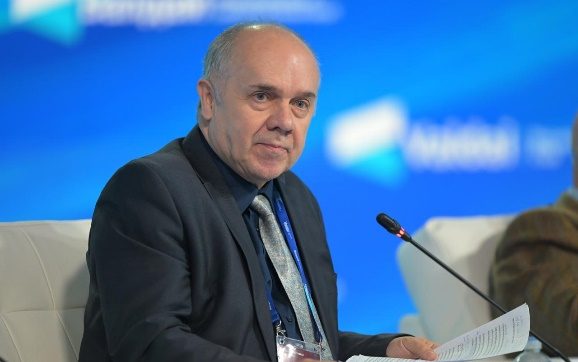
In February 2026, the Paks II NPP project entered an active construction phase. However, due to the change of government in Hungary, a review of previously reached agreements was initiated. This calls into question the future of the project and poses a set of legal, financial and technological challenges to Hungary’s energy strategy. What are the legal and financial risks for Hungary in the event of unilateral termination of the Paks II contract? How can the new geopolitical background and environmental arguments affect the project? What could be the consequences of terminating the contract for Rosatom State Nuclear Energy Corporation? Is Hungary’s abandonment of nuclear power plants in favor of renewable energy and gas realistic, and will this lead to the country’s increased energy dependence? These and other questions were discussed by Gabor Stier, foreign policy columnist for Demokrata, the founding editor of the moszkvater.con portal and member of the Valdai Club, and Ksenia Smertina, international political scientist, expert on Central and Eastern Europe and visiting lecturer at the HSE Institute of Media.
The polemics was moderated by Anna Tishina, PIR Center intern.
Ksenia SmertinaGabor Stier
Anna Tishina: Given that the Paks II nuclear power plant project involves the use of a Russian state loan of up to 10 billion euros, and Rosatom has already begun concreting Unit 5 in February 2026, in your opinion, what legal and financial consequences for Hungary will a possible unilateral withdrawal from contractual obligations entail?
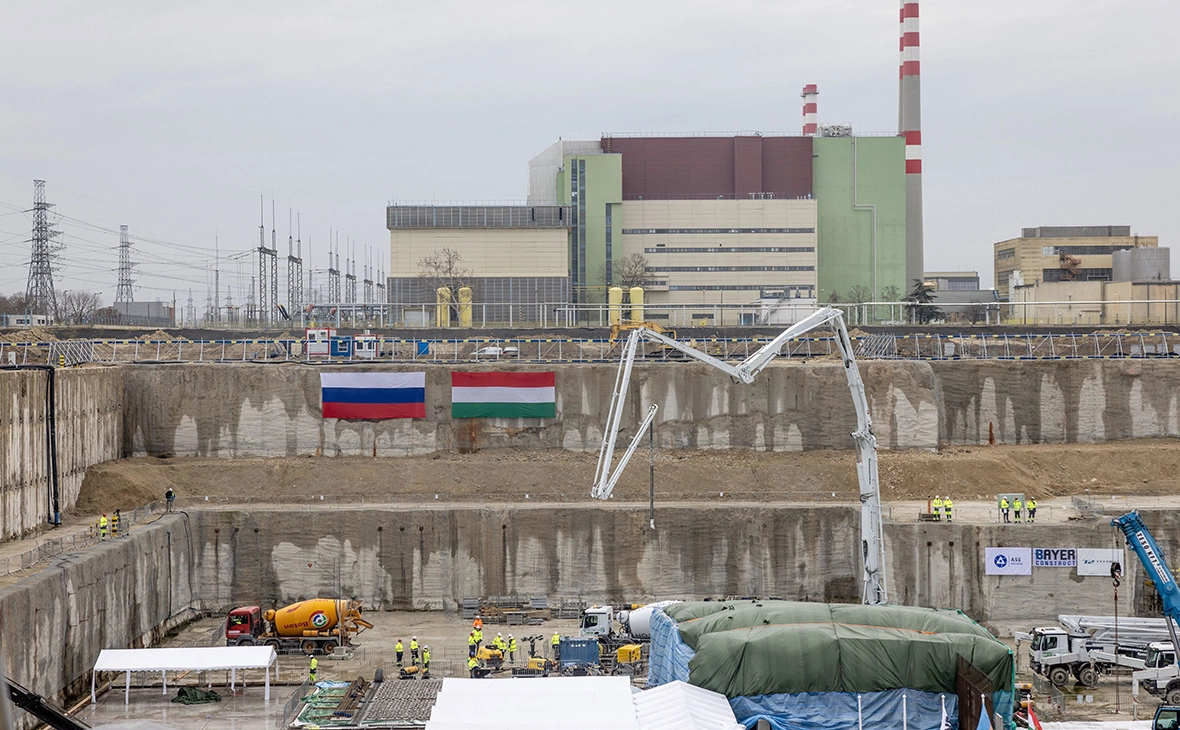
Gabor Stier: Yes, the first stage of concreting the foundation of Unit 5’s reactor vessel took place in February 2026. It has already been completed by 80%, and by now more than 18 thousand cubic meters of concrete have been poured into the base. According to the plans, these works will be completed before winter, and by that time preparations will have begun for the first concrete pouring at Unit 6 where the excavation is currently underway. At the same time, on August 1, 2024, the first pieces of the new nuclear power plant’s large–scale equipment – a 730-ton zonal melting trap – were delivered to the construction site, while Rosatom plants began producing reactors for both power units. The components of Unit 5’s reactor vessel are fully ready, and the assembly of the hull will begin soon. The construction of Unit 6’s vessel is also on schedule. Turbine production began in April 2025 in Belfort, France, by Alstom in collaboration with Siemens.
In the event of unilateral termination of intergovernmental and general contracts, Rosatom may demand compensation for lost profits, in addition to damages, just as Alstom and Siemens, which supply turbines, may also apply penalties. Thus, if the Hungarian government withdraws from the Paks project, guided by EU expectations rather than national interests, this may not only cause at least temporary supply problems, but also have serious financial losses. According to contractual obligations, Rosatom and Western suppliers are expected to have to pay up to 2-3 billion euros. Of course, this compensation lawsuit will drag on for years in the International Court of Arbitration, but judging by previous examples, the work done and the lost profits must be paid for. To compare, in the case of Belene, for example, the Bulgarian government paid 600 million euros for the reactor vessel, and taking into account additional costs – almost a billion euros.
Ksenia Smertina: The withdrawal from contractual obligations under the Paks II NPP project after the first concrete was poured in February 2026 is a difficult decision for Budapest, both complex in procedure and disastrous financially. A unilateral termination of the agreements by Hungary will launch the early recovery of a Russian government loan in the amount of up to 10 billion euros, and it will also lead to lengthy proceedings in international arbitration, with Rosatom demanding compensation for billions of dollars in losses and lost profits. For Hungarians, who have historically been accustomed to solving fundamental issues of their livelihood from a purely pragmatic point of view, such a scenario of straightforward economic suicide is categorically unsuitable.
However, it is essential to take into account the current political situation in the Euro-Atlantic where a course has been taken towards maximum regulatory rejection of cooperation with Russia and harsh confrontation. In such circumstances, what happens if Hungary refuses to build a nuclear power plant will be decided not in Budapest, but in Brussels.
It is with this understanding of decision–making dynamics in Hungary in mind – to follow the interests of Euro-Atlantic structures to the highest extent possible – that the problem should be considered. There are several dangerous signals that may favour the hypothesis of delaying the construction of the project and an attempt to launch the so-called “regulatory shredder” through the agency of the European bureaucracy. For example, in August, Attila Shagodi, the new Paks II CEO with experience in working for the auditing giants KPMG and EY, was appointed to the facility. At a press conference, Minister of Economy and Energy Istvan Kapitan emphasized that Shagodi had had 25 years of experience in audit, and in his new position they expected him to “control costs”, “transparency” and “regulatory compliance”. In this case, Péter Magyar’s hardware plan may imply using Shagodi’s experience in the gas and energy markets to create an avalanche of internal “environmental and regulatory doubts” about cooling reactors on the shoaling Danube. Budapest is obviously trying to provoke Brussels into political slogans to ban construction by Euratom in order to be able to justify the impossibility of working with Rosatom through an external decision of the European Commission, trying to hide behind the EU’s “force majeure” and avoid fines.
Magyar will only escalate matters to the utmost if Brussels signs financial and economic guarantees for him, compensates for sovereign losses resulting from a default under the intergovernmental agreement, and unfreezes the 17 billion euros frozen in EU funds. Concurrently, Shagodi himself officially underlines that a stable energy mix is impossible without weather‑independent base‑load nuclear power generation. This confirms that the Hungarians, who genuinely see themselves exclusively within the European framework, are using this audit as a tool for negotiations both with the Russian company and with bodies in Brussels for the sake of their own physical survival.
Anna Tishina: Rosatom emphasizes that the Paks 2 project complies with nuclear safety requirements. However, Hungary’s new prime minister, Péter Magyar, has expressed doubts about the environmental permit issued by Viktor Orbán’s government for the construction of the nuclear power plant, specifically regarding the cooling systems. The issue has made itself felt against the backdrop of the Danube River reaching record low levels, which has reduced the output of the existing plant by 10%. Could these technological concerns about the project be sufficient for suspending construction?
Ksenia Smetina: Had this question been asked in early May, the answer might have been negative. However, reality has shown how dramatically the climatic situation in Europe has changed. The record‑breaking summer heat, extreme drought, and critical shallowing of the Danube, which reduced the output of the operating Paks I nuclear power plant by 10 %, have exposed the vulnerability of the region’s old energy infrastructure.
The criticism of the Paks II project by Prime Minister Péter Magyar is based precisely on the absence of tower evaporative cooling towers in the Russian project and the preservation of a direct‑flow cooling circuit from the Danube. Opponents argue that the thermal discharge from the new units in drought conditions will lead to an ecological collapse of the river. Experts note that Magyar’s idea to negotiate on the cooling system for the Paks II NPP will help solve the problem of the water level in the Danube and, moreover, will make it possible to involve local companies in addressing the issue.
From a technical standpoint, Rosatom can counter these claims by changing the engineering solution, for example, by integrating combined or dry cooling towers. The advantage for Magyar is that revising the project and engaging the Hungarian contractor MVM EGI to rebuild the cooling systems will require a thorough audit of the financial model, new approvals, and, most importantly, a delay in the commissioning of the units by at least several years. Another issue is that the project’s cost will rise, and the new Hungarian prime minister already has his own views on this matter. Ultimately, at present, we see not the grounds for stopping the concreting but rather a legitimate reason for negotiations with Moscow, with the new team having an opportunity to discuss financial concessions by Rosatom.
Gabor Stier: It absolutely cannot be ruled out that the crisis, which arose as a result of the combined impact of climate change and the deepening of the riverbed, to some extent benefited the government, whose steps and decisions led to ambiguous conclusions. Perhaps many rightly suspected that the escalation of the situation was aimed at making the entire Paks II project impossible. Judging by a number of signs, it seems that the debate about closing the power units is paving the way for a political decision. This feeling is reinforced by comments from media outlets close to the government which question the importance of the nuclear power plant. In the European press, a kind of coordinated campaign to discredit Rosatom and the expansion of Paks has noticeably unfolded. Alleged shortcomings in the design of Paks II have been identified, despite the fact that the consequences of climate change had already been taken into account when designing these two new power units. Initially, continuous water cooling was planned, but the cold water channel will be wider, and the water outlet will be two meters deeper. Furthermore, the supercooler, which cools the water before it is discharged back into the Danube, will prevent it from overheating. Nevertheless, according to some reports, the absence of a cooling tower and dry cooling may well become one of the arguments in favor of rejecting the project.
Anna Tishina: The Paks II nuclear power plant project has become one of the symbols of energy cooperation between Moscow and Budapest under Viktor Orbán. However, after the shift in government, Hungary initiated an audit of the project, while simultaneously stating its readiness to begin negotiations “with other international partners”. What role do you think the new geopolitical balance will play in the fate of Paks II? Could Washington or Brussels offer Hungary a comparable alternative in terms of funding and technology in the foreseeable future?
Gabor Stier: With Tisza Party coming to power, the issue of canceling the Paks II project is becoming increasingly serious. It seems that canceling energy cooperation with Russia is one of the conditions for Hungary’s return to European society and for receiving the support funds that have so far been frozen. You are more and more getting the impression that this is a geopolitically resolved issue, and the government is merely gathering arguments to reject the expansion of Paks. In this decision, political rather than professional arguments play a primary role.
Even during the election campaign, the prime minister announced a review of investments. He did not respond to Rosatom’s repeated statements about its readiness for dialogue. It seems that the issue has been resolved and the Hungarian government is looking for a suitable pretext to terminate the contract. This is also confirmed by Péter Magyar’s recent statement that Paks II can be replaced with small modular reactors (SMRs). The British company Rolls‑Royce SMR is mentioned as a supplier. The problem is that the company does not yet have a licensed project; to replace 2,400 MW, 8 MMR will be required, so the investments will be higher compared to Paks II, and electricity production will begin later.
Ksenia Smetina: From the perspective of financial decisions, Paks II was implemented competently and is being built on mutually beneficial terms for both Rosatom and Hungary. The factor of the region’s “new geopolitical balance” has been accurately identified here. What does it consist of? On the one hand, it lies in Budapest’s policy being strictly within the framework of the collective West. On the other hand, if we take a detailed look at the nuclear geopolitical balance in Central and Eastern Europe, we will see a deep split in the macroregion.
The Czechs have finally capitulated to Washington, awarding a contract for the expansion of the nuclear power plant to the USA’s Westinghouse and Korea’s KHNP. Under Fico’s cabinet, the Slovaks have been firmly holding the line with Rosatom in order to ensure the survival of their heavy industry. Poland has become involved in the design of its first nuclear power plant on the Baltic Sea, with the aid of the very Westinghouse in Pomerania (Lubiatowo‑Kopalino), and at the same time is conducting negotiations with France’s Framatome on the construction of the second, commercial nuclear power plant in Pontnowe, while Austria continues to play the card of aggressive anti‑nuclear lobbying in the EU, blocking any sovereign initiatives of its neighbors.
Undoubtedly, Rosatom is facing powerful and aggressive competitors in the region. Can they offer a comparable alternative to Budapest? Most likely not, if we focus on the word “comparable”. In the West, there is no 10 billion euros available for a non‑market state credit, and it is technically impossible to install the USA’s AP1000 reactors on an existing VVER‑1200 site without resetting the project and pushing the timeline back by 15 years, according to a comparative technical analysis on the official website of the Paks II NPP. The VVER-1200 and AP1000 projects have fundamentally different designs for cooling systems and critical node placement, which makes it impossible for them to be interchangeable on a ready-made foundation. Moreover, according to the specialized monitoring of the World Nuclear Association, the infrastructure of the Paks site is rigidly tied to Russian technological standards, and changing the vendor will reset the multi-year licensing cycle. However, in the current situation in Europe, no one is worried about a real technological alternative. The record clearly shows that for local liberal elites, what is important is solely the general line set by Brussels and Washington, and it is within this framework that the only politically correct decisions for them exist, even if they run counter to national economic interests.
Anna Tishina:Alexey Likhachev, Director General of Rosatom, has confirmed that construction is proceeding according to schedule. How vulnerable is Rosatom to secondary sanctions if Hungary decides to terminate the contract? How will this affect other European projects of the Russian State Corporation?
Gabor Stier: At present, Rosatom’s only construction project is the expansion of the Paks nuclear power plant, and the Russian state corporation is not under sanctions. If the Hungarian government terminated the contract, it would be easier to be placed under sanctions. It could also affect cooperation, for example, between Framatome and TVEL in the production of fuel cells. This would hardly be in Paris’s interests.
Ksenia Smetina: The issue of Rosatom’s vulnerability to secondary sanctions and the precise financial losses in the event of contract termination is a purely technical and specialized topic which should be thoroughly assessed by relevant experts and economists. However, if we look at the situation through the lens of global politics, we can note that for the Russian state corporation, the Paks II nuclear power plant project primarily has enormous symbolic and reputational significance.
Hungary’s construction project is the only and last large‑scale foothold for Rosatom within the EU territory after Finland terminated the contract for the Hanhikivi 1 nuclear power plant. Paks II has proven to the whole world that Russian Generation III+ nuclear technologies are capable of passing through the most stringent regulatory control mechanisms imposed by European authorities and Euratom. Therefore, if Péter Magyar’s executive team, under pressure from Euro‑Atlantic structures, nevertheless decides to unilaterally withdraw from the agreement, this will have far more serious consequences in terms of symbolism and international reputation than simply losing a commercial contract. Such a precedent would mark the closure of the European market to Russian capital construction services and force Rosatom to completely reorient its expansion towards the markets of the Global South.
Simultaneously, the influence of Russian nuclear platforms in Central Europe remains fundamental, and it is premature to talk about Moscow being completely forced out from the region. The viability of this technological framework is clearly demonstrated by the example of neighboring Slovakia which, guided by considerations related to the survival of its own heavy industry, maintains close cooperation based on Soviet‑era projects. It is noteworthy that, under the conditions of the anomalous 2026 summer heat, when traditional power generation in the EU was experiencing enormous overloads, the Slovak operator Slovenské elektrárne successfully brought the newest Unit 4, equipped with a VVER‑440 reactor, to a minimally controlled power level using Russian fuel at the Mochovce NPP. This precedent clearly demonstrates that Rosatom’s engineering school and technologies remain a benchmark of reliability in the global nuclear industry and in Europe, and the corporation’s international status as a key technological leader is undeniable.
Anna Tishina: The existing Paks nuclear power plant, built according to a Soviet project, provides a significant share of Hungary’s electricity, and its expansion through Units 5 and 6 was considered the foundation of the country’s energy security. However, the new prime minister is questioning not only the timeline and cost, but also the very feasibility of the project in the current economic conditions. In your opinion, how realistic is the scenario of Hungary abandoning nuclear expansion in favor of alternative energy sources? Would this lead to increased dependence on volatile imported gas and renewable sources?
Ksenia Smertina: The new prime minister may consider a scenario in which Hungary completely abandons nuclear expansion in favor of alternative energy sources, but national and international businesses whose factories are registered in Hungary will be categorically opposed. When analyzing the real balance of energy resources, it becomes clear that Budapest simply has no room for maneuver, and the situation in the energy sector borders on critical.
The physical geography of the Carpathian Basin, where Hungary is located, limits the real potential of renewable energy sources (RES), preventing them from becoming a full‑fledged substitute for peaceful nuclear power. The country has no stable offshore winds, and solar power generation at the peak of the summer heat in August 2026 clearly demonstrated its vulnerability. Due to extreme overheating of the panels, their efficiency drops by a quarter precisely during the hours when the air‑conditioning load breaks the record. An attempt to balance the power system solely through unreliable renewable energy sources, coupled with the lack of powerful storage solutions, will guarantee Budapest widespread blackouts, similar to those experienced by the British operator NESO.
The August 2026 climate crisis clearly demonstrated this reality: due to the record‑low water levels in the Danube, the operating Paks I nuclear power plant nearly suffered a complete blackout, losing up to 75 % of its current capacity. This forced the government to urgently replenish the country’s energy balance by burning huge volumes of imported gas. According to Eurostat and the CREA analytical centre, even with the nuclear power plant operating, Hungary remains one of the largest buyers of Russian gas in the EU, continuing to spend hundreds of millions of euros on it every month.
The only physical alternative to Rosatom will be the accelerated construction of thermal power plants using imported natural gas. The consequences here will be such that the price of energy will depend on the volatile prices of European spot hubs (TTF). The immediate example of a tariff‑related disaster here is Slovakia, where tying the cost of electricity to gas quotes during periods of climate peaks deals a devastating blow to the budget and the real sector of the economy. Moreover, Brussels will impose carbon penalties on Hungary straightaway, which will make local production unprofitable for key investors, including German automakers (Audi, Mercedes, BMW).
Given that the four power units of the old Paks I NPP will begin to fail irreversibly due to reaching the end of their service life as early as 2032–2037, without the timely launch of Paks II, the country will face a total generation deficit. In such a framework, it seems unlikely that Hungary would engage in economic suicide for the sake of interests of others. Doubt publicly expressed by Péter Magyar’s executive team is either a tool for negotiations – both with Moscow and with Brussels – or a manifestation of politically motivated idealism on the part of the new government’s specialized experts who ignore the harsh technological and economic realities.
Gabor Stier: The past few weeks have shown how essential Hungary’s Paks power plant is to the country’s energy balance, as it currently imports about 40% of its electricity, even though it has four operational power units. Moreover, renewable energy sources do not provide a stable supply. Despite this, lobbies supporting the construction of wind farms and SMRs have grown stronger within the Hungarian government and its circle. One of Brussel’s demands is a complete break with Russia in all areas. Apparently, the EU is not much interested in whether this will reduce the competitiveness of the economy or seriously affect the population. Therefore, Brussels is demanding a high price for Hungary’s return to the mainstream of the economy, and the new government is evidently doing everything possible to meet the expectations, even at the cost of abandoning national interests. This is why, the cessation of the expansion of the Paks nuclear power plant is becoming increasingly likely.