
№ 12 (56), 2026. Beyond Oil: How Peaceful Atom Shapes the Future of the Gulf Monarchies: Interview with Hao Nan by Eseniia Kosulina

May 20, 2026

Exclusive Interview

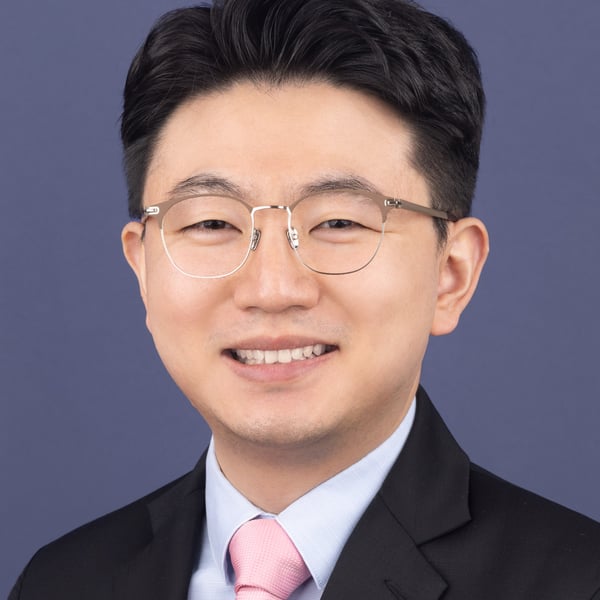
PIR Center spoke with Hao Nan, Nuclear Futures Fellow with the Ploughshares Fund & Horizon 2045. In the interview, he analized the competitive landscape in the nuclear technology market and the factors influencing the decisions of Gulf monarchies, discussed the impact of geopolitical factors on the development of nuclear energy in the region, assessed the potential for alternative areas of cooperation between the Gulf monarchies and Russia, and underlined the prospects for joint initiatives on energy security.
The interview was conducted by Ms. Eseniia Kosulina, 2nd year Master’s student of the International Security Program (MGIMO University & PIR Center).
Ms. Eseniia Kosulina: What factors influence the likelihood of nuclear power plant construction projects being implemented in the Arab states of the Persian Gulf with the participation of the Russian Federation? In the absence of plans to build nuclear power plants, what innovative technologies and scientific developments in the field of nuclear energy could Russia transfer to interested states to enhance their energy potential and develop their national infrastructure?
Mr. Hao Nan: The main factors are financing, sanctions and export-control exposure, supplier credibility, technology localization, workforce training, non-proliferation commitments, long-term fuel services, and compatibility with Gulf states’ broader foreign-policy balancing. If large Russian-built nuclear power plants are not politically or commercially feasible, cooperation could still be possible in lower-sensitivity areas such as nuclear medicine, isotope production, agriculture, food irradiation, safety training, research reactors, and regulatory capacity-building. Any such cooperation would need to be transparent, peaceful, IAEA-consistent, and carefully designed to avoid secondary-sanctions or proliferation concerns.
Ms. Eseniia Kosulina: How is competition with other nuclear technology suppliers (South Korea, France) affecting Russia’s position? What are the prospects for Russia’s nuclear cooperation with the Arab states of the Persian Gulf? Will it continue to develop? Or, on the contrary, will it face difficulties? Or will it remain at the current level?
Mr. Hao Nan: Competition from South Korea, France, the United States, China, and other suppliers has made the Gulf nuclear market more selective and politically complex. South Korea benefits from the successful delivery of Barakah in the UAE, while France has strong credentials in regulation, fuel-cycle services, and long-term nuclear industrial capacity. Russia remains a major global nuclear supplier, but in the Gulf its prospects are likely to be shaped by sanctions exposure, financing terms, political risk, and the ability to meet the high non-proliferation and governance standards expected by Gulf states and their Western partners.
Ms. Eseniia Kosulina: Saudi Arabian officials have repeatedly stated that if Iran develops nuclear weapons, Saudi Arabia will also begin building its own nuclear arsenal. This raises the question of how other Arab states might react to such actions by Saudi Arabia?
Mr. Hao Nan: If Saudi Arabia ever moved toward nuclear weapons, most Arab states would likely avoid direct public confrontation, but the regional security environment would become much more difficult. The UAE, in particular, has built its civilian nuclear program around international credibility, non-proliferation commitments, and regulatory transparency, so a regional nuclear arms race would run against its preferred model. Smaller Gulf states would be more likely to seek stronger security guarantees and regional de-escalation mechanisms than to pursue independent nuclear weapons programs.
Ms. Eseniia Kosulina: As for Saudi Arabia, as part of its national “Vision 2030” program, it aims to reduce its dependence on oil and develop alternative energy sources, including nuclear power. With which countries is Saudi Arabia prepared to cooperate in this area? And what nuclear technologies does it need? What is the likelihood that Russia will become a contractor for the Kingdom to build nuclear power plants?
Mr. Hao Nan: Saudi Arabia has kept a multi-supplier approach and has engaged, or could engage, with the United States, South Korea, France, China, and Russia. Its needs include baseload power, desalination support, industrial decarbonization, human-capital development, and possibly fuel-cycle-related capabilities, although enrichment remains the most politically sensitive question. Russia may remain part of Saudi Arabia’s option set, but under current geopolitical conditions it is less likely to be the least controversial choice for a flagship nuclear power plant contract. Saudi Arabia’s nuclear plans remain active, while its earlier 17 GWe target was abandoned and its current pathway is more gradual and institution-building focused.
Ms. Eseniia Kosulina: Why are the other Gulf states (Qatar, Oman, Bahrain, Kuwait) less interested in developing nuclear energy as part of their national programs? What are the obstacles? In which areas related to nuclear energy could Russia cooperate with these countries? What projects already exist in science, agriculture, medicine, business, or digitalization?
Mr. Hao Nan: Qatar, Oman, Bahrain, and Kuwait have shown less urgency because their power systems are smaller, gas remains important, renewables are cheaper and quicker to deploy, and nuclear power requires demanding regulatory, safety, financing, and human-capital infrastructure. For these states, the opportunity cost of large nuclear power plants is higher than for Saudi Arabia or the UAE. Russia could still cooperate in peaceful and lower-risk applications, including medical isotopes, cancer treatment, agriculture, food security, radiation safety, education, and nuclear-science training.
Ms. Eseniia Kosulina: South Korea has already demonstrated its competitiveness by completing the Barakah nuclear power plant project in the UAE. What are the UAE’s future plans in this area? Which nuclear technologies are currently the most promising and effective for the UAE – new generation reactor design, floating nuclear heat and power plants, or small modular reactors?
Mr. Hao Nan: The UAE’s immediate priority is likely to consolidate Barakah’s performance, deepen regulatory and human-capital expertise, diversify fuel and service arrangements, and assess future electricity demand from AI, data centres, desalination, and industrial decarbonization. Barakah’s four APR1400 reactors now produce around 40 TWh annually, equivalent to roughly a quarter of the UAE’s electricity needs, making it the strongest civilian nuclear reference project in the Arab world. Additional large reactors or small modular reactors appear more plausible for the UAE.
Ms. Eseniia Kosulina: What strategic opportunities and risks do the Arab states in the Gulf face in balancing its relations with China, the US, Russia, especially in sectors like technology, infrastructure, and energy?
Mr. Hao Nan: The Gulf states’ main opportunity is strategic diversification. They can maintain US security ties, deepen Asian energy and technology partnerships, and preserve pragmatic channels with Russia. The risk is that technology, energy, infrastructure, finance, and security are increasingly interconnected through sanctions, export controls, data governance, and military interoperability. The most sustainable approach is not equidistance, but selective multi-alignment with clear boundaries, sector-by-sector risk assessment, and a strong preference for transparency.
Ms. Eseniia Kosulina: Can we speak of the long‑term sustainability of the partnership between the Arab states of the Gulf and Russia over the coming decades? What factors currently influence and are expected to influence the resilience of this partnership? What role will nuclear energy play in the relations between these countries?
Mr. Hao Nan: The Gulf-Russia partnership is likely to remain durable but bounded. It will continue to matter in oil-market coordination, diplomacy, food security, investment dialogue, and selective technology cooperation, but it will face constraints from sanctions, the Ukraine war, Russia-Iran relations, and Gulf states’ continued need to preserve strong ties with the United States and Europe. Nuclear energy may remain one area of discussion, but it is less likely to become the central pillar of Gulf-Russia relations unless the broader geopolitical environment changes significantly.
Ms. Eseniia Kosulina: What joint initiatives in the field of energy security are feasible between the Gulf states and Russia, taking into account the logistical and infrastructural potential of the Gulf region?
Mr. Hao Nan: The most feasible initiatives are practical rather than alliance-like: oil-market consultation, strategic storage dialogue, port and tanker resilience, insurance coordination, emergency logistics, cyber protection of energy infrastructure, and nuclear-safety exchanges. There may also be room for technical conversations on hydrogen, ammonia, gas-market stability, and crisis management around chokepoints. The Gulf’s logistical and infrastructural role makes it a valuable platform for energy-security coordination, but any cooperation with Russia will have to account for sanctions and Western partnerships.
Ms. Eseniia Kosulina: What are the implications of the UAE’s withdrawal from OPEC and OPEC+ for the Emirates themselves, and how might this development affect the other Gulf states?
Mr. Hao Nan: The UAE’s withdrawal from OPEC and OPEC+, a sovereign strategic decision, gives Abu Dhabi more autonomy to align production policy with its national capacity expansion and long-term energy strategy. At the same time, it reduces the collective discipline of producer coordination and may increase competition within Gulf energy politics, especially with Saudi Arabia. For other Gulf states, the UAE case shows that OPEC discipline is no longer politically untouchable, but most smaller producers will probably still prefer the stability and bargaining power provided by collective frameworks.
Ms. Eseniia Kosulina: Is the establishment of a Middle East zone free of nuclear weapons and other weapons of mass destruction feasible? In what ways could the Gulf states and Russia contribute to advancing this agenda? Conversely, which countries might be disinclined to support such an initiative, and what underlying interests or concerns would likely drive their opposition?
Mr. Hao Nan: A Middle East zone free of nuclear weapons and other weapons of mass destruction remains normatively important but politically difficult in the near term. The core obstacles are Israel’s nuclear ambiguity, Iran’s nuclear program, missile and drone proliferation, weak regional trust, and the absence of a credible collective-security architecture. Gulf states and Russia could support dialogue, verification discussions, and confidence-building measures, but progress would require buy-in from the United States, Israel, Iran, and the major Arab states.
Ms. Eseniia Kosulina: Rafael Grossi warns of a possible “domino effect”: if the non‑proliferation system fails, up to 20 states could start developing nuclear weapons. How realistic is this scenario given current geopolitical realities? Which countries are most likely to be the next candidates for acquiring nuclear status? By what criteria can they be identified?
Mr. Hao Nan: Grossi’s warning about a possible proliferation domino should be treated as a serious risk scenario, not as a prediction that twenty states will inevitably seek nuclear weapons. The most relevant candidates are states with strong threat perceptions, advanced technological capacity, access to nuclear infrastructure, doubts about external guarantees, and domestic political constituencies willing to debate nuclear options. South Korea, and Japan are often discussed in this context, but there is a major difference between hedging, latent capacity, extended deterrence debates, and an actual decision to build nuclear weapons.
Ms. Eseniia Kosulina: Let’s discuss the tensions over Iran. On May 15, 2026 Saudi Arabia has proposed to Iran and other Middle Eastern countries conclude a non‑aggression pact, modelled on the 1975 Helsinki Final Act, with the aim of reducing tensions in the region. How have other states reacted – or how might they react – to this proposal, particularly the United States, Israel, Russia, and the Arab states of the Persian Gulf? In your expert assessment, would such a pact resolve the underlying conflict in the region?
Mr. Hao Nan: The reported Saudi proposal for a Helsinki-style non-aggression pact should be understood as an exploratory de-escalation idea rather than a settled regional security architecture. Gulf states may welcome the principle of reducing conflict risks, Russia would likely support a more inclusive regional-security dialogue, the United States may support de-escalation while insisting on constraints on Iran’s nuclear and regional activities, and Israel would likely remain skeptical unless its core security concerns are addressed. Such a pact could reduce escalation risks and create a diplomatic framework, but it would not by itself resolve the deeper disputes over Iran’s nuclear program, missiles, non-state armed groups, Israeli security, and the future role of US security guarantees. Recent reports note that the idea has been discussed but not yet formally confirmed as a finalized Saudi initiative.
Keywords: Gulf monarchies; Peaceful atom; Nuclear nonproliferation
NPT
E16/SHAH – 26/05/20
