
№ 14 (25), 2025. «Openness, Dynamism, Viability»: APEC in a Changing World Order: Interview with Marat Berdyev by Yuriy Shakhov
December 22, 2025
Exclusive Interview

Yuriy Shakhov: APEC has traditionally positioned itself as a platform of the “three E” – Economic growth, Energy security and Ecology. What priorities is Russia advancing in each of these areas in the upcoming cycle of meetings?
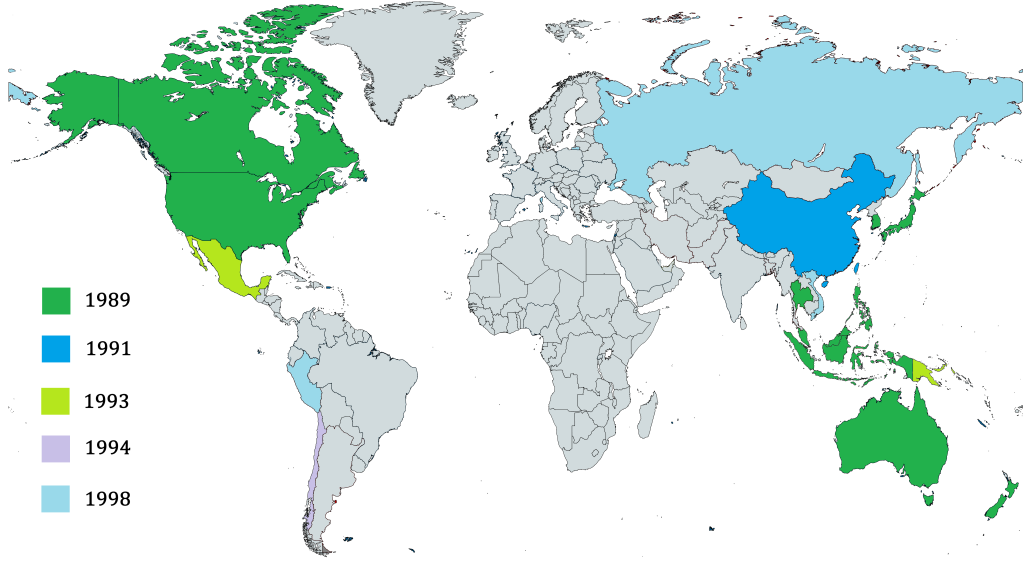
Marat Berdyev: APEC is a significant and highly relevant forum for comprehensive discussions of economic cooperation issues in the Asia-Pacific region (APR). Its establishment in 1989 was prompted by the region’s transformation into the locomotive of the global economy. Moreover, it became clear that today’s international problems cannot be resolved without the involvement of the Global Majority. The West not only lacks the capacity to cope with them alone, but it also frequently becomes the very source of crises or the author of policy prescriptions that exacerbate them.
The Asian financial crisis of 1998 was primarily the result of deregulatory standards and practices imposed by Western-oriented institutions – most notably the Organization for Economic Co-operation and Development (OECD), the International Monetary Fund (IMF), and the World Bank – on the countries of Southeast Asia. The consequences included the collapse of local capital markets, currency instability, and a sharp decline in business activity. A notable South Korean film, Default (2018), depicts this episode.
In the euphoria that followed the end of the Cold War, APEC adopted an ambitious goal: by 2020, to liberalize trade and investment and to establish a comprehensive free trade area (FTA) in the region. This scenario was not realized within the declared parameters. To a large extent, it was thwarted by the confrontational and protectionist stance of APEC’s Western-centric members, who viewed such measures as a response to the natural process of multipolarity, in which they no longer held a monopoly on technological and economic leadership.
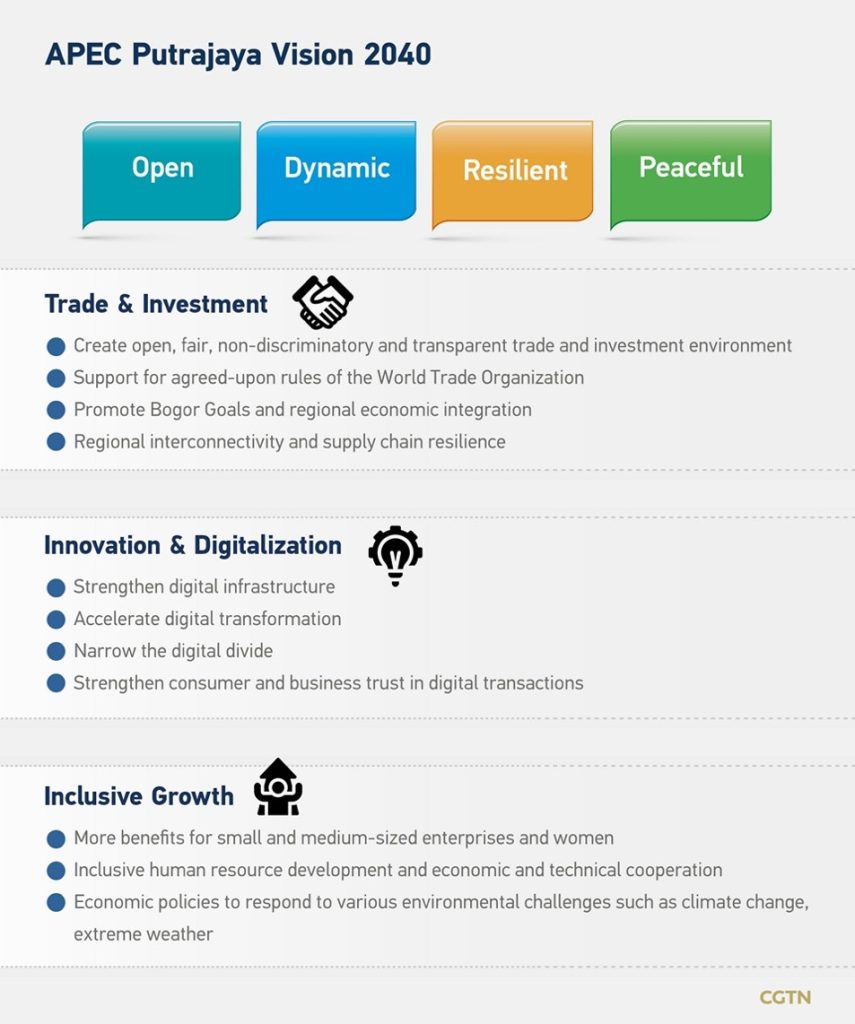
Nevertheless, the overall trajectory of APEC’s aspirations has remained intact. Its new strategic document, the 2020 APEC Putrajaya Vision 2040, reaffirms the goal of transforming the Asia-Pacific into an “open, dynamic, resilient, and peaceful community.”
This aligns well with Russia’s interests and strategic plans. In 2015, President Vladimir Putin advanced the initiative of establishing a Greater Eurasian Partnership (GEP), aimed at removing barriers to economic cooperation among all states and associations across the continent, which would also include the Asia-Pacific region. Within APEC, we actively promote GEP elements, including the harmonization of existing regimes, expansion of the FTA network, and the strengthening of transport and logistics connectivity.
Yuriy Shakhov: What consequences for security in the APR might arise from the continued intensification of the US-China rivalry? How does this affect the APEC agenda?
Marat Berdyev: Of course, APEC does not exist in vacuum. It cannot fully insulate itself from confrontational dynamics provoked by the West. Today, as neoliberal elites unleash conflicts, trade wars, and hybrid wars, engage in direct interference in the domestic affairs of sovereign states, and weaponize the economy, it is naturally difficult to speak of normal cooperation within the forum.
You can clearly see how rapidly the global military-political environment is deteriorating, and the same tensions are rising within APEC. The dividing line does not run solely between the United States and China; regional tensions are being stoked along multiple vectors, and not always primarily by Washington. Australia and Canada, for instance, often act independently, accustomed to regarding themselves as “trend-setters” in the APEC arena. They persist in anti-Russian rhetoric and in making aggressive statements against other Global Majority countries, which they continue, by habit, to lecture and pressure.
This destructive course runs counter to the realities of multipolarity and provokes resistance within APEC. The majority of its members are focused on constructive dialogue and joint efforts. They clearly understand that a poor peace is better than a good quarrel. As I already noted, a clear collective benchmark has been set: by 2040, to build an “open, dynamic, resilient, and peaceful community” in the Asia-Pacific. Our partners within the forum share the importance of this goal and actively prevent disagreements from prevailing. This creates promising conditions for APEC to move forward, despite challenges. We are doing our utmost to support this constructive spirit, including by promoting within APEC the relevant toolkit of the Greater Eurasian Partnership.
In these circumstances, geopolitics in APEC, especially in the West’s Ukraine-centric interpretation, is steadily losing its relevance as a subject of discussion.
Yuriy Shakhov: Given the growing militarization of the region, is it possible to expand APEC’s dialogue to include security-related issues, such as cyber threats, piracy, or the security of supply chains? These topics have long been a stumbling block for member economies.
Marat Berdyev: Security is a multidimensional concept. It is not limited to military and political aspects; it also encompasses economic, social, and environmental dimensions. This approach is reflected in Russia’s National Security Strategy, approved by President Vladimir Putin in 2021. That document includes sections on ensuring security in the economic, informational, and environmental domains. Key components also include energy and food security, which require reliable sources, adequate volumes, and reasonable prices. We attach great importance to achieving economic and technological sovereignty, as well as to building an information and digital environment that takes into account the priorities and characteristics of each state.
At the same time, it is necessary to clearly delineate which elements of this broad spectrum fall within APEC’s strictly economic mandate, possess regional specificity, and can be more effectively addressed within APEC than within universal institutions, above all, the United Nations. At Russia’s initiative, the UN framework has already produced tangible results, including the consensus-based adoption by the General Assembly of the Convention against Cybercrime, as well as practical cooperation in counterterrorism, combating organized crime, and fighting corruption. At the apex of this architecture stands the UN Security Council, with its unique prerogatives in maintaining peace, security, and strategic stability.
Against this backdrop, APEC must be aware of its unique position within the system of international institutions and operate within its economic mandate. The focus should be on how to facilitate the implementation of already-achieved global agreements at the regional level, and on fine-tuning economic linkages to eliminate violence, coercion, abuse, and pressure. It is vital to dismantle politicized measures of unfair competition, including pseudo-sanctions, blockades, embargoes, tariff wars, and other trade and investment barriers used as instruments of suppression against strategic competitors. All these are manifestations of a rudimentary neocolonial mindset on the part of former hegemonic powers.
As far back as the 1970s, the Global Majority was already raising the question of a new international economic order. Achieving this objective requires a thorough reform of specialized global institutions – a necessity recognized by the Group of Twenty (G20), in which I have participated since its first summit in 2008, and reaffirmed annually since then. Key items on the agenda include the redistribution of IMF and World Bank quotas in favor of BRICS and other dynamic states of the Global South and East, the revitalization of the WTO, and, most importantly, the creation of an independent set of mechanisms and instruments enabling international economic operations beyond Western control, including payments, insurance, logistics, and trading systems.
Yuriy Shakhov: How would you characterize Russia’s current position in APEC? To what extent is this platform being actively used to promote Russian interests in the region? What remains the main stumbling block?
Marat Berdyev: Russia holds a solid position in APEC. Within this format, we are regarded as constructive participants. This is understandable: Russia has entered the top four global economies, displacing former giants such as Germany and Japan. Our share of the global economy has already exceeded 3%, while our GDP growth in 2024 reached more than 4%. It is essential to note that these impressive results were achieved despite unprecedented sanctions pressure from the “collective West”.
Moreover, Russia advances not only in terms of scale but also in quality, steadily climbing the ladder of technology, competencies, and overall improvement of the business climate. The outdated label of a mere “gas station” economy no longer applies to Russia. The structure of our economy is rapidly changing, with increasingly visible contributions from advanced sectors that add intellectual value, such as the digital economy, manufacturing industries, and creative sectors.
Russia is expanding its economic presence in the Asia-Pacific, with over 70% of our trade already directed toward the region. The ruble and the national currencies of our friendly partners cover more than 90% of the corresponding settlements.
Within the framework of the Greater Eurasian Partnership (GEP), we are pursuing a course that links the EAEU, SCO, China’s Belt and Road Initiative (BRI), and ASEAN, thereby opening new opportunities for accelerated growth and sustainable development in the Asia-Pacific. Many APEC members are experiencing firsthand the drawbacks of Western monopolies in managing business processes and supply chains, where access to settlements can be cut off overnight, sovereign assets can be confiscated, or trade can be suffocated by tariffs and duties under any pretext – whether political or economic.
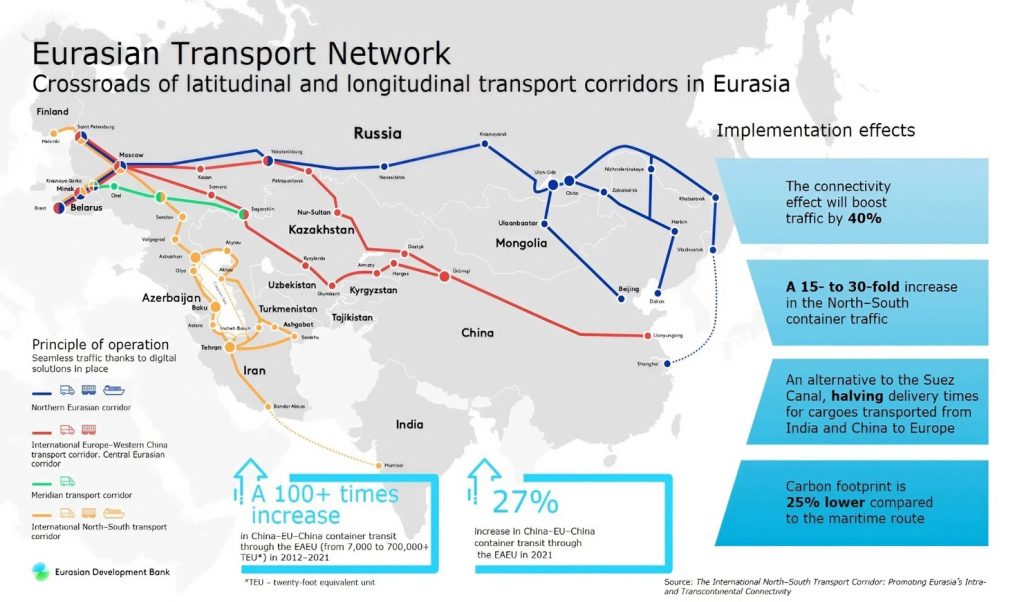
At BRICS summit in Kazan (October, 2024), we put forward specific proposals to break this vicious circle. These included the creation of independent and resilient mechanisms in payments and settlements, insurance, stock exchange operations, as well as improved access to investment and commercial lending. A new development in logistics has been the emergence of transcontinental routes across Russia, including North-South, East-West, and the Trans-Arctic Transport Corridor.
We are ready to share our accumulated potential with interested partners, offering them all the benefits of cooperation with Russia. This elicits a positive and receptive response from the majority of countries in the Asia-Pacific region. Looking ahead, we see broad horizons and the prospect of significant achievements, which we intend to implement for the benefit of the entire region and with a focus on strengthening its material prosperity.
Yuriy Shakhov: One of the flagship projects of the Russian Foreign Ministry is the concept of the Greater Eurasian Partnership. Which practical mechanisms for aligning the GEP with the APEC agenda do you consider most promising?
Marat Berdyev: The development of the Greater Eurasian Partnership is among our key long-term objectives. This strategic priority is enshrined in Russia’s Foreign Policy Concept. The GEP is designed to remove barriers to trade, investment, and broader economic ties, while ensuring a synergistic effect from integrating the various initiatives and projects currently being pursued across Eurasia. Within the GEP framework, the centripetal forces in Asia are directed toward creating an open and non-discriminatory space of comprehensive economic cooperation. These efforts will enable us to fully leverage the unique historical, geographical, and financial advantages of our continent.
APEC has substantial potential to promote the GEP initiative. The Greater Eurasia project could provide an additional stimulus for growth among our Asia-Pacific partners. It envisages reliable channels for the supply of energy resources to the region’s rapidly expanding markets, the creation of “seamless” transport and logistics connections, and effective payment and settlement systems. We regard the GEP as an instrument for contributing to the implementation of APEC’s Putrajaya Vision 2040. Work on this agenda is carried out systematically, both within the APEC framework and through bilateral channels.
Yuriy Shakhov: In 2025, it will be ten years since the idea of the GEP was first announced. What lessons have been learned over this decade, and which indicators would you propose for assessing the effectiveness of the partnership by 2030?
Marat Berdyev: You are absolutely right: the GEP is marking its first milestone anniversary in 2025, ten years since its inception. Notably, this initiative has withstood the test of time, a rarity in today’s diplomacy. Often, we see superficial projects being promoted, such as the so-called multilateral forums initiated by French President Emmanuel Macron or the “Summit for Democracy” of former U.S. President Joseph Biden – initiatives that have long since faded without leaving much of a lasting impact.
The GEP, by contrast, is driven by real-life necessity, not “laboratory invention.” It embodies a simple and universally understandable meaning: cooperation, solidarity, and interconnectedness as the foundations of shared prosperity, well-being, and peace.
We envision the final stage of the GEP as the creation of a broad integration contour across the entire Eurasian continent. This would be a space where borders do not hinder the movement of people and goods, and where cooperation among states and integration groupings, on a mutually beneficial basis, serves common goals and interests, raising material welfare and strengthening technological and industrial capacities.
Today, the GEP figures in discussions at a wide range of Eurasian forums. Its relevance as an integration tool has been recorded in the EAEU’s strategic document, the “Eurasian Economic Path”, with a planning horizon to 2030 and beyond to 2045. Practical progress is being made in linking the GEP, EAEU, and China’s Belt and Road Initiative, with a focus on aligning transport routes and logistics systems.
This year (2025 – Editor’s note), we updated our approaches to implement the GEP further, refining its specific objectives and tasks. We proceed from the understanding that the framework of the common economic space will rest on regulatory harmonization, a network of free trade agreements, and an extensive system of transport links.
We see the EAEU, SCO, and ASEAN as the principal pillars of the GEP. The project, however, remains open to all interested states, including EU members, on an individual basis if necessary. This would, of course, require them to abandon zero-sum games and adopt more cooperative attitudes. Russia has already concluded free trade agreements with Serbia, Vietnam, and Iran, as well as an economic cooperation agreement with China. Negotiations are nearing completion on an FTA with Mongolia and the UAE, while talks with other states are also underway.
Russia also offers convenient and cost-effective transit opportunities, which are particularly valuable for landlocked countries. We are actively developing major transport corridors, including the North-South, East-West, and Northern Sea Route (NSR). For example, the NSR reduces delivery times by 40% compared to the Suez Canal, while also being more environmentally efficient in terms of fuel consumption.
As for indicators of the GEP’s effectiveness, although they are not easy to summarize in a single figure, several stand out. First, the GEP is based on relations of equality and non-discrimination, where no sudden tariff increases are imposed, no political pressure is applied, and no external prescriptions for development are enforced. Second, it provides a strong framework for strengthening South-South cooperation, which has shown significant momentum. According to WTO data, trade within this perimeter has grown from 10% to 25% of global trade volume over the past thirty years. We also see a rising share of settlements in national currencies across Eurasia, increased capital mobilization through local markets, and a growing role for financial institutions such as the Eurasian Development Bank (EDB), the New Development Bank (NDB), and the Asian Infrastructure Investment Bank (AIIB) – banks where Western shareholders do not dominate.
Our ultimate goal is to overcome centrifugal tendencies in the global economy, to transform Eurasia into its central axis, and to shape the continent into a unified, expansive market. Even at an early stage, this market could encompass 2.2 billion people, and under favorable conditions, it could ultimately expand to around 5.7 billion.
Yuriy Shakhov: Food security has once again become a critical issue for global stability. What opportunities does Russia see for multilateral projects within APEC that could combine Russian agricultural resources with the technological solutions of its partners?
Marat Berdyev: Issues of food security and the eradication of hunger are of extreme relevance today. They are enshrined in Sustainable Development Goal 2, which essentially crowns the UN 2030 Agenda for Sustainable Development, where overcoming poverty and hunger is placed at the forefront. Unfortunately, the international community has little to show in this regard. At present, food shortages affect 735 million people worldwide – more than the population of the European Union. Hunger has also begun to spread to so-called developed countries, where entire social groups now find access to food increasingly unaffordable.
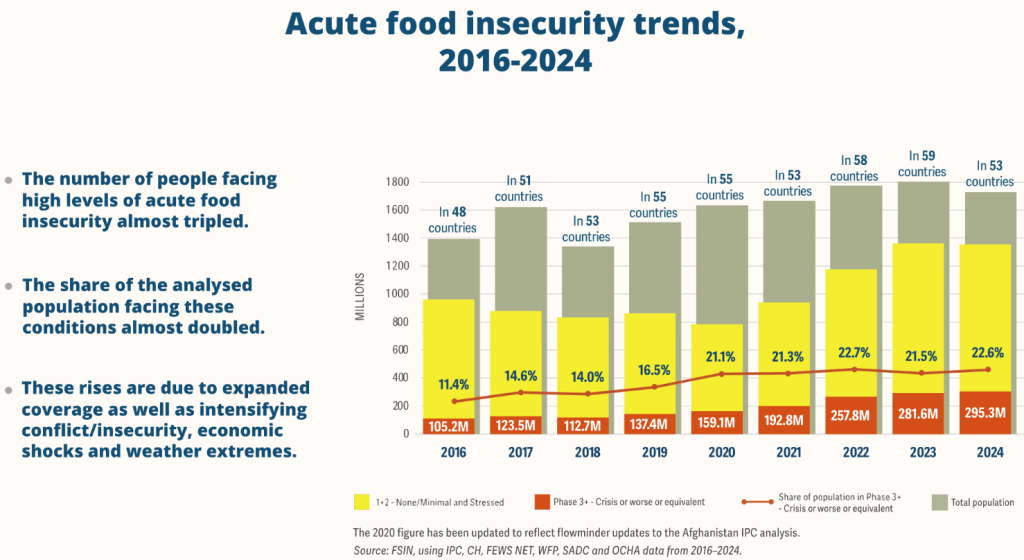
As Brazilian President Luiz Inácio Lula da Silva rightly noted at last year’s G20 summit (November, 2024), there is more than enough food in the world, but it does not reach everyone. This is true: the most vulnerable states suffer disproportionately, particularly in Africa. Yet the most acute crisis at the moment is in Gaza, where Palestinians are on the verge of survival. Many international observers describe the situation as genocide. At the same time, even UN Secretary-General António Guterres, who often softens language on issues uncomfortable for the West-called the events a “scene of horror”. Gaza’s residents are systematically deprived of humanitarian assistance, dying from lack of basic food, with the number of affected already exceeding 140,000.
Symbolically, the global effort to eradicate hunger has stalled since 2014. It was then that the West undermined Ukrainian statehood, ignited civil conflict, took control of the country’s agricultural sector, and began obstructing exports of Russian foodstuffs and fertilizers. Another severe blow to food security has been the redirection of donor and humanitarian resources by Western countries toward militarization and the support of the Kiev regime–at the expense of assistance to the poorest states, particularly in Africa. This shift provoked inflationary spikes, price volatility, and disruptions in supply chains.
Russia seeks to mitigate these challenges and ease their impact through the capacities of its agricultural and industrial complex. We are among the top three global suppliers of food to international markets. Our export structure is centered on grain, other basic agricultural commodities, and fertilizers, with developing countries in Africa, Asia, and Latin America as the principal destinations. Over the past decade, Russia has increased agricultural output by more than one-third. The range of exports is expanding to include higher-value-added goods, such as processed meats, cheeses, vegetable oils, dairy products, confectionery, and other ready-to-consumer products. We intend to maintain this momentum, further promote the liberalization of global trade in agricultural products, and expand Russian contributions to food supply.
Yuriy Shakhov: In the context of APEC’s transition to the “Bangkok Goals” on a bio-circular-green economy, which Russian technologies or projects could serve as a showcase of our contribution to the region’s sustainable development?
Marat Berdyev: Russia was a key player in the inception of international cooperation on climate and environmental protection. We remain active participants in relevant interagency mechanisms and thematic processes.
Our country has traditionally proceeded from the principle that both domestic and international efforts in this area must be grounded in the concept of sustainable development. Its core tenet is the need to maintain a balance between economic, social, and environmental objectives. What matters is not slogans, but realism – placing the individual and society at the center of such efforts.
We consistently advocate that any international agreements in this field should be scientifically substantiated, utilize the full range of available technologies and resources, and avoid undermining prospects for economic growth and cross-border trade. It is essential that environmental considerations not become a cover for unfair competition or a tool of neo-colonial practice. A case in point is the EU’s so-called Carbon Border Adjustment Mechanism, which imposes levies on greenhouse gas emissions embedded in imported products, creating discriminatory trade conditions that disproportionately affect developing countries.
In recent years, various instruments for sustainable development have emerged, including the “green economy”, “circular economy”, “bio-circular economy”, and approaches to the safe use of fossil fuels. Each has advantages and drawbacks, and their application requires consideration of national specificities.
Russia is pursuing a consistent modernization of its economy, improving energy and resource efficiency, reducing waste, and expanding recycling, while also lowering anthropogenic pressures on the climate and environment.
By Presidential Decree of Vladimir Putin in August 2025, Russia set a target to reduce greenhouse gas emissions to 65-67% of 1990 levels by 2035.
At the federal level, numerous projects, pilot programs, and initiatives have been launched, including market-based mechanisms for the trading of carbon units, enhancing the carbon absorption capacity of forests and ecosystems, waste recycling, the establishment of carbon testing grounds, the deployment of nature-like technologies, and higher levels of secondary material use.
Currently, the Russian Government is finalizing the national project “Technological Support for the Bioeconomy”. This initiative is being shaped with consideration of the advanced practices reflected in recent G20 recommendations and the APEC Bangkok Goals, the substantive core of which, in many respects, reflects Russian experience and perspectives. Russian business regularly represents the country with distinction at the APEC bio-circular economy competition. In 2025, three Russian companies have been nominated for awards, presenting innovative solutions such as the use of fungal strains for waste recycling, the production of artificial leather from apple pomace, and the development of children’s construction sets.
Yuriy Shakhov: Amid ongoing global transformations, voices of skepticism have resurfaced, calling for a “reassembly” of APEC because the forum is allegedly unable to respond to regional security challenges. In your view, how justified are these assessments? In which direction will the organization move in the near future?
Marat Berdyev: At the root of contemporary challenges lies, above all, the self-interested policy of the West. Former advocates of globalization have turned to erecting political, trade, financial, and technological barriers, unwilling to accept the democratization of international relations and the erosion of their dominance in the face of rising competitors, including in Asia.
Yet, in the emerging multipolar world, no single state possesses the capacity to impose it will be unchecked. This new reality is rapidly taking hold across multilateral platforms. We observe, in various negotiation tracks, how the neoliberal elite’s agenda, ranging from climate radicalism to gender speculation and neo-colonial practices, encounters growing resistance from new centers of power among the Global Majority. This consolidation is reinforced by the rising “weight” of these states in the global economy: the BRICS now account for 40% of global GDP, compared to 29% for the G7.
In this context, APEC remains a vital, region-wide platform for equal dialogue among Asia-Pacific economies. The forum demonstrated resilience and effectiveness even at the height of anti-Russian hysteria during the U.S. chairmanship in 2023 and continues to uphold its consensus-based principles despite political disagreements. In recent years, APEC has adopted substantive and forward-looking leaders’ documents. Notably, attempts by Anglo-Saxon countries to substitute the forum with more convenient quasi-formats, such as the Indo-Pacific Economic Framework and other closed “clubs” including developing states, have not been supported by our constructive partners.
APEC offers unique added value. Unlike many similar formats that begin and end with abstract rhetoric or unused reports, APEC functions as both a “think tank” and a “project workshop”. Its initiatives yield tangible results. To cite just one example: the APEC Business Travel Card allows entrepreneurs to move freely for professional purposes without visas or excessive formalities.
The forum rests on strong foundational principles: voluntary participation in specific activities, consensus-based decision-making, and an emphasis on practical benefits. Accordingly, I see no justification for a fundamental “audit” of APEC’s activities. The problems lies not in the mechanism itself but in the inadequate conduct of some of its Western members. As the Russian writer Mikhail Bulgakov observed in The Heart of a Dog: “Ruin is not in the closets but in people’s heads.” This diagnosis is fully applicable to the areas that require adjustment within APEC.
Yuriy Shakhov: Not long ago, the world crossed what might be called the “short equator of the century”: 2050 is now chronologically closer to us than the year 2000. In this regard, could I ask you to briefly formulate what, in your opinion, should be the main priority in strengthening the system of global security in the near future?
Marat Berdyev: I would not go beyond the scope of my main report, which is centered on economic diplomacy. Nevertheless, it must be stressed that strategic stability and international security cannot be achieved without the comprehensive normalization of inter-state relations. In practice, it is difficult to draw a clear line between pure politics and pure economics, as they are mutually communicating vessels.
Today, the foundations of security are being undermined not only by the West’s destructive line in this sphere. The radicalization of military bloc ideologies and the waging of wars–both direct and by proxy, as in the case of the Kiev regime–represent only one side of the coin. Equally important is that the West has turned the economic domain into a battlefield. It was in this sphere that it sought to deliver a crushing defeat to Russia, confident in its omnipotence. Yet these illusions dissipated quickly. At the onset of sanctions, embargoes, blockades, and outright confiscations of Russian assets, Western “think tanks” and organizations, including the OECD, rushed to predict Russia’s demise, forecasting an apocalyptic double-digit economic collapse. However, policymakers in Washington, Brussels, and Tokyo overlooked the fact that sanctions are a double-edged weapon: the boomerang eventually returns. Consequently, they themselves sustained serious injuries. According to some external estimates, the EU alone has incurred opportunity costs amounting to $1 trillion.
Nevertheless, global markets, supply chains, financial settlements, and specialized institutions remain under residual Western control. This monopoly must be brought to an end. The G20, as early as its first summit in 2008 at the height of the U.S. financial crisis, set such a task. In recent years, under BRICS presidencies, we have reaffirmed the need to strengthen the voice of the Global South and East in collective decision-making mechanisms.
Two key priorities are of fundamental importance: reforming the global governance system in the interests of the Global Majority, and creating infrastructure for trade, financial, stock exchange, payment, and related operations that is independent of Western arbitrariness. This would be an essential step toward granting our like-minded partners – the new centers of growth and development – absolute sovereignty, economic independence, and technological self-sufficiency. At last year’s BRICS summit in Kazan (October, 2024), within the framework of President Vladimir Putin’s initiative on the Greater Eurasian Partnership, Russia presented specific proposals and mechanisms in this regard. We will continue to work on translating them into practice.
As for security in the traditional sense, it must be equal and indivisible, grounded in a fair balance of interests and mutual respect. Responsibility for ensuring security should rest with the countries of the region themselves and not be undermined by external interference. President Vladimir Putin clearly articulated this conceptual framework at a meeting held at the Russian Ministry of Foreign Affairs on June 14, 2024.
Full version of this interview is available in Security Index Yearbook Vol.2 (2026-2027)
Keywords: APEC
RUF
E16/SHAH – 25/12/22
