
№ 5 (19), 2026. A New Strategic Reality: New START, China, and the Future of Arms Control: Interview with Daryl Kimball by Alexandra Zubenko

March 31, 2026
Exclusive Interview

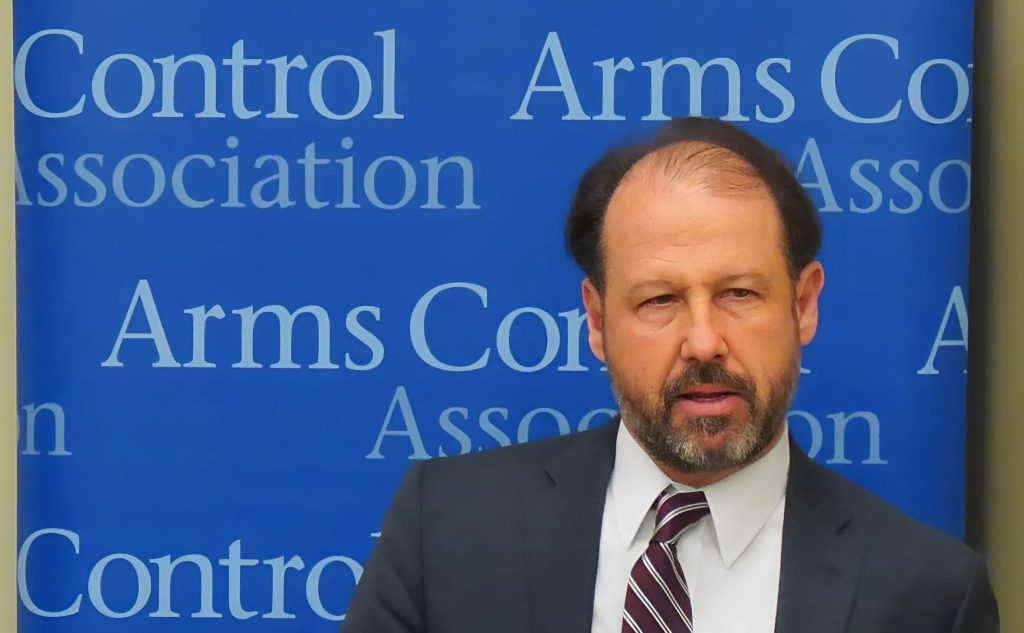
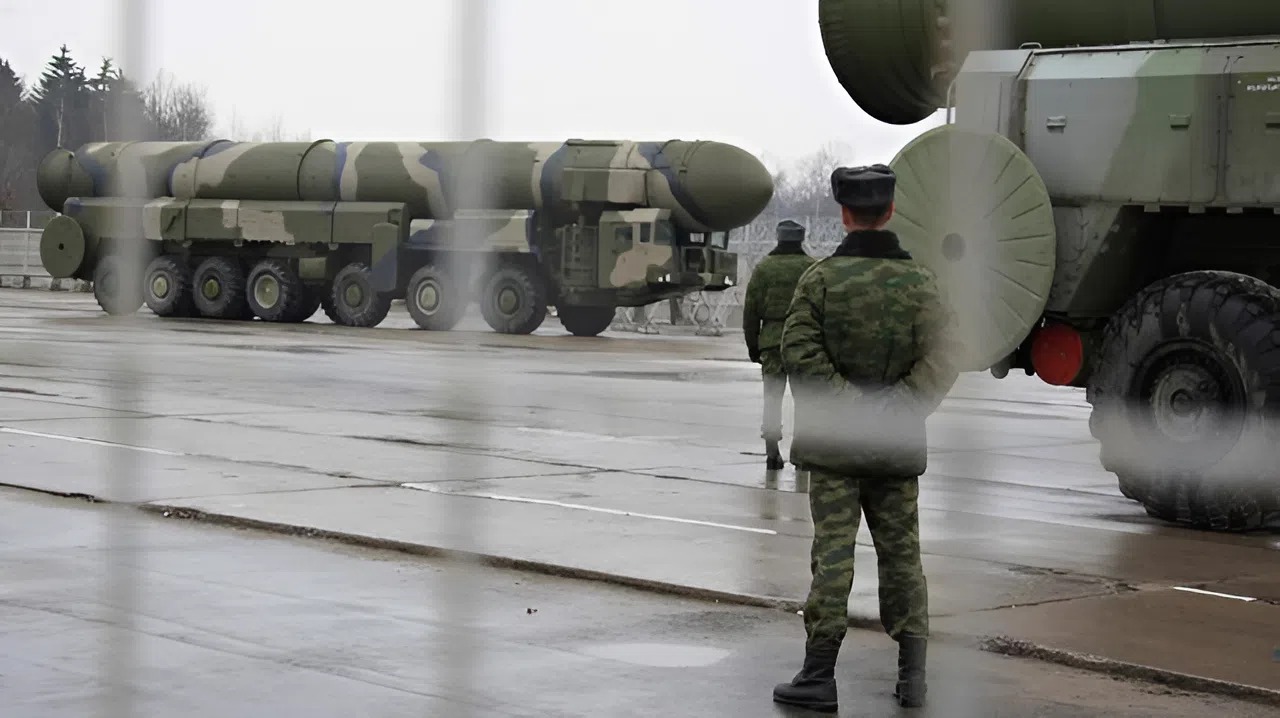
Against the backdrop of the expiration of New START, the absence of new agreements between Moscow and Washington, and growing attention to China’s nuclear factor, issues of strategic stability are once again coming to the forefront. In an interview with PIR Center, Daryl Kimball, Executive Director of the Arms Control Association, explains why the United States has not responded to Russia’s proposal to maintain New START warhead ceilings, what the prospects are for multilateral arms control, and what the advancement of the “Golden Dome” missile defense system could entail.
The interview was conducted by Ms. Alexandra Zubenko, PIR Center Research Associate.
Alexandra Zubenko: What do you see as the main factors behind the United States’ decision not to formally respond so far to Russia’s proposal for a mutual moratorium on exceeding New START limits? Is this exclusively linked to the state of negotiations on Ukraine, or are there other key considerations at play? Do you think the current US administration would be interested to proclaim such a moratorium in the near future?
Daryl Kimball: Well, I think there are a number of factors that have shaped how the Trump administration has approached this issue of nuclear arms control with Russia, and with China as well. And, you know, this is informed speculation based on what I’m seeing and some things I’m hearing. I don’t have a direct explanation from people inside the administration about exactly why they’ve chosen not to respond to Moscow’s proposal. So, with that said, I think we need to understand a few key elements.
Since coming into office for a second term, Donald Trump has made it clear that he wants to engage in denuclearization talks with both Russia and China. Yet he did not put together a team at the State Department or the Defense Department to actually pursue those discussions until rather late. This administration is operating quite differently from the first Trump administration – it is very White House–centered, with a small circle of advisers. We don’t have the usual hierarchy of interagency consultations that would typically lead to recommendations flowing up to the Cabinet Secretaries, the National Security Advisor, and then to the President. So it’s a much less deliberative and less well-organized policy-making process.
There are certainly experts in Trump’s circle, but it’s not clear whom he is listening to at any particular point in time. All of these factors help to explain why there was no real response to Russia’s proposal until February 6, the day after New START expired – and why there still is no clear concept emerging from the administration about how to pursue the kind of multilateral arms control they say they want, somehow involving China.
Another factor, I think, is Donald Trump’s general distaste for anything associated with Barack Obama – or Joe Biden for that matter. New START was, after all, an Obama-Medvedev agreement. It’s quite plausible that Trump simply didn’t want to extend or reaffirm the central limits of a treaty negotiated by Barack Obama and his team; he wanted to move beyond it and put his own stamp on nuclear policy.
Finally, to the extent that President Trump has been briefed on President Putin’s September 22 proposal to continue respecting the central limits of New START for one year to allow time for negotiating a follow-on framework – it seems that many of his advisers were people who had long been critical of New START. They were unhappy with Russia’s suspension of implementation beginning in 2023, frustrated that the treaty never covered sub‑strategic or non‑strategic nuclear weapons – an issue that many Republicans have been fixated on for years. And there’s also a strong concern, across both Republican and Democratic defense circles, about how the United States should account for China’s expanding nuclear arsenal.
So, all these factors combined have pushed the administration toward saying, essentially, “We don’t want another bilateral framework with Russia. We want something new and broader that includes China.” I think those are the main reasons for the lack of response.
One other point worth mentioning: when Trump and Putin met in Alaska, both sides noted that strategic nuclear issues would be on the agenda. But that summit was cut short, and the entire agenda wasn’t covered. My understanding is that arms control discussions were scheduled for the afternoon session, which never took place. That might have been one reason Putin later put forward his September 22 proposal. What’s also interesting is that after Alaska, the two presidents spoke by phone at least twice, and their senior advisers met on other issues such as Ukraine. So, there were opportunities to discuss this if either leader had wanted to – but apparently, they didn’t.
As for whether Ukraine was a factor, I don’t believe the Trump administration linked its response to Putin’s September proposal with the state of negotiations over Ukraine. From what I can tell, the Kremlin itself adjusted its stance compared to their Biden years stance of linking their dissatisfaction with continued US support for Ukraine’s defense, yet being willing to engage Washington on strategic nuclear issues separately under Trump. So here we are: no New START treaty, and for the first time in decades, the two sides have no legally binding limits on their strategic nuclear arsenals.
Alexandra Zubenko: The absence of negotiations on a follow‑on arms control agreement may not alter the strategic balance overnight, but it does allow both Washington and Moscow to plan for larger and more advanced nuclear forces over time. If no serious dialogue on a new agreement emerges, how do you expect US nuclear force planning and modernization priorities to evolve in the coming decade?
Daryl Kimball: Well, it’s hard to forecast with any certainty how the US nuclear force will change in number or structure over the span of a decade. That’s a long period, and there are many factors that can influence it. But if we narrow the focus to the next one to two years, a few possibilities come into view.
It’s now theoretically possible for the United States to make certain adjustments that were previously limited by New START. For example, it could convert some of its strategic bombers to nuclear missions, or it could load additional missiles into some of the sea‑based strategic submarines – remember, there are four empty launch tubes on each Trident submarine as a result of New START reductions. The US could also upload additional warheads on its land‑based Minuteman III ICBMs. Taken together, these steps could allow the United States over the next two to three, maybe four years, to increase its number of deployed strategic warheads by several hundred – conceivably up to around a thousand or more.
Of course, all of this would take time; it couldn’t be done overnight. And I would argue that there is no reason to do so at all. Why? Because if you count the bombers by what they can actually carry rather than under New START’s counting rules, the United States currently has close to 1,700 warheads deployed on strategic delivery systems – about the same number as Russia. That force level is more than sufficient to deter a nuclear attack by Russia and, certainly, by China, even if China’s arsenal continues to expand. In my view, the United States does not need to increase the number of nuclear warheads or develop new capabilities specifically to deter a larger portion of China’s strategic forces.
That said, others disagree – and many in Congress take a different view. The Congressional Commission on the US Strategic Posture, for example, issued a report about two years ago that laid out a broad menu of options for augmenting US forces, including many of the ideas I just mentioned. They suggested uploading additional warheads on ICBMs and submarine‑launched ballistic missiles, deploying the new Sentinel ICBM in a multiple‑warhead configuration for at least several years, increasing the planned number of nuclear‑armed air‑launched cruise missiles for strategic bombers, expanding the planned B‑21 bomber fleet, and raising production of Columbia‑class submarines – the new generation of strategic submarines.
The report even floated the notion of exploring the feasibility of fielding some portion of the future ICBM force in a road‑mobile configuration – a rather fantastical concept, in my view. They did not include cost estimates for these proposals, which was one of the major criticisms of that report. Still, these kinds of changes would add hundreds of billions of dollars to the cost of the current nuclear modernization program, which is already projected to cost the United States roughly one trillion dollars over the next decade.
So if we look to the longer term, I think we’ll see pressure from hawks in Congress and elsewhere to pursue some or even all of these expansions. And that, in turn, is why it is so important for both the United States and Russia to return to the negotiating table – to work out a new framework agreement that covers strategic nuclear weapons, intermediate‑range systems capable of carrying nuclear payloads, and eventually, perhaps, to revisit the question of non‑strategic or sub strategic nuclear weapons. The Russian government’s earlier proposals from 2019 and 2020 could even serve as a starting point for discussions on transparency measures – beginning with basic reporting on what each side possesses.
There also needs to be dialogue on strategic ballistic missile defense. The so‑called Golden Dome strategic missile defense scheme that President Trump has been promoting will not be completed before he leaves office, so there is still time to develop arrangements that address the security concerns of all sides and avoid destabilizing dynamics in this area.
But if no new framework emerges, we will be entering a far less predictable environment. Without limits – especially verifiable ones – the United States, Russia, and increasingly China will be watching one another with suspicion, questioning what the others are doing and reacting even to perceived moves. In that sense, we could find ourselves slipping back into a kind of “missile gap dynamic” reminiscent of the late 1950s and early 1960s. And that is not a future that promises stability or predictability for anyone.
Alexandra Zubenko: Given ACA’s engagement with the Congressional Nuclear Weapons and Arms Control Working Group, how would you characterize the current stage of the debate in Congress over “two‑peer” deterrence and the requirements for simultaneously deterring both Russia and China?
Daryl Kimball: Well, it is changing things in significant ways. I mean, if you read Tom DiNanno’s speech at the Conference on Disarmament on February 6, and other statements that have followed, you can see this shift quite clearly. The reason, perhaps the excuse, that the Trump administration has declined the opportunity to extend the central limits of New START right now is that it no longer believes bilateral nuclear arms control with Russia is sufficient to deal with today’s nuclear challenges. And that is all about China. Just as he wanted to do six years ago, President Trump wants to find a way to include China in a broader arms control architecture.
So, we need to look carefully at what’s actually happening and how China might be involved. Independent researchers at the Federation of American Scientists, whose work we rely upon, now estimate that China possesses about 600 nuclear weapons in total. The number of strategic launchers is thought to be around 550, and that figure includes newly constructed silos in Western China that appear still empty, not yet fitted with ICBMs. So the number of Chinese nuclear warheads that can actually reach the United States right now remains relatively low, in the low hundreds. In my view, that does not necessitate or justify an increase in the size of US nuclear forces.
But there are others who disagree, as I mentioned earlier. Some argue that the United States needs to increase its number of deployed warheads by 400, 500, even up to 1,000 in order to deal with “two near-peer competitors.” This is essentially old Cold War logic, the idea that in a full-scale nuclear war, the United States must be able to “limit the damage” an opponent could inflict with a second strike. The reality, though, is that once two countries of the size and capability of the United States and China are engaged in a full-scale nuclear conflict, each side will be firing at empty silos or empty airfields, because the other side’s weapons will already have been launched. So, in many ways, it’s madness. It’s a kind of mathematical formula that drives you toward ever-increasing numbers of nuclear warheads on both sides.
That’s how this new dynamic is reshaping the debate in Congress, so how to prevent that kind of escalatory cycle? One point that Trump and his team do have right is that all five nuclear-weapon states, China, the UK, France, Russia, and the United States, have an obligation under Article VI of the Nuclear Non-Proliferation Treaty to engage in good-faith negotiations on disarmament and ending the arms race. So China does indeed have an obligation to engage. The question is: where and how should the P5 begin such arms control talks, and what should the format be?
The Chinese have long rejected the idea of trilateral talks. I can share a little story from 2019, when Trump first proposed that the U.S., Russia, and China begin trilateral nuclear arms control discussions. I was in New York at the NPT Preparatory Committee meeting and had just delivered an NGO presentation on how the nuclear-armed states could meet their Article VI obligations. Suddenly, a Chinese official rushed up to the balcony where I was sitting and said their ambassador wanted to speak urgently about what exactly the Trump administration meant by “trilateral arms control.” I spoke for about an hour with the ambassador, but I couldn’t answer his questions, because at that time, frankly, I didn’t understand what the Trump administration wanted to accomplish.
By 2020, it became fairly clear that what they were trying to accomplish was less about diplomacy and more about putting China on the spot, perhaps to embarrass them, rather than to achieve concrete progress. If you recall, in 2019 and 2020, the US and Russia were beginning to discuss the potential extension of New START. Washington also wanted Moscow to agree to additional steps for accounting sub-strategic warheads. When the US invited the Chinese to join those talks, the Chinese were confused, and the US envoy, Marshall Billingslea, even placed small Chinese flags at the table, wrong ones by the way, and, predictably, the Chinese never showed up. I think that was largely a publicity stunt rather than a genuine negotiation attempt.
Now, however, the administration seems to be approaching the issue more seriously, and I would hope they don’t make the mistake of proposing trilateral talks again, because, for better or worse, the Chinese are not going to agree. So the key question is: should the nuclear-weapon states engage at a high level in a P5 format? That could be very complicated, because each country has different numbers, different force structures, and different priorities.
Personally, I think a better alternative, and I laid this out in a recent article for the Bulletin of the Atomic Scientists, would be for the United States and Russia to resume a bilateral dialogue on a new, comprehensive framework that covers strategic, intermediate-range, and sub-strategic weapons, as well as strategic missile defense. That framework should also include discussion of the so-called “exotic” Russian systems, to determine where they fall and whether they can be addressed within any future agreement. At the same time, the United States should pursue separate bilateral talks with China on nuclear production and arms control.
China, notably, has not rejected bilateral dialogue. In fact, in November 2023, Assistant Secretary of State Mallory Stewart met in Washington with her Chinese counterpart, Director-General Sun Xiaobo, for a one-time discussion on arms control. It didn’t continue afterward, but it did happen, and it demonstrates that bilateral engagement with China is possible, at least at the exploratory stage.
Finally, the P5 process itself continues under the current chairmanship of China and will soon transition to the UK, which could perhaps make it more robust. But that would require higher-level representation. Right now, P5 meetings are held only at the so-called “expert level,” meaning they’re largely exchanges of views, not real negotiations. Elevating those discussions to the political or leadership level could make a real difference if countries are serious about reducing risk and avoiding a dangerous new era of unconstrained nuclear competition.
The United Kingdom and France could also consider freezing the number of their strategic delivery systems. These would cover delivery platforms rather than warheads, since it is much easier to verify and count missile silos, submarines, and ICBMs remotely than it is to track individual warheads. Such a step could help create a more stable and transparent environment for more detailed discussions on specific issues further down the line. It would also ease concerns about an open‑ended Chinese nuclear buildup.
These are some of the ideas that deserve serious consideration. And, importantly, I think Russian audiences should recognize that the Trump administration has not declared arms control dead. President Trump continues to say he wants some form of arms control agreement. He may not yet have a clear idea of how to achieve it, but his emphasis is on making it multilateral. That means we all need to think more creatively about how to adapt the proven and successful elements of US-Russian arms control experience and apply them to a broader set of nuclear‑armed states.
Alexandra Zubenko: As you rightly mentioned the argument for involving China has surfaced repeatedly. Several U.S. officials have emphasized the need to engage China when giving comments on the expiration of the New START treaty. But at the same time, as you said, there hasn’t been significant progress in US–Chinese consultations to suggest that, in the short term, they could actually reach a common understanding on how to bring China into arms control talks or how the agenda would be set. Meanwhile, time is running, since the Russian proposal originally aimed to extend compliance with the central limits for only one year. There’s no guarantee that China could be meaningfully involved within that timeframe; in fact, most likely, it won’t be. So, to what extent this argument is genuine?
Daryl Kimball: Yes, I mean, involving China in nuclear arms control is easier said than done. And involving the UK and France in nuclear arms control is also easier said than done. Anyone proposing it needs to provide real leadership and show how such a process can actually be initiated.
Another thing I would point out is that they have to genuinely pursue it. And I would note that the Trump administration has not, to this day, made any formal proposal to the Chinese government for engaging in nuclear arms control talks. Senior U.S. and Chinese officials could meet in March in Geneva, on the sidelines of the Conference on Disarmament, and Presidents Trump and Xi are also expected to meet in April. But eventually, if the Trump administration continues to insist that China must be involved, they will need to put forward some specific ideas for how that should happen.
The same applies to Russia. If Moscow wants the UK and France involved, then it, too, needs to explain how. You can’t simply declare that others must join an arms control framework without offering a workable plan for doing so. In other words, you have a responsibility to help solve the problem you are presenting.
Now, going back to President Putin’s September 22 proposal, this is actually an idea that the Arms Control Association had been publicly floating as far back as 2022 and 2023. The logic behind it was clear: any new nuclear arms control agreement between the United States and Russia will take time to negotiate – probably even more time than New START required. And in fact, New START itself took about 18 months from start to finish. This next one would almost certainly be more complicated and more difficult.
So, the idea was that by agreeing to continue observing the central limits of New START for another year, both sides could buy time to pursue serious negotiations on a successor agreement before new destabilizing factors come into play, such as each side starting to increase the number of deployed warheads. In that sense, it remains a sound and practical idea, even though Donald Trump has not formally accepted it.
It is quite possible, however, that the United States will, at least for some time, continue to observe those limits informally. Russia will be able to see whether the United States is increasing its warhead deployments or not – partly because the United States is a highly transparent country. You’ll read about any such developments in Arms Control Today or similar publications almost as soon as they happen. So in many ways, the Russian proposal remains viable, even if it has not been formally or mutually declared as accepted by the Trump administration.
Alexandra Zubenko: In light of the renewed debate over the appropriate level of US involvement in European defense and the US pivot to Asia, do you anticipate that, over the longer term, Washington will seek a significant modernization of NATO’s deterrent in Europe to address European allies’ security concerns?
Daryl Kimball: I think, as your question suggests, there are multiple factors at play here. The economic and military rise of China has led the United States – going back to the Obama administration – to seek to strengthen our alliances in East Asia. The goal, to put it plainly, has been to counter China’s growing power projection capabilities in the region.
At the same time, European perceptions of Russia have transformed after 2014 and especially 2022 – from a difficult partner into a clear threat. And now, under President Trump’s second term, European concerns about the threat posed by Russia have only deepened, because Trump has put pressure on President Zelensky and encouraged the Ukrainian government to give up territory. He’s also done things that seem to undermine transatlantic unity more broadly – like making erratic statements about U.S. commitments to NATO and, at one point, even suggesting an interest in “taking over” Danish territory in Greenland.
Now, that said, there remains a deep well of political and public support within the United States for defending Europe against external threats – just as there is strong support for our allies in Asia against North Korean and Chinese provocations. So, will this evolve? Yes, but I think Europe has clearly started to move in a new direction, and that shift is probably permanent. European leaders increasingly understand that they can no longer rely fully on the United States for their security.
And I should say that I genuinely think that the war in Ukraine has produced outcomes that Russia wanted to avoid – NATO is now larger than it was before February 2022, and it’s in the process of becoming a stronger military alliance than it has been in decades. Relations between Europe and Russia are at rock bottom, and the trajectory seems unlikely to reverse any time soon.
So how does all of this affect NATO’s nuclear deterrent? I don’t think any European country can meaningfully augment NATO’s collective nuclear capabilities on its own. Poland, for instance, is not likely to acquire U.S. forward-deployed nuclear weapons, and it lacks the technological base to develop its own nuclear force. Germany also has no desire to pursue such a course. What we’re more likely to see is further integration of British and French nuclear planning with NATO’s overall defense strategy, and perhaps some limited steps by the U.K. and France to diversify or modestly expand their forces. But any such changes will have to be done affordably, and for the U.K. especially, that’s a significant constraint.
In short, this trend of closer British and French coordination with NATO will probably continue, but it’s not going to lead to radical transformations in Europe’s nuclear posture.
From our perspective, the advice we’ve been giving to European allies is that their security rests primarily on maintaining strong conventional defenses against external threats. Pursuing new nuclear capabilities would only make them more vulnerable, not less, and would do nothing to address the asymmetric or hybrid threats they face from Russia today. A strong, integrated conventional defense remains the most credible and stabilizing deterrent.
Those are my reflections. These are early days, and everything remains quite fluid, but that’s how I would characterize the situation for now. And I should add, my views are not necessarily the majority view here in the United States – but they’re an honest assessment of where things stand.
Alexandra Zubenko: A growing number of Western experts admit that any future nuclear arms control framework will need to involve not only China but also the United Kingdom and France. Do you think the United States has, or could develop, meaningful leverage or incentives to encourage one or both of these allies to take part in future negotiations?
Daryl Kimball: That’s a good question, and I really don’t know the answer with any certainty. I don’t know if the United States will actually agree to try to persuade the British and the French to participate more actively in future negotiations – but remember, all five nuclear-weapon states are already engaging through the P5 process.
So one approach the Trump administration might pursue is to say: all right, we already have this process, so let’s strengthen it. Let’s augment it by raising the level of participation – send under secretaries of state, deputy foreign ministers – and make the meetings longer, perhaps more than a single day, and more frequent. They could seek to leverage that existing forum rather than try to create something entirely new. In that sense, they might not need to do a great deal of additional persuading. Whether that is what they intend to do, we’ll have to wait and see.
But I also think it’s worth noting that the British, French, and Chinese diplomats all repeatedly acknowledge that, at some point, they recognize the need to be involved in arms control discussions. The real questions are: at what point, and in what form? Because, very often, the Chinese say, “We have far fewer nuclear weapons than the United States or Russia.” And of course, the British and French say the same thing – and they’re right; their arsenals are much smaller.
Still, there are other forms of mutual restraint that could involve all five. Here’s one example that hasn’t gotten much attention recently but is on the international agenda: the Comprehensive Nuclear-Test-Ban Treaty (CTBT). All five nuclear-weapon states have signed it. One – meaning Russia – has “de-ratified”; two others have not yet ratified. Nevertheless, all five countries are legally bound not to conduct nuclear test explosions that produce a self-sustaining chain reaction. Everyone knows what that means.
But since the treaty has not yet entered into force, we don’t have the on-site inspections it would authorize, so questions naturally arise about what might be happening at former test sites – like Novaya Zemlya, Lop Nur, or other facilities – possibly at very low yields or involving hydronuclear experiments.
So one constructive step that all five could take for arms control and strategic stability would be to reaffirm their support for the global nuclear test moratorium and to agree to technical discussions aimed at developing new confidence-building measures – steps that would give greater assurance that no one is conducting prohibited nuclear experiments at their former test sites. For the British and French, that would be relatively easy, since the U.K. no longer conducts any testing at Nevada and France no longer maintains an active test range.
Such an initiative could, in fact, serve as a breakthrough – and the time may be right, given recurring accusations in recent years that Russia has carried out low-yield hydronuclear tests, or that China conducted some form of experiment at Lop Nur, reportedly on June 22, 2020. Moves like this could show all five states are serious about transparency and restraint.
Another idea, separate but related, would be to revisit the U.S.-Soviet “Agreement on the Prevention of Nuclear War” from 1973. That agreement committed both sides not to threaten each other or their allies with nuclear weapons and to engage in prompt consultation in the event of a crisis that might risk nuclear use. A modernized and expanded version could include China, the UK, and France. That would make it broader, more relevant, and tailored to today’s multipolar context.
This type of measure would be less “arms control” in the traditional sense and more of a risk-reduction initiative, but nonetheless extremely valuable. There are things that could be done if there were genuine high-level engagement among the P5 – discussions that go beyond the one-day, mostly ceremonial meetings we tend to see now. And perhaps, out of such talks, we could see renewed joint declarations reaffirming that a nuclear war cannot be won and must never be fought.
Alexandra Zubenko: If a broader, more inclusive agreement is ever negotiated, it would almost certainly bring missile defense and other ABM‑related systems back onto the agenda. In that context, recent discussions about whether deploying Golden Dome in Greenland would enhance US missile defenses have attracted growing attention. Do you view these as substantive policy debates within the US government, or largely speculative at this stage, given how little is publicly known about what “Golden Dome” would actually entail?
Daryl Kimball: Well, I think, you know, Trump raised the issue of Golden Dome in the context of Greenland, right? And I think he was trying to enhance his silly argument – and I use this word very deliberately – that the United States must own Greenland. He was trying to make his case more persuasive. I mean, the reality is that the United States has, for decades, had early warning radars in Greenland with the cooperation of Denmark and Greenland. So there’s no reason why we have to own the place or invade in order to continue to use those facilities.
There hasn’t been any serious debate in the United States about Trump’s Golden Dome strategic missile defense plan. Congress, currently controlled by Republicans, has been largely passive – no hearings have been held on the issue so far. Lawmakers have been authorizing funds for the administration to channel to contractors developing concepts for space-based interceptors.
There’re too many other pressing issues in the US now that holds the public’s attention – from illegal ICE raids in Minnesota, vaccination policy changes, interest rate fluctuations, and affordability concerns. As a result, missile defense doesn’t feature prominently in national discourse.
There’re three main aspects that distinguish Trump’s missile defense approach.
First, the US strategic missile defense policy has for years been geared to provide limited protection against limited attacks from so-called rogue states such as North Korea – perhaps a few dozen incoming ICBMs. Trump has expanded that idea into a system designed to counter hundreds of missiles from Russia and China, which represents a fundamental shift.
Second, his plan emphasizes space-based interceptors. If developed, these would dramatically alter the security dynamics in space, potentially introducing new instability and uncertainty. Even with thousands of interceptors in orbit, such a system would still be unable to reliably stop massive nuclear-armed missile strikes from major powers.
Third, the administration is pouring unprecedented funding into the program, with Congress continuing to approve large appropriations. These developments could gradually erode strategic stability and complicate future efforts to limit or reduce nuclear arsenals. Russia and China will need to respond pragmatically and constructively to address their concerns about this evolving U.S. posture.
Alexandra Zubenko: How would you characterize President Trump’s overall view of arms control? Is it considered purely as a bargaining chip in a broader geopolitical game by the current administration?
Daryl Kimball: I would call it aspirational. Policy shifts have been announced, although not much has actually been done. I would also describe it as adversarial and coercive. He sees every negotiation as a form of leverage – like with tariffs policy now: if we don’t like something you are doing, we’ll do something very painful in return.
They have also fired many of the people who provide the expertise needed to help inform government decisions. The National Security Council has been downsized, the State Department has been downsized, and the Secretary of State, Marco Rubio, is also serving as the National Security Advisor. So there’s a much smaller number of experts now, and those who remain are spread thin. They’re doing many things at once – negotiating on Ukraine, negotiating on Iran, invading Venezuela, and maybe talking about arms control with Russia and China.
So what I’m getting at is that I just don’t think they’re capable of conducting a sustained negotiation on a complex issue like nuclear arms control. As we all know from the history of nuclear arms control, this kind of diplomacy requires detailed expert work – lots of back-and-forth over time. It’s not something that can be accomplished in a two-hour summit between two presidents somewhere in Alaska.
Alexandra Zubenko: Given the strained relations between Europe and Russia, do you believe that current European leaders still see value in renewing US-Russia strategic arms control dialogue?
Daryl Kimball: Honestly, I don’t think enough of them understand enough to see the value. I think many of them have for understandable reasons, focused on how to respond to the war in Ukraine, how to adjust European defense strategy to deal with a Trump administration that is less supportive of NATO and so this has just not been on their radar screen. But as Mark Carney said in his speech at the Davos conference, you know, middle powers need to recognize that major powers – he didn’t name names, but he meant the United States, Russia and China – are not playing by the rules we’ve all established as a part of the international rules based order.
Some of those rules include the rules about nuclear weapons, and so I would hope that over time the Norway, the Italy, the Spain, the Netherlands, etc. understand that it is in their interest to see the United States and Russia continue to engage in nuclear disarmament talks, not just arms control talks to reinforce the guidelines and the principles that are part of the global nuclear order that guard us against the ultimate nuclear catastrophe.
Keywords: Nuclear nonproliferation; START; Arms Control; Strategic Stability
AC
E16/SHAH – 26/03/31
