
№ 14 (58), 2026. The Verdict on the 11th NPT Review Conference: Interview with Dr. Tariq Rauf by Maksim Nosenko

June 11, 2026
Эксклюзивное интервью

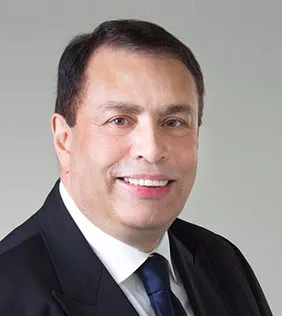
The new guest of PIR Center’s exclusive Interview is Dr. Tariq Rauf, former Head of Verification and Security Policy Coordination Department at the International Atomic Energy Agency (IAEA), PIR Center Advisory Board Member. In this interview, we discussed all the pitfalls of the past Review Conference and everything that was left unsaid. And finally, we looked into the future to assess how many Preparatory Committees would be enough, and whether it would be better to hold the Review Conference in Vienna?
The interview was conducted by Mr. Maksim Nosenko, PIR Center Editor, Information, Publications & Digital Communications Program.
Mr. Maksim Nosenko: Probably, now is the best time to discuss the outcomes of the 11th NPT Review Conference. Some time has passed, the emotional discussions have ended, and the events have been reflected upon. In that regard, my first question is: What are the positive outcomes of the Review Conference, and is it possible to assume that with each inconclusive conference, countries will come to realize the need to build confidence-building measures?
Dr. Tariq Rauf: I do not think that there was anything positive that came out of this Review Conference. First of all, the international situation is very disturbed. We have the ongoing attacks against Iran, Gaza, and Lebanon by Israel, and by the US against Iran. We have the continuing escalation in Ukraine. We have the continuing issue between India and Pakistan, and we also have the issues over North Korea. Generally, relations among the five permanent members of the Security Council are very complicated and complex; we have three members on one side – the UK, France, and the United States – and then China and Russia on the other side.
So, nobody was expecting that this Review Conference would be a smooth one. As usual, developments outside the NPT always come and influence the Review Conference. The NPT Review Conference is not immune to international conflicts outside the context of the NPT, which was abundantly clear. People went in with low expectations, fully expecting that there would not be an outcome.
Right from the very beginning, the problems started with the United States objecting to Iran being one of the 34 vice presidents, and also raising the issue of Iran’s non-compliance with its NPT safeguards agreement with the IAEA. This, in one sense, was a replay of 2005 and 2007. At the 2005 NPT Review Conference, we could not agree on the agenda for two or three days because of this issue of reference to Iran’s non-compliance. In 2007, at the first PrepCom in Vienna, for seven out of ten days, there was no meeting of the PrepCom because there was this disagreement between the United States and Iran on how to refer to Iran’s non-compliance.
So, it’s the same issue here, which is very unfortunate. Normal protocol is that the regional and political groups nominate countries for positions like vice presidents, and other groups do not challenge them. Iran was a nomination of the Non-Aligned Movement (NAM). Now, the normal protocol would be: if NAM has nominated them, that’s it. But the United States chose to pick a fight with Iran right from the beginning, and it created problems throughout the conference.
What distinguished this conference from its predecessors is the breadth of the disillusionment it produced. Mexico’s observation that there was “no genuine search for common solutions based on a negotiating package that integrated the priorities of all States in a balanced manner” applied not just to Russia’s and China’s positions but also to a Western posture that, under the cover of NATO solidarity, quietly ensured that disarmament obligations would remain aspirational. Canada was right that the “primary weight of responsibility for restoring the Treaty’s credibility rests with the nuclear-armed States” — but that weight falls on all five, not selectively.
The 2026 NPT Review Conference did not end with an explosion. It ended with expressing regret and a disappointed Conference President’s appeal to States to do better next time. That solemn quietness should not be mistaken for safety. The incremental erosion of nuclear disarmament norms is not a lesser danger than their sudden rupture; it is merely a slower one. Each Review Conference that ends without an outcome makes the next one harder.
The non-nuclear-weapon States left New York with their legal obligations intact and their political patience visibly exhausted. The nuclear-armed States left with their arsenals unencumbered by any new commitment whatsoever. The NPT survives, technically. Whether it survives as a meaningful instrument of disarmament, or merely as a framework for managing the permanence of nuclear weapons, is the question that the next five years must answer.
Mr. Maksim Nosenko: Was the conflict between the United States and Iran the primary bone of contention at the NPT Review Conference, or were other factors – such as the geopolitical rift between Russia and the United States – the true determining factor behind the general discord?
Dr. Tariq Rauf: On the Iran issue, it was not only the United States, but they were supported by the members of the European Union and the NATO countries in general. This also reflects the situation here in Vienna at the IAEA Board of Governors. The IAEA Board of Governors has 35 members. Of these 35, 20 are Western or Western-influenced. So, all resolutions against Iran adopted at the IAEA Board of Governors have been by a vote, and the vote has been 19 or 20 in favor, two or three opposed – with China, Russia, and some others – and some abstentions. So, this debate was reflected in New York as well. Therefore, it was not representative. Most NAM countries did not support the position of the Western countries on the quote-unquote non-compliance of Iran with its safeguards agreement.
I think the bigger issue on nuclear disarmament was more between the United States and China. As you know, the discourse in official circles in the United States – but also in civil society, NGO, and think tank circles – is that China is undergoing a major expansion of its nuclear forces, and there is no transparency. So, the pressure from the United States and the Western countries on China is that it wants them to take part in multilateral negotiations. They argue that another round of bilateral negotiations between Russia and the United States following the expiry of New START should be multilateral and should bring in China. The Russian position on this is, well, if one brings in China, then one needs France and the UK as well. The Chinese have said we do not want to be part of a multilateral negotiation unless the Russians and the Americans, who have 90% of the world’s nuclear weapons, reduce to our level; then we will come to the table. So, this was the underlying discord.
There was one other related theme, and this is NATO, nuclear sharing, nuclear weapons, and extended deterrence, particularly with regard to the five countries in Europe where American nuclear weapons are deployed. The NATO members came up with a new justification, saying extended deterrence and US nuclear guarantees are supporting the Non-Proliferation Treaty because they are a non-proliferation tool. They argue that because of extended deterrence, many NATO countries in Europe did not develop their own nuclear weapons. So, they argued that in that sense, NATO nuclear sharing – this is their argument, I do not agree with it – is fully in compliance with the NPT, and it strengthens the NPT. So, this was also another major issue.
On disarmament, there were some other aspects: the inclusion of China, the lack of another agreement between Russia and the US, nuclear sharing, and Iran. These were the four major issues on which there were problems. The Middle East was not so much an issue here, and on safeguards, again, there was not any really new tension.
The same thing goes for peaceful naval nuclear propulsion, which also is a problem area. Originally, it was Australia in 2021 that announced nuclear submarines under the AUKUS programme. Then, in March 2022, Brazil announced its own nuclear program,e, and last year, in October or November, South Korea said it would also get nuclear submarines. So, the principal country raising the issue of naval nuclear propulsion and its implications for safeguards is China, but they also got some support from some of the ASEAN countries. Russia really did not, as far as I know, play a visible role on this matter.
Mr. Maksim Nosenko: As for regional issues, as far as I know, countries tried to avoid them. If we look at the draft final document, is that true? Specifically, how did the participant states handle highly sensitive topics such as North Korea, Iran, and Ukraine?
Dr. Tariq Rauf: The position the Russians have taken, along with China, in the UN Security Council for more than a year is that the North Korea file is closed. There is nothing to discuss regarding North Korea. We know what North Korea’s situation is, and that’s it. There’s no need to discuss it at the Security Council, and so, in the NPT, they also said there is no need to bring up the North Korea issue. The position of the Western countries is that they do not recognize North Korea as having left the Non-Proliferation Treaty. So, their position is that North Korea should return to the NPT, should return to IAEA safeguards, and that North Korea should accept complete, verifiable, and irreversible disarmament or denuclearization.
So, the Chinese and Russian position was: we do not want to talk about North Korea. There’s no need to mention North Korea in the final document. On the other hand, South Korea and Japan were on the side of the Western countries. So, this was one issue. India and Pakistan normally do not become a major issue. There’s just a ritualistic reference: that India and Pakistan should join as non-nuclear-weapon states.
However, in order to compromise – because the Middle Eastern countries want to name Israel, and usually they want to do it in the regional issues section dealing with the Middle East – the compromise was to put India, Israel, and Pakistan into one paragraph, all three of them. And so, that’s how they got over this issue of the three countries with nuclear weapons outside the NPT.
As for the fourth country with nuclear weapons outside the NPT, North Korea, as I mentioned, the Western countries said they never left the NPT and they should undergo denuclearization. China and Russia – maybe supported by Venezuela and Cuba, I do not remember this clearly – maintained that North Korea is a non-issue.
Mr. Maksim Nosenko: At the conference, if I am not mistaken, the United States and the United Kingdom introduced the ASCENT initiative – Accelerating Scientific Collaboration and Excellence in Nuclear Technology. This topic seems to have flown under the radar, which makes me wonder: what are the true strategic motivations behind this joint initiative?
Dr. Tariq Rauf: Yes, ASCENT is not the only one. If one goes back a few years, there were also initiatives by France and the United Kingdom, and the United States, on the peaceful uses of nuclear energy.
The view of analysts like me is that by promoting new areas of cooperation in the peaceful uses of nuclear energy – including the development of small modular reactors – their goal is to show the developing countries that are parties to the NPT what benefits the treaty brings to them. Consequently, they hope these countries will not make a big issue out of the lack of nuclear disarmament. It is an attempt to counter the disappointment of the developing countries, and non-nuclear weapon states from the Global South in general, regarding the non-performance of the five nuclear-weapon states on nuclear disarmament.
They say: “Look at all these good things that the NPT brings to you. If you left the NPT, you would not be able to get all these benefits. We are the technology holders, and we are willing to share our technology with you under Article IV. Nuclear technology has many areas where it can help you – in nuclear medicine, agriculture, water, electricity generation, and so on”.
So, my assessment is that this is the underlying rationale: to show the majority of the Global South countries why it is in their interest to preserve the NPT, and not to make nuclear disarmament the most important issue on the table.
Mr. Maksim Nosenko: Could this initiative be a direct response to the widespread disappointment that emerged after the escalation over Iran? Especially considering that Iran, too, was attempting to explore and develop its own sovereign, peaceful nuclear program.
Dr. Tariq Rauf: I do not think it’s connected to Iran, but I think it’s also connected to Rosatom. This is because Rosatom now is the world’s largest exporter of nuclear reactors; almost all nuclear reactors being built outside of China in newcomer countries are Rosatom reactors – in countries like Vietnam, Bangladesh, Egypt, Turkiye and so on.
Because of the escalation in Ukraine, it has been the policy of the European Union and the United States for some time now to try to destroy Rosatom’s international business in nuclear energy. They want to disrupt the supply of nuclear fuel from Russia to nuclear reactors, and also to kill the market for supplying new nuclear reactors to new countries – or even new reactors and fuel to countries that already have them.
But so far, they have not been successful, because Rosatom offers a very attractive package. So, yes, that is the second underlying reason. The first is: “Don’t worry about disarmament; look at all the good things we can offer.” And the second underlying thing is: “You can rely on our technology, whereas Russian and Chinese technology may not be as advanced or as safe as ours, and we are the leaders in these many areas of nuclear technology.
Mr. Maksim Nosenko: How do you assess the role of the Vietnamese chair at the NPT Review Conference?
Dr. Tariq Rauf: Everyone was very impressed with the performance of the Vietnamese President of the Conference. Ambassador Viet performed exceptionally well, operating independently and in an unbiased manner, and he consulted with everyone. He did not convene a special group of 20 to 25 countries like previous presidents did – hiding in some corner and negotiating in secret. Instead, he was fully available for consultations with all of the regional and political groups.
He established a new precedent by circulating the first zero draft of the final document at the end of the first week or beginning of the second week. Over the next two weeks, he produced three more drafts – revisions two, three, and four.
He also took the initiative to assign specific paragraphs of the final document to the main committees, indicating which sections they should review under their respective mandates. Additionally, he provided guiding questions to the subsidiary bodies of the three main committees.
Ultimately, nobody had any criticism of the president. Everyone was very appreciative of his efforts. Nobody is blaming the president for the failure; rather, they deeply appreciated his dedication in trying to guide the conference toward a final document.
Mr. Maksim Nosenko: In the document you shared, you noted a last-minute proposal by the Netherlands to reduce the PrepCom sessions to just two. What was the real intention behind this initiative? Was it designed to roll back the institutional commitments established at the previous Review Conference, or did it have a different objective?
Dr. Tariq Rauf: I was actually very unhappy with this proposal, particularly since it was also supported by several other countries. Technically, this proposal was illegal because it violated Decision 1 of 1995 on the strengthened review process, which confirmed that before each Review Conference there would be three sessions of a Preparatory Committee. Instead, they proposed to have only two sessions.
Second, I was also very surprised that nobody at the Review Conference – neither the member states nor the Secretariat – remembered that in 2022, when the President, then-Ambassador Gustavo Zlauvinen, put forward this decision, it specified that the next Review Conference would be in 2026 and that the Preparatory Committees would meet in 2023, 2024, and 2025, meaning no gap year. Review Conference in 2022, first session in 2023, 2024, 2025, and the Review Conference in 2026. There was also an informal agreement that the subsequent review cycle would start immediately after. Thus, we would have a PrepCom with no gap year – the first PrepCom in 2027, then 2028, 2029 – and the Review Conference would be in 2030. From then on, we would return to the normal cycle of Review Conferences in years ending in zero or five, allowing us to pick up from the delay caused by the COVID pandemic.
Nobody remembered that, so I was really angry, and one can see that from the comments in my assessment of 25th May, The Bomb Wins Again: How the 2026 NPT Review Conference Became a Monument to Nuclear Complacency, published by Atomic Reporters and InDepth News.
I correctly suspected that this was a nefarious attempt: first, to take the pressure off the NATO countries because of the increasing criticism of NATO nuclear sharing; and second, to reduce the pressure on the Nuclear Weapon States regarding nuclear disarmament by cutting the PrepComs from three to two. It makes zero sense that in today’s environment – where we have no agreement left between Moscow and Washington, where we have ongoing modernizations of nuclear weapons, and where we have two wars going on, including one related to non-proliferation – countries would decide to take a year off. Having nothing on the NPT in 2028 feels as if everything was working fine. So, while I am glad that the Netherlands’ proposal was shot down, I am very unhappy that we have this one year with no meeting, and that the next Review Conference will be in 2031 rather than 2030.
In my view, it is still technically possible for the NPT states to decide to change this schedule. The normal procedure would be for the Vietnamese delegation in New York to submit a resolution at the First Committee, requesting the UN Secretary-General to provide the secretariat services for the next review cycle. In that resolution, they could change it to say: “We want to start the first PrepCom in 2027 in Vienna, 2028 in Geneva, 2029 in New York, and the Review Conference in 2030 in New York.”
Furthermore, as one would know from my writings, I would like to move the Review Conference from New York to Vienna. Again, it makes no sense to have a Review Conference in New York because two of the three pillars have always been based in Vienna – non-proliferation and safeguards, and cooperation in peaceful uses – with the IAEA, and now with the CTBTO, which also handles one element of nuclear disarmament. Plus, New York is getting more expensive, and many countries are having problems obtaining visas to go to the United States for UN conferences. If you were following the 2026 Review Conference on UN Web TV live, you could see that the level of attendance was much lower; the General Assembly Hall was half-empty most of the time, if not more, and in the sessions in the other conference rooms, the number of member states sitting in the room was much smaller than before. Therefore, this argument of maintaining the Review Conference in New York, from my point of view, makes less and less sense with every passing year.
Mr. Maksim Nosenko: At the same time, not every state maintains a permanent mission in Vienna.
Dr. Tariq Rauf: This is a good point, and I agree with you, but you know, every year we have the conference on the environment, right? It goes around the world – to Paris, to Abu Dhabi – and 200 countries and territories attend those conferences. So, if they can go to Paris, if they can go to Abu Dhabi, or if they can go to Nairobi for the climate conference, they can certainly come to Vienna for the NPT. Therefore, that is a nonsensical argument.
I am very unhappy with the Non-Aligned Movement because they are the ones with the most parties – 110 members of the NPT are non-aligned countries – and their coordinator for the NPT is Indonesia’s mission in New York. I am also very disappointed with the Indonesian mission in New York for not being aware of this. People are no longer thinking rationally; they are just operating in an automatic mode. They just think: “Okay, NPT Review Conference – New York”.
They do not realize how many countries have visa problems. If one looks at how many countries have not paid their costs for previous Review Conferences, because of the high costs incurred in New York for travel, hotel and meals. Some of these countries do not even owe very much money – it is only $500 or $1,000 – but for some nations, even that is an issue. So, this argument that all countries have missions in New York simply does not fly, it is not credible. As I already mentioned, if that were the case, why was the General Assembly hall not full with all 191 parties – attendance at this year’s review conference was much lower with nearly or half empty conference rooms during negotiations?
At most, 150 countries attended formally to register. They showed up just to get registered and show face, but they never showed up again. They come for the first or second session so the UN Secretariat can count them. Okay, for example 135 countries are in the room; they registered and got their badges, but then they never show up again. So, this argument that every country is actively represented at NPT meetings in New York does not make sense.
I am very surprised that those countries facing visa problems – which are only increasing – still want to go to New York. I really do not know or understand what their thinking is. Why subject oneself to being insulted by having visas denied to one’s delegates? Why be insulted by getting visas at the very last minute – one day before the conference, or even after the conference has already started? Why would one want to suffer this indignity year after year? Again, I just do not understand it – mindless conformity with precedent.
Mr. Maksim Nosenko: You mentioned the visa issues. In that regard, what was the role of non-governmental organizations at the conference, and did they manage to make a meaningful contribution despite these challenges?
Dr. Tariq Rauf: I have a problem with some of that now. Many civil society groups have bought into this narrative of risk reduction rather than disarmament, because that has become the dominant narrative coming from Western countries. Many NGOs get funding from governments and foundations in Western countries, and who funds one determines – to a large extent – what one says. Consequently, very few NGOs and civil society actors are actually calling for total disarmament. They are all singing from the same tune of nuclear risk reduction, with different NGOs offering different propositions on how to reduce those risks. As a result, nuclear disarmament has been relegated to a lower priority.
The following comment is a criticism of both the non-nuclear-weapon states and civil society. In 2013, the five nuclear-weapon states (N5) agreed to a common reporting format. They all report, but they do so in different ways; they do not always strictly follow the 2013 format, but they still submit reports. Some of the five provide more detailed reports, while others provide less. However, most civil society and non-nuclear-weapon states never really discuss these reports. I have some sympathy with the frustration of the N5 – they submit a report, and then they do not get much feedback. Although at this Review Conference, I think the UK and France held sessions to discuss their reports, I do not believe Russia and China did, though they used to do so in the past.
When New START was negotiated, a suggestion was made to the N5 that they should insist on formal feedback. They should demand that time be set aside specifically in the Main Committee – not in a side event at lunchtime – so that there is an official record. In a Main Committee discussion, it becomes an official debate where they can make a formal presentation of their report, and civil society and non-nuclear-weapon states should be there to actually discuss it.
What is the point of demanding a report, only to ignore it and then put out more working papers increasing the list of items you want the nuclear-weapon states to report on? Demanding details on doctrines, the number of nuclear weapons, how many were added, or how many were decommissioned is useful – yes – but that is not the most important thing. Therefore, I think civil society and non-nuclear-weapon states also need to re-examine their approach. I would assign blame to all sides: to the weapon states, to the non-weapon states, and, to some extent, even to civil society.
Mr. Maksim Nosenko: My final question is about the generational shift, because over time generations change. A new generation is emerging that does not remember the spirit of the previous, successful Review Conferences. Do you think this carries any significance?
Dr. Tariq Rauf: This is what we call a lack of institutional knowledge, and it’s affecting all delegations at all levels. Very few delegations now have people in senior or middle positions who have experience in NPT diplomacy. It’s declining – people are retiring, people are getting older, and people are being posted to other portfolios. And so, the younger people who are coming in are influenced by the senior people in their delegations. If the understanding of the senior people is not at a high level, we cannot blame the younger people coming in. Where else are they going to get this information from? They’re going to get it from their superiors, or they’re going to get it from reading the files in the Foreign Ministry.
Also, reporting by delegations is now declining. In the days before we had high-speed internet, and before we had these small devices like cell phones and so on, diplomats had to write long reports. Even when I was with the delegation, we would work until midnight. We would write a long report and send it back to the capital so people in the ministry could read it, and this would go into the file. It would be a long report – 10 to 12 pages or more written in full text. Now, this is happening very rarely; instead, there are a lot of tweets. You know, one cannot get good information from tweets. It’s better than nothing, but it’s not an official record.
On the other hand, there are many more opportunities today for younger people to attend conferences and to be associated with institutions like PIR Center, who have on their boards and advisory councils senior people who have retired. Therefore, younger people also have more opportunities to be briefed, and I think they should make the most of it.
Research institutions should also – like PIR Center, which already has such training programmes for younger diplomats – provide the training that the foreign ministries cannot or do not provide anymore.
Keywords: NPT Review Conference; Global Security
NPT
E16/NOS – 26/06/11
