
PIR Post № 6 (20), 2026. French “Forward Deterrence” and the European Nuclear Debate: First Practical Steps and German Assessments

August 10, 2026
From a Doctrinal Initiative to Military Cooperation
On July 16, 2026, the French and German air forces conducted joint exercises, the first held within the framework of cooperation on “forward deterrence.” Two French Rafale fighters and two German Eurofighters took off from the German air base at Nörvenich. The exercise was aimed at practicing joint maneuvers and conducting aerial refueling using a French A330 MRTT Phénix tanker aircraft. German Chancellor Friedrich Merz also announced that the next exercise would take place in the second half of 2026.
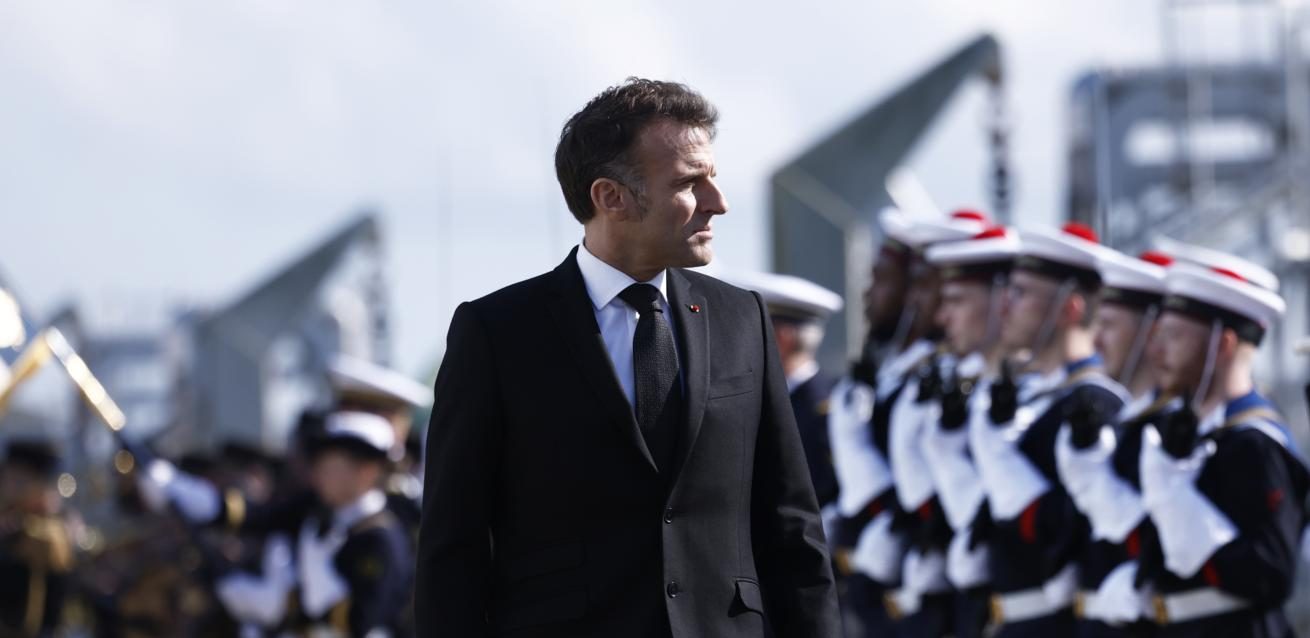
French President Emmanuel Macron presented the concept of forward deterrence on March 2, 2026, during a speech at the Île Longue strategic nuclear submarine base. The proposed model allows European partners to participate in French nuclear deterrence exercises, provide conventional military support and, under certain circumstances, temporarily host French strategic air forces on the territory of allied states.
At the same time, Macron outlined the fundamental limitations of the initiative. Paris does not intend to share with its partners the authority to make the final decision on nuclear use, engage in joint nuclear planning, or allow them to participate in defining France’s “vital interests.” France is also not offering its allies a formal security guarantee comparable to U.S. extended nuclear deterrence. Any decision to cross the nuclear threshold will remain, under all circumstances, the exclusive prerogative of the French president.
The Franco-German Track as the Central Element of the Initiative
On the day of Macron’s speech, France and Germany announced the establishment of a bilateral high-level nuclear steering group. Its tasks include doctrinal dialogue and coordination between French nuclear forces and German and European conventional capabilities, missile and air defense systems, early-warning systems, and long-range precision-strike capabilities.
Following a meeting of the Franco-German Defense and Security Council on July 17, the two sides reaffirmed their intention to develop a common strategic culture and greater complementarity between nuclear and conventional deterrence capabilities. Chancellor Friedrich Merz described the process as the beginning of a “new common path” that could eventually lead to the development of new doctrinal approaches. At the same time, the German side has consistently emphasized that cooperation with France should complement, rather than replace, U.S. security guarantees, Germany’s participation in NATO’s Nuclear Planning Group, and the existing mechanisms of the North Atlantic Alliance.
Expansion of the Circle of European Partners
In his March speech, Macron named Belgium, Denmark, Germany, Greece, the Netherlands, Poland, and Sweden as the first non-nuclear partners in the initiative. Norway subsequently joined the process. In May 2026, Paris and Oslo signed the Narvik Agreement on mutual defense, which includes Norway’s participation in consultations on the role of the French nuclear deterrent in ensuring European security.
The United Kingdom occupies a special position because, unlike the other partners, it possesses nuclear weapons of its own. In July 2025, Paris and London adopted the Northwood Declaration, confirming the possibility of coordinating their two independent nuclear forces and establishing a separate bilateral steering group. Its first meeting took place in December 2025, while British representatives attended the French strategic aviation exercise Operation Poker for the first time.
Finland and Lithuania have also shown interest in closer involvement in European nuclear deterrence, although by mid-July they were not among Paris’s formal partners. The Finnish parliament removed legislative restrictions that had previously prevented the possible presence or transit of nuclear weapons during a crisis. In Lithuania, political leaders have begun discussing the repeal of Article 137 of the Constitution, which prohibits the deployment of weapons of mass destruction and foreign military bases.
The degree of participation in the initiative varies considerably from country to country. Germany, the United Kingdom, Sweden, and Poland already have dedicated bilateral formats, while other states remain limited to consultations and domestic discussions about the desirability of a European dimension of deterrence.
The growing number of interested countries indicates that there is demand among European states for alternative security guarantees, as well as an ongoing debate within Europe about the future of deterrence on the continent.
Institutional Constraints of the French Proposal
The principal feature of “forward deterrence” is that it combines broader allied participation with the preservation of exclusive French autonomy. Partners could potentially provide airfields, escort and refueling aircraft, intelligence capabilities, early-warning assets, and air-defense systems.
In this respect, the French model differs from the NATO model. Non-nuclear members of the North Atlantic Alliance are represented in the Nuclear Planning Group, participate in consultations, and have an opportunity to communicate their own interests to the United States and the United Kingdom.
Bilateral nuclear steering groups between Paris and its allies are emerging as the institutionalized form of cooperation within the initiative. The first meeting of the Franco-Swedish group took place in Paris on April 23, 2026, when the two sides agreed on a roadmap for further cooperation. On July 10, French and Polish representatives held a similar meeting involving senior diplomats, military officials, and defense ministry personnel.
As some researchers have noted, this approach enables France to preserve its central role and tailor cooperation to the needs of each individual partner. At the same time, it creates an asymmetric structure in which Paris has full information about all bilateral negotiations, while its partners are not necessarily aware of the content of France’s arrangements with other countries. Some Western diplomats have also noted that formal regional mechanisms for coordinating forward deterrence policies, for example, in Northern Europe, have so far not been established because they could potentially emerge as competing mechanisms to NATO’s Nuclear Planning Group, something Paris seeks to avoid.
As a result, the initiative is developing a hierarchy of different levels of participation: the United Kingdom acts as a special nuclear ally, Germany as the principal non-nuclear partner, while cooperation with other states remains more limited.
The question of the initiative’s compatibility with NATO mechanisms has also not been fully resolved. Non-nuclear states possess limited numbers of aircraft, refueling assets, intelligence capabilities, and infrastructure that can be used to support nuclear operations. In a crisis, an ally could theoretically receive simultaneous requests to provide such capabilities from both NATO and France. Moreover, at the doctrinal level, France, unlike NATO,does not support the concept of flexible nuclear response, and French approaches to escalation management do not fully coincide with those of the North Atlantic Alliance.
French domestic politics represents another source of uncertainty. The 2027 presidential election will determine whether “forward deterrence” becomes a lasting feature of French defense policy or remains primarily an initiative associated with Emmanuel Macron. Representatives of the National Rally are critical of extending French deterrence to European partners. European states therefore have an interest in institutionalizing the arrangements already reached before a change of government in Paris.
Expert and Political Debate in Germany
Within the German expert community, a general understanding has emerged that dialogue with France is necessary, although assessments of its desirability differ considerably.
Josef de Weck, Elias Rieken, Jakob Ross, and Shahin Vallée, writing in Internationale Politik Quarterly, view the issue of European deterrence as central to European defense integration. In their assessment, as long as Germany remains entirely dependent on the U.S. nuclear umbrella, its strategic orientation will remain predominantly transatlantic, while European rearmament risks becoming little more than a collection of uncoordinated national programs.
The authors propose establishing a permanent and structured dialogue among France, Germany, and, if possible, the United Kingdom. At the same time, a future system should not be presented by Paris as a predetermined “take it or leave it” model. Non-nuclear partners should be given genuine ownership in shaping the policy, even if the final decision on the use of French nuclear weapons remains with the French president.
Supporters of deeper cooperation argue that nuclear dialogue could bring the strategic cultures of Paris and Berlin closer together. Such dialogue should also take account of long-range precision weapons, missile defense, early warning, escalation management, and the interaction between nuclear and conventional forces. Trust developed in the nuclear sphere could therefore contribute to broader defense cooperation and the development of a shared doctrine.
A more cautious position is taken by Ulrich Kühn, Head of Arms Control and Emerging Technologies at the Institute for Peace Research and Security Policy at the University of Hamburg. He supports the opening of negotiations but points to Germany’s lack of a clear understanding of their ultimate objective.
According to Kühn, the creation of a fully autonomous European nuclear umbrella or a genuinely joint deterrence system is unlikely. The real question is whether France is prepared to defend its European partners and whether it possesses sufficient numbers of warheads, aircraft, and other delivery systems to deter Russia. An expanded French role would require additional resources and probably an increase in the size of its arsenal, inevitably raising the question of German financing and the degree of political influence Berlin should receive in return.
Kühn considers the NATO model more viable for the time being, as it combines strategic forces, forward deployment of nuclear weapons, and allied participation in nuclear planning. France currently rejects the replication of such a system. Kühn also doubts whether Paris possesses a sufficiently broad range of capabilities to respond adequately to a limited conflict, for example in the Baltic region.
A similar, although somewhat more moderate, position is taken by Lydia Wachs and Liviu Horovitz of the Berlin-based German Institute for International and Security Affairs (SWP). They argue that replacing the U.S. guarantee with the French nuclear deterrent would encounter serious political and military-technical obstacles. A more realistic scenario would involve strengthening France’s role as an additional component of Western deterrence through expanded consultations, joint scenario analysis, and German participation in French exercises.
At the same time, Berlin needs to define in advance its own objectives and the costs it is prepared to bear in pursuing such cooperation. Paris may expect Germany to publicly recognize the special role of the French arsenal and to adjust Germany’s traditional approaches to nuclear disarmament. In return, Germany could seek a greater role in bilateral consultations and a gradual integration of French policy with NATO’s nuclear mechanisms.
German debate therefore revolves around three main issues. First, what role should Germany seek within the French initiative: should it demand greater influence over decision-making and nuclear planning in exchange for financial contributions, and should it seek the development of joint doctrinal approaches to deterrence? Second, if Germany assumes a more ambitious role, is it prepared to reconsider its approaches to nuclear disarmament? Third, how does Germany assess the role and necessity of nuclear deterrence on the European continent in relation to conventional deterrence?
The future parameters of Franco-German cooperation will depend on the answers to these questions.
Key words: strategic stability, arms control, forward deterrence, France
AC
26/08/10 – F8/PASH
