
MULTI-VECTORIALITY AND TRADITIONS: HOW GULF MONARCHIES ARE CHANGING THEMSELVES, EACH OTHER, AND THE MIDDLE EAST


ARABIAN MONARCHIES OF THE GULF IN THE 21ST CENTURY: REGIONAL AND GLOBAL ASPECTS OF FOREIGN POLICY
Elena Melkumyan
Institute of Oriental Studies RAS, 2023.
ISBN: 978-5-907671-48-5
(published in Russian)
URL: https://book.ivran.ru/book?id=5430&from=1061
The monograph “Arabian Monarchies of the Gulf in the 21st Century: Regional and Global Aspects of Foreign Policy” by Dr. Elena Melkumyan, as the title implies, focuses on the changes that have taken place in the Gulf monarchies over the current century. The examination focuses on new trends in building bilateral and multilateral contacts as well as the development paradigms of the regional states.
The book consists of four parts (sections), each of which focuses on a separate aspect of the development of the Arabian monarchies, allowing for the formation of a holistic picture of the situation in the Gulf region and adjacent subregions.
The first section (“Paradigms of Development in the Gulf Monarchies”) provides a thorough introduction. In it, Dr. Melkumyan demonstrates the historical, cultural, and economic diversity of the Gulf states (presenting each monarchy as a unique player with its own national identity, long-term goals, and distinct perspective on regional issues).
At the same time, despite their diversity, these monarchies share common views and aspirations. Among these, for example, is the shared desire to wean themselves off oil (and in some cases, gas) needle and transform their economies into modern ones, infused with digital technologies and cutting-edge solutions. Some states of the Gulf (Saudi Arabia, the UAE) have made more progress in this area than their neighbours, while others (for example, Kuwait) are only just picking up the pace.
But, one way or another, each ruling house has already determined what it wants to see for its country in the near future. The “image of the future” outlined by the Gulf monarchies in their long-term political and economic reform strategies, “Vision”[1], is formed by ambitious goals in energy, healthcare, finance, and digitalization.
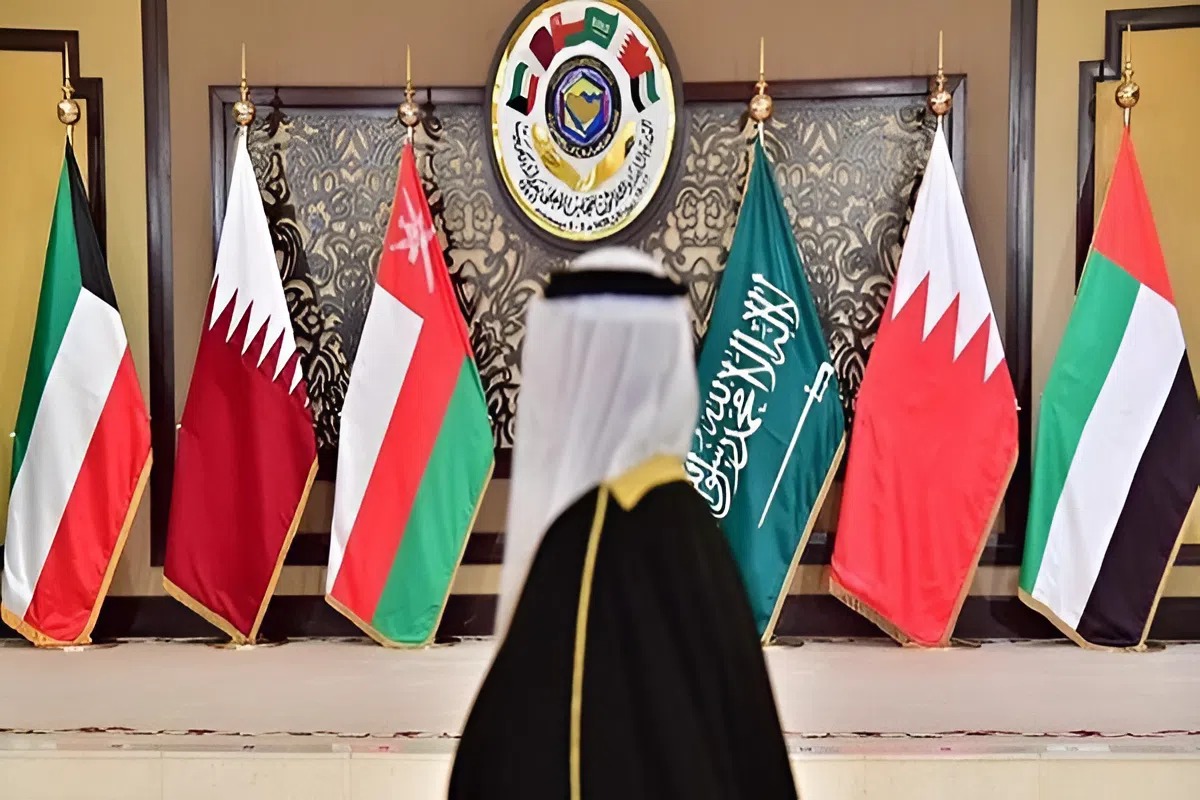
The second section (“New Trends in the Gulf Cooperation Council’s Activities”) is entirely devoted to the Gulf Cooperation Council (GCC). In addition to an extensive historical overview explaining the historical, political, and economic context in which the Council was formed and how its position and scope of objectives have evolved over time, the book examines in detail its institutional structure, the Arabian monarchies’ path to recognizing the importance of expanding and developing this integration platform, and the key constraints that hindered its accelerated development.
The Qatar diplomatic crisis, which lasted from 2017 to 2021 and became one of the most significant challenges facing the GCC since its inception, has also received a lot of attention. Doha and other Gulf states have not completely forgotten the crisis, even though the Arabian monarchies first managed to come to an amicable agreement. It is undoubtedly helpful to remind ourselves of the lessons learned from the Crisis at a time when some Middle Eastern groups are once again trying to paint Qatar as the primary source of unrest and terrorism funding.
In analyzing the GCC’s development, Dr. Melkumyan doesn’t dwell on the past. On the contrary, she thoroughly demonstrates that the Council is dynamic and continues to evolve. The Arabian monarchies are seeking new approaches to deepening cooperation in the military, economic, and scientific-technical spheres, striving to transform the GCC into a magnet for foreign capital and, more importantly, a fulcrum for the Gulf monarchies in building a new security architecture in the Middle East.
In the third section (“Policy in the Middle East: Relying on Pragmatism”), the author conducts a kind of audit of the regional situation – focusing attention on the dynamics of relations between the Gulf monarchies and Iran and Israel (including the first manifestations of new approaches to interaction with these countries), and the evolution of attitudes toward the Syrian and Yemeni conflicts.
Although the monograph presents the course of the conflicts in rather general terms (partly because the topic is covered in separate monographs by researchers at the Institute of Oriental Studies RAS[2]), it does contain valuable insights. For example, in describing the Syrian crisis, the author equivocates and points out that some Arabian monarchies were mentally prepared for the fall of Bashar al-Assad’s regime as early as 2023 and had a contingency plan in place.
Another important point that Dr. Melkumyan makes is the connection between intra-GCC relations and positive developments in key regional conflicts. Despite the region’s characteristic mutual suspicion, Arabian monarchies are increasingly less inclined to seek out states to play the role of “bogeyman” (which has been primarily Iran over the past decade), preferring to focus on jointly countering more abstract threats (terrorism, hacking, etc.). Joint counteraction to these threats could also serve as an additional bridge in dialogue with the outside world.
The final section, “Changing Approaches to Interacting with Global Powers”, focuses on the interactions of the Gulf monarchies with the three superpowers – the United States, Russia, and China.
Given that all of the Gulf monarchies are Washington’s regional allies (and Qatar and Bahrain are major non-NATO allies), and that US military installations are located on their soil (such as Al Udeid Air Base in Qatar, Eskan Village Air Base and Jenkins Rear Air Base in Saudi Arabia, and air bases in Masirah and Thumrait in Oman, among others), cooperation with the US is most thoroughly investigated. However, Dr. Melkumyan makes it apparent that the Gulf ruling houses are not Washington’s “obedient satellites: (as was formerly popular to call them in the media) and that the Gulf region is not a US playground. The Arabian monarchies, on the other hand, aim for a multi-vector strategy and pursue relationships with all superpowers, not only the USA.
Russia serves as a prime example in this regard, as its relations with the Gulf monarchies have long been described as “jerky and chaotic”. Moscow has been able to forge strong relationships with the majority of the monarchies and carve out a position in the markets of the area by adhering to the Arabian multi-vector policy (including those that the GCC countries are focused on while restructuring their national economies[3]).
China is something of a dark horse in this race. Its influence in the Gulf region is, at first glance, limited to the “One Belt, One Road” megaproject. Dr. Melkumyan consistently dispels this belief, pointing to the growing military cooperation between Beijing and the Arabian monarchies, as well as the intensifying competition between the US and China for the right to play a leading role in the Gulf security sector. And while Washington still holds the military lead, Beijing is rapidly closing the gap.
Although the monograph’s storyline may at first seem somewhat disjointed (the author sometimes jumps ahead a bit, sometimes backtracks several decades when exploring certain themes), this is the only correct strategy for presenting such a complex topic. The roots of many of the decisions made by Arabian monarchies today lie “in yesterday”. And in some cases, even in “the day before yesterday”.
Of course, given the rapidly changing situation (not only in the Gulf region, but also in the Middle East and globally), some aspects seem, from today’s perspective, only partially explored. For example, the monograph only sketches the humanitarian activities of the Arabian monarchies in broad strokes, without a detailed analysis of the strategies of key players. Their initial steps into artificial intelligence and other high-tech fields are also described in general terms.
However, such omissions are not a flaw in the work. Quite the contrary, they encourage readers to independently seek answers to their questions in external sources and shape their own understanding of the balance of power in a given area. Furthermore, this monograph remains an excellent starting point for further research and exploration of specific issues only briefly mentioned in the work. Overall, Dr. Melkumyan has created a good foundation for a comprehensive introduction to the topic, both for “amateurs” (those just discovering the Gulf region) and for sophisticated readers seeking new facets of the development of the Arabian monarchies.
[1] Also, in some countries, their own “Vision” programs have been adopted at the level of individual entities (for example, Dubai Vision 2030 in the UAE).
[2] You can find more detailed information about the catalogue of publications of the Institute of Oriental Studies RAS via the link: https://book.ivran.ru/ (in Russ.) – Editor’s note.
[3] Read more here: On Both Sides of the Persian Gulf: The Growth of the Region’s High-Tech Industry and Russia’s Interests // PIR Center, 2024. URL: https://pircenter.org/editions/38-2024-po-obe-storony-persidskogo-zaliva-razvitie-vysokotehnologichnogo-biznesa-v-regione-i-interesy-rossii/ (in Russ.) and From the Gulf to Sub-Saharan Africa: Digital Technology Development and Russia’s Interests // PIR Center, 2025. URL: https://pircenter.org/wp-content/uploads/2025/03/25-03-03-REP-TSU-on-AFR-GULF.pdf (in Russ.) – Editor’s note.
