
PIR-Post № 2 (16), 2026. In the skies over the Gulf: most of Iran’s targets in the Persian Gulf have been on UAE territory

March 6, 2026
IIn the escalation of the Iran-Israel conflict, among all the Persian Gulf states the UAE has taken the heaviest bombardment in terms of the number of missiles and drones launched against it. According to the UAE Ministry of Defense, as of 3 March, from 28 February onward 186 ballistic missiles and 812 drones were launched toward the country; 172 missiles and 755 drones were intercepted, 13 missiles fell into the sea, and one missile struck a US military base in Abu Dhabi. From the first days of the attacks, experts and media agreed that the UAE air and missile defense system, which consists mainly of US‑made missiles and radars, has proved its effectiveness. There were attempts to calculate how many days the interceptor missile stocks would last given the high tempo of Iranian attacks. Bloomberg, for instance, published an article arguing that a single Patriot interceptor missile costs around 4 million dollars, which is tens of times higher than the manufacturing cost of an Iranian Shahed‑type drone, estimated at roughly 20 thousand dollars. The UAE government responded the next day, calling Bloomberg’s calculations “inaccurate” and urging not to spread false rumours. The article is indeed not entirely correct in its math. Anyone currently in the UAE can observe daily that drones are not intercepted mainly by heavy ground launchers, but by F‑16 Block 60 and Mirage 2000 aircraft using air‑to‑air missiles. THAAD, at about 15 million dollars per missile, and Patriot PAC‑3, at about 4 to 5 million dollars, are better suited for intercepting ballistic missiles. Therefore, when analyzing Emirati air and missile defense, it makes sense to distinguish between two types of targets: ballistic missiles, which are intercepted by THAAD and Patriot, and cruise missiles and drones, which are intercepted by fighter aircrafts
Air defense against ballistic threats
Open sources suggest that the UAE may have up to 1,000 interceptor missiles deployed on THAAD and Patriot systems. The Probability of Kill, that is the chance that a given interceptor will hit and destroy its target, for Patriot PAC‑2 and PAC‑3 is usually quoted at between 0.6 and 0.9, although the reliability of these figures has often been questioned because there have been relatively few realistic tests. Nevertheless, using these numbers implies that roughly 2.5 interceptors are needed per ballistic threat. Taking into account that air‑defense batteries belonging to the United States are also deployed on UAE territory, meaning the Emiratis are not using only their own launchers, European expert F. Hoffmann estimates that the UAE may have expended around 200 of its own missiles to intercept 186 Iranian missiles, which could represent about 20 to 40 percent of its total arsenal. For example, six ballistic missiles were intercepted on Thursday and three on Wednesday.
This indicates that the UAE’s stocks, like those of other Gulf countries, may indeed have been significantly reduced. However, claims that missiles could be exhausted within the next three or four days are incorrect, especially given that the frequency of ballistic‑missile strikes has noticeably decreased, even though there is still reason for concern, since according to the latest Israel Defense Forces assessments Iran’s ballistic‑missile arsenal may amount to roughly 2,500 missiles.
As for drone interception, as already noted, the UAE uses air‑launched missiles whose unit cost is significantly lower than that of surface‑to‑air interceptors, although still not comparable to the cost of producing drones. According to open data, the UAE Armed Forces employ several types of air‑to‑air missiles for these tasks, including:
Airborne interception provides flexibility, mobility, and the ability to respond outside the engagement zone of a specific ground‑based air‑defense battery. In addition, stocks of air‑to‑air missiles are normally built up for air‑combat missions, creating a broader reserve for operational use. There is no exact public figure for the number of air‑to‑air missiles in UAE service, as such data is typically classified. However, a reasonable estimate can be made based on the number of aircraft and typical ammunition norms. According to available sources, the UAE Air Force has two main types of combat aircraft: roughly 78 F‑16E/F Desert Falcons and around 55 to 60 Dassault Mirage 2000‑9s. This gives approximately 130 to 140 fighters.
In most air forces worldwide, air‑to‑air missile inventories typically amount to about 15 to 20 missiles per aircraft, including those on the jets, in storage, and reserved for training and potential combat. Multiplying the number of fighters by this ratio yields an approximate stock of about 2,000 to 2,800 missiles.
It is noteworthy that between 2026 and 2031 the UAE is also scheduled to receive about 80 Rafale fighters. France appears to have decided to act ahead of schedule: on 3 March it announced the deployment of Rafales to the UAE to protect its naval and air bases from drones.
Iran’s targets in the UAE
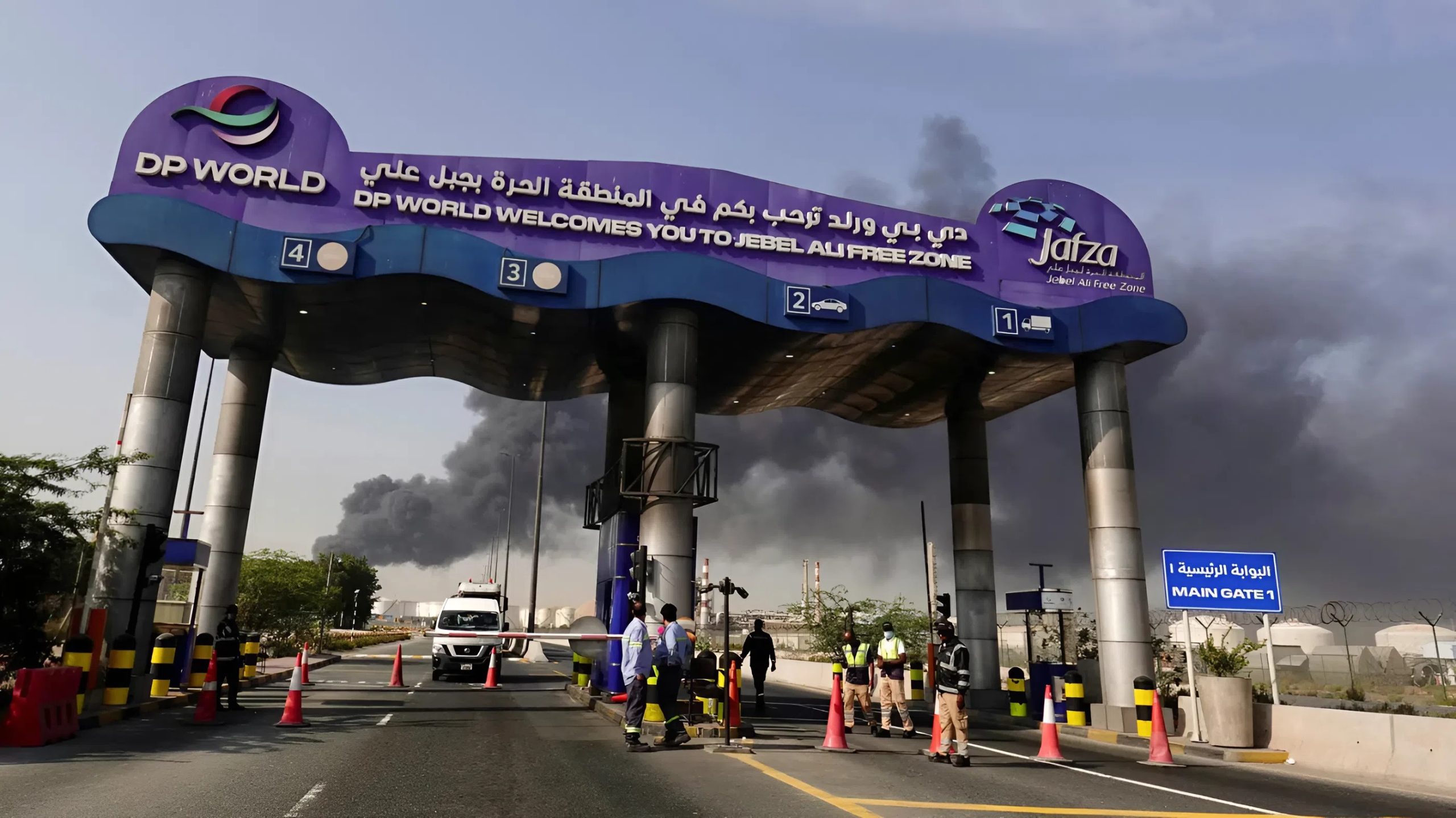
So far, Iranian forces have directed drone and missile strikes against several types of targets on UAE territory, primarily facilities of economic, infrastructure, or military significance. Some of the most prominent targets have been energy facilities, for example the Mussafah industrial area in Abu Dhabi, where drones hit fuel tanks near ADNOC infrastructure. Aviation infrastructure has also been under threat, including the international airports in Abu Dhabi and Dubai, where attacks have caused disruption to international air traffic. In addition, strikes and falling debris from interceptions have affected logistics and port facilities such as Jebel Ali port, as well as areas with high international visibility, including Dubai’s tourist and business districts.
Among the US diplomatic and military facilities attacked on UAE territory have been military bases and the US consulate in Dubai. One of the key targets has been Al Dhafra air base near Abu Dhabi, which hosts US air forces and air‑defense systems; reports have also mentioned Al Minhad base, used by the UAE Armed Forces and allied Western contingents. Moreover, a drone struck the parking area of the US consulate in Dubai, causing a fire that was quickly contained.
Overall, the UAE’s air‑defense system, and the country’s broader military‑security architecture, have demonstrated very high effectiveness. Public confidence in the authorities’ actions is strong and combined with strict control over disinformation this helps prevent public panic.
Keywords: Middle East
NPT
E16/SHAH – 26/03/06
