
№ 17 (65), 2026. A tour was held of Bunker 703 – the former special archive of the Ministry of Foreign Affairs
May 13, 2026
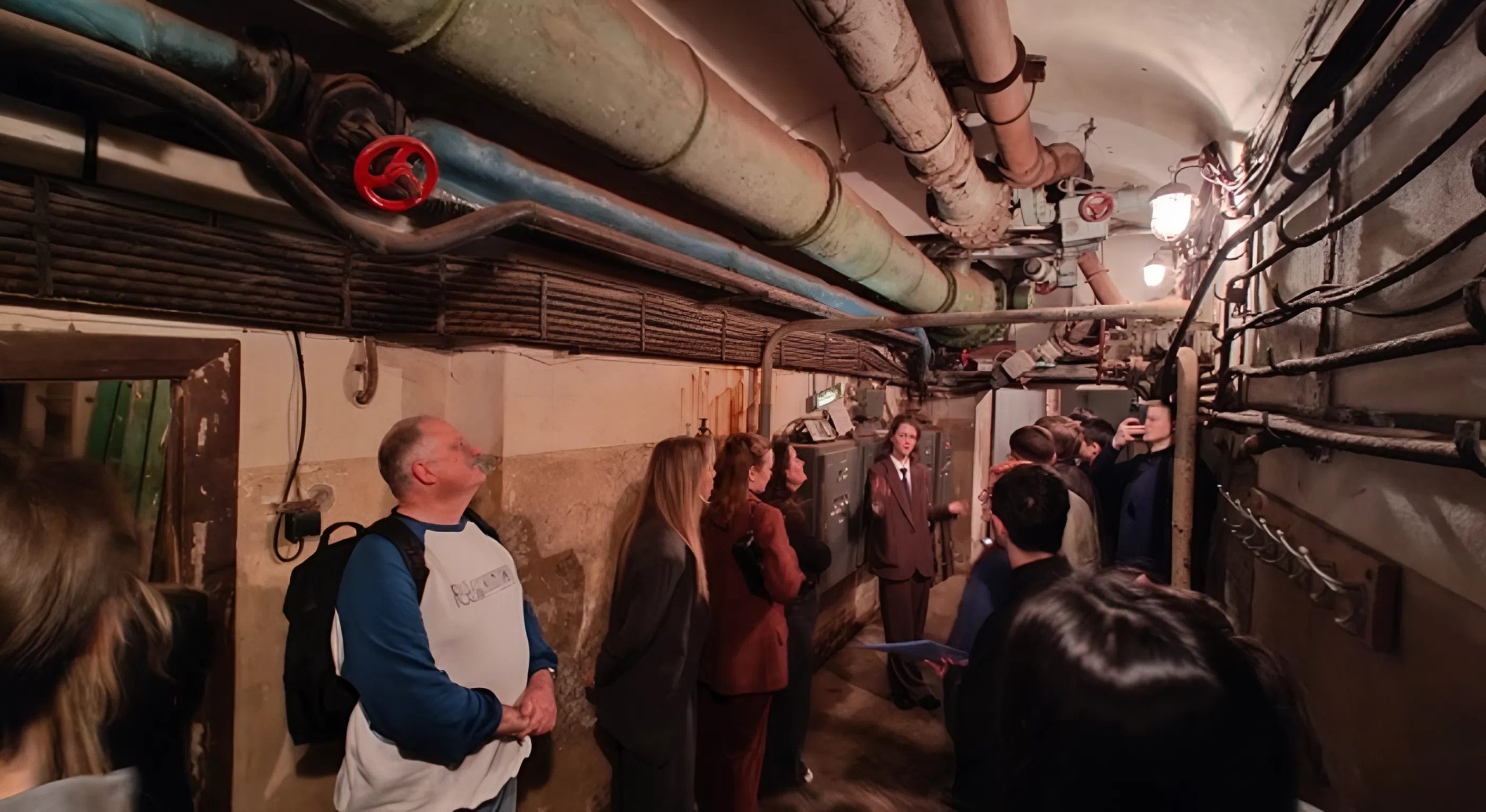
MOSCOW. MAY 13, 2026. PIR-PRESS. «Has anyone ever been inside a facility like this? If you had come here in 2017, no one would have told you there was anything underground. According to the story, there used to be ‘restoration workshops’ here. But, of course, that wasn’t the case. No workers ever came here, and nothing was ever restored. The building itself was designed to be completely nondescript and inscrutable; even the barbed wire – which, in theory, might have hinted at the facility’s special purpose – was hidden behind concrete walls. “Such buildings are called camouflage structures», – Ms. Irina Klimenkova, Research Fellow at the Center for the Study of Modern Fortifications and Underground Structures, a student of the MA Program International Security (implemented by MGIMO University jointly with PIR Center).
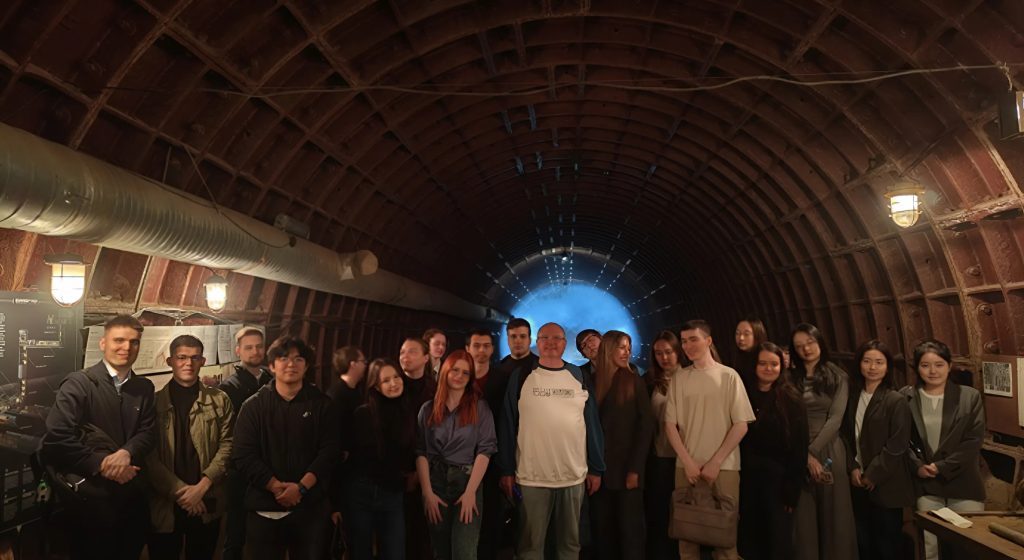
A tour was held of Bunker 703 – the former special archive of the Ministry of Foreign Affairs of the USSR (later the Ministry of Foreign Affairs of the Russian Federation) following the MA Program International Security. The tour was attended by students of the MA Program International Security, as well as staff members, interns, and trainees of PIR Center. The tour was led by Ms. Irina Klimenkova, a Research Fellow at the Center for the Study of Modern Fortifications and Underground Structures and a student of the MA Program International Security.
Bunker 703 is a deep-buried fortification structure built in late 1953 to serve as a secure repository for documents of particular state importance. Today, the bunker functions as a museum located 43 meters underground.
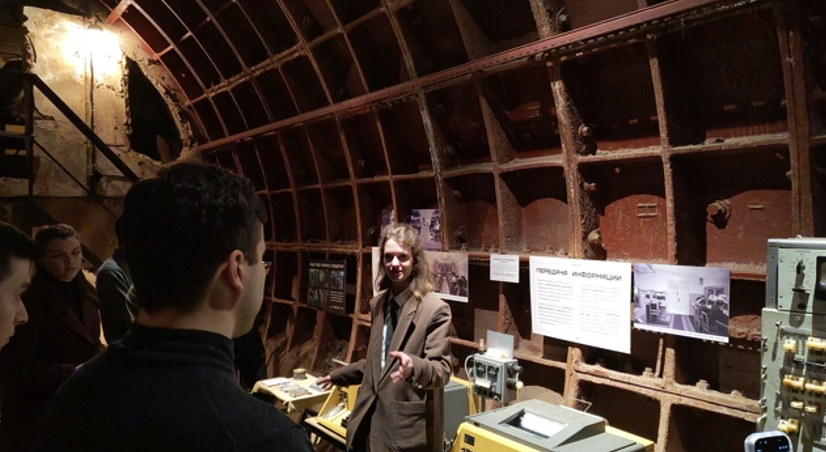
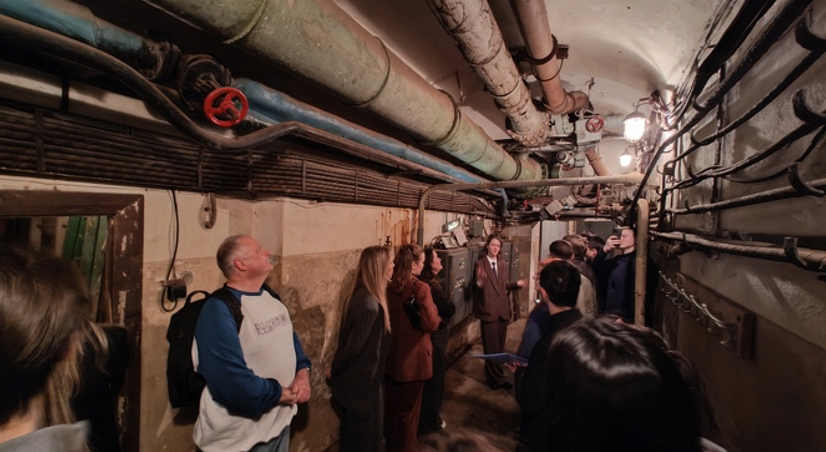
“Construction of the Foreign Ministry’s special repository lasted throughout the 1950s, and in November 1961 the facility was commissioned; at that time, all the valuable documents were brought in, where they remained until January 1, 2005. That was when the accident occurred, and it became clear to the staff that water and valuable documentation were incompatible, so everything was quickly evacuated, and the facility underwent reconstruction, which continued until 2008. After that, the facility was abandoned for nearly 10 years, its ‘top secret’ classification was removed, and it was handed over to be converted into a museum space,” says Ms. Irina Klimenkova.
The tour participants learned what types of weapons of mass destruction these special fortifications are designed to protect against, and how the protective measures for such structures are organized. Particular attention was paid to systems designed to protect against blast waves, chemical warfare agents, radioactive fallout, and biological agents.
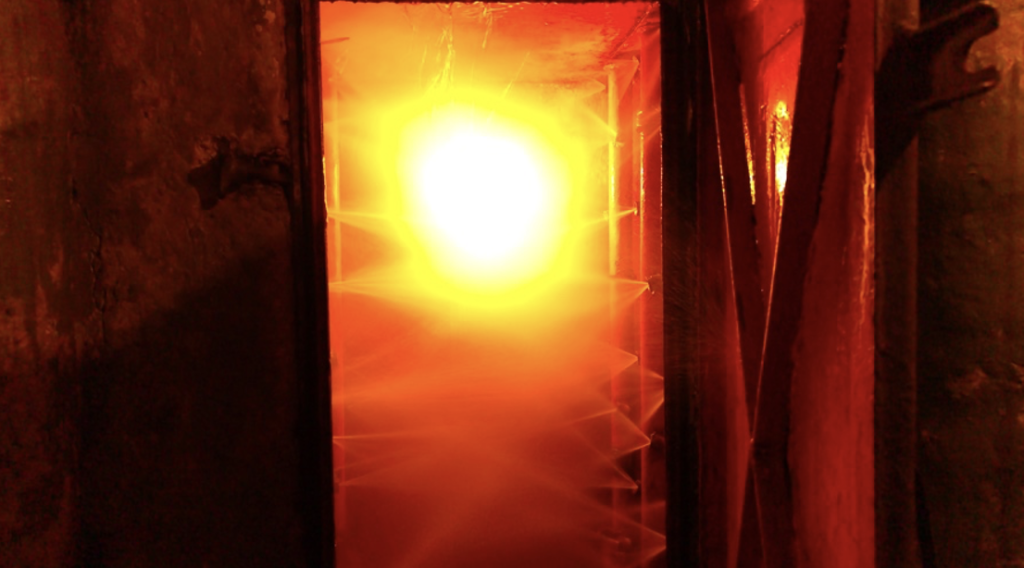
By the 1970s, enemy weapons were already capable of delivering precision strikes against key special facilities, which could have left Moscow without a system to govern the state or control its strategic nuclear forces, emphasizes the Research Fellow at the Center for the Study of Modern Fortifications and Underground Structures. This necessitated the development of new types of special fortifications. Later structures began to utilize shock absorber technology, which consists of springs capable of suspending an entire special facility, thereby protecting it from seismic shock waves. Dozens of such structures remain on active duty to this day.
During the organized tour, the methods of bunker construction in the USSR were discussed in detail. Participants learned why such structures are built and how they help maintain strategic stability, using the historical example of bunker use during the Cold War and the escalation of tensions in the USSR-US relations.
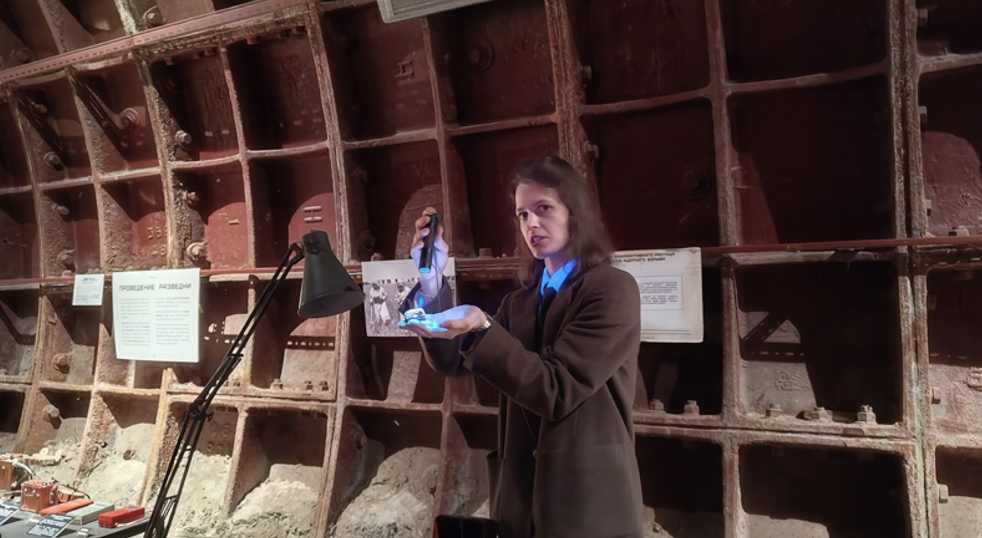
At the end of the tour, students of the MA Program International Security, alongside with staff members of PIR Center, were briefed on methods for surveying an area for contamination and the fundamental principles of life support for personnel stationed at fortified structures.
A photo gallery from the event is available on PIR Center’s website.
Watch the video report from the event on the PIR Center’s channels in social media: Telegram, VK, and MAX (in Russian).
For more information about the fortification and the “Bunker 703” museum, see the PIR Center’s interview with the museum director Mr. Petr Efimenko (in Russian).
Keywords: International security; Fortifications; Defensive structures
NPT
E16/SHAH – 26/05/13
