
№ 47 (95), 2026. PIR Center Report Series: “Missile Programs of the DPRK and the Republic of Korea: Transformation of Strategic Deterrence on the Korean Peninsula in the Second Quarter of the 21st Century”
September 21, 2026
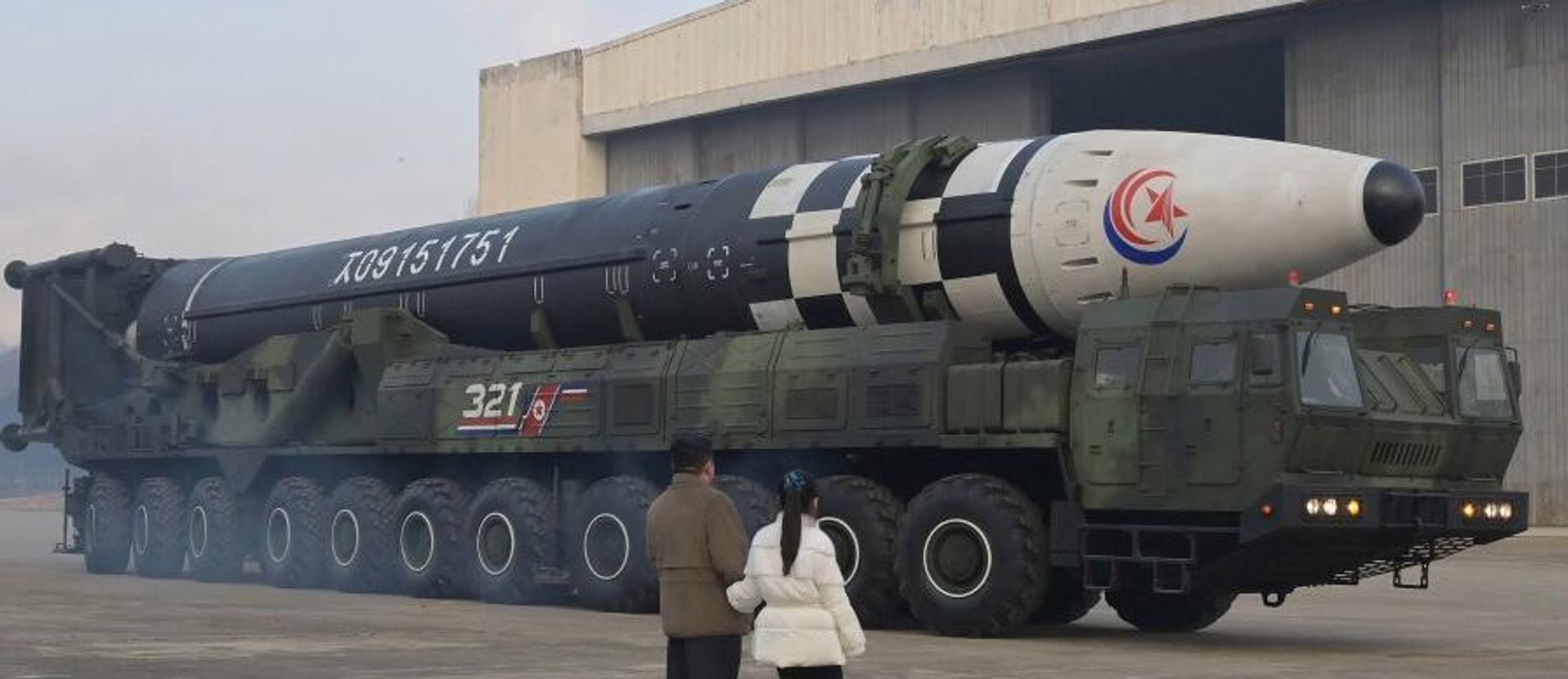
MOSCOW. SEPTEMBER 21, 2026. PIR PRESS. “Contemporary missile rivalry on the Korean Peninsula is defined by the interaction of two distinct models of deterrence: the North Korean model of nuclear deterrence based on the development of a diversified nuclear-missile capability, and the South Korean model of strategic non-nuclear deterrence based on precision-guided munitions, space-based reconnaissance assets, and multi-layered missile defense,” – Mr. Roman Kalinin, PIR Center Research Fellow.
PIR Center is pleased to announce the publication of its new report (in Russian), “Missile Programs of the DPRK and the Republic of Korea: Transformation of Strategic Deterrence on the Korean Peninsula in the Second Quarter of the 21st Century”, prepared by PIR Center Research Fellow Mr. Roman Kalinin. The report is published as part of the PIR Center Reports Series (№ 53) and represents a comprehensive study of the evolution of the missile programs of the two Koreas, their production and testing infrastructure, the military-political factors driving their development, and their impact on the mechanisms of strategic deterrence on the Korean Peninsula and in East Asia.
Work on the report was completed on 30 June 2026. The scientific advisor of the research was Dr. Vladimir Orlov, PhD in Political Science, PIR Center Founding Director and Professor at MGIMO University.
This report analyzes the evolution of the missile programs of the DPRK and the Republic of Korea and their influence on the transformation of strategic deterrence on the Korean Peninsula. It examines the main stages in the development of North Korean and South Korean missile programs, the specific features of the formation of their production and testing infrastructure, as well as the military-political factors that continue to shape the development of missile armaments. Particular attention is paid to the way in which the creation of ballistic missiles of various ranges, submarine-launched ballistic missiles, hypersonic systems, and means of penetrating missile defenses is shaping the current configuration of forces on the Peninsula. The report also examines the consequences of the DPRK’s transformation into a de facto nuclear-weapon state, the lifting of restrictions on the development of South Korean missile technologies, and the formation of new approaches to strategic deterrence – historical processes that directly determine the current state of affairs and the military-political dynamics in the region. Separate attention is given to the impact of the missile rivalry between the two Koreas, which has grown out of the long-term evolution of their programs, on the contemporary military-political situation in East Asia and the regional security architecture.
Key Findings of the Report:
Reviews
“The strong point of the text is its very detailed and careful description of the evolution of the missile programs of the DPRK and the Republic of Korea. The stages of development, sources of technology, the roles of the USSR, China, and the United States are clearly shown, and individual missile systems, their characteristics, and their significance for military policy are thoroughly examined. The section on North Korea is particularly successful: one can see an understanding of how the Scud complex and its North Korean modifications evolved, how the transition to solid-fuel systems, SLBMs, and intercontinental missiles proceeded. There is reliance on specialized research, including analytical centers and databases. This creates confidence in the work and allows it to be used as a reference material”, – Dr. Vadim Kozyulin, PhD in Political Science, Chief Research Fellow at the Center for Military-Political Studies of the Diplomatic Academy of MGIMO University of the Ministry of Foreign Affairs of the Russian Federation, Member of PIR Center Executive Board.
“The findings of the study are of practical significance for assessing the military-political situation on the Korean Peninsula and in the Asia-Pacific region as a whole. They make it possible to better understand the logic of the development of the armed forces of the DPRK and the Republic of Korea, the interrelationship of nuclear and non-nuclear deterrence mechanisms, as well as possible directions of further missile rivalry”, – Dr. Alexander Vorontsov, PhD in History, Head of the Department of Korea and Mongolia at the Institute of Oriental Studies of the Russian Academy of Sciences, Member of PIR Center Advisory Board.
“The author’s work is distinguished by a high scholarly standard, careful selection of empirical material, and elaboration of technical details, as well as a balanced and logical structure. Roman Kalinin has successfully coped with the problem of the shortage of reliable information on the military development and the state of the DPRK’s defense industry and has qualitatively collected available information and analyzed the current state of Pyongyang’s missile program. Of particular value is the author’s systematization of North Korean missile armaments developed and fielded at different historical stages,” – Dr. Valentin Voloshchak, PhD in History, Research Fellow at the Laboratory of Asia-Pacific Studies Institute of History, Archaeology and Ethnology, Far-Eastern Branch of the Russian Academy of Sciences (IHAE FEB RAS).
Keywords: International Security; Nuclear nonproliferation; The Korean Peninsula; The DPRK; The Republic of Korea
NPT
E16/NOS – 26/09/21
