MainPIR Press News№ 62 (110), 2026. PIR Center, together with MGIMO and the Institute of Europe of the Russian Academy of Sciences, held an expert seminar on the topic “The Potential for International Cooperation between Russia and Arctic and Non-Arctic States in the Development of Small Nuclear Power Plants in the Russian Arctic”
№ 62 (110), 2026. PIR Center, together with MGIMO and the Institute of Europe of the Russian Academy of Sciences, held an expert seminar on the topic “The Potential for International Cooperation between Russia and Arctic and Non-Arctic States in the Development of Small Nuclear Power Plants in the Russian Arctic”
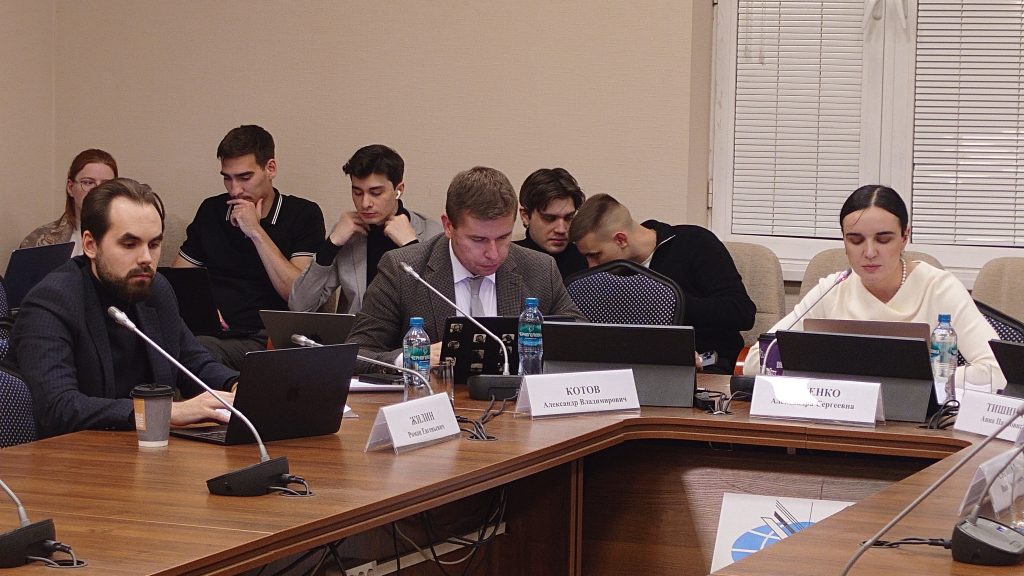
MOSCOW. NOVEMBER 26, 2026. PIR PRESS. “The work done by Anna is not simply a systematic collection of data and an attempt to create new knowledge and a direction for international cooperation. It is an attempt to justify a new style of Russia’s policy, taking into account the development of a new Arctic strategy when truly stable energy supply turns the Northern Sea Route into a more attractive artery and a more predictable international corridor for our partners in Asia, especially those who possess such technologies, and where we could show how necessary it is to develop cooperation with non-Arctic countries, attracting their investment in exchange for participation in our resource projects. Because we understand that foreign countries will enter resource projects in the Russian Arctic zone only if stable energy supply is guaranteed.” – Alexander Kotov, Candidate of Economic Sciences, Leading Research Fellow at the Center for German Studies of the Department of Country Studies of the Institute of Europe of the Russian Academy of Sciences.
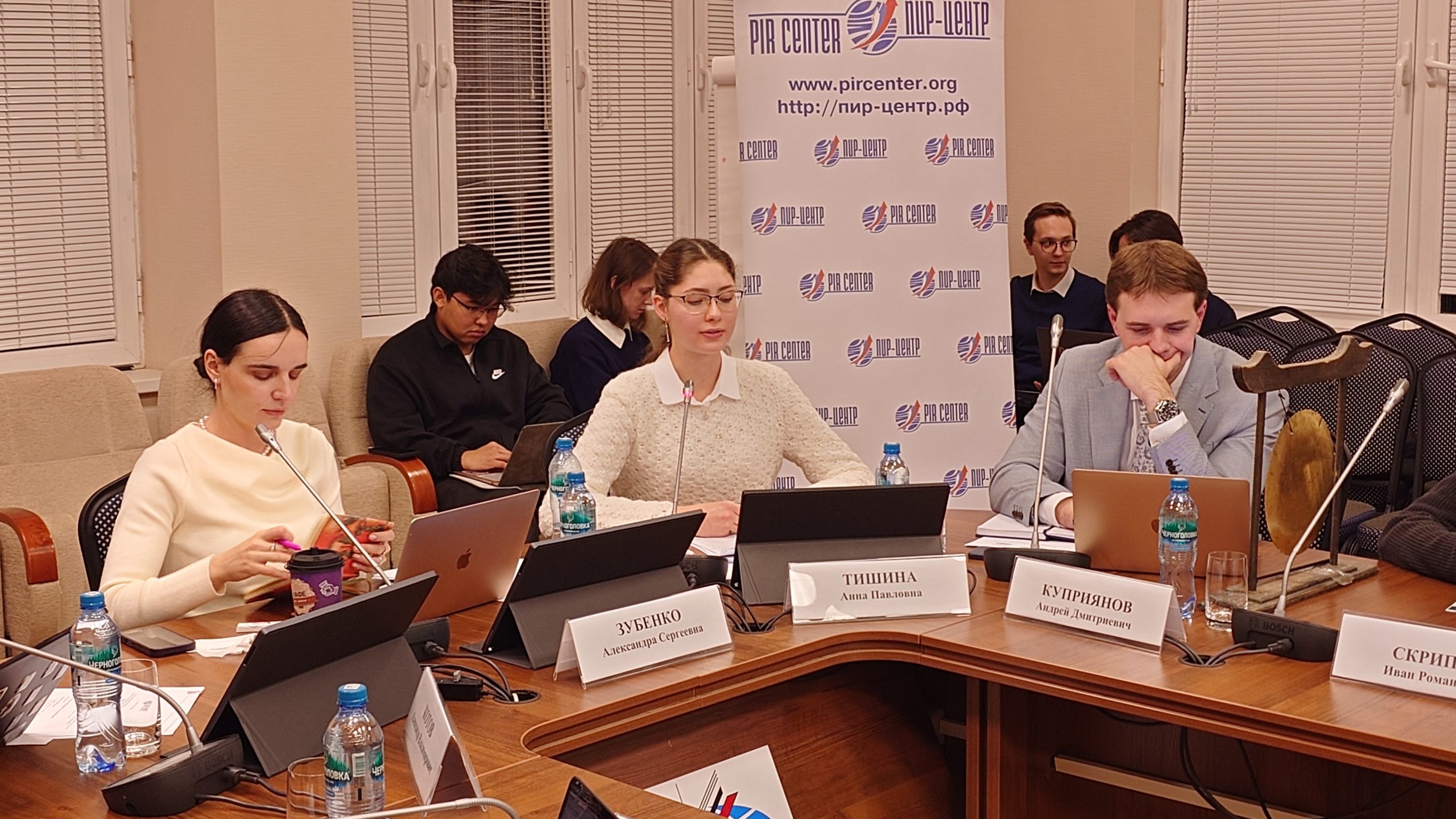
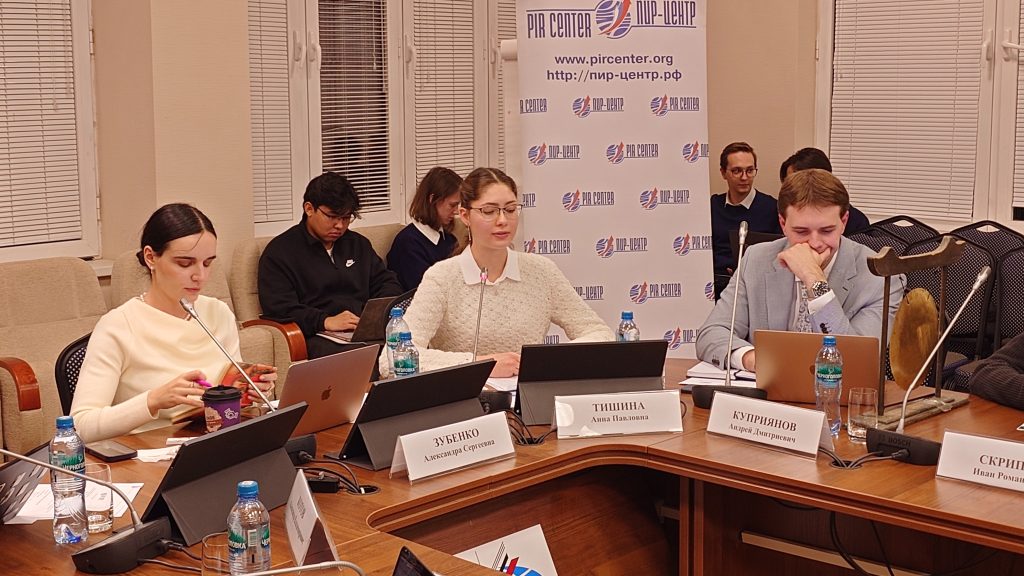
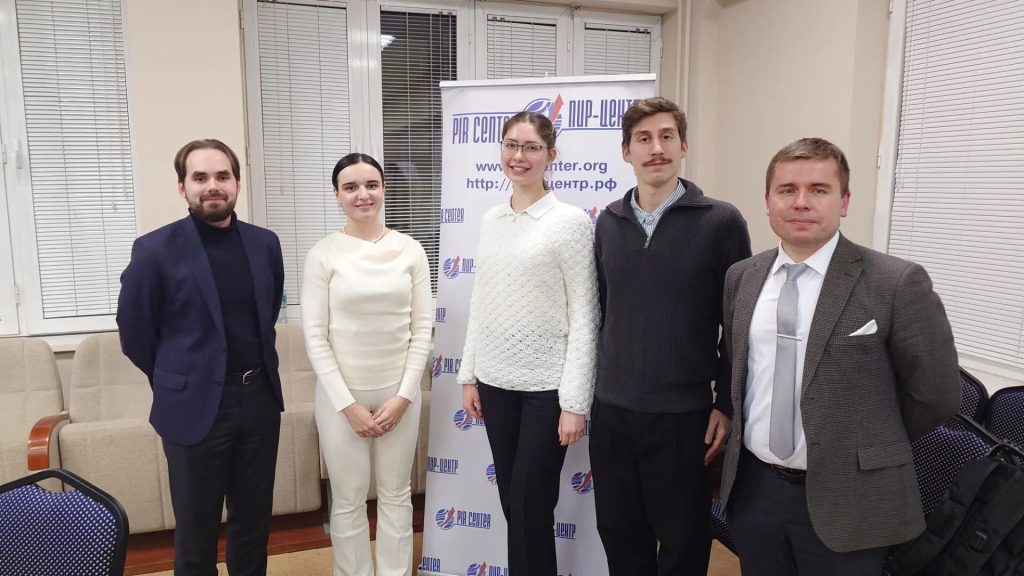
PIR Center, together with MGIMO and with expert assistance provided by the delegation of scientific staff from the Institute of Europe of the Russian Academy of Sciences, held an expert seminar on the topic “The Potential for International Cooperation between Russia and Arctic and Non-Arctic States in the Development of Small Nuclear Power Plants in the Russian Arctic.” The keynote speaker was Anna Tishina, a second-year master’s student in International Relations at Lomonosov Moscow State University and a PIR Center intern.
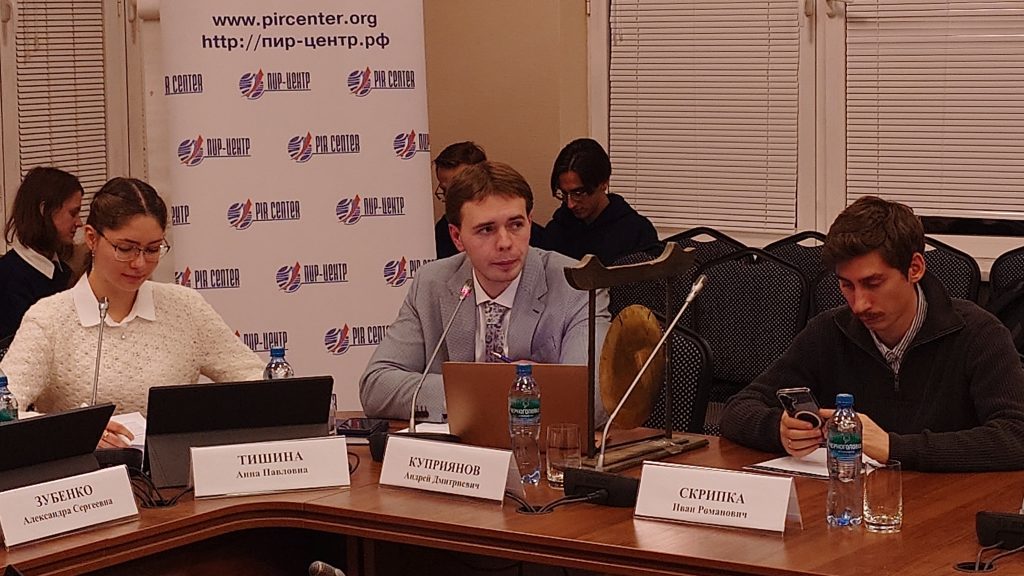
Opening remarks were delivered by Alexandra Zubenko, PIR Center Deputy Director, and Andrey Kupriyanov, a second-year student at the MGIMO and PIR Center’s joint International Security Master’s program.
At the center of the event was the presentation by Anna Tishina, devoted to the analysis of the potential for international cooperation between Russia and Arctic and non-Arctic states in the field of creating small modular nuclear power plants (SMNPs) in the Russian Arctic.
During the presentation, the growing role of nuclear energy in providing sustainable energy supply to remote northern territories was examined. The speaker paid particular attention to the advantages of small modular reactors which make it possible to ensure autonomous and uninterrupted energy supply, reduce dependence on diesel generation, and create additional opportunities for the development of natural resources in the Arctic region.
A separate part of the report was devoted to an analysis of Russia’s experience in developing small modular reactors. The main achievements in the creation of land-based and floating nuclear power installations were presented, including the floating nuclear thermal power plant “Akademik Lomonosov”, as well as promising projects for the deployment of SMNPs in Chukotka and Yakutia.
As part of a comparative analysis, the speaker examined the experience of Arctic and non-Arctic states: Canada, the United States, and Sweden, as well as China, India, and the Republic of Korea in nuclear energy. The technological advantages of each country were outlined, as well as the possibilities for applying their developments in the conditions of the Russian Arctic.
Special attention was paid to existing limitations on international cooperation. Among the main obstacles identified were competition in the global nuclear technology market, issues related to the management of spent nuclear fuel, and the need to develop international safety standards for floating nuclear power plants. In turn, sanctions restrictions and problems with providing high‑assay low‑enriched uranium (HALEU) make relations with Canada, the United States, and Sweden extremely difficult.
Prospects for interaction between Russia, China and India were investigated in a separate way. Despite their mutual interest in nuclear energy, cooperation is complicated by these states’ striving for technological independence and competing for international contracts. As an additional avenue for international cooperation, the possibility of implementing multilateral projects in external places, in particular in Vietnam, with the participation of Russia and the Republic of Korea, was presented.
In conclusion, the speaker noted that the most promising direction for Russia’s international engagement in the field of SMNPs remains the cooperation with China and India; however, its development will depend on the parties’ ability to overcome technological and political constraints. At the same time, full-fledged cooperation with Canada, the United States, and Sweden under current conditions appears significantly constrained.
Expert comments made during the discussion confirmed the relevance and significance of the topic presented, as well as the need for further study of the prospects for international cooperation in the field of small modular reactors.
For example, Alexander Kotov, the academic supervisor and Leading Research Fellow at the Center for German Studies of the Department of Country Studies of the Institute of Europe of the Russian Academy of Sciences, drew attention to the importance of technological sovereignty and the need to view small nuclear reactors not only as a tool for supplying electricity to individual facilities, but also as a factor in the long-term development of the Arctic. In particular, he touched upon issues of international safety standards and the role of the IAEA in shaping common approaches to the operation of new types of reactors.
Ivan Skripka, Research Fellow at the Center for Northern Europe of the Department of Country Studies of the Institute of Europe of the Russian Academy of Sciences, emphasized that the prospects for nuclear cooperation must be considered in the broader context of Russia’s relations with Arctic states. He mentioned existing contradictions in the legal regulation of the Arctic and noted that technological interaction with China and India should not automatically be regarded as problem-free.
In turn, Roman Zhilin, the reviewer, Head of young researchers’ association “The Arctic Community” and Junior Research Fellow at the Institute of Europe of the Russian Academy of Sciences, focused on the economic justification of projects, the legal aspects of their implementation, and the need to take into account the interests of the small-numbered indigenous peoples of the North.
Alexander Sporshev, Senior Lecturer at the Department of European and International Law of Lobachevsky State University of Nizhny Novgorod, addressed issues of secondary sanctions, international licensing, spent nuclear fuel management, and the applicability of international legal norms to floating nuclear installations.
Andrey Kupriyanov, the moderator, noted the importance of international interaction on this topic, mentioning the ATLAS (Atomic Technologies Licensed for Applications at Sea) program, which is being implemented under the auspices of the IAEA. He also emphasized the significance of partnership between states within the framework of the Northern Sea Route, noting the launch of the first South Korean container ship, which was carried out with the participation of Rosatom.
Artem Astvatsaturov, a second-year student at the MGIMO and PIR Center’s joint International Security Master’s program, mentioned New Zealand’s involvement in an International Cooperative Engagement Program for Polar Research, which aims to pool resources and exchange data to advance polar sciences and technologies in the extreme conditions of the Arctic and Antarctic.
In the subsequent discussion, the invited experts and participants exchanged views on the issues outlined in the report, the prospects for the development of SMNPs, and the existing limitations to international technological cooperation. The discussion was very rich and constructive, encompassing not only practical data on the energy component of the countries considered in the research but also an expert assessment of the prospects for cooperation between the countries in the field of small modular reactors.
Keywords: small modular nuclear power plant; the Arctic region; nuclear energy; peaceful atom