MainPIR Press News№ 51 (99), 2026. PIR Center jointly with MGIMO University hosted the XI International Timerbaev Debates titled “Would a World with a Greater Number of Nuclear Powers Be More Stable and Predictable Than a World Founded on the Nuclear Non-Proliferation Regime?”
№ 51 (99), 2026. PIR Center jointly with MGIMO University hosted the XI International Timerbaev Debates titled “Would a World with a Greater Number of Nuclear Powers Be More Stable and Predictable Than a World Founded on the Nuclear Non-Proliferation Regime?”
MOSCOW. SEPTEMBER 30, 2026. PIR PRESS. “I am very pleased that, for the eleventh time since Roland Timerbaev’s passing in 2019, we have the opportunity to realise – I would venture to assert – his vision, namely that questions relating to nuclear proliferation should be approached not in a doctrinaire manner, but through discussion and debate,” said Vladimir Orlov, Director and Founder of PIR Center.
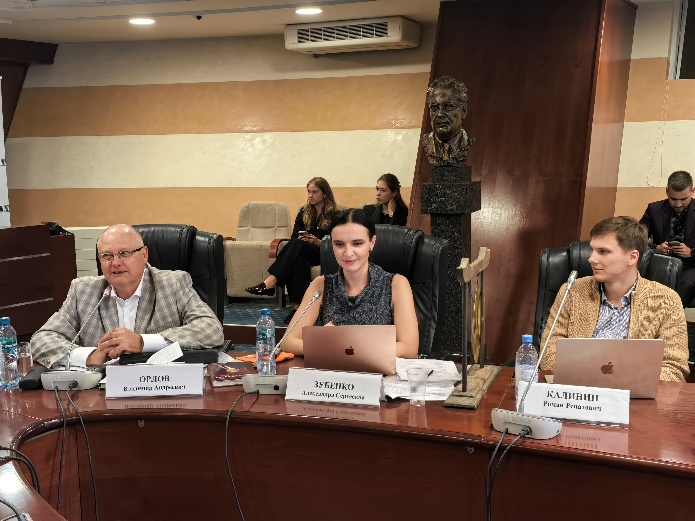
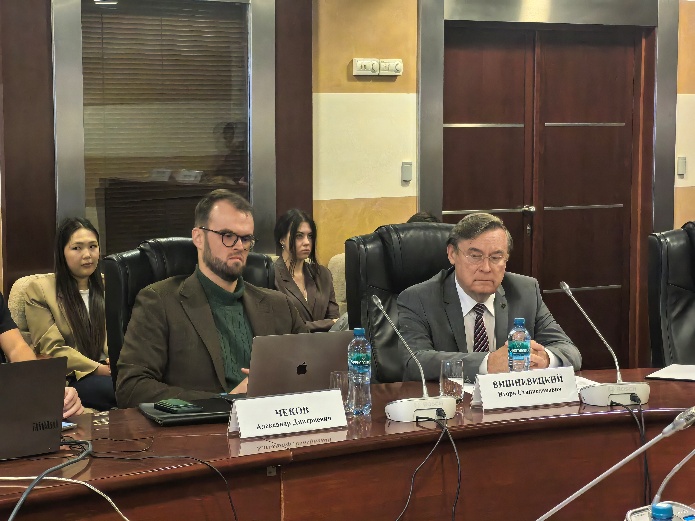
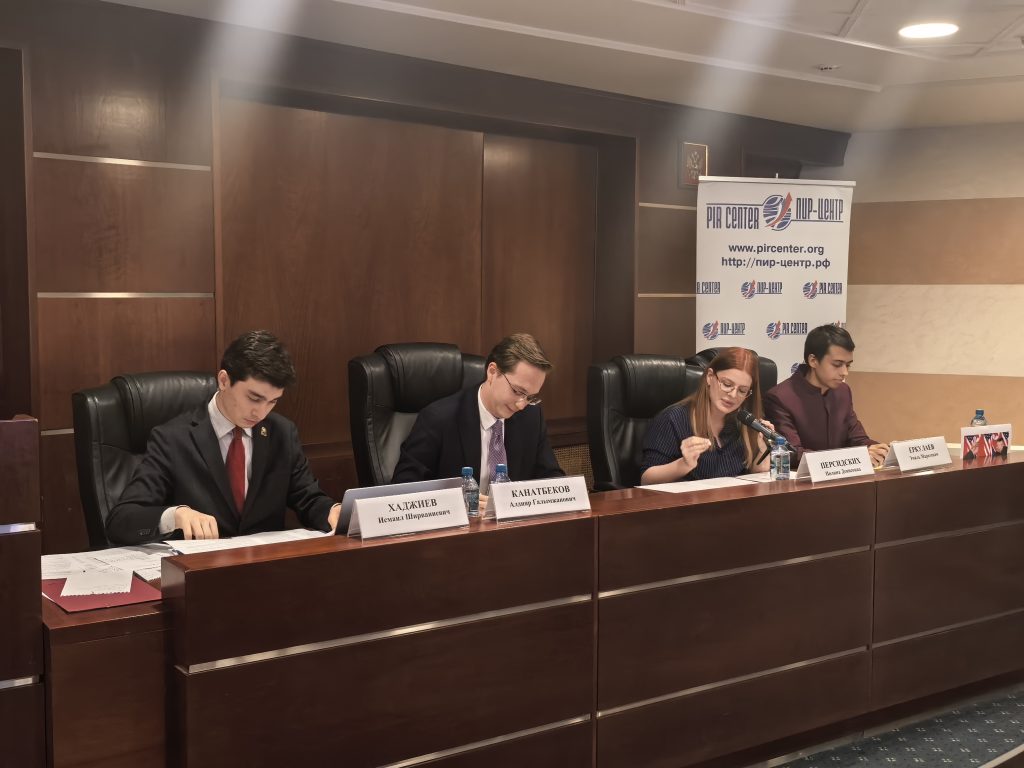
PIR Center jointly with MGIMO University hosted the XI Timerbaev Debates titled “Would a World with a Greater Number of Nuclear Powers Be More Stable and Predictable Than a World Founded on the Nuclear Non-Proliferation Regime?”. The debate participants were divided into two teams – opposition and proposition. In preparing for the event, each team nevertheless formulated arguments both “for” and “against” the question under consideration. Participants learned of their assigned “position” only a few hours prior to the commencement of the debates. The Areopagus of the debates included Vladimir Orlov, Director and Founder of PIR Center; Igor Vishnevetsky, independent expert and member of PIR Center Advisory Board; and Alexander Chekov, Lecturer at the Department of International Relations and Foreign Policy, MGIMO University. The discussion was moderated by Alexandra Zubenko, Deputy Director at PIR Center.
A particularly significant role in preparing the participants was played by the teams’ mentors –practitioner-experts in the fields of international security and non-proliferation. The mentor of the proposition team was Roman Kalinin, a research fellow at PIR Center. The opposition team was led by Mikhail Luchina, a junior research fellow in the Strategic Analysis and Forecasting Sector of the Center for International Security at IMEMO.
Owing to their professional experience, deep expertise, and attentive mentorship, the debaters were able not only to refine their argumentation but also to examine the debate topic from multiple vantage points – both diplomatic and analytical.
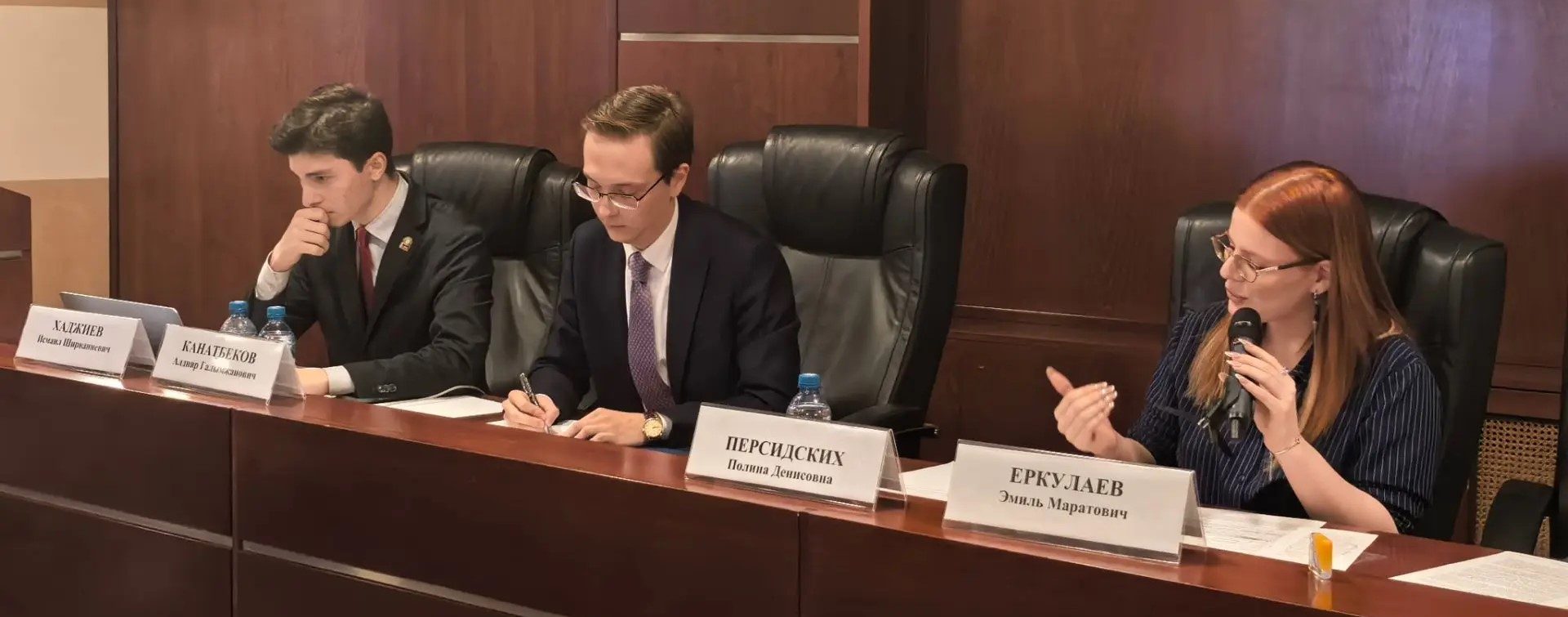
The proposition team was represented by Emil Yerkulayev and Polina Persidskikh, second-year students in International Security MA program at MGIMO University and PIR Center. The proposition team articulated its position by emphasising that it consisted in supporting a greater number of nuclear powers, grounded in a clear logic of nuclear deterrence and a decision-making system.
The opposition team comprised Aldiyar Kanatbekov and Ismail Khadzhiyev, second-year students in the International Security MA program. At the outset of their presentation, the members of the opposition team invited the audience to consider what an increase in the number of nuclear powers would entail and what consequences nuclear testing would have. The team’s principal thesis was the pursuit of strict limits on the opportunities for the proliferation of nuclear technologies.
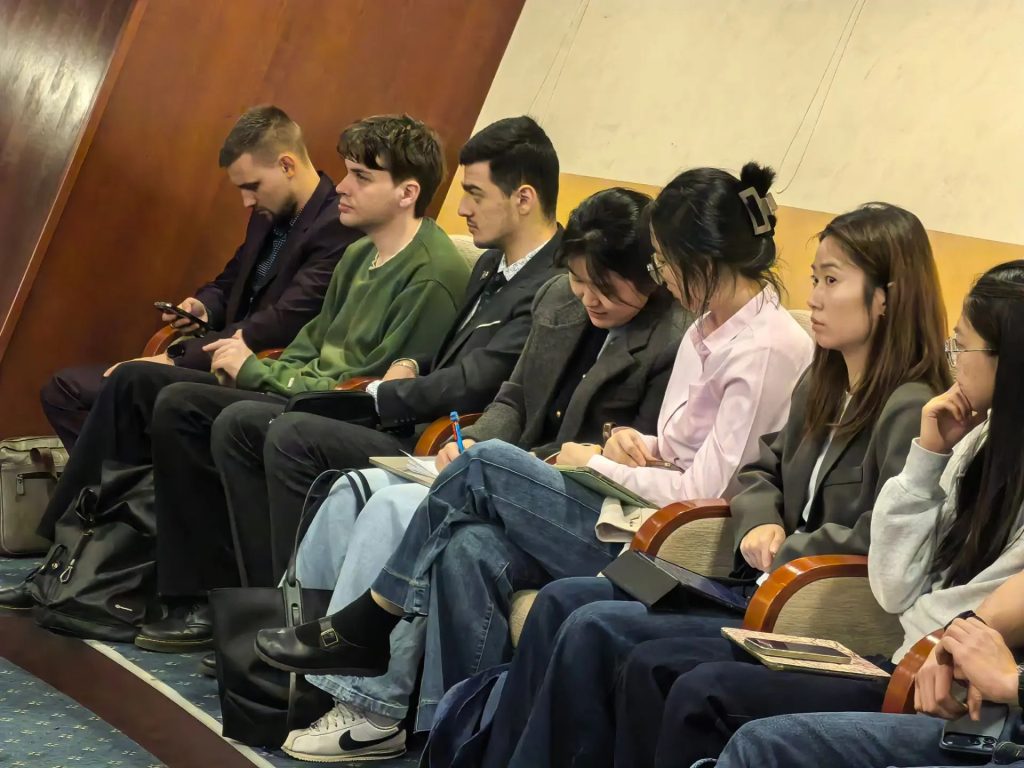
The debate audience consisted of students from the International Security MA program and the Global Politics and International Political Analysis MA program. Ultimately, the discussion did not yield a consensus among the audience, nor a preponderance in favour of either position.
In his concluding remarks, Vladimir Orlov noted that the debates had been conducted at a high level and that the teams had demonstrated an excellent degree of professionalism and thorough preparation, notwithstanding the complexity of the motion under consideration.
The team members then shared their reflections on the discussion:
“I think that, like many in this hall, I would have spoken ‘against.’ However, the ‘for’ position thoroughly turns one’s mind inside out and compels one to reflect”, – Polina Persidskikh, second-year student in the International Security MA program.
“In fact, it is always more interesting to issue a challenge. To try to reach people – this is very useful for one’s skills. I was very glad that we ended in a draw”, – Emil Yerkulayev, second-year student in the International Security MA program.