
№ 43 (101), 2025. PIR Center Report Series: “Uranium Competition in the Sahel Region and Russia’s Interests. Current Situation. Assessment of Prospects. Recommendations”
December 1, 2025
MOSCOW. DECEMBER 1, 2025. PIR PRESS. «The report is extensive and interesting. I read it from cover to cover. Undoubtedly, the report is instrumental as a source of factual material, above all, of its numerical dataset. It utilizes rich infographics, diagrams, and tables. Fortunately, this report has been released today. It seems to me that it will become an indispensable reference tool for State Atomic Energy Corporation «Rosatom» and for other Russian companies that work, or plan to work, on the African continent», – Dr. Mikhail Margelov, Vice President of the Russian International Affairs Council (RIAC), Member of PIR Center Advisory Board.
PIR Center is pleased to announce the publication of a new report (in Russian), “Uranium Competition in the Sahel Region and Russia’s Interests. Current Situation. Assessment of Prospects. Recommendations.” The report, part of PIR Center Reports Series (№47), is devoted to analyzing the current state and future development of the uranium sector in the Sahel countries. The study examines the political, economic, and legal characteristics of the region, as well as the specifics of the mining sector in Niger, Mali, Burkina Faso, Mauritania, and Chad. It also explores the influence of geopolitical factors on the industry’s development. Particular attention is given to Russia’s role in ensuring the region’s security and shaping new avenues of cooperation in nuclear energy and the peaceful uses of the atom. The report includes an assessment of the region’s geological potential, the competitive landscape of the uranium market, and trends in the participation of international actors – France, China, Canada, and Russia.
The report was prepared within the framework of PIR Center and MGIMO University Consortium under the auspices of the Priority-2030 Strategic Academic Leadership Program.
The author of the report is Ms. Alexandra Zubenko, PIR Center consultant. The reviewers are: Mr. Vsevolod Sviridov, Deputy Director, Faculty of World Economy and International Affairs, Centre for African Studies, HSE University; Dr. Alexey Ubeev, PhD in Engineering and member of PIR Center Advisory Board; and Dr. Grigory Shalamov, PhD in Political Science and Advisor at the Department for Africa and Latin America, Rosatom State Corporation.
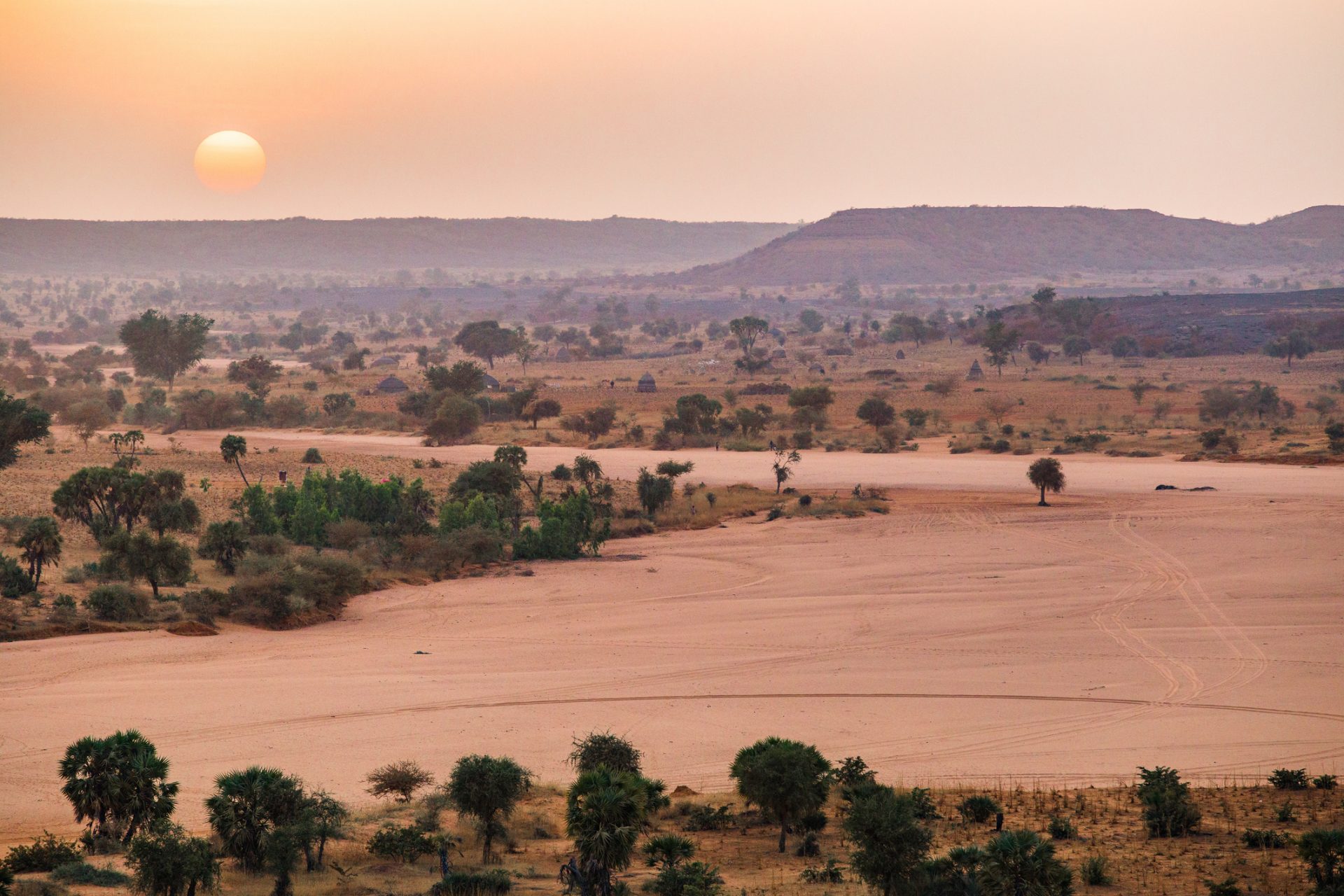
“The Sahel region, which includes Mauritania, Chad, Burkina Faso, Mali, and Niger, has been in a state of profound economic and political turbulence since 2022-2023. The withdrawal of French troops, a chain of military coups, the growing activity of jihadist groups, international sanctions, and the consequences of climate change have all had a significant impact on the macroeconomic dynamics of these countries. At the same time, this state of crisis has prompted these countries to reassess several key principles of their domestic and foreign policies, as established by previous governments. Chad, Burkina Faso, Mali, and Niger have set a course toward closer relations with non-Western external actors, including Russia. It is too early to assess the productivity of such cooperation. What is certain is that there are many potential areas for cooperation. One such promising area is the extraction and processing of uranium, as well as the development of nuclear energy and non-energy applications of nuclear technologies. However, significant progress in this direction can only be achieved through ensuring the proper protection of industrial facilities, developing supporting infrastructure, and involving the local population in the work of enterprises,” the report states.
Key Findings of the Report:
The full text of the report is available at: https://pircenter.org/category_editions/doklady/
The presented report became the subject of a detailed expert review, with commentators offering a wide range of assessments and recommendations.
“The report is extensive and interesting. I read it from cover to cover. Undoubtedly, the report is beneficial as a source of factual material, above all, of its numerical dataset. It utilizes interesting schemes, diagrams, and tables. Fortunately, this report has been released today. It seems to me that it will become an indispensable reference tool for State Atomic Energy Corporation «Rosatom» and for other Russian companies that work, or plan to work, on the African continent,” said Dr. Mikhail Margelov, Vice President of the Russian International Affairs Council (RIAC), Member of PIR Center Advisory Board.
“We are presented with a highly coherent and comprehensive monograph – indeed, a monograph in the full sense of the word, in which one finds political analyses of each country, an overall economic assessment, and reviews of their relations with Russia. Should PIR Center decide to publish Ms. Alexandra Zubenko’s report precisely as an academic monograph, it would be the correct decision,” said Dr. Oleg Barabanov, Professor at the Department of Integration Processes of MGIMO University, and Professor of the Russian Academy of Sciences.
“The report possesses a number of strong merits. First, the topic itself is of clear relevance: the uranium sector in the Sahel countries lies at the center of global politics and energy security, making its study both timely and in demand. Second, the use of satellite-image analysis to determine the status of individual projects adds novelty and provides a solid empirical foundation. The quantitative examination of the mining sector’s contribution to national revenues is also a notable strength. Another important advantage is the systematic treatment of the legal frameworks governing the mining industries of the Sahel states. Finally, the attention given to political-legal constraints and the consequences of coups enhances the applied value of the text,” concluded Dr. Grigory Shalamov, PhD in Political Science and Advisor at the Department for Africa and Latin America, Rosatom State Corporation.
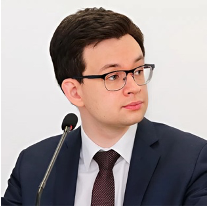
“Ms. Alexandra Zubenko’s report is extremely relevant ‘here and now’ and represents a significant contribution to examining the prospects for regional cooperation between Russia and the Sahel states in the field of uranium extraction and processing. The author provides a thorough analysis of the current state of uranium mining and production in the region, considers the factors that hinder deeper development of this sector, and identifies the geopolitical threats and challenges faced by the region,” noted Mr. Vsevolod Sviridov, Deputy Director, Faculty of World Economy and International Affairs, Centre for African Studies, HSE University.
On PIR Center website, there is a section titled “Uranium Markets of Sahel: Competition, Strategies, Further Developments,” which allows for a deeper understanding of why exactly this region is attracting increasing attention from both business and security experts. The Sahel is not merely a geographical space, but a key node in the global competition for influence. Its strategic location, vast resources, and direct impact on regional and international security make it a subject of close attention. Uranium, long an “economic artery” of the region, continues to attract the interest of prominent global actors.
Keywords: Sahel; Uranium
SAH
SAH E16/SHAH – 25/12/01
