
№ 23 (67), 2026. Energy and technologies for the Sahel: Russia offers nuclear solutions
November 11, 2026
Exclusive Interview

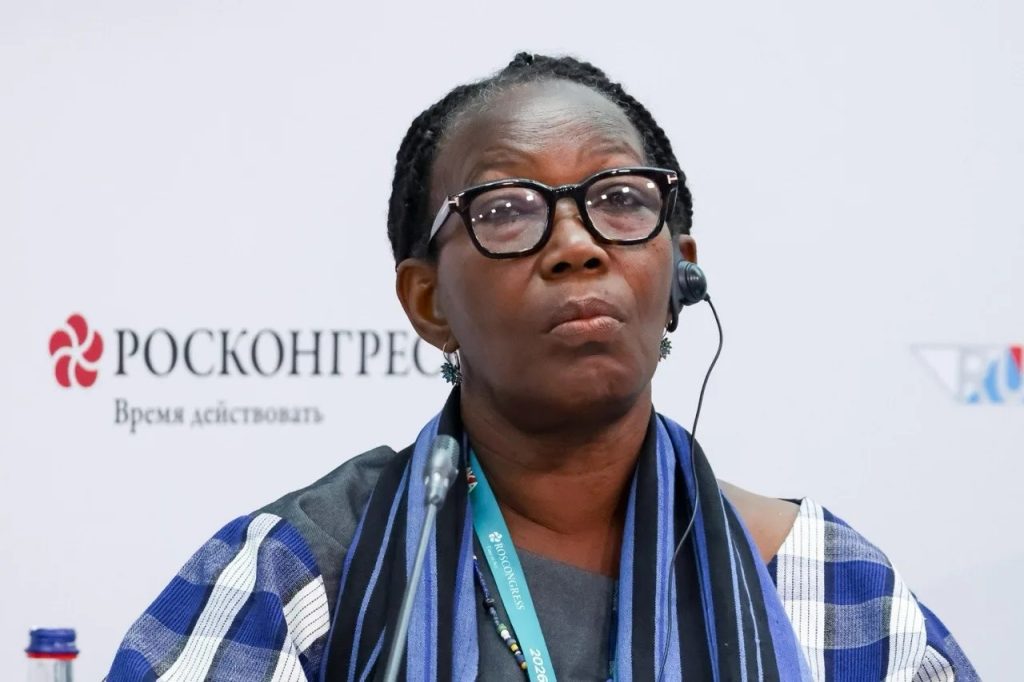
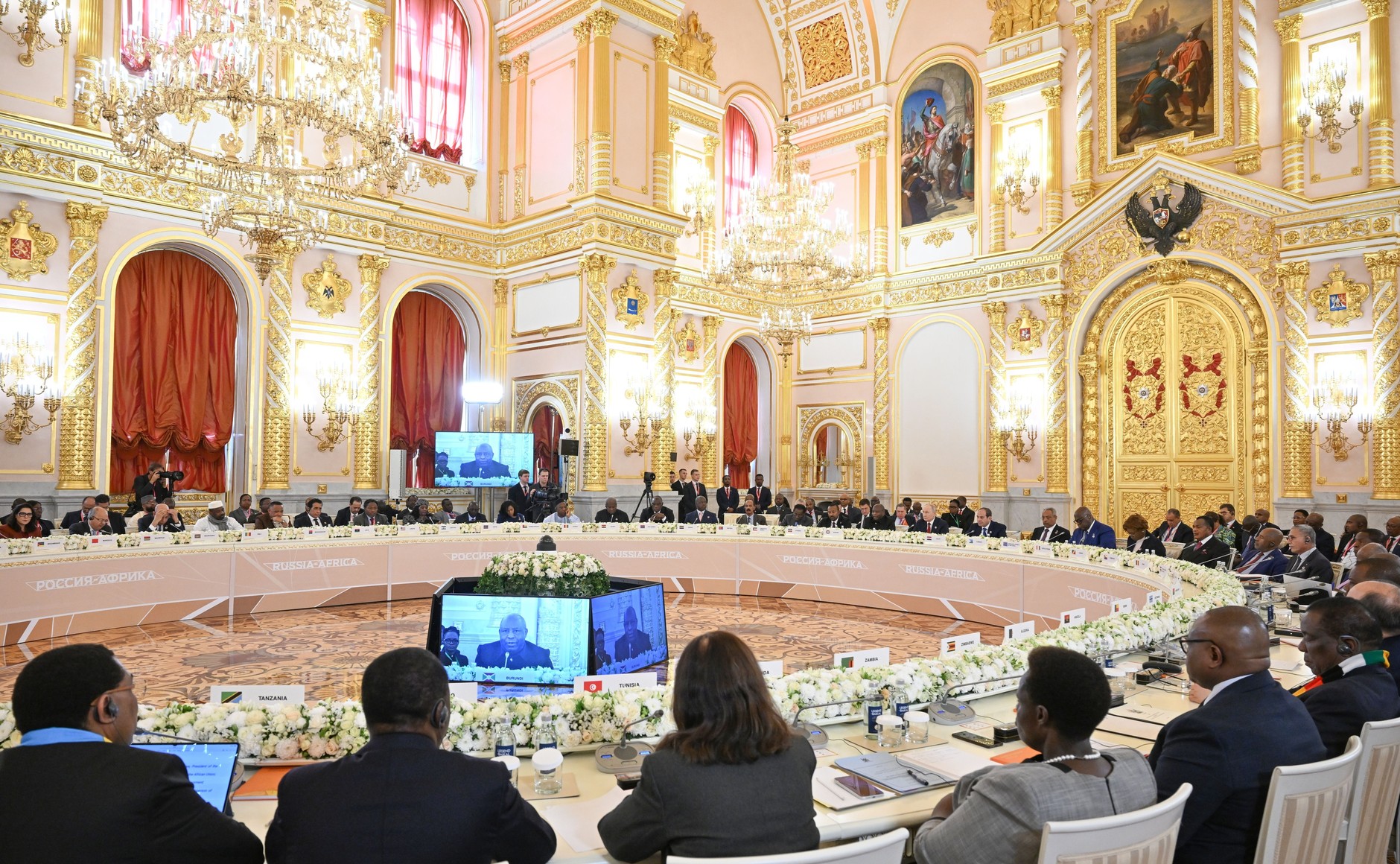
The third Russia-Africa Summit brought together representatives from 48 African states. Yvonne Libona Bonzi-Coulibaly, Permanent Secretary of the National Academy of Sciences of Burkina Faso, shared her experience of participating in the event. The expert discussed how nuclear energy will be developing in the Sahel, whether small modular reactors could be useful in addressing the lack of access to clean water, and in which areas Russian technologies are already being used.
The interview was conducted by Ms. Anna Tishina, PIR Center intern.
Anna Tishina: Recently, a large‑scale event in Moscow has come to an end, namely the third Russia‑Africa Summit. Please share your impressions of your participation and the trip to Russia.
Yvonne Libona Bonzi-Coulibaly: As part of the summit, I delivered a report at the panel discussion “Clean Water for the Countries of the African Continent: The Socioeconomic and Technological Dimension.” I was impressed by the event’s professional organization, the high level of participation – both in terms of quality and quantity – and the diversity of the topics addressed. Other sessions dedicated to scientific cooperation, smart cities, agribusiness, and the mining industry significantly broadened my horizons and opened up new areas of development for me. The participants from Africa, who took part in the discussion, recognized Russia’s considerable potential, which, in their view, would be very useful for meeting their needs in the development of the continent. They openly emphasized the importance of mutually beneficial partnership and respect for national sovereignty. Russian partners, who were very well represented in the discussion sessions, demonstrated a strong commitment to cooperation; organizers at information boards, where Russia’s capabilities were showcased, also expressed a desire to further develop relations with Africa.
The trip gave me the opportunity to see a large and advanced Russia for the first time, to get to know its hardworking, cheerful, polite, and hospitable people. This fills me with great optimism regarding the implementation of the proposed priority measures to accelerate the development of Russia‑Africa partnership in line with the wishes stated by the President of the Russian Federation. I consider the Russian Academy of Sciences to be a model institution, and I highly appreciate its work, and in particular, the Institute for African Studies of the Russian Academy of Sciences, for its outstanding scientific leadership and its firm commitment to organizing and coordinating panel discussions within the framework of the summit.
Anna Tishina: Nuclear technologies served as one of the central topics discussed at the summit. Burkina Faso signed an agreement on cooperation in peaceful nuclear energy with Russia in 2025, and the country plans to construct a small nuclear power plant by 2030 in cooperation with Rosatom. How has nuclear energy been developing in Burkina Faso?
Yvonne Libona Bonzi-Coulibaly: The process of installing even a small nuclear power plant is lengthy and requires adherence to certain stages in accordance with international conventions. The Burkina Faso Atomic Energy Agency (ABEA), established in 2024, acts as an official partner. The body oversaw the signing of the agreement on June 19, 2025. Expert exchange missions have already taken place, and students are currently undergoing training in Russia. The Technical Academy of Faso, built in 2026 at the initiative of the country’s authorities, is currently training the best secondary school graduates for future work as highly qualified engineers. Thus, the foundation has been laid; the next step will be to ensure that the choice of models takes into account factors such as cost, maintenance, safety in the Sahel, and social impact.
Anna Tishina: The business program of the 2026 Russia-Africa Summit featured both the development of nuclear technologies and access to clean water. Can nuclear energy, including small modular reactors (SMRs), help solve the water supply problem?
Yvonne Libona Bonzi-Coulibaly: The water needs of the Sahel countries are far from being met. Any industrial enterprise requires an environmental impact assessment. Depending on the chosen location, the criteria that need to be taken into account are both the water footprint and the carbon footprint. SMRs are mentioned as nuclear technologies that require less cooling water compared to traditional nuclear power plants. However, Africa’s benefit lies in a significant energy output, which will make it possible to purify drinking water, treat wastewater for reuse, and use water for irrigation and livestock farming.
Anna Tishina: Water scarcity and desertification create social tension. What role can Russia play, for example, in the field of desalination technologies?
Yvonne Libona Bonzi-Coulibaly: This would be very useful for coastal African countries, since seawater is readily available. It could be desalinated to provide the population with drinking water and thereby reduce the pressure on freshwater resources. In particular, with regard to water desalination, in Morocco, a subsidiary of Rosatom and the Moroccan company Water and Energy Solutions signed a cooperation agreement in 2023 in the field of desalination, purification, and water treatment. This Russian‑African cooperation may focus on pilot plants adapted to local conditions, followed by the transfer of know‑how so that Africans can operate and maintain them. The same technology can be used to purify water contaminated with fluorine or arsenic in Burkina Faso.
Keywords: Burkina Faso; peaceful atom; Sahel; small modular reactors
AFR
E16/NOS – 26/11/11
