
№ 24 (68), 2026. The African vector: what is Russia ready to offer in terms of security, multipolarity, and the continent’s energy future?
November 13, 2026
Exclusive Interview

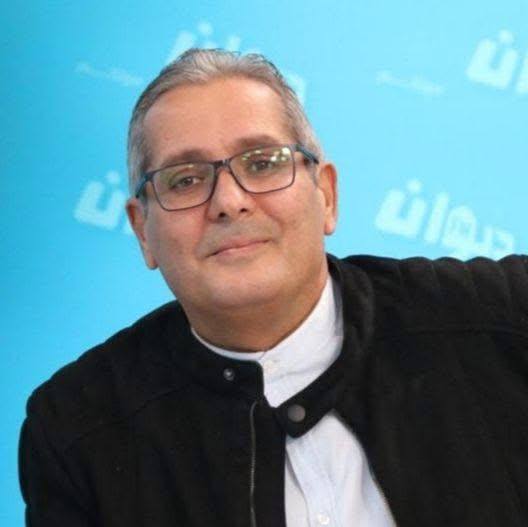
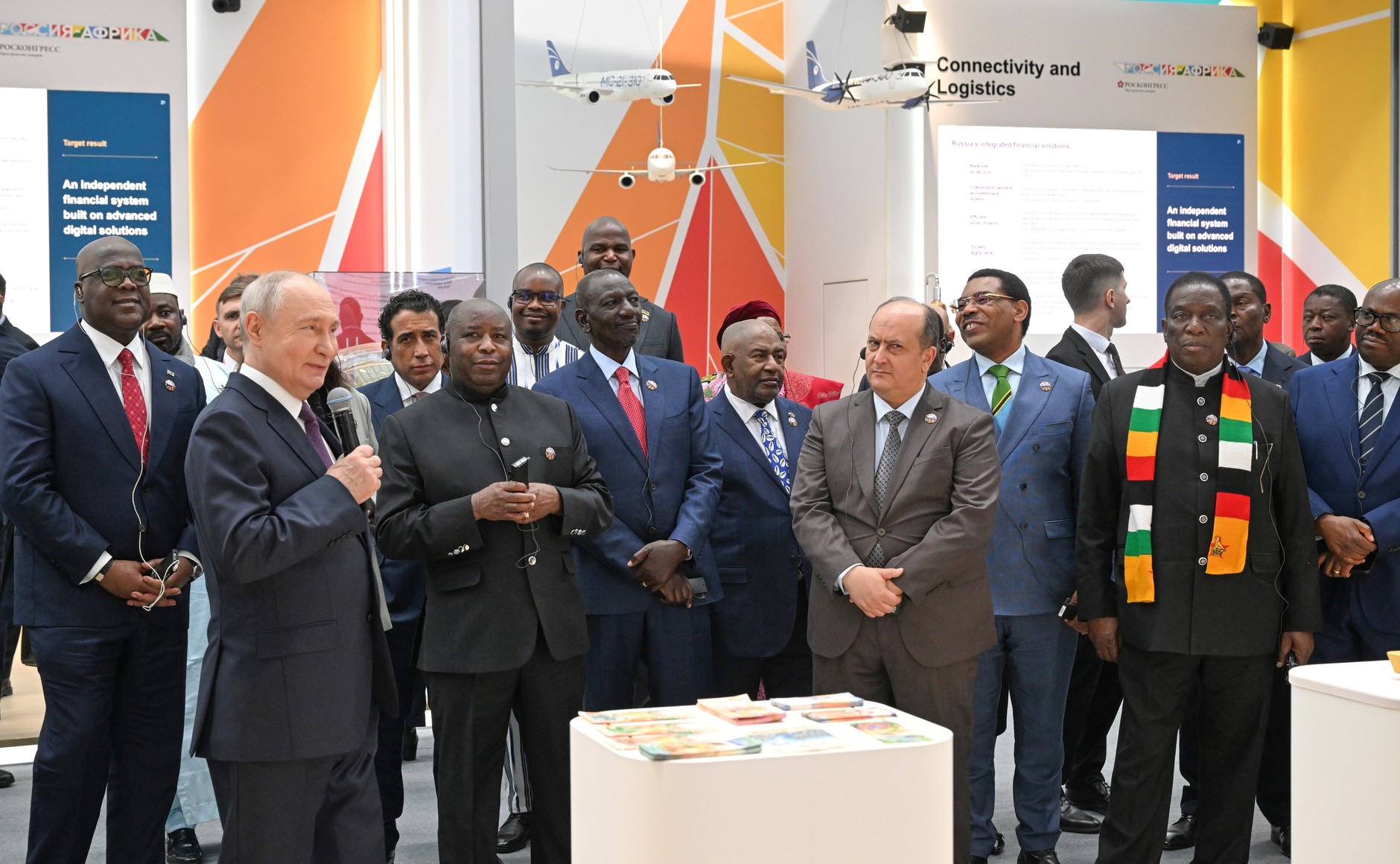
The third Russia-Africa summit became a focal point for several long‑term trends. The three‑day work resulted in the signing of 92 agreements and 54 memorandums, as well as the adoption of the Moscow Declaration and a joint action plan until 2029. The summit confirmed the course towards a multipolar world and even-handed partnership, and its participants explicitly stated their desire to form a “fair, balanced, and equitable multipolar world order.” What does Moscow have to offer Africa in the field of security, and how does this policy align with its own vision of the global architecture? Is what we are witnessing today a change in the rules and institutions of the international order, or redistribution of centers’ of influence weight? What are the prospects for the agreements reached at the summit in the field of nuclear energy? Does the recent summit represent a breakthrough, or does it merely mark the direction of movement? Mr. Rafaa Tabib, geopolitical analyst and lecturer at the Tunisian War College (École de guerre de Tunis), gives his answers.
The interview was conducted by Mr. Ahmat Mahamat Tahir Bahit, Sputnik Africa journalist and member of PIR Alumni Community.
Ahmat Mahamat Tahir Bahit: A few days ago, the Russia-Africa Summit was held in Moscow. In your opinion, what constitutes Russia’s security policy?
Rafaa Tabib: Africa is facing several hotspots of tension. Some regions are still under the control of armed groups, militias and, in certain cases, terrorist factions. Russia has always advocated the existence of a strong central state, sovereign over its entire territory. It has consistently opposed political parties or factions attempting to resolve political disputes through armed force. We can therefore see that Russia has always supported peace operations. However, in certain regions, when a state faces the risk of collapse, fragmentation or, above all, territorial disintegration, Russia has never hesitated to provide assistance and stand alongside these countries and their governments to restore order, security and, most importantly, territorial unity. Such situations are not necessarily the result of the actions of political actors. They may also be part of broader destabilisation operations, financed and orchestrated by foreign powers, particularly former colonial powers.
Ahmat Mahamat Tahir Bahit: The Security Index Yearbook 2026-2027 by PIR&MGIMO Vol.2 Global Edition discusses the transition towards a multipolar world. What do you think – is the international order transformation currently underway, or it is rather a shift in the balance of power? What is Russia’s role in this process?
Rafaa Tabib: There is no doubt about it. Multipolarity is no longer just an aspiration; it has become a reality on the ground. The United States, or what we call the Western bloc, is no longer in a position to impose its vision of politics, its choices or even its social models on the rest of the world. We have observed that throughout the period of the unipolar order, after the fall of the Berlin Wall, Europe believed it had a free hand to impose its economic, political, social and even ethical model on the world. Today, that era is behind us. We are no longer obliged to submit to choices imposed by the major powers. A wave of sovereignty-driven movements is now sweeping across the world, and Russia is accompanying this growing momentum for sovereignty.
Russia is also regaining the position it deserves and has fully earned. People clearly understand that by coordinating their actions with Russia and, above all, cooperating with it, they can benefit from its considerable resources and capabilities in support of development, security, territorial integrity and the sovereignty of African countries. We know perfectly well that Russia is capable of cooperating and is willing to do so without seeking to intervene or interfere in the internal affairs of other countries. In my opinion, this is an aspiration widely shared across African countries.
Ahmat Mahamat Tahir Bahit: During the summit, several agreements were signed and various projects were announced, particularly concerning the peaceful use of nuclear energy. How do you see the future of nuclear power development in Africa?
Rafaa Tabib: This is a very important question, especially because we in Tunisia are particularly concerned about this issue. There has been a debate within society and among political groups about the possibility of developing our own capabilities in nuclear energy. We see that certain African countries, such as Niger, possess substantial uranium reserves. Other countries located not far from Niger also have the potential to discover uranium resources. This raises an important question: how is it possible that these countries have some of the lowest electrification rates in the world?
So, what is Russia offering us? Quite simply, an alternative to what we call carbon-based energy, which has placed a heavy burden on the economies of our countries, particularly those that do not produce oil. Nuclear energy is being proposed not only to provide electricity to our homes, but, above all, to develop our economies, which are suffering from a significant shortage of electricity. I believe that the Russians have already begun playing this role in Africa, and they are doing so remarkably well. We have seen this in Egypt, with the El-Dabaa nuclear power plant, which represents a genuine source of national pride for the country. Similarly, Algeria has put forward proposals for Russia to build nuclear power plants there. As for Tunisia, I believe it could become one of Russia’s future partners in the field of nuclear energy.
It is important to understand that Russia’s nuclear technologies are utilized for electricity generation and industrial needs, but they can also be used for water desalination. And you know very well that one of the major structural problems threatening the future of our countries is water scarcity. Today, therefore, the use of nuclear energy represents a strategic issue for the African continent. It is even indispensable, if I may put it that way. Yes, it is essential for developing our economies and industries, as well as for providing electricity to entire regions of our countries that still lack access to reliable power supplies. This is a crucial issue for us. Furthermore, it will enable us to make better use of our uranium resources and our human capital, particularly our energy engineers, many of whom are currently working in various European countries and Australia. For us, this is the best way to pave the way for inclusive development and for economic and social progress that is endogenous, taking into account our own capabilities, potential and, above all, our needs. And here, I believe Russia has knocked on the right door. First, because it is a reliable partner. Second, because it offers nuclear energy solutions that are genuinely affordable for us Africans.
Ahmat Mahamat Tahir Bahit: Mr. Rafaa Tabib, as you pointed out earlier, Russia presents its partnership with Africa as a form of cooperation based on sovereignty and mutual respect for each other’s interests. How would you assess the Russia-Africa Summit held in Moscow?
Rafaa Tabib: The African leaders who travelled to Moscow ultimately discovered a range of very interesting proposals for African countries. Russia demonstrated considerable generosity by presenting different alternatives. In essence, it told them: “Here is what I can offer you, and here are the solutions that could help address your challenges.” These proposals concern not only security and energy issues, but also education, vocational training and many other areas. Russia has therefore managed to make itself a useful partner during this period of transformation that Africa is experiencing. Of course, this comes after the first two summits, during which security issues were the dominant focus.
Keywords: Africa; Russia; uranium; Russia-Africa Summit
AFR
26/11/13
