
№ 22 (66), 2026. From cross‑border threats to peaceful nuclear energy: how is the Russian‑African security agenda expanding?
November 9, 2026
Exclusive Interview

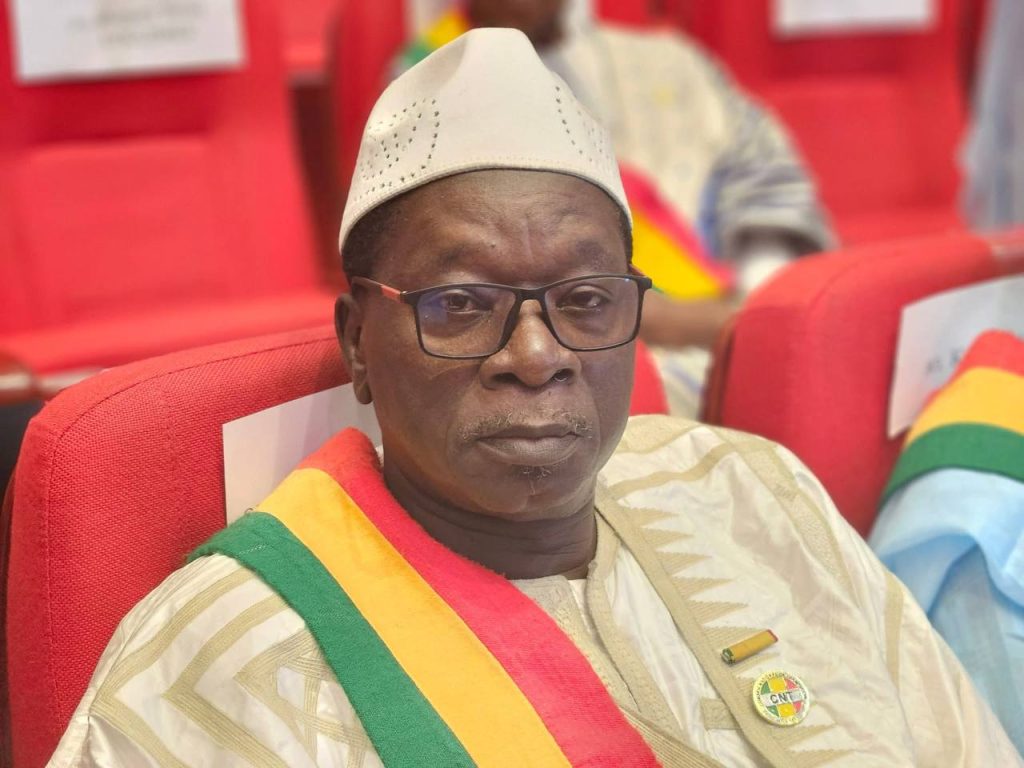
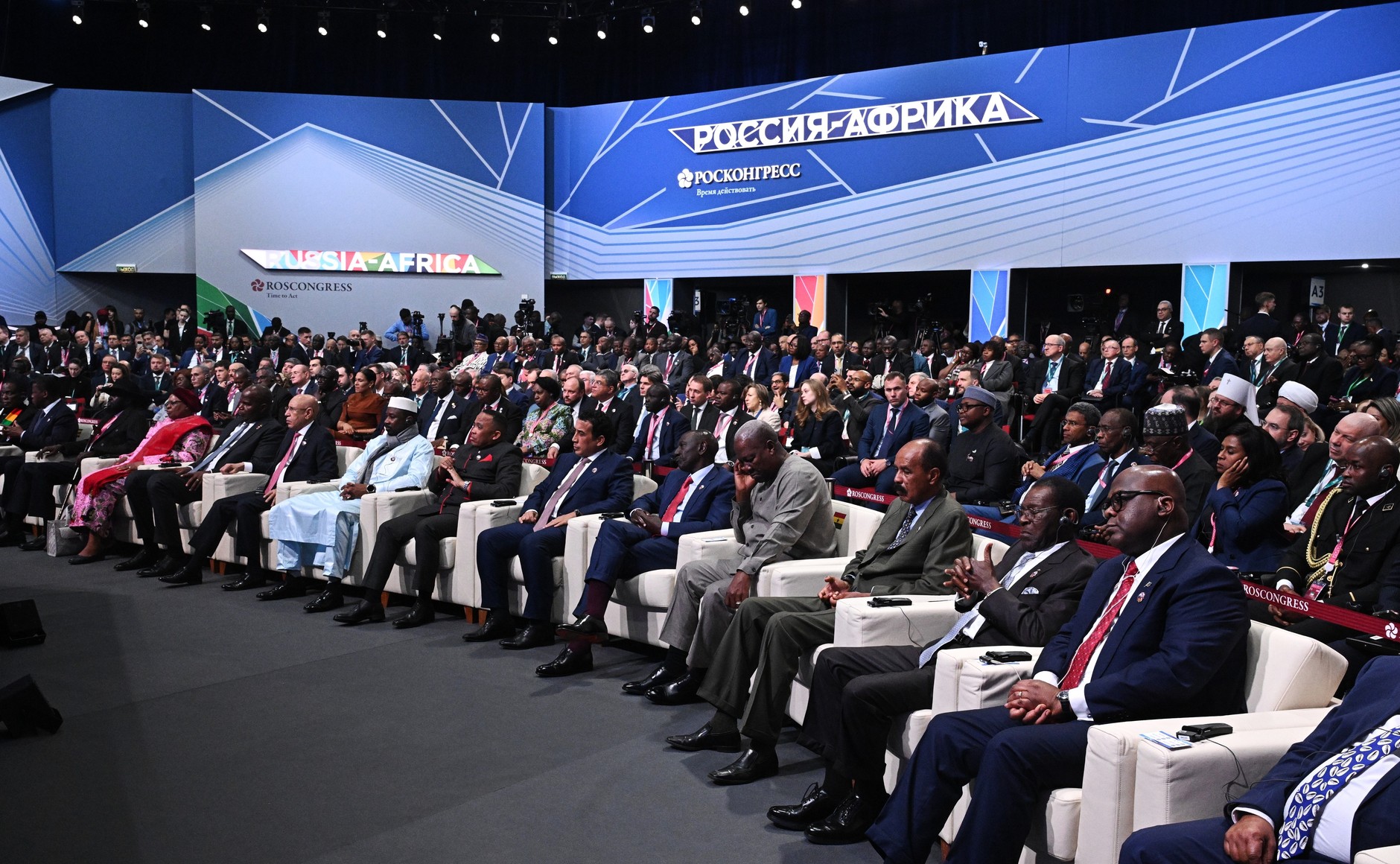
The third Russia‑Africa summit, held on October 28–29, 2026, in Moscow, confirmed that cooperation in the fields of security and energy is becoming one of the most dynamic and simultaneously most sensitive pillars of the Russian‑African partnership. The protection of the civilian population, the fight against cross‑border threats and the strengthening of sovereignty are at the centre of the agenda concerning relations with the Alliance of Sahel States, which unites Mali, Burkina Faso, and Niger. At the same time, Russian‑African cooperation in the uranium and peaceful nuclear sectors can help strengthen the energy security of the Sahel countries. Dr. Fousseynou Ouattara, Vice-President of the Commission on Security, Defence and Civil Protection of Mali’s National Transitional Council, provides expert comments on these issues.
The interview was conducted by Mr. Ahmat Mahamat Tahir Bahit, Sputnik Africa journalist and Member of PIR Alumni Community.
Ahmat Mahamat Tahir Bahit: In the Sahel, civilian populations remain particularly exposed to violence perpetrated by armed groups and the consequences of conflicts. What should be the priorities of security cooperation between Russia and its African partners today in order to better protect civilians?
Fousseynou Ouattara: I believe that today, our cooperation in this area, particularly when it comes to protecting populations, should focus on everything that can shield people from the temptations of those who sell false promises and generally try to convince them to join radical groups. As you know, in our villages and in certain regions, young people are disadvantaged and have no employment opportunities. As a result, they are easily recruited. We must therefore find structural solutions that provide these young people with activities enabling them to meet their own needs. I believe that efforts today should be directed towards this objective: developing and implementing projects so that every young person living in rural areas can find something productive to do. Otherwise, they are often left to their own devices and become vulnerable to those who sell false promises, including certain Quranic teachers who exploit them, particularly by sending them out to beg, before unfortunately handing them over to terrorist groups.
Ahmat Mahamat Tahir Bahit: The Security Index Yearbook 2026-2027 by PIR&MGIMO Vol.2 Global Edition analyses contemporary conflicts and the complexity of the actors involved. How can Sahelian states adapt their responses to cross-border threats that often exceed the capabilities of any single state?
Fousseynou Ouattara: It was precisely in this spirit that the Liptako-Gourma Charter emerged, paving the way for the creation of the Alliance of Sahel States. This reflects an awareness that no state, acting individually, can confront terrorist groups effectively. We therefore needed to secure our borders. To achieve this, we had to establish this Alliance and, within its framework, enable our troops to pursue terrorist groups from one country into another without being stopped by national borders.
As you know, this Charter gave our military forces the possibility of pursuing terrorist groups, for example, from Mali into the territory of Burkina Faso or Niger, and vice versa. Nigerien forces could also pursue them into Malian and Burkinabe territory, and so on. Previously, this possibility did not exist. Terrorist groups would commit horrific acts in our countries and then retreat peacefully into one of the neighbouring states. This awareness led to the creation of the Alliance of Sahel States on 16 September 2023, following the signing of the Charter. This is an important step forward. By pooling our resources, we have been able to establish a joint force. We now have a joint military headquarters and a force numbering more than 5,000 personnel, including rapid intervention brigades. These forces are now able to conduct operations to counter terrorist activities.
Ahmat Mahamat Tahir Bahit: The Sahel region also possesses strategic resources, particularly uranium, and is interested in the prospects of nuclear energy for peaceful purposes. Under what conditions could cooperation with the Russian Federation contribute to the development and energy security of African countries?
Fousseynou Ouattara: As you know, energy plays a major role in the development of every country. Economists generally estimate that the economy is 80% dependent on energy. This means that it is extremely important for every country to have control over its own energy resources. Niger has significant uranium resources, and Mali also has uranium deposits, even though they have not yet been exploited. Our subsoil is also rich in other important minerals, such as gold, lithium and manganese. In addition to all this, our subsoil also contains considerable underground water reserves, including underground lakes. If all these reserves were taken into account, they could provide water for the entire African continent for 50 years. All these resources are highly coveted by the former colonial power, particularly France, as well as by other European countries. The competition is mainly centred around these resources. In the past, they absolutely did not want us to develop the capacity to exploit the wealth beneath our own soil using our own means.
Today, thanks to cooperation with Russia, as you have seen, we are developing energy sources, particularly solar power plants. As for nuclear power plants, these remain long-term prospects because the necessary documentation, studies and construction take considerably more time, whereas our needs today are immediate. Russia is currently helping us primarily in this area through the construction of solar power plants and hydroelectric dams, so that we can address the electricity shortages we are facing.
Ahmat Mahamat Tahir Bahit: Is it planned to use uranium for civilian purposes, in particular at nuclear power plants?
Fousseynou Ouattara: Yes, for civilian purposes. As you know, uranium is also used in medicine and agriculture. It is therefore something that will boost our economies and provide an important foundation for the emergence of our countries.
Ahmat Mahamat Tahir Bahit: Honorable Fousseynou Ouattara, during the third Russia-Africa Summit, held in Moscow from 28 to 29 October 2026, several agreements were signed and a number of projects were announced, particularly concerning the strengthening of military partnerships, which are often presented as a response to insecurity. How does cooperation in this area help ensure stability and trust in society and fight terrorism?
Fousseynou Ouattara: Today, thanks to this cooperation, our populations have regained confidence. Our economic sectors, particularly the primary and tertiary sectors, are beginning to function properly. There was a time when terrorists would come and destroy fields, preventing farmers from working. They would burn crops, kill livestock and so on. They also set up roadblocks to disrupt all commercial activities. Today, with the assistance of the African Corps and Russia, we have managed to contain approximately 80% of these activities. Farmers can now go to their fields, cultivate their land peacefully and harvest their crops. Buses, delivery trucks and other means of transport are also circulating much more freely between our cities. Cooperation in the fields of armaments and defence therefore makes an important contribution to the stability of our countries.
As you know, peace cannot be ensured unless we have a strong army. This is precisely what we are working to build today. We have chosen this direction and are committed to it. I am confident that sooner or later, we will overcome terrorism because terrorist groups now know that our army has considerably strengthened its capabilities. With the assistance of the African Corps, our forces are now able to anticipate terrorist attacks and locate the hideouts of armed groups as well as their warehouses. Today, this is what the African Corps, the Malian army and, above all, the armies of the Confederation’s member states are doing. Through intelligence operations and investigations, we are able to locate the facilities, warehouses and logistical bases of terrorist groups and subsequently destroy them. As you know, no war can be sustained without logistical support. That is why we are working to completely dismantle the logistical capabilities of terrorist groups.
Keywords: Africa; Sahel; Russia; Peaceful atom
SAH
E16/NOS – 26/11/09
