
№ 21 (69), 2026. MGIMO University hosted a seminar on «It’s Going to Rain: Peculiarities & Prospects of Nuclear Umbrellas»
May 29, 2026
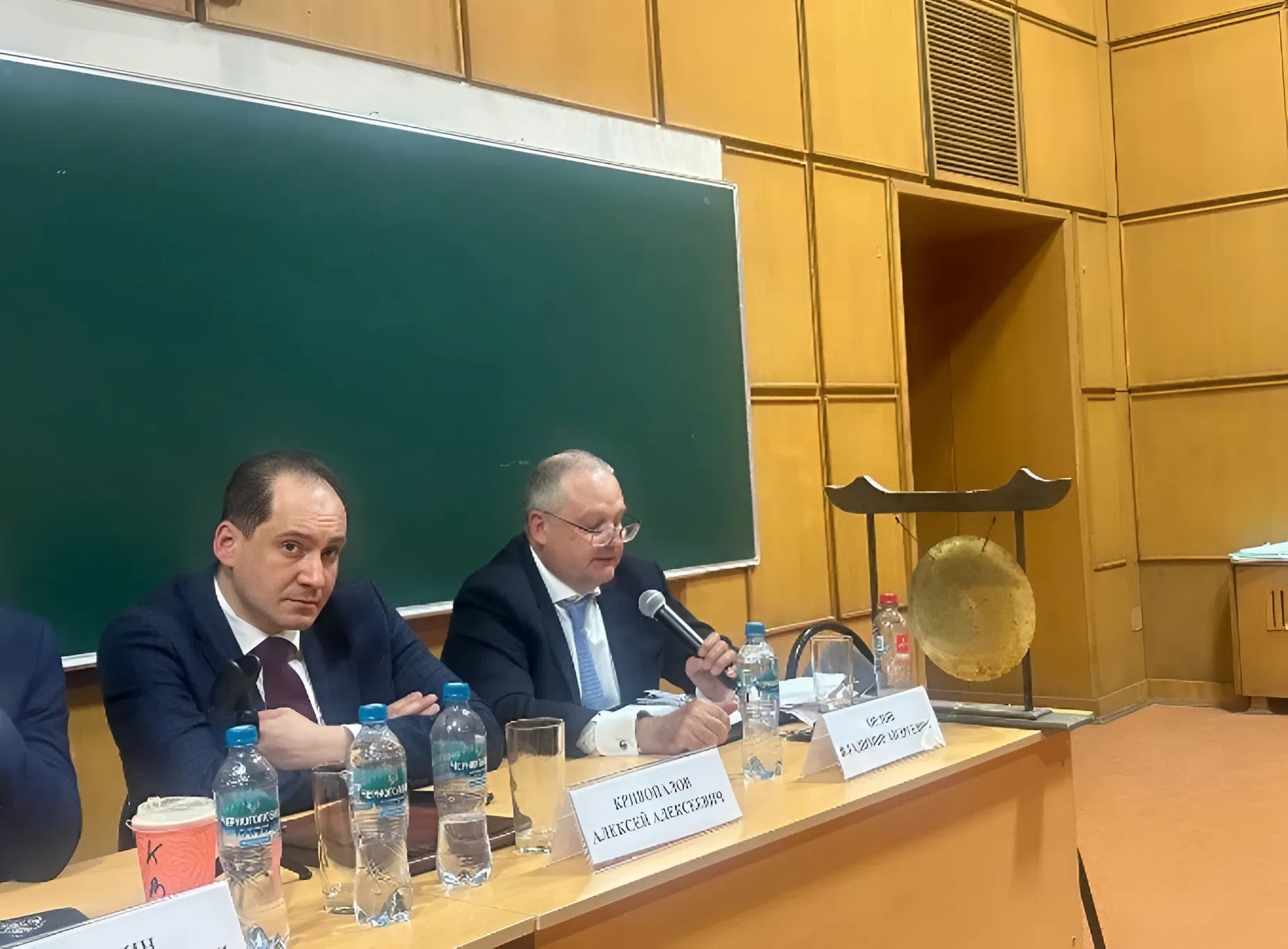
MOSCOW. MAY 29, 2026. PIR PRESS. «A nuclear umbrella constitutes the ultimate manifestation of a comprehensive military-political alliance; it is never established under any other circumstances», – said Mr. Ilya Subbotin, PIR Center intern and student of the MA Program International Security (implemented by MGIMO University jointly with PIR Center)
PIR Center, jointly with MGIMO University, held a seminar on the topic “It’s Going to Rain: Peculiarities & Prospects of Nuclear Umbrellas”. The keynote speaker at the seminar was Mr. Ilya Subbotin, PIR Center intern and student of MA Program International Security. Dr. Vladimir Orlov, PIR Center Director, has served as the scientific advisor of Mr. Ilya Subbotin’s research paper.
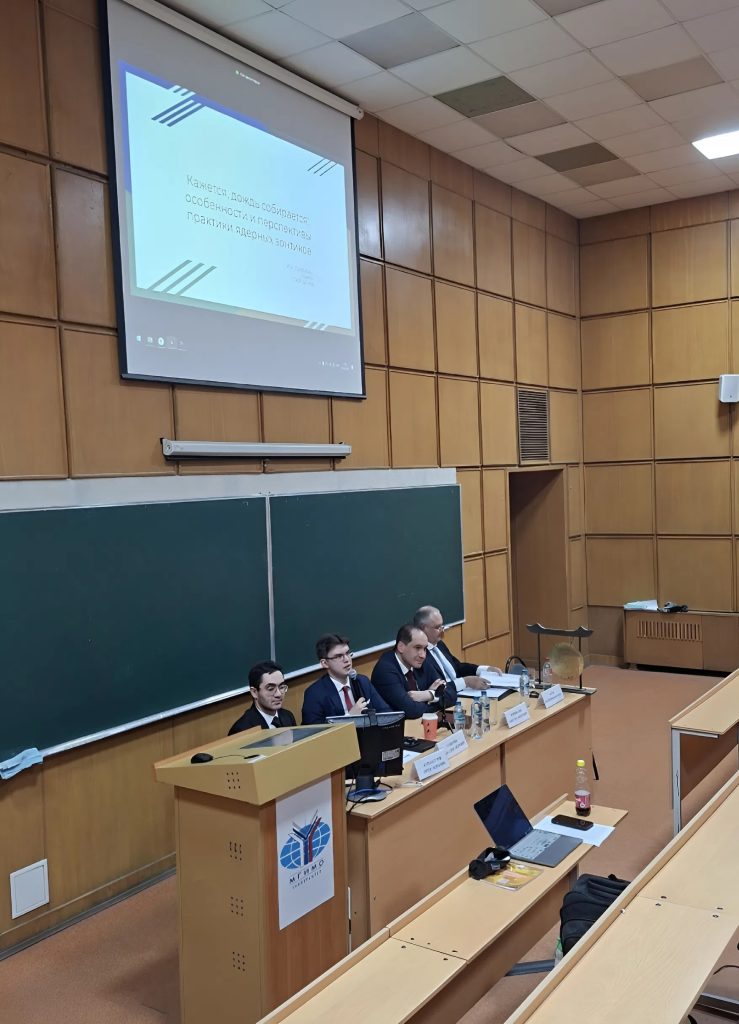
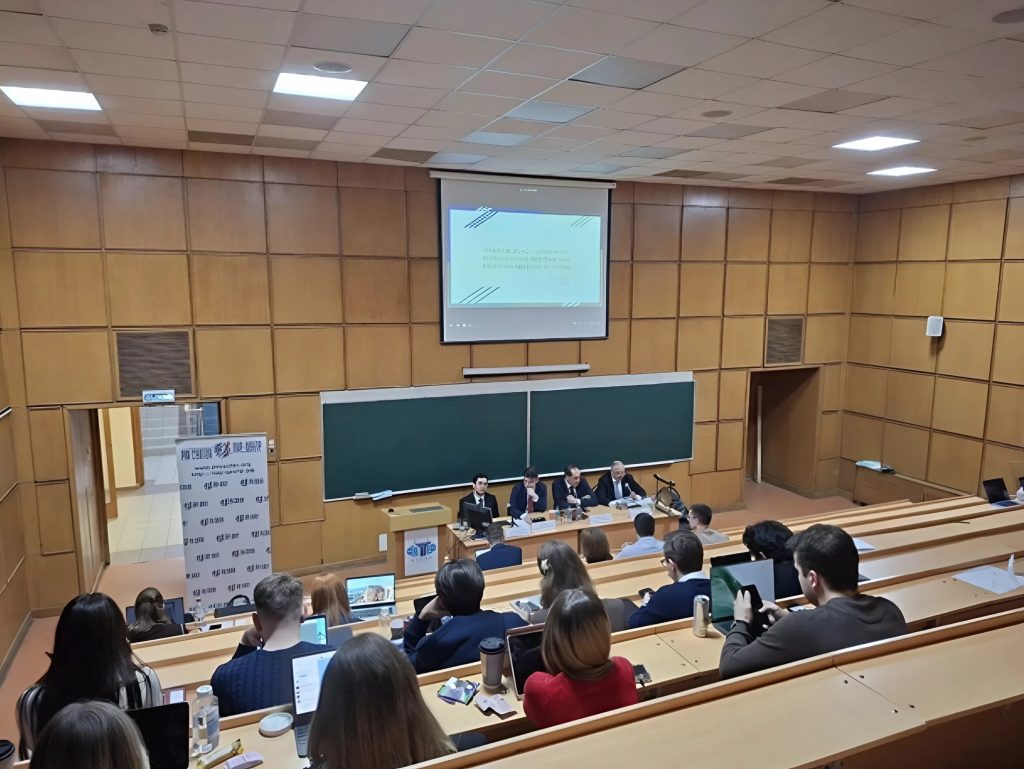
At the very beginning of his presentation, the speaker outlined the research methodology, defined the established goals and objectives, and delineated the primary sections of the research paper. Preceding the discussion of specific instances of “nuclear umbrellas,” the speaker provided several critical clarifications essential for an accurate conceptual understanding of the subject. He emphasized the necessity of distinguishing between the concepts of a “nuclear umbrella” and “extended nuclear deterrence,” noting that the former is a constituent element of the latter. Furthermore, he observed that a “nuclear umbrella” serves as protection not only against nuclear threats and is not strictly limited to the deployment of nuclear assets, but rather presupposes the existence of a system of doctrinal guarantees.
Regarding NATO, the speaker noted that nuclear umbrellas within this organization exhibit a trend toward Europeanization, primarily under French leadership; however, proliferation risks persist, particularly concerning the FRG and especially in the long-term perspective. French guarantees cannot substitute for U.S. commitments within NATO, as it is strategically disadvantageous for the United States to withdraw from the Alliance for several reasons, including nonproliferation considerations. In the future, the deployment of French nuclear weapons on the territory of allies remains unlikely; however, their integration into the activities of the Franco-German nuclear steering group – or the creation of institutional analogues – is quite probable. Thus, the speaker concluded that “an independent European nuclear deterrent is more of a fantasy than a reality”.
Particular attention was drawn to the differences between United States nuclear guarantees in Europe and Asia, as in the latter case, nuclear weapons are not stationed on the territory of allied nations. According to the speaker, it is highly probable that US guarantees in the Asia-Pacific region will further evolve toward multilateral nuclear integration within the Washington-Seoul-Tokyo framework. Regarding Taiwan, he argued that any nuclear guarantees from the United States are not feasible. The author maintained that this assessment generally applies to the emergence of any new “nuclear umbrellas.” In this sense, the example of another East Asian state, the DPRK, is noteworthy: while it technically falls under a “nuclear umbrella” according to the letter of its agreements with the Russian Federation, it does not do de facto.
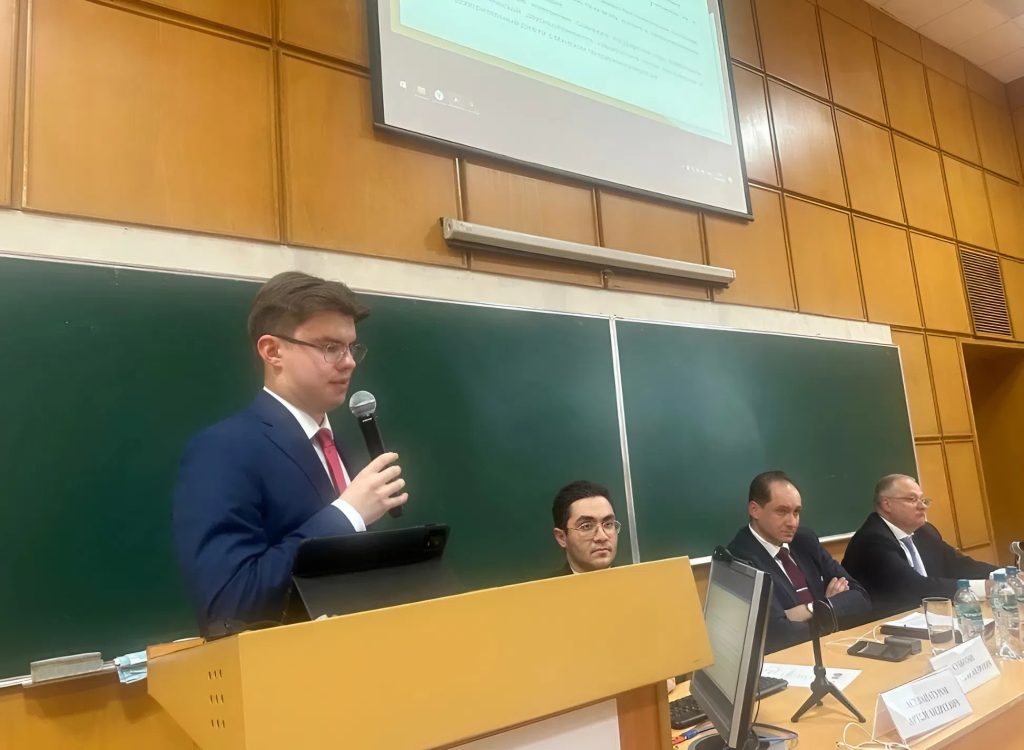
Furthermore, the speaker examined the “nuclear umbrellas” existing within the CSTO and the Union State of Russia and Belarus, concluding that there are distinct differences between the guarantees provided by Russia and the United States; specifically, the U.S. emphasizes nonproliferation and integrated deterrence. Ilya Subbotin also noted that the Russian “nuclear umbrella” will persist as long as NATO’s nuclear sharing missions exist, though this is not an irreversible decision.
Upon completion of the study, Mr. Ilya Subbotin presented a wide range of illustrative materials, including a classification of nuclear umbrellas by the degree of their credibility, and outlined recommendations for Russia’s foreign policy.
The reviewers of the paper were Dr. Dmitry Trenin, the RIAC President and PIR Center Executive Board Member, and Dr. Alexey Krivopalov, PhD in History and Senior Research Fellow at IMEMO RAS. “The USSR did not officially adhere to the doctrine of nuclear deterrence, and its nuclear weapons were not deployed under multilateral agreements within the Warsaw Pact. Moreover, other historical examples must be considered, such as Spain, Yugoslavia, and Romania. A “nuclear umbrella” did not always facilitate a country’s abandonment of its nuclear program; conversely, in some instances, such as Romania, the program continued even under the “umbrella,” Dr. Alexey Krivolapov noted, commenting on the research. The current format of Russian NSNW deployment in Belarus should be interpreted precisely as a mirrorlike response to NATO’s nuclear sharing missions”.
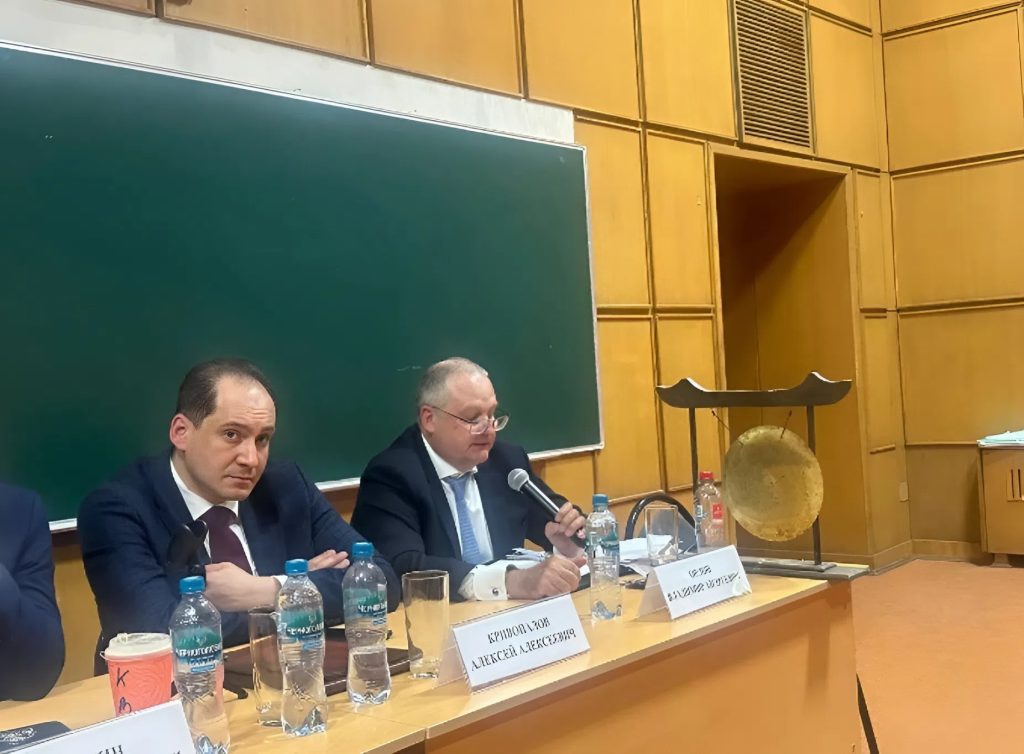
In his review of Mr. Ilya Subbotin’s research paper, the RIAC President Dr. Dmitry Trenin underscored that the conclusions drawn by the PIR Center intern in his research are of practical significance for assessing the evolution of the military-strategic situation in the region’s most critical to Russia, such as Europe, the Middle East, and the Asia-Pacific region. Following the review of the discussants’ comments, a Q&A session was held. Based on the results of the research paper defense, Ilya Subbotin’s work was awarded an excellent mark.
A video recording of the expert seminar and the speaker’s presentation are now available on PIR Center website in the “NONPROLIFERATION.WORLD” section, under the subsection of the online-course titled “Current Issues in International Security 2025–2026: PIR–MGIMO Seminar Series” (in Russian).
Keywords: International Security; Nuclear Umbrella
NINE
E16/SHAH – 26/05/29
