
№ 33 (81), 2026. PIR Center jointly with MGIMO University held a seminar on “The Legal Framework for International Cooperation in Peaceful Nuclear Energy”
July 4, 2026
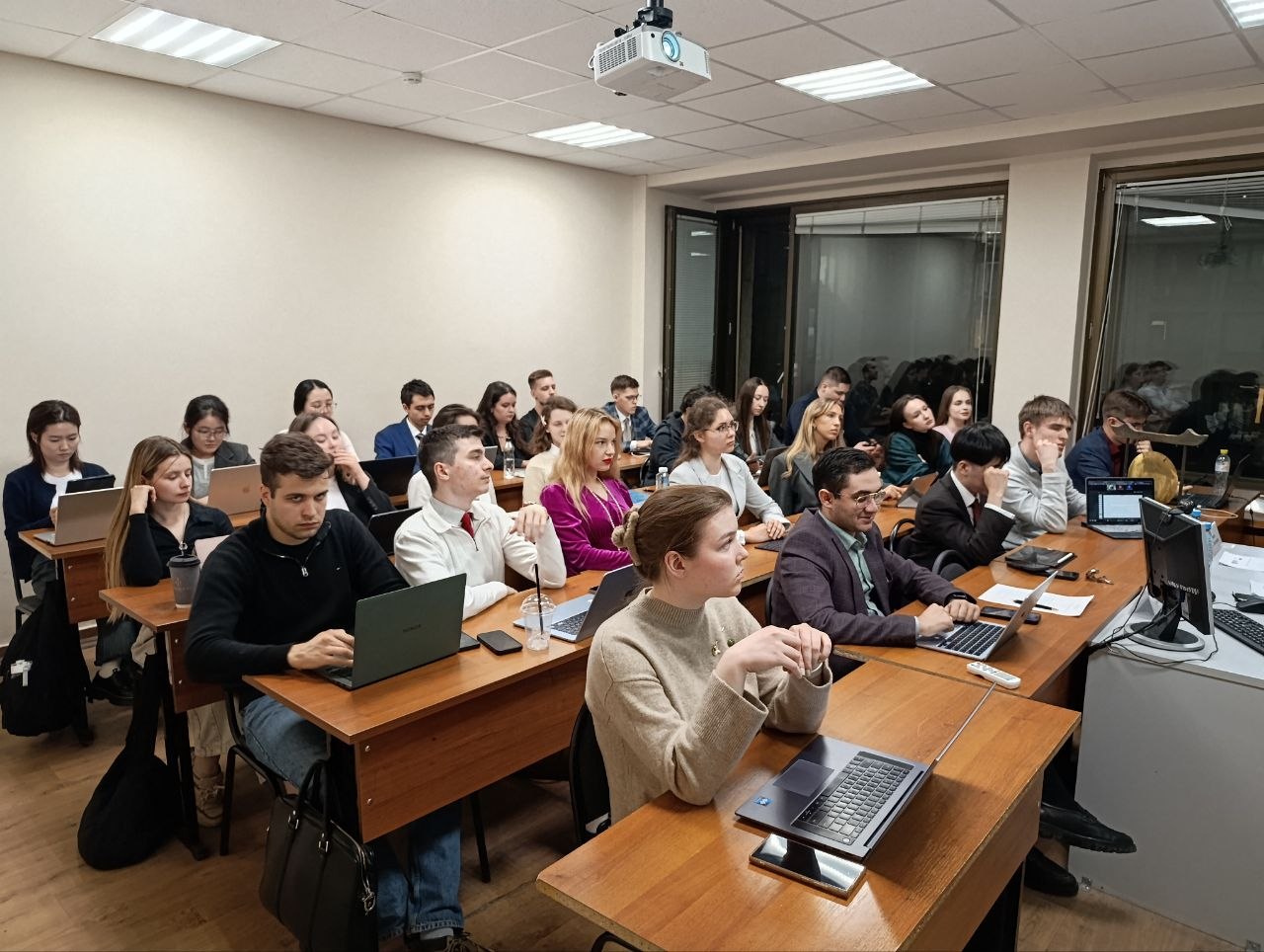
MOSCOW. JULY 4, 2026. PIR PRESS. «Nuclear energy is a very reliable and long-term source. It is independent of the location and volume of fuel sources. The nuclear power industry produces no greenhouse or carbon monoxide emissions. It is a high-tech sector where a single job can create dozens of jobs in related industries», – Dr. Mikhail Lysenko, PhD in law, Associate Professor at the Department of International Law, MGIMO University, Advisor to the Director-General of Rosatom State Corporation, and PIR Center Advisory Board member.
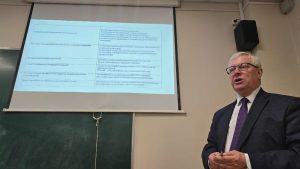
MGIMO University saw PIR Center hosted an expert seminar on “The Legal Framework for International Cooperation in Peaceful Nuclear Energy.” The keynote speaker at the seminar was Dr. Mikhail Lysenko, PhD in Law, Associate Professor at the Department of International Law, MGIMO University, Advisor to the Director-General of the Rosatom State Corporation, and PIR Center Advisory Board member. The topic of his presentation was “Fundamentals of International Nuclear Law. Legal Frameworks for International Legal Cooperation in the Peaceful Use of Nuclear Energy.” The speaker highlighted the advantages offered by nuclear energy. According to him, these include long-term reliability, predictability, uninterrupted supply, environmental friendliness, and high energy density. For instance, “the life cycle of a nuclear power plant is approximately one hundred years. A plant is built in 8–10 years and operated for 40–60 years; provided there are no issues following repairs, its operational life is extended for subsequent periods. Safe and environmentally sound decommissioning takes another 10–20 years.”
In the nuclear power industry, it is known in advance where a nuclear power plant will be built and how long it will remain in service. Three generations of specialists will work at the plant, and thousands of skilled workers will be trained. Hundreds of related industries will receive long-term work. Entire regions or large industrial facilities will be supplied with electricity. The power output can be artificially controlled at any time; it does not depend on the vagaries of the weather or the seasons. Nuclear power plants do not emit carbon monoxide or greenhouse gases. Unlike hydrocarbon-fired power plants, which require a continuous fuel supply, nuclear power plants are designed to be refueled only once every few years. In terms of energy density, 0.5 kg of nuclear fuel produces as much energy as burning two railcars of coal or a tanker of oil.
Alternative energy sources, despite all their apparent advantages, require large areas of land and are directly dependent on weather conditions. Wind and solar power plants are well-suited for supplying energy to small and large households and communities. However, even with a large total capacity, they are insufficient to provide a constant and uninterrupted power supply to heavy industry—such as industrial giants and urban agglomerations, including, for example, metallurgical, aviation, and machine-building plants. Moreover, in recent years, an environmental flaw in alternative energy sources – one that had previously been overlooked – has come to light. Despite the mass production of wind turbines and solar panels, reliable and clean methods for their disposal have yet to be developed. At present, end-of-life devices are simply shredded and buried, leaving toxic waste for future generations. This contradicts the principles of sustainable development.
The presentation focused primarily on the legal regulation of both the peaceful use of nuclear energy and the prospects for the development of international nuclear law. Dr. Mikhail Lysenko emphasized that the existing foundational treaties in the field of peaceful nuclear energy, along with IAEA guidance documents, generally regulate international cooperation in this area efficiently. At the same time, the global nuclear power industry is now approaching the threshold of another technological transformation. In the foreseeable future, new technologies such as small- and medium-power modular reactors, floating power units, fourth-generation industrial reactors, and possibly fusion power plants may appear on the global market on a massive scale. Accordingly, the agenda – primarily within the IAEA – includes issues such as improving the international legal framework, addressing emerging gaps in it, developing adaptive standards for nuclear safety and nuclear security, cybersecurity for nuclear facilities, the integration of IAEA safeguards, the strengthening of the international emergency response mechanism, and the further consolidation and dissemination of best practices in the field of nuclear safety as a whole.
In conclusion, the speaker answered questions from the audience. In particular, the topic of the prospects for the development of small modular reactors was raised. The speaker noted that small-scale nuclear power has very promising prospects, and not only in Russia. About 60 countries are researching this technology, but to date, not a single small modular reactor of modern design –including floating power units specifically intended for export – has been commissioned either in Russia or abroad. Russia plans to build several reactors of this type around 2028–2030 to support mineral extraction in Yakutia. An intergovernmental agreement has been signed with Uzbekistan regarding the construction of both large- and small-capacity nuclear power plants there. We are summarizing our “domestic” experience operating the first floating nuclear power plant, the Akademik Lomonosov, in Chukotka.
During the expert seminar, the situation in the Middle East was also discussed. According to Dr. Mikhail Lysenko, the U.S. and Israeli missile strikes on the Bushehr Nuclear Power Plant, as well as the ongoing shelling of the Zaporizhzhia Nuclear Power Plant by the Armed Forces of Ukraine with the connivance of Western countries, are extremely dangerous and reckless practices that are nonetheless becoming commonplace. Such practices are unacceptable, require an immediate cessation, and must be subject to an international prohibition in accordance with applicable norms of international humanitarian law (the Additional Protocols to the 1949 Geneva Conventions) and the UN Charter (situations threatening the maintenance of international peace and security).
A video recording of the expert seminar and the speaker’s presentation are now available on PIR Center website in the “NONPROLIFERATION.WORLD” section, under the subsection of the online-course titled “Current Issues in International Security 2025–2026: PIR–MGIMO Seminar Series” (in Russian).
Keywords: International Security; Nuclear Energy; IAEA
NPT
E7/AST– 26/07/04
