
PIR Post № 8 (22), 2026. From Lessons of Crisis to the Future: Trust and Scenario Models for the Security Architecture of the Middle East

October 6, 2026
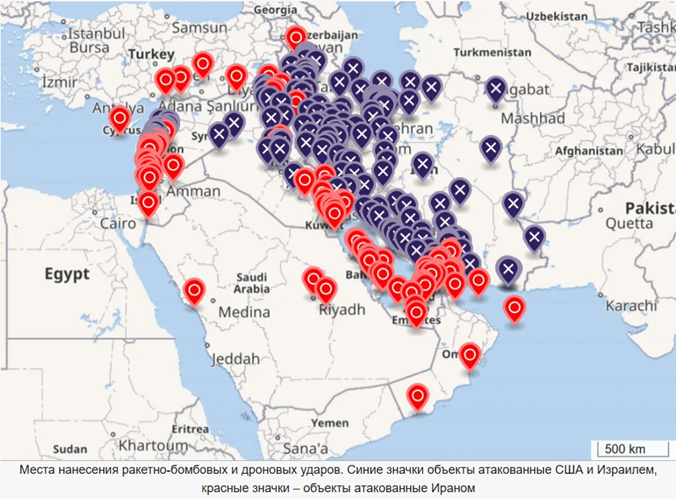
The origins of the current round of the crisis, which has entailed a transformation of the entire security architecture in the Middle East, trace back to 2023, when Hamas attacked Israel. In 2024, an exchange of retaliatory strikes occurred between Israel and Iran -albeit on a limited scale, yet they resonated with an alarming echo and unequivocally signified that the previous dynamics of confrontation were gradually receding into the past, giving way to a qualitatively different level. Subsequently, in 2025, the United States, together with Israel, delivered strikes against the territory of the Islamic Republic of Iran, and in 2026 a full-scale war began, in the course of which the Supreme Leader of Iran, Ali Khamenei, was killed. Iran significantly increased the intensity and scope of its retaliatory strikes. American military installations in the region came under attack. Thus, American facilities in the territory of Turkey, the UAE, Qatar, Kuwait, Bahrain, Saudi Arabia, Oman, Jordan, and Cyprus were shelled. According to information published in the media, as of 11 August 2026, since the beginning of Operation “Epic Fury,” Tehran had delivered more than 2,000 strikes employing aviation, missiles, and unmanned aerial vehicles.
On 2 March 2026, two Su-24M front-line bombers belonging to the IRIAF attempted to deliver an air strike on Al Udeid Air Base, but were intercepted by Qatari F-15QA fighters. Nevertheless, a significant portion of the attacks on American facilities reached their targets, and serious damage was inflicted on the armed forces of the United States. At present, within the American expert community, the question is even being raised as to the expediency of restoring American bases in the region in connection with the significant increase in the accuracy of Iranian strikes.
“Patriot” and THAAD – Not a Panacea
Despite the fact that the estimated probability of kill for PAC-2 and PAC-3 on “Patriot” equals 0.6–0.9, from a military-strategic standpoint, the long-range THAAD and “Patriot” systems proved practically ineffective against combined strikes by comparatively cheap unmanned aerial vehicles and ballistic missiles of varying ranges. This thesis can be confirmed by a number of facts.
The Failure of Missile Defense – The Deepening of the Crisis of Trust in the United States
From a political standpoint, all these factors in aggregate, first and foremost, exacerbated the crisis of allied trust in the United States. Given the existing distrust and political contradictions among the Arabian monarchies, they will probably seek allies in the region not by strengthening interaction with one another. A vivid confirmation of this conclusion is the recent conclusion of a defense agreement between Saudi Arabia, Turkey, and Pakistan. The so-called “Meccan Agreement” is a trilateral pact providing for the creation of a collective security system by analogy with NATO. It is interesting to note that Turkey is one of the parties that is a member of the North Atlantic Alliance and has on its territory one of the Organization’s largest bases – Incirlik. The other party – Pakistan – has for a long time actively cooperated with Saudi Arabia in the sphere of defense. According to Nikolai Sukhov, a leading research fellow at the Center for Middle Eastern Studies of the Primakov Institute of World Economy and International Relations of the Russian Academy of Sciences, Saudi Arabia strives to diversify the sources of its security, Turkey – to expand its influence in the Persian Gulf and the market for its defense industry, Pakistan – to strengthen its positions in the Middle East, obtain additional economic and military-technical ties with Saudi Arabia, and enhance its own international weight. According to Dr. Gary Seymour, Director of the Crown Center for Middle East Studies and Professor of Political Science at Brandeis University: “Saudi Arabia and other Persian Gulf countries believe that their dependence on the United States in matters of protection has not met their expectations. They cannot completely rid themselves of this dependence, because the United States is the only country that has the capabilities and the will to defend the Persian Gulf countries from strategic threats, including from Iran. Neither Turkey nor Pakistan are reliable partners in the sphere of security in the event of a threat to Saudi Arabia from Iran. This trilateral agreement is an attempt by Saudi Arabia to reduce its dependence on the United States.”
The acute phase of the crisis demonstrated serious vulnerabilities in the architecture of regional security. Iran’s combined strikes, which included both ballistic missiles and UAVs, revealed the limited effectiveness of costly Western missile defense systems against the massive use of relatively inexpensive means of destruction.
Lessons of the Escalation of the Crisis for the Arabian Monarchies
As a result of the crisis, the countries of the region have developed a need for diversifying the sources of arms supplies, developing their own defense technologies, and strengthening bilateral relations with various partners. At the same time, the creation of a unified security system in the region is still hampered by political disagreements among the Persian Gulf countries, which pushes them to seek alternative alliances outside the traditional alliance with the United States.
As a result, one can forecast a number of scenarios for the development of the situation in the sphere of regional security, in particular with regard to the missile programs of the Persian Gulf states. Given that the “Meccan Agreement” has already been signed and is actively developing, consequently, at present the region is rather striving for the development of its own autonomy and the creation of a fundamentally new security architecture. At the same time, new large-scale deals with American companies also increase the probability, if not of strengthening the US position in the Persian Gulf, then of its stabilization; here, with a high degree of probability, the contradictions among the monarchies mentioned by us will also play a role. Thus, the scenarios for the development of the situation may be as follows:
Thus, the new escalation of the crisis in the Middle East, especially the period from March to July 2026, has confronted the Arabian monarchies with the question of the inadequacy of the main “Patriot” and THAAD complexes, which constitute the basis of missile defense and air defense, including for combating comparatively cheap unmanned aerial vehicles, even given their recent rearmament to the PAC-3 modification, as well as with certain ballistic targets. The high intensity of hostilities and the depletion of interceptor missile stocks are forcing the Pentagon to conclude new large-scale deals with manufacturers in order to accelerate and increase the production of these much-needed interceptor missiles. The exchange of strikes between the American-Israeli coalition and Iran had not only military-strategic but also political significance for the Persian Gulf states. The search for opportunities to diversify imports and invest in their own developments in the sphere of the defense industry intensified. Also, the already existing crisis of trust in the “American umbrella” deepened, which led to the necessity of seeking allies and attempts to create a new architecture of collective security in the region, including with the participation of Pakistan, Turkey, and, quite probably, China.
Keywords: Iran, regional security
NPT
F8/PASH – 26/10/06
